Get in touch with Welong Company

Updated October 2026
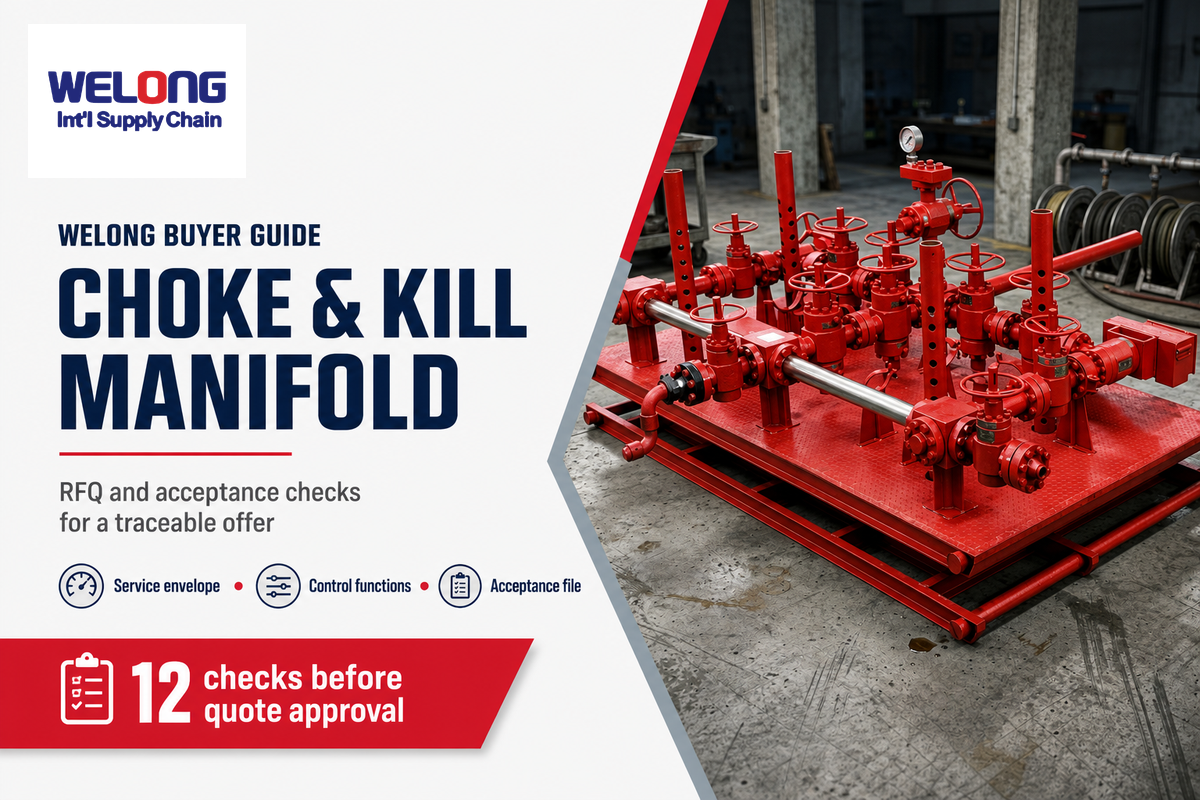
Although the pathway description in a Choke & Kill Manifold quotation appears complete, the pressure boundary, control interface, responsible manufacturer, and acceptance records may be left unresolved. The useful comparison starts with the well programme and ends with documents tied to the actual ordered assembly. This guide supports the work of drilling engineers, purchasing personnel, and quality reviewers prior to commitment to a particular model or price.
For oil and gas drilling operations, controlling well pressure is an operator-led task supported by identified equipment and procedures. A supplier’s phrase about the manifold cannot replace either one.
Short answer: A choke and kill manifold quote is ready to compare when the operator has defined the service envelope, the bidder has marked the flow and control interfaces, and each required test or document has an owner and revision.
Quick Specs: fields to fix before comparing offers
Record the approved pressure and temperature basis, flow and erosion assumptions, well fluids and sour-service conditions, main and side bore, end connections, actuator and remote-control functions, drawing revision, responsible manufacturer, applicable standard and regulatory edition, inspection scope, and site handoff owner. An open field remains open; a catalogue model doesn’t fill it automatically.
In brief
- A choke return path and a kill-fluid injection path serve different functions; the approved well-control procedure governs their use.
- Remote-control capability can be required in a defined jurisdiction and service even when an actuator label alone tells you little about functional compliance.
- An API specification reference doesn’t identify the licensed manufacturer, product category, or status of a particular order.
- The 12-record file below is a buyer checklist. The signed contract decides which records apply.
What the choke path and kill path each do
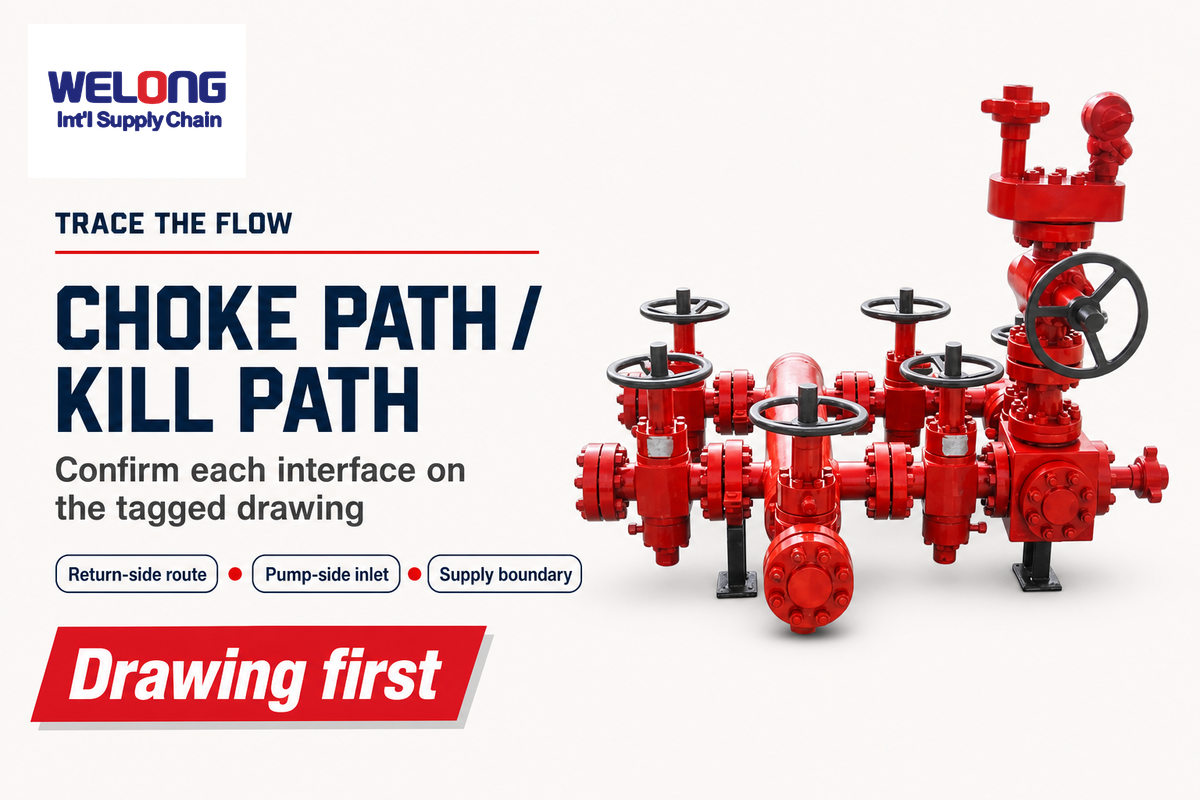
The choke path carries well returns through pressure-control equipment toward the choke manifold, while the kill path provides a separate route for drilling fluid toward the blowout-preventer stack. The paths are related in a well-control system, but a purchasing drawing should name each one and show where its pressure boundary starts and ends. The approved well programme governs operation.
Choke manifold systems help control the flow of drilling mud from the wellbore during a drilling operation; the operator’s procedure determines when and how to circulate. A choke manifold and kill manifold may be sold together as choke and kill manifold systems, but their paths remain distinct. The equipment doesn’t independently set formation pressure, or guarantee a specific well pressure. Ask the bidder to describe, in the same terms as used in the well programme, the limits of the assembly and the intended flow of fluids.
Quotations sometimes reverse the labeling to “kill and choke manifold.” Both lines must still be shown. Diverting flow through a series of valves requires an approved arrangement; the name of the product doesn’t dictate the route. Chokes allow restriction to be adjusted, but the drilling process and well-control procedure determine when that function is used.
The well-control illustration of the US Occupational Safety and Health Administration distinguishes between the choke-line valve which redirects mud to the choke manifold during a kick and the kill-line valve which routes drilling fluid to the blowout preventer. It’s a useful equipment-language reference and not a piping layout of the rig.
“The kill line valve is used to direct drilling fluid to the BOP during a kick.”
| Path | Direction in the OSHA explanation | Buyer evidence to request |
|---|---|---|
| Choke line | Wellbore return toward choke manifold | Tagged inlet, valves, choke route and downstream interface on the approved drawing |
| Kill line | Drilling fluid toward the BOP | Tagged pump-side interface, isolation and connection schedule |
On the RFQ, identify named inlets, choke return outlets, kill fluid inlets, isolation points and any interface to a separate choke and kill hose assembly. A manifold allows flow to be routed through a series of valves and chokes, but its tagged arrangement determines what is actually supplied. A hose certificate is for its hose, not a rigid manifold or every valve. If a vendor’s literature uses “choke and kill” as one undifferentiated label, request a tagged P&ID before evaluating the offer.
Build a pressure and service envelope before comparing models
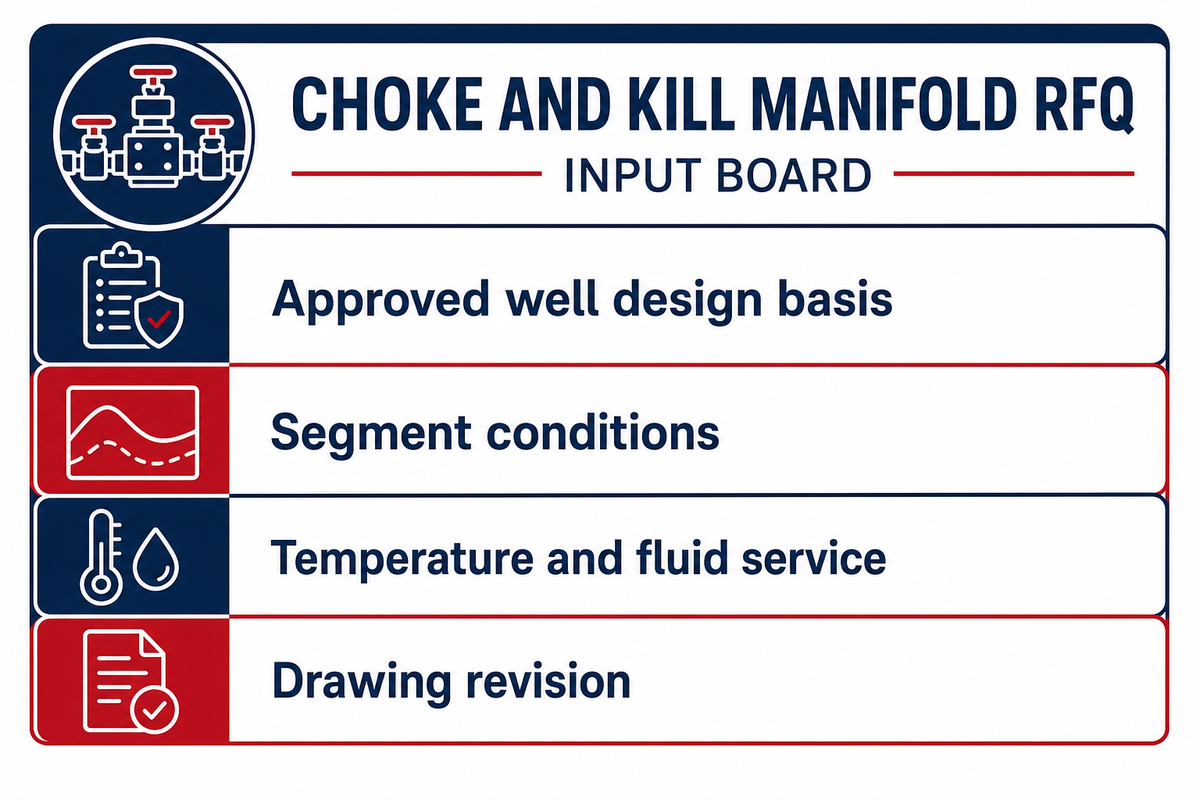
A pressure class is one consideration to selecting a manifold; it isn’t a complete basis of design. The operator’s engineer should define pressure, temperature, fluids, bore, connections, expected flow conditions, jurisdiction, and the required evidence. The supplier may then present an assembly against that definition and state all assumptions. Missing inputs should be clarified; guessing shouldn’t be done.
Well pressure during drilling operations varies with the well and the approved procedure. In high-pressure drilling, a catalogue label in psi can’t establish what every valve, joint or downstream outlet is rated to withstand. Show the intended formation fluids, solids and temperature, alongside the pressure basis for each component; the drawing must indicate where that basis changes. The operator’s well-control calculation, rather than the seller’s table, addresses the relationship between static liquid column pressure and formation pressure.
Pressure in the well isn’t the rated working pressure of every item in a manifold. The engineer may call out a hydrostatic test, but its procedure and acceptance criteria must come from the project requirements, not this checklist. A product description can’t control the pressure or establish the correct test by itself.
What is a choke manifold in drilling?
A choke manifold is an arrangement of pressure-control components used on the return side of a drilling well-control system. Its valves and chokes route and restrict flow according to approved procedures. A “choke and kill manifold” may include separate kill-side equipment, controls, instrumentation, and interconnections; the actual supply limit is the tagged drawing and purchase order, not the product name.
What inputs should a drilling engineer supply before specifying the pressure class and bore?
Bidders should be given the approved well design basis, the highest anticipated condition for each segment, temperature and fluid service, solids, sour service exposure, main and side connection schedules, location, regulatory regime and drawing revision. A bidder can only take responsibility for what the order defines. Ask the engineer to identify assumptions that are provisional.
Welong’s public model selector and JG/YG tables are exemplars for discussion and not an approved project selection. Its published table combines model names, bore and pressure fields, while the page itself calls for confirmation against the well programme. The final quotation should name the responsible manufacturer, the exact configuration and approved data sheet revision.
| Purchaser input | Bidder response to request | Owner or evidence |
|---|---|---|
| Well and operation type | Named drilling, workover, testing, or other duty | Operator / well programme |
| Jurisdiction and governing rules | Applicability matrix and cited edition | Operator / compliance lead |
| Pressure basis by segment | Rated working pressure for tagged items | Engineer / approved data sheet |
| Temperature range | Materials and seals within that range | Engineer / material schedule |
| Fluid, H2S/CO2 and solids | Service limits and exposed-part list | Operator / fluid basis |
| Flow and erosion assumptions | Choke and flow-path design assumptions | Engineer / design review |
| Main and side bore | Actual clear flow path and item schedule | Manufacturer / drawing |
| End connections | Size, type and mating interface | Both interface owners |
| Controls and power | Local/remote functions and failure state | Controls engineer / test plan |
| Inspection and records | Witness points, reports and release owner | Quality lead / purchase order |
The seller may provide several Catalogue pressure classes. Ask the engineer to place the requested class on each segment of the drawing and then select the appropriate class. In a US offshore example, the Bureau of Safety and Environmental Enforcement’s FAQ explains a specific boundary downstream of the choke isolation valve for its rule. That answer cannot be copied to another jurisdiction or used to select a lower rating without the applicable design review.
Review the proposed flow path, valves, chokes, and instrumentation
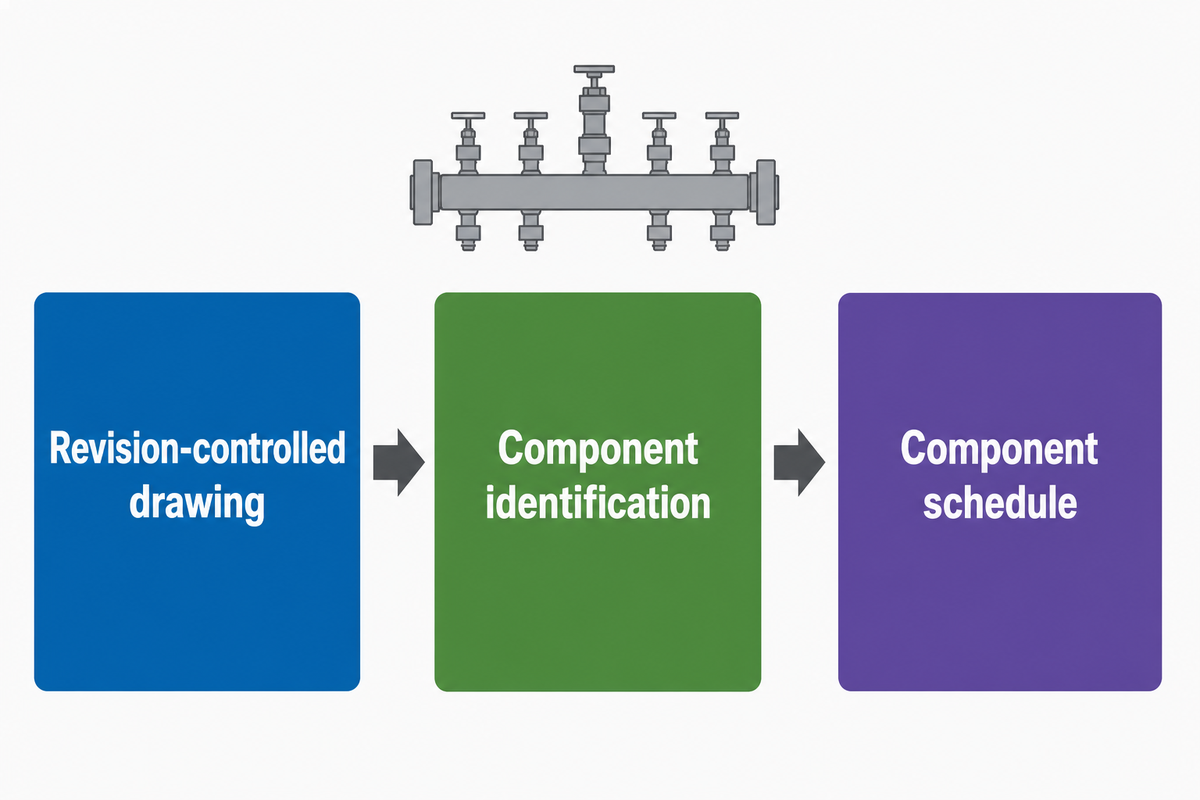
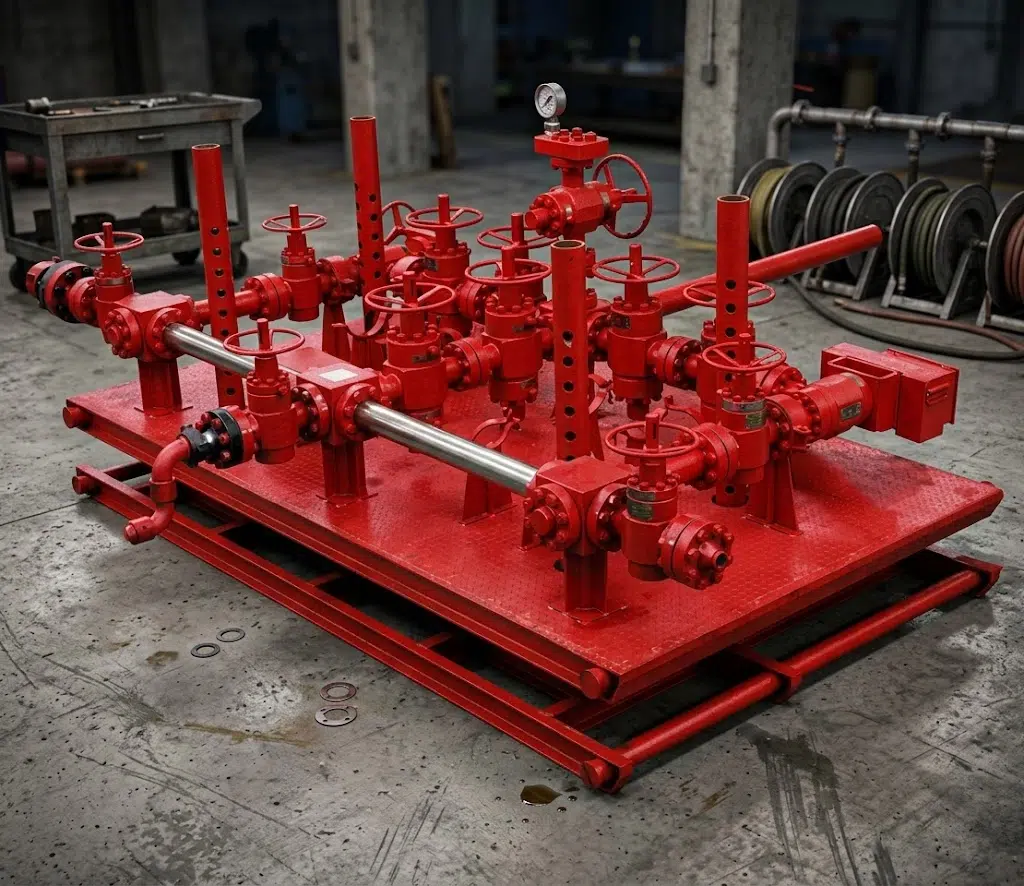
The bidder’s Process and Instrumentation Diagram (P&ID) should show the pressure boundary from inlet to outlet, tracing valves, chokes, gauges, control points, drains and interfaces. A provided brochure photo shows appearance; it doesn’t represent the tagged arrangement, nor does it show what a different contractor will install. Request a revision-controlled drawing that shows component identification, review the drawing to ensure it shows connection to the P&ID, and request a component schedule.
| Element | Question the drawing should answer |
|---|---|
| Choke-line inlet | Which upstream interface and rating apply? |
| Kill-line inlet | Where is the pump-side interface? |
| Isolation valves | Which valve separates each pressure segment? |
| Adjustable choke | What actuator and control functions are supplied? |
| Fixed choke, if specified | Is it included, and who selects its trim? |
| Pressure gauges or sensors | Where are readings taken and calibrated? |
| Control panel | Which signals, power and location are included? |
| Outlets and drains | Which downstream system owns the connection? |
| Boundary break | Where does the tagged rating or responsibility change? |
The last row is the most interesting. The US offshore regulator’s rule-specific answer concerns equipment downstream of the choke isolation valve under 30 CFR 250.736(b). In your RFQ, mark the proposed isolation valve, valves and pressure gauges, and downstream equipment explicitly; the engineer then checks whether that regulatory interpretation applies. A forum debate or vendor caption doesn’t settle the boundary.
Ask what remains connected when the blowout preventer is closed under the approved procedure, including during a shut-in, and mark those interfaces on the drawing. This question is about design review, not about changing the valve line-up of a rig.
Normalize manual and hydraulic choke offers
Manual and hydraulic refer to how a choke is controlled. Local and remote refer to where a choke can be controlled. These are separate considerations when evaluating an offer. Review each offer for the required operating functions, control location, failure state, feedback, test evidence, and site integration. Where required remote control exists, a local offer with only manual control isn’t an equivalent offer.
When comparing manual and hydraulic choke offers, which control interfaces should match?
Ask each bidder to identify the actuator, local controls, remote controls, power source, command and position feedback, loss-of-power response, control panel location, and commissioning interface. Adjusting the choke can be used to alter system backpressure, but the operator’s approved procedure governs how to manage well pressure. Specify how those functions will be tested in the test plan. A hydraulic package can include remote control, but that word alone does not prove operational flexibility and control, reliability or site integration.
Teams control well pressure and manage returns under the well programme; they should not rely on a manifold to manage those duties independently. A choke valve can be used to control restriction in the specified branch; however, the complete system response would require an arrangement-specific check. Identify which signals permit the operator to adjust the flow from the intended location.
For the defined US onshore Federal and Indian lease H2S circumstances in 43 CFR 3176.3, 43 CFR 3176.8(d)(1)(viii) requires a remote-controlled choke for H2S drilling. That’s a jurisdiction- and operation-specific functional requirement, not a rule that every manifold everywhere must use hydraulics. Confirm whether it applies before narrowing the actuator choice.
Control and Interface Scope Matrix: The same four questions should be asked for both types of offers. Document the actual functions and evidence for each bidder.
Manual-actuated offer
- Confirm where an operator must stand.
- Identify any separate remote-control function.
- List position feedback and test evidence.
- Name who supplies and tests the interface.
Hydraulically actuated offer
- Confirm local and remote command locations.
- Identify power and loss-of-power response.
- List position feedback and test evidence.
- Name who integrates and commissions the panel.
According to Louisiana State University’s Babak Akbari in the Drilling Contractor magazine, choke characteristics and well hydraulics can intertwine in managed-pressure drilling control tests. That context can benefit a practical RFQ question: which control response will be demonstrated with the actual arrangement? It doesn’t imply that either actuator type is universally safer.
Verify API 16C language against the responsible manufacturer
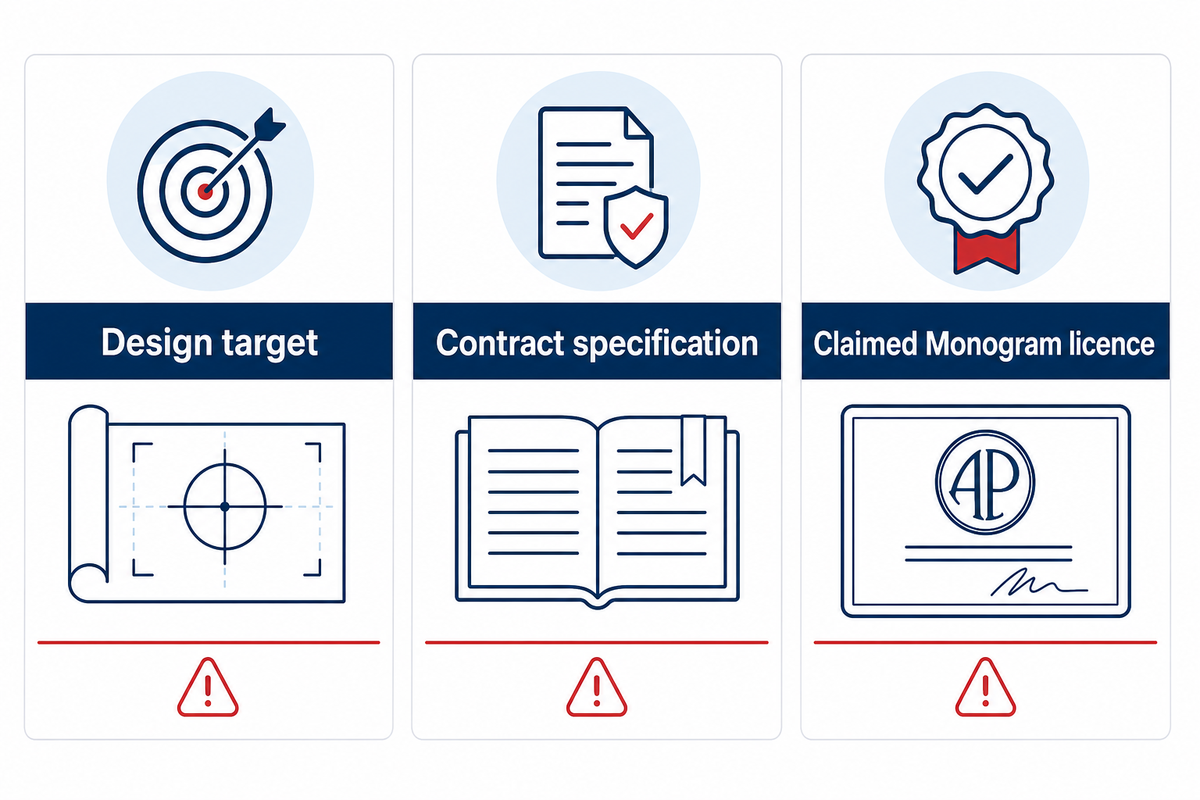
An API 16C reference can describe a design target, a specification in the contract, or a claimed Monogram licence, and these are distinct statements. Inquire as to who manufactures each of the pressure-boundary items that are quoted, what product category a licence covers, the facility and licence number, and how the order’s test records are related to the serial numbers that have been delivered. Confirm status through API’s current records.
The API Spec 16C Licensing Information Form lists product categories including buffer chambers, well control chokes, actuators, controls and choke-and-kill lines. It’s a form that’s filled out by the applicant, and isn’t an issued licence for Welong or a specifically assembled manifold. API’s programme documents advise users to verify currently licensed companies and products; request the exact responsible facility and scope before making a certification statement.
WELONG states it’s an international, integrated supply-chain service provider. Its role in sourcing and coordinating a package should be written in the quotation alongside the actual manufacturer’s role. An entity may manage drawings and purchasing and also perform inspection without taking ownership of all design and manufacturing licenses and tests. If a quotation states “API 16C certified,” ask if the statement pertains to a licensable item, a system design, a component, a named licensed manufacturing facility, etc.
Do
- Ask for the manufacturer and facility on each pressure-boundary item.
- Match the licence category to the item actually supplied.
- Check the current licence status and order identifiers.
Do not
- Infer a licence from a reseller logo or catalogue phrase.
- Transfer one component’s licence to the whole package.
- Treat a quality-system certificate as item-level conformity evidence.
Define materials and sour-service evidence at item level
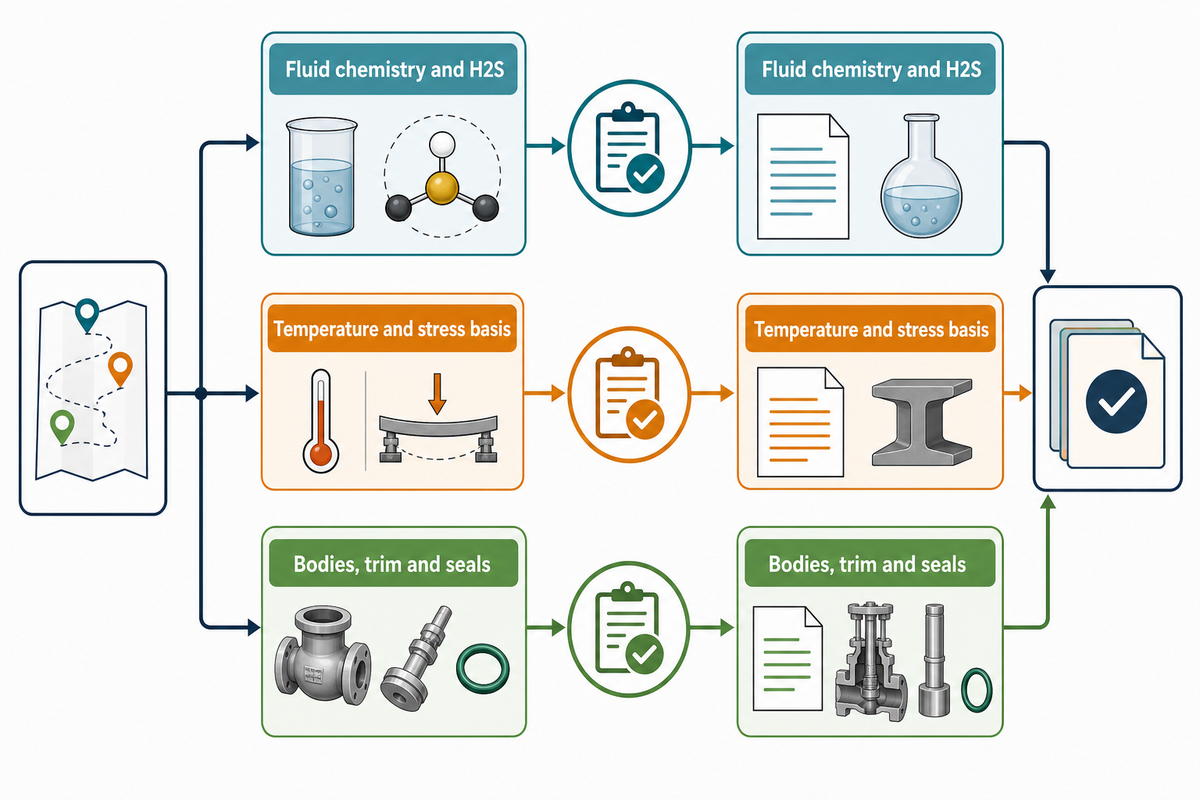
Sour-service suitability should be described for each exposed component in a defined environment, not in a general statement on the quotation. Specify the fluid chemistry, H2S conditions, temperature and stress basis, then request the manufacturer’s material and design evidence for bodies, trim, seals, packing and other wetted parts. The project engineer should address any gaps prior to acceptance of the package.
ISO 15156 is a common reference for metallic materials in H2S-containing oil and gas environments. A material certificate may support a named metal heat and component, but it alone does not validate the actual fluid envelope or non-metallic parts. The client should ask the manufacturer to verify the chosen material and processing condition, heat identifier and service limits for all exposed items.
A narrowly scoped US regulatory example makes the hidden gap concrete: 43 CFR 3176.8(d)(3)(ii) addresses H2S-exposed elastomers, packing and similar inner parts at the maximum anticipated exposure temperature, as well as manufacturer design verification. This provision applies only within the scope of the subpart. For other projects, the same question is still useful, but the governing requirement must be established separately.
In the supply chains for the oil and gas industry, a metal heat certificate and a seal material declaration address different questions. If contaminated drilling fluid can contact a seal, request the actual service limits and the manufacturer’s verification for that part. A generic material grade can’t substantiate suitability of every wetted component.
The 12-record acceptance file
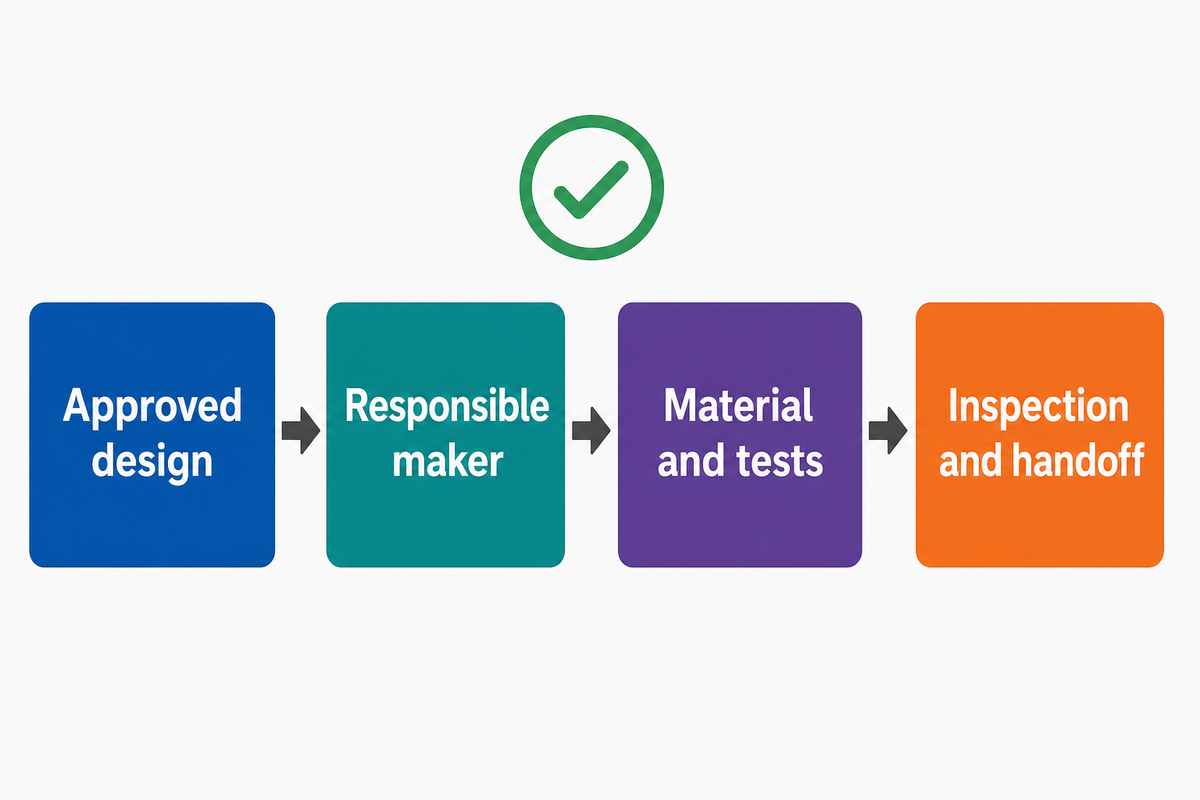
An acceptance file makes a quoted manifold auditable by linking the approved design to its maker, material, tests, inspection and handoff. The 12 rows below are a proposed purchase order schedule and not an API 16C required list. Each row should be annotated as applicable, not applicable or open, and assigned to an owner. The document name and revision should be recorded prior to release to the agreed milestone.
Which test and traceability records should accompany the purchase order?
Use the approved data sheet, final drawings, bill of materials, responsible manufacturer, standard scope, and the relevant standard. If the contract requires them, provide material certificates, heat/serial mappings, fabrication and exam records, approved test procedures, witnessed reports, and calibration evidence. Define preservation, spares, manuals, closure of a punch-list, and who owns site integration. One test certificate can’t answer all of these questions.
| Record to request if applicable | Likely owner | Identifier or release check |
|---|---|---|
| Approved project data sheet | Operator engineer | Basis and revision |
| Final diagram and bill of materials | Manufacturer | Tags, item numbers, revision |
| Design and standard scope statement | Manufacturer / engineer | Edition and item coverage |
| Manufacturer and licence evidence, if claimed | Supplier / manufacturer | Facility, licence, product category |
| Material certificates | Manufacturer | Part and heat linkage |
| Heat and serial trace map | Manufacturer / quality lead | Component-to-report index |
| Welding and examination records | Fabricator | Only where process and contract apply |
| Pressure and function test procedures | Manufacturer / operator | Approved method and revision |
| Witnessed results and instrument records | Manufacturer / inspector | Item, result, calibration link |
| Coating and preservation record | Supplier | Shipment condition |
| Spares and operating manuals | Manufacturer / supplier | Applicable model and revision |
| Punch-list and site handoff | Operator / supplier | Open items and sign-off owner |
Use “not applicable” only with a reason. If a component license isn’t claimed, the row should state what the conformity basis is. For a claimed API Monogram licence, consult the API programme documents and Composite List to check the named company and product scope. Are replaceable components and ease of maintenance supported by the parts list and manuals? The document index must point to the ordered item, not an unrelated brochure or another manufacturer’s test report.
Plan commissioning and maintenance handoff
Factory acceptance establishes what the manufacturer demonstrated under the purchase order. What was agreed to be shipped and preserved for transport is released for shipment. Site readiness hinges on the operator’s installation and connection checks, an approved test programme, training, and closure of open items. Keep those milestones separate, with a named owner for every outstanding action and a route for updating the as-built record after a change.
Compare quotes on the same delivered scope
Two quotations can be compared when they answer the same approved design basis and define the equipment, controls, testing, records, spares, shipment and site interfaces. Different approved technical solutions can be used to achieve the same objective; the evidence should be compared then the commercial decision should be made. A low unit price with excluded inspection or undocumented interfaces is still an incomplete offer.
3-Gate Quote Release Map
The 3-Gate Quote Release Map sorts a manifold offer by design inputs, accountable evidence, and comparable delivered scope.
- Hold the RFQ — obtain the approved service envelope and applicable jurisdiction before comparing models.
- Review conditionally — resolve missing drawing revisions, manufacturer identity, control functions, or record owners before commercial ranking.
- Compare delivered value — evaluate price, schedule, inspection, spares, preservation and site interfaces against the same required outcomes.
A supplier may propose alternative manifold designs, valve layouts or inspection routes. Record what requirement each meets, who approves the deviation, and how the result will be demonstrated. Keep exclusions visible. A price that omits controls, witness inspections, protective packing and commissioning shouldn’t be compared to a complete solution.
Sales language can be rephrased to be requests for specific information. “Efficient drilling” and “safety and efficiency” must be defined along with an acceptance method and the accountable person. The same is true for the following in a manifold offer.
| Phrase in an offer | Request before accepting it |
|---|---|
| “Effective pressure management” | Tagged function, operating envelope and approved test. |
| “Durability and safety” | Materials, service limits and acceptance records. |
| “Ability to handle extreme conditions” | Define the condition and identify each rated item. |
| “Play a critical role” | State the supplied function and the boundary of responsibility. |
Welong can use the completed worksheet to discuss Welong choke and kill manifold configurations. Ask its team to return a configuration, the named responsible manufacturer, a drawing revision and a document-scope list. The order engineer and quality lead should approve those outputs before commercial release.
What recent API 16C updates mean for an RFQ
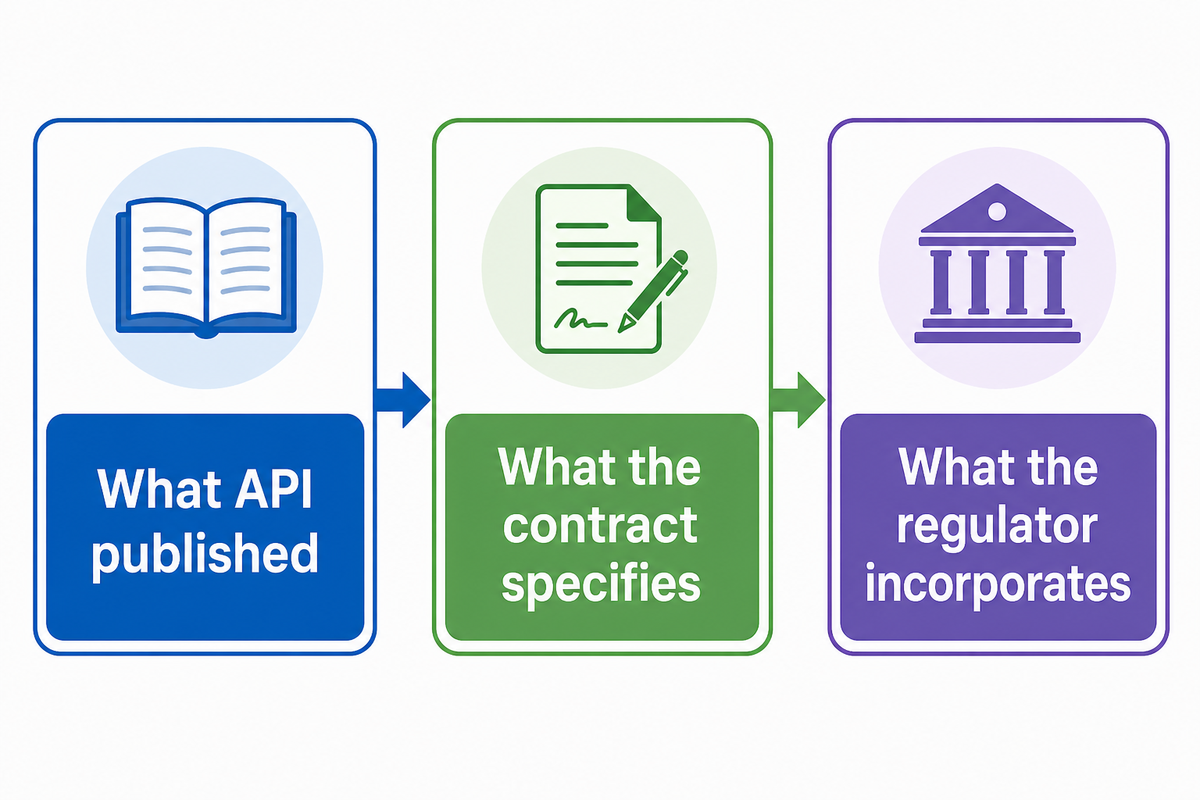
An RFQ should distinguish three edition questions: what API has published, what the contract specifies, and what an applicable regulator has incorporated. API’s updates index lists Spec 16C third edition with Errata 3 dated December 2025. Fact of publication for these revisions doesn’t replace an earlier edition cited in a regulation or provide evidence that a product manufacturer holds a product license.
The American Petroleum Institute’s updates index indicates the errata in question. The current 30 CFR 250.198(e)(2)(i)(EE) lists the first edition of API Spec 16C (reaffirmed in 2010) as an incorporated reference for the cited US offshore rule. A purchase contract can specify additional or later requirements, but it cannot waive a rule that applies to the operation.
The standards or regulatory lead for the operator’s operation has specific criteria regarding which jurisdiction(s) and edition(s) apply. Request this info from the standards or regulatory lead and put it in the RFQ. A manufacturer should state which edition and errata its proposed items align to, where any deviation is (if any), and how its records show conformity. Use the information provided as order-specific document control, not to assume the older manifold is obsolete or the newer catalog pages are current.
Key takeaway
The buyer can release a comparable manifold quote only after the design basis, responsible manufacturer, control functions, applicable edition and contract-specific acceptance records all refer to the same ordered configuration.
Frequently asked questions
What is a kill line on an oil rig?
A kill line carries drilling fluid toward the blowout-preventer stack during a well-control event.
It’s a pressure-rated route distinct from the choke return path. The exact valve sequence, pump arrangement, pressure limits and operating actions belong in the operator’s approved well-control programme. When purchasing a package, identify the kill-line inlet and its pressure and connection boundary on the tagged drawing for the specific assembly being ordered.
How do I verify an API 16C claim on a choke and kill manifold quote?
Verify the named manufacturing facility, licensed product category and current licence scope against the exact quoted items.
Ask the bidder for its claimed API Monogram licence number and the responsible manufacturing facility. Check the applicable API programme records, then tie the claim to the ordered drawing and serial numbers. A specification reference, a seller’s logo, a quality-system certificate and a licence are different kinds of evidence. The 2024 API licensing form lists categories; it isn’t an issued certificate for your order.
What should be included in a choke manifold quotation?
A comparable quotation identifies the design basis, supplied configuration, responsible manufacturer and acceptance scope.
Request the tagged flow diagram, rated items and connections, actuator and control functions, governing edition, inspection and test scope, document index, spares, preservation, delivery and site interfaces. Exclusions should be as visible as inclusions. The buyer’s engineer and quality lead can then compare bids against one approved scope. A catalogue description or a single pressure rating can’t replace those order-specific commitments.
Does a higher pressure rating always make a manifold a better choice?
No. The rating must fit the approved design basis for each pressure segment.
Compare bore, connections, temperature, fluid conditions, material and control requirements alongside the rating. A higher catalogue number doesn’t resolve a mismatched interface or missing sour-service evidence. In a limited US offshore context, the regulator also distinguishes equipment downstream of the choke isolation valve; the responsible engineer must decide whether that interpretation applies.
Is a hydraulic choke always preferable to a manual choke?
No. Compare required control functions and test evidence for the actual well programme.
Check control location, remote operation, power-loss response, feedback and maintainability. In some defined US onshore H2S drilling circumstances, a remote-controlled choke is required; that’s a functional and jurisdiction-specific requirement, not a universal hydraulic mandate. A local-only manual offer can’t satisfy a remote-control requirement without a compliant arrangement.
What is the purpose of a choke valve?
A choke valve restricts flow through a controlled passage in a pressure-control arrangement.
In drilling well control, its operation must follow the approved procedure and the actual hydraulic response of the system. The valve alone doesn’t define the entire choke return route, the kill-fluid path, the manifold’s rated boundary or the control panel. The quotation should identify its trim, actuator, controls and tests as part of a tagged assembly.
Send a quote-ready specification
Share the completed envelope and mark any open fields. Welong can discuss the proposed configuration, responsible manufacturer and document scope for your well programme.
Editorial scope: The scope of this document is to assist buyers with quotations and checks for choke and kill manifolds, based on publicly available information reviewed in October 2026. It isn’t a well-control operating procedure, an approval of a specific design, or a claim that Welong manufactures or holds an API 16C Monogram licence for every quoted item. The purchaser, responsible manufacturer and operator must verify the applicable requirements for each order.
References & Sources
- Well Control US Occupational Safety and Health Administration.
- 43 CFR 3176.3, Scope and 43 CFR 3176.8, drilling requirements US Electronic Code of Federal Regulations.
- Well Control Regulations FAQ US Bureau of Safety and Environmental Enforcement.
- Spec 16C Licensing Information Form, programme documents, and latest updates American Petroleum Institute.
- 30 CFR 250.198, incorporated references US Electronic Code of Federal Regulations.
- Choke-control system testing discussion Drilling Contractor, named Louisiana State University contributor.
![Casing, Tubing & Drill Pipe Elevators [Field Guide]](https://welongoiltools.com/wp-content/uploads/2026/09/casing-tubing-drill-pipe-elevators-guide-featured-768x512.png)