Get in touch with Welong Company


Controlling Well Flow After Drilling — How Welong's Wellhead Christmas Tree Solves It
Once drilling operations finish, a well still needs an assembly of valves that will hold back pressure, control the flow of oil or gas, and give you a shutoff point - that's the job of the wellhead christmas tree. Welong supplies integrated assemblies; the quotation confirms the responsible manufacturer, component scope and applicable API 6A requirements for the selected service.
Which Well Types Need This Assembly
Within the oil and gas industry, tree and wellhead builds are dependent on what the well is actually doing and not what pressure class the build represents. Welong supplies equipment for the range of well types operators currently have in service:
- Oil production wells - standard flowing production, metered through the wing valve and choke
- A gas well christmas tree handles higher-velocity flow, often paired with a larger choke for gas injection well service.
- Water/gas injection wells control gas injection or inject water in the reservoir rather than from it
- Test and workover wells - temporary or semi-permanent setups for short-duration well testing
The tree acts as a single control point across all four scenarios - which is exactly why getting the valve count, bore, and material class right at order time matters more than it would on a single-purpose component.
Not Every Well Needs One
But not all producing wells have a christmas tree, and that’s important for your procurement strategy. Most artificial-lifted (pump jack and other rod-pumped) wells don’t need a Christmas tree - there’s no sustained pressure that needs to be contained at the surface. For flowing, gas-lifted, or injected wells, the tree is the pressure boundary that separates your reservoir from your production pipeline, and the quotation should confirm the material class, pressure boundary and responsible manufacturer for the selected surface tree.
- No proper flow control means uncontrolled pressure at surface during production, well testing, or workover
- Undersizing the material class brings sulfide stress cracking risk in H2S service within months, not years
- A mismatched bore or connection means costly re-work at the rig site instead of at the shop
Welong's wellhead christmas tree covers the full pressure range operators actually order - 2,000 to 20,000 PSI - with casing head, tubing spool, and valve configurations matched to your well program before the assembly ever leaves the shop.
Where the Assembly Is Actually Used
In practice, the same christmas tree body handles more than steady-state production. The supplied assemblies can be configured for four distinct scenarios, with the responsible manufacturer and configuration confirmed in the quotation.
- Acid fracturing - the tree provides a controlled, pressure-rated path for acid stimulation treatment injected into the well
- The water injection duty uses the same valve stack to regulate the injection rate and isolate the annulus for water-flood and pressure maintenance wells
- Well testing relies on the swab valve and choke assembly for a controlled, monitored flow path during test service
- Emergency shut-in relies on the master valve pair for positive, proven shutoff should a well need to come off-line in an emergency
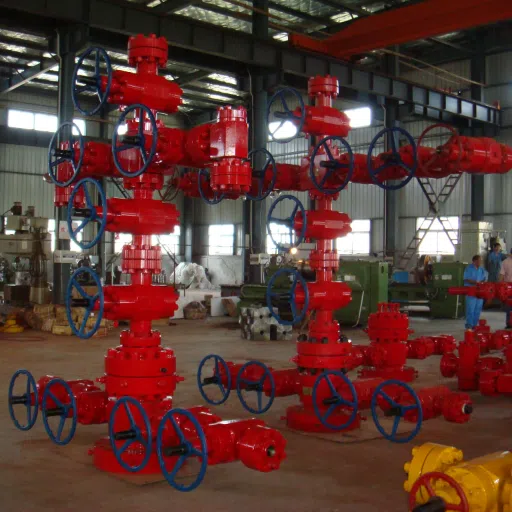
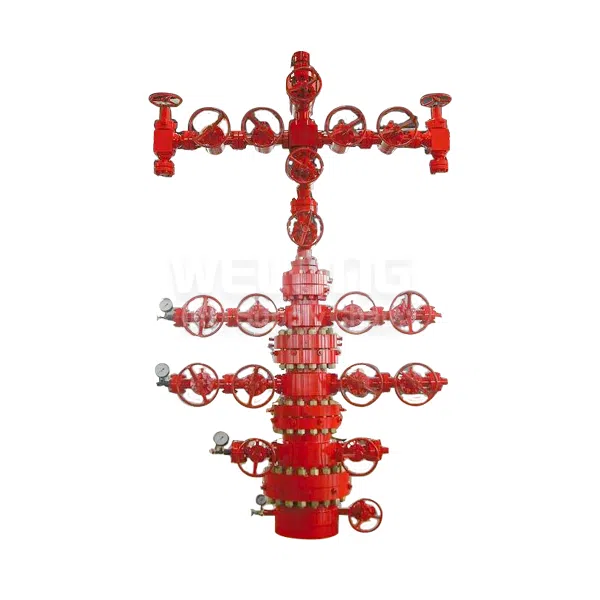
Welong Wellhead Christmas Tree Range — Valves, Bore & Pressure Configurations
A wellhead tree isn't a singular entity - it is a conglomeration of five to six christmas tree valves performing discrete roles. Miss your valve count, or placement on the spec sheet and either you over pay for redundancy you will never need, or underspec a well intervention point you are sure to require come month three.
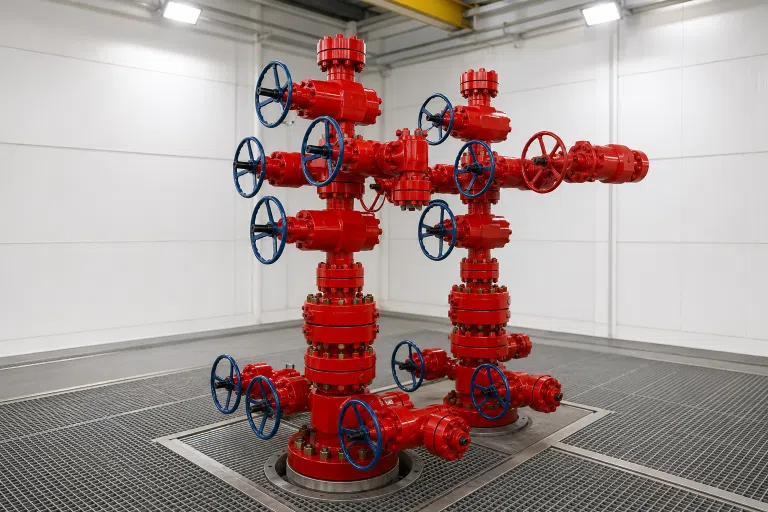

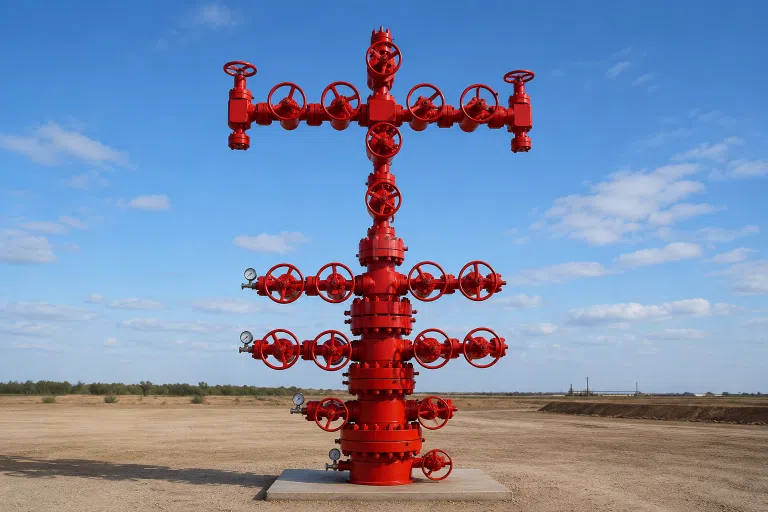
Need a standalone choke and kill manifold for well testing or workover instead of an integrated tree? See Welong's choke and kill manifold under the same Wellhead & Well Control product range.
| Valve | Position | Function | What It Prevents |
|---|---|---|---|
| Lower Master Valve | Base of tree, above tubing head | Primary well shutoff | Uncontrolled flow if upper valve fails |
| Upper Master Valve | Above lower master valve | Backup shutoff, often actuated | Single point of failure on the primary valve |
| Production Wing Valve | Horizontal outlet to flowline | Routes flow to production facilities | Need to close the master valve just to stop production flow |
| Kill Wing Valve | Opposite side from production wing | Entry point for kill fluid / chemical injection | No safe access point during well-kill operations |
| Swab Valve | Top of tree | Wireline / slickline / coiled-tubing access | Having to remove the whole tree for intervention |
| Choke | On the wing valve line | Regulates flow rate | Erosion and pressure spikes from unregulated flow |
| Parameter | Range |
|---|---|
| Working Pressure | 2,000 / 3,000 / 5,000 / 10,000 / 15,000 / 20,000 PSI |
| Working Medium | Oil, natural gas, mud — including H₂S, CO₂ service |
| Working Temperature | -46°C to 121°C (Class LU) |
| Material Class | AA, BB, CC, DD, EE, FF, HH |
| Product Specification Level | PSL1, PSL2, PSL3, PSL3G |
| Performance Requirement | PR1, PR2 |
| Bore Size | 2-1/16", 2-9/16", 3-1/16", 3-1/8", 4-1/16" |
| Governing Standard | API Spec 6A / ISO 10423 |
Some operators still source the casing head, tubing head, and tree valves from separate suppliers to chase the lowest line-item price on each component. The honest trade-off is that this approach shifts risk and coordination cost onto your engineering team instead of the manufacturer.
| Factor | Welong Integrated Assembly | Multi-Vendor Sourced Components |
|---|---|---|
| Connection interface compatibility | Interface dimensions and pressure-test scope confirmed for the selected assembly | Interface tolerances verified only at final site fit-up |
| Material traceability | Single traceability chain across casing head, tubing head, and tree | Separate MTRs per vendor; buyer must reconcile the paperwork |
| Lead time coordination | One delivery schedule, one point of contact | Multiple vendor schedules must align independently |
| Accountability if component fails | Responsible manufacturer identified for each component and full-stack integration | Vendor-to-vendor dispute over which component is at fault |
| Third-party witness inspection | Inspection plan can cover the full assembly when specified | Separate inspection trips per vendor, or gaps in coverage |
Need the full dimensional drawing before you spec a well program?
Request product information →Sour-Service Material Class Decision Grid — Matching Class, PSL & PR to Your Well
Ordering "API 6A compliant" isn't enough of a spec by itself. Material class, PSL, and PR each answer a different question-what the metal can chemically tolerate, how much paperwork you get, and how the equipment was performance-tested-and getting one wrong doesn't show up until the well is already sour.
Why Class Selection Fails Silently
Sour-service suitability depends on CO₂ and H₂S exposure, material selection, and hardness limits. Confirm the applicable service conditions and material requirements for the selected tree.
| Well Service Condition | Recommended Material Class | PSL | PR | Standard Reference |
|---|---|---|---|---|
| Sweet, standard onshore | AA / BB / CC | PSL1–PSL2 | PR1 | API Spec 6A |
| H₂S present, moderate partial pressure | DD (carbon/low-alloy, sour) | PSL3 | PR1–PR2 | API 6A + NACE MR0175 |
| H₂S + CO₂, higher severity sour | EE (alloy steel, sour) | PSL3 | PR2 | API 6A + NACE MR0175 |
| Aggressive sour, high H₂S partial pressure | FF (martensitic stainless, sour) | PSL3G | PR2 | API 6A + NACE MR0175 |
| Most severe sour service | HH (nickel-based alloy) | PSL3G | PR2 | API 6A + NACE MR0175 / ISO 15156 |
Class/PSL/PR mapping follows API Spec 6A + NACE MR0175 (ISO 15156) definitions. Confirm exact class against your project's H₂S partial pressure and pH per NACE MR0175 before final order.
Send Welong your H₂S partial pressure, CO₂ content, and expected working pressure up front-not after the quote. A tree ordered as PSL1/Class BB can't be field-upgraded to sour service; it has to be re-manufactured.
It's a common assumption that a higher pressure rating automatically means a more rigorous spec-it doesn't. Sweet service at 20,000 PSI can sit at PSL1 with a basic records package, while a 2,000 PSI tree in an aggressive sour well needs PSL3G with the full sour-service qualification testing.
PSL is a records-and-testing rigor axis; PR is a design-validation axis; material class is a metallurgy axis. Buyers who collapse all three into "give me API 6A" end up under-specified on the axis that actually matters for their well-usually material class, since that's the one that fails silently in service rather than showing up on an inspection checklist.
Wellhead & Christmas Tree Equipment — Inspection & API 6A Order Documentation
API Spec 6A isn't a marketing label-in the U.S., it's incorporated directly into federal regulation. Its wellhead-and-tree equipment scope is referenced in 30 CFR 250.874(g)(2) for offshore operations, and the international parallel standard, ISO 10423:2003, covers the same equipment class for buyers working outside U.S. jurisdiction.
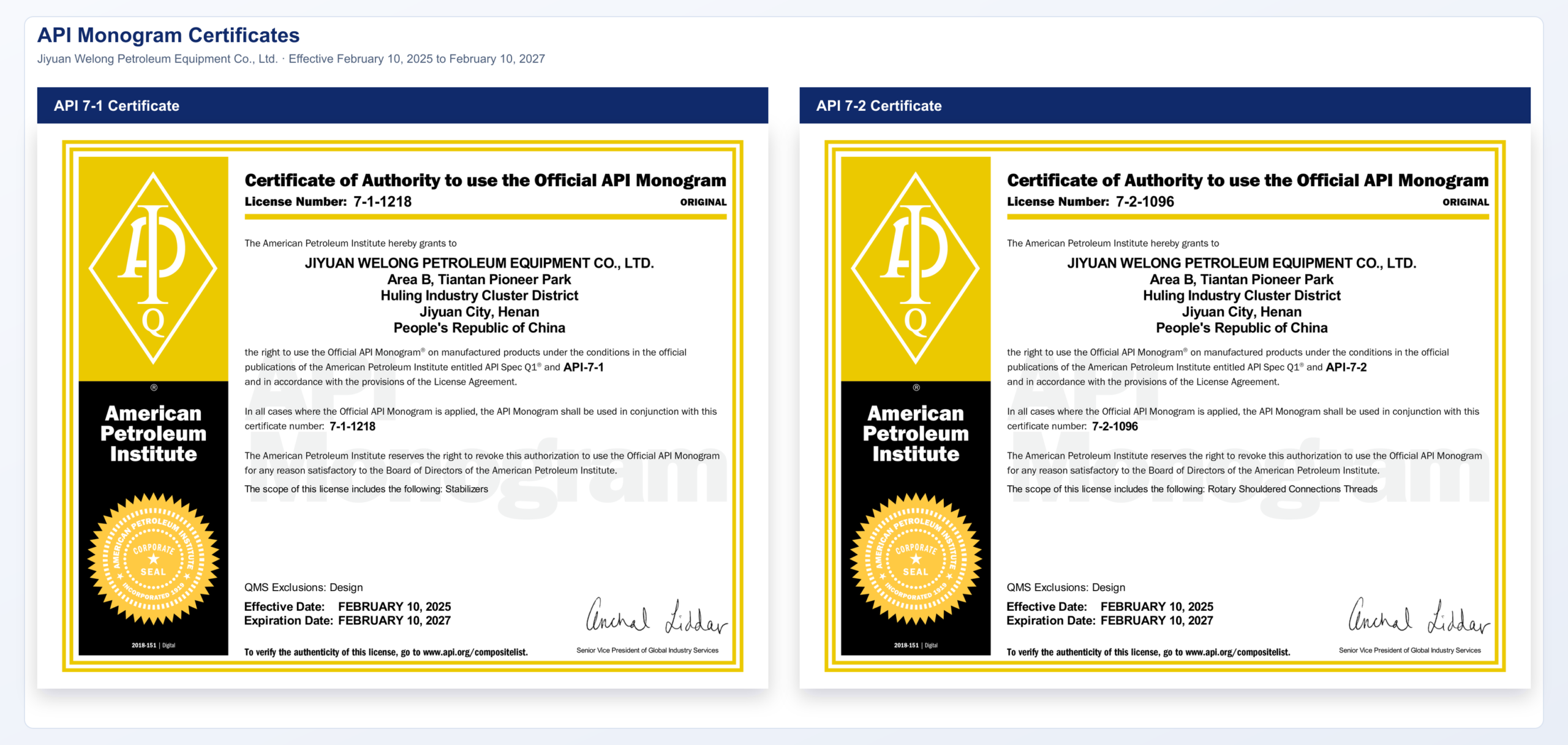
How Inspection Scope for Each Selected Assembly
For the selected wellhead Christmas tree, the quotation identifies the responsible manufacturer, in-process and final inspection points, and the material-traceability records required with the shipment.
- In-process inspection at machining and assembly stages
- Final inspection before shipment
- Optional third-party witness inspection - provider and scope confirmed for the selected order
- Material traceability records specified for the selected order
Confirm the required inspection and documentation scope for the selected wellhead Christmas tree at RFQ.
Want to see what a Welong material test report looks like before you order?
Request Material Test Report Sample →Wellhead Christmas Tree Configuration Tools
Frequently Asked Questions
What is the difference between a wellhead and a Christmas tree?
The wellhead is installed first and provides mechanical support and pressure containment for the well; the christmas tree is a separate valve assembly installed on top of the wellhead afterward to control flow. Drilling crews run a wellhead without any Christmas tree at all - the assembly only goes on once the well moves into production, testing, or injection service, so the reverse relationship doesn't hold.
Does every producing well need a Christmas tree?
No. Wells on artificial lift, such as pump jacks, frequently produce without a christmas tree because there's no surface pressure containment requirement in that configuration. Flowing, gas-lifted, and injection wells are the ones that need one.
What is the difference between API 6A and API 6D?
API 6A covers wellhead and christmas tree equipment - the assembly that sits on top of a well. API 6D covers pipeline valves used in transmission and distribution lines downstream of the wellhead, a different equipment scope entirely.
What do PSL1 through PSL3G actually mean for my order?
PSL (Product Specification Level) sets the records-and-testing rigor, not the pressure rating - PSL1 requires the least paperwork, PSL3G the most, including additional performance and material testing appropriate for the harshest sour-service conditions.
What's the difference between PR1 and PR2?
PR (Performance Requirement) reflects how the design was validated, and it's a separate axis from both pressure rating and material class, which is where a lot of buyers get tripped up on a spec sheet. PR1 relies primarily on design calculations backed by prototype testing to confirm the equipment performs as engineered under its rated conditions. PR2 goes further, requiring more extensive qualification testing - a larger test sample and a broader range of simulated service conditions - before the design is approved for the stated rating, which is why PR2 equipment generally carries a longer manufacturing and documentation lead time than an equivalent PR1 build.
Can a standard-class tree be upgraded to sour service later?
No - material class is fixed by what the base metal and welds were processed and tested to withstand, not a bolt-on option. Spec the sour-service class up front if there's any chance the well turns sour.
What inspection documentation ships with a Welong wellhead Christmas tree?
The quotation confirms the material-traceability and in-process/final inspection records required for the selected order. Third-party inspection by SGS, DNV, or another qualified provider can be arranged when requested.
What trade terms does Welong support?
FOB, CIF, DDP, and DDU, with sea, air, or rail freight depending on your destination and delivery window.
Is a wellhead Christmas tree the same as an "oil Christmas tree" or "X-mas tree"?
Yes - wellhead christmas tree, oil Christmas tree, and X-mas tree all refer to the same equipment class in industry usage. The name comes from the branching arrangement of valves and spools, which resembles a decorated tree, not from any connection to the holiday.
What are the types of wellhead christmas tree available?
Surface trees are installed on top of the wellhead, so that crews have direct, onshore or in-shallow water access to the wells. Subsea trees, on the other hand, are designed to sit underwater on a deep-water offshore rig, a totally different, remote controlled type of equipment. Welong supplies only surface trees.
Which operating conditions affect a wellhead Christmas tree's service life?
Service life depends on operating pressure, fluid corrosivity, and maintenance practices. Confirm the material class and inspection scope for the planned service.
Procurement & Capability
Wellhead Christmas Tree Capability Review
China Welong reviews the buyer drawing, product specification and inspection scope before quotation.
This review is scoped to the Wellhead Christmas Tree configurations set out in the specification table on this page — 6 documented rows covering Parameter and Range.
24 hEngineer-reviewed quotation on business days
2001Founded in 2001
30+30+ engineers on staff
5 yrStamped serial traceability
Quotation Scope and Commercial Terms
Pricing is prepared against the selected product configuration, material route, inspection scope and shipment terms.
- Quotes are returned within 24 hours on business days, reviewed by an engineer.
- T/T or L/C by wire transfer.
- We ship EXW, FOB, CFR or CIF; other Incoterms on request.
- We work from 2D drawings and 3D CAD models (AutoCAD, Pro/ENGINEER, SolidWorks; .dwg and .igs).
Production Planning
Production timing is confirmed with the quotation after quantity, process route and finishing scope are reviewed.
- We hold agreed items in stock and ship against your release to shorten delivery. Feasibility is confirmed at drawing review.
- Manufacturing at Xi'an, Shaanxi and at Jiyuan, Henan.
- 0.01 mm machining precision.
- Material standards to ISO, BS, ASTM, ASME, DIN, JIS and GB.
- Orders ship in standard export wooden cases, or the packing you specify.
Order Review and Responsibility
The responsible manufacturer, inspection scope and document package are identified for the selected item.
- Every quotation states whether the item is made in our own works or by an approved supplier we developed and supervise.
- We develop, audit and supervise the mills and workshops that make your parts: material mills are re-audited every two years and approved by Welong before they run your order.
- Forgings from 0.2 to 50 tons.
Specification and Inspection Evidence
The specification table on this page is the technical basis for this review: its numeric rows define what we quote, manufacture and inspect against.
- Each piece carries a stamped serial number and stays traceable for five years to its chemical composition, mechanical properties and measurement report, with the test coupon retained.
- An EN 10204-3.1B material certificate with chemical composition and mechanical properties, a dimensional measurement report, and UT and MT reports ships with your order.
- Inspection is by coordinate measuring machine, ultrasonic, magnetic particle and X-ray.
Request a Product Review
Send the drawing, product specification and inspection requirements for a quotation review.
![Choke & Kill Hose: [Field Guide]](https://welongoiltools.com/wp-content/uploads/2026/07/choke-kill-hose-guide-featured-1-150x150.png)