Get in touch with Welong Company
Specifications & Capabilities
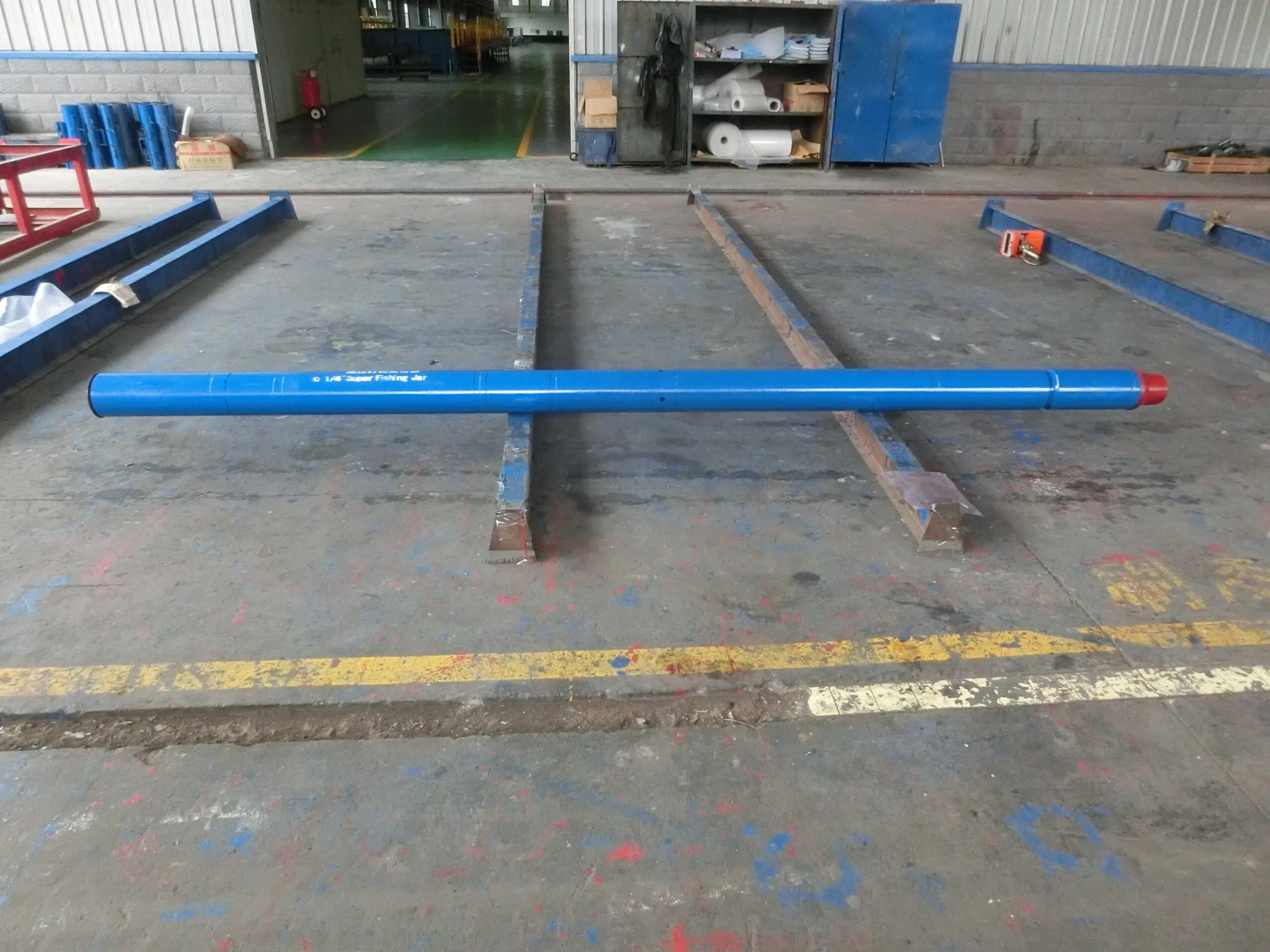
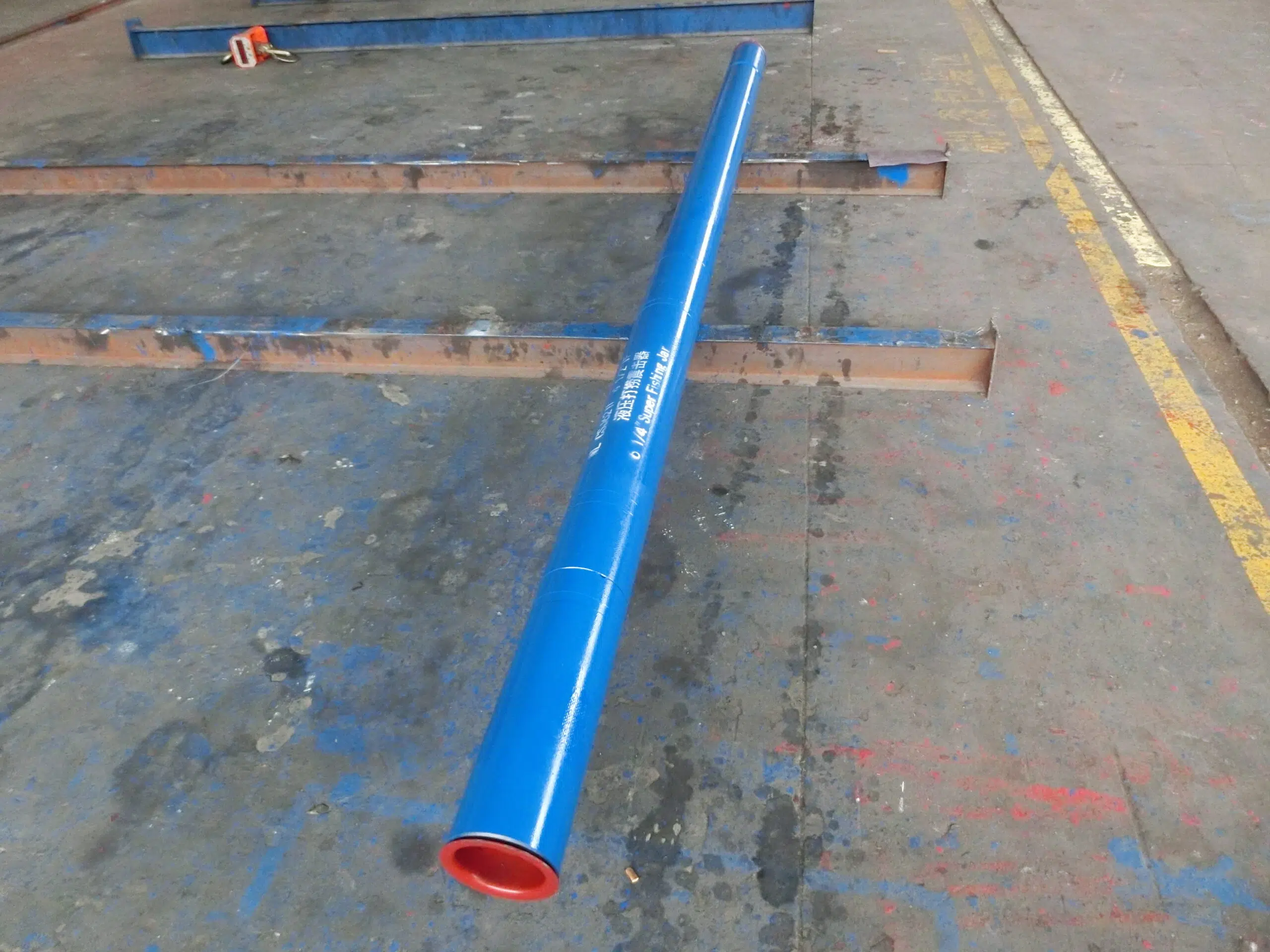
Hydraulic Fishing Jar | (Super Fishing Jar) — CSJ42–CSJ80
A hydraulic fishing jar frees stuck drill strings by storing and releasing jarring energy on demand, Welong’s CSJ series gives your crew stepless control over jarring tonnage across 8 API-connection sizes, so the blow matches the well instead of the other way around.
- API Spec 7-1 Disclosed
- Sea / Air / Rail Logistics
- 8 API-Connection Models
- 30–240s Adjustable Time Delay
- 700–1870kN Tensile Load Range
- 150°C Rated Max. Working Temp
- 20MPa Sealing Pressure (all models)
- NC31–6⅝ REG API Connections Covered
Stuck Pipe Costs You Time, How a Hydraulic Fishing Jar Frees It
Stuck pipe isn’t a rare event you plan around once and forget, published drilling-engineering literature puts stuck-pipe incidents at roughly 25% of non-productive time (NPT)Differential sticking is a drilling risk that should be addressed in the BHA plan.40% of total well cost in some regions. Every hour the string sits stuck is an hour the rig isn’t making footage, and the longer it sits, the more likely the next call is to a fishing crew rather than a driller. This is exactly where a hydraulic drilling jar or dedicated fishing jar earns its place in the string, as standard oilfield fishing tools, not emergency improvisation.
A hydraulic fishing jar exists to shorten that window. Instead of relying on surface overpull alone, the tool stores mechanical energy, through a hydraulic time-delay metering system rather than a mechanical detent, and releases it as a sharp, controlled upward (or downward, on double-acting designs) impact at the stuck point. The jar’s outer mandrel and inner sleeve assembly accumulate tension as the operator pulls; once the metering device clears its restriction, the resistance drops and the hammer strikes the anvil, delivering a sharp shock impact as the jarring blow.
Field Documentation
Performance & Environmental Tolerances
Independent case documentation backs up why that distinction matters in practice: a university-published case study of stuck-pipe recovery in deviated wells recorded a job where circulation could not be restored and other methods failed, but the drill string was ultimately freed once a drilling jar was run — while a separate operator case record spanning six extreme-reach wells reported zero catastrophic stuck-pipe incidents across the campaign.[3][8]
Neither record is a Welong field test, and we are not presenting them as one — they are cited here because they illustrate a real pattern: jars are not a backup plan you reach for after everything else fails, they are a planned part of the string design on wells where sticking risk is already elevated.
That is a useful reminder for buyers too: no jar, hydraulic or mechanical, performs in isolation. Impact delivered downhole depends on drillstring stretch, depth, mud friction, and whether an accelerator is run in tandem, not on the jar alone.
Welong’s CSJ series is built to be paired with an accelerator when the well calls for it, and the sealing and metering components are rated to hold consistent delay timing across the full -40°C to 180°C environmental temperature range the tool is designed to survive in transport and downhole standby — not to be confused with the 150°C rated maximum continuous working temperature.
Engineering Note
Hydraulic Jar Mechanism vs. Mechanical Jars
Both jar families exist for the same reason but reach it differently. Mechanical jars use a spring-loaded or detent trigger that fires at a preset tension, simple, and largely maintenance-tolerant.
Hydraulic jars, including the Welong CSJ series, use a metering valve that bleeds hydraulic fluid across the piston at a controlled rate, which is what lets the operator dial in a 30–240 second delay window rather than accept a fixed trigger point. The tradeoff is a more precision-dependent seal system in exchange for stepless tonnage control.
Not sure whether your well conditions call for hydraulic or mechanical? Ask Our Engineer About Your Well Conditions →A rule we repeat to junior engineers: the textbook says keep the jar out of the neutral point of the drillstring, and that rule holds in vertical wells. In high-angle and extended-reach geometries it is not always practical, and placement has to be recalculated against the actual string mechanics, not the diagram in the manual.
— Welong Application Engineering Team
Welong CSJ Series, Model & Specification Selection
Buyer roles: Drilling/Fishing Engineers (primary) · Procurement (RFQ matching, secondary)
Underlying it all is the same core piston-and-mandrel telescoping principle refined across decades of patented engineering — from early tandem-piston hydraulic fishing jar designs in the 1970s through to fishing jar patents as recent as 2024 — now applied across eight API-connection sizes so you can match bore, tensile capacity, and connection to the string you are actually running, rather than compromising on a one-size tool.
Sizing a fishing jar is a compromise exercise, not a lookup. A larger O.D./tensile-capacity model like the CSJ80 gives you more overpull margin and a longer stroke, but it also means a longer, heavier tool in the string and a larger API connection to match. Our three-tier grouping reflects how most fishing strings are actually built, but extended-reach and highly deviated wells often justify sizing one step larger than the bore alone would suggest, as the jarring blow has to travel further through a string under more friction. Coring runs generally favor smaller-bore models to preserve core-barrel clearance.
CSJ Series Hydraulic Fishing Jar, Full Specification Table
| Model | Pull-Down Length | O.D. | I.D. | Stroke | Tensile Load | Max. Tension Downhole | API Connection |
|---|---|---|---|---|---|---|---|
| CSJ42 | 3980mm | 108mm | 32mm | 305mm | 700kN | 300kN | NC31 |
| CSJ44 | 3980mm | 114mm | 51mm | 305mm | 780kN | 340kN | NC31 |
| CSJ46 | 3980mm | 121mm | 51mm | 305mm | 980kN | 400kN | NC38 |
| CSJ62 | 4098mm | 160mm | 57mm | 320mm | 1270kN | 700kN | NC50 |
| CSJ64 | 4177mm | 165mm | 57mm | 320mm | 1370kN | 750kN | NC50 |
| CSJ65 | 4177mm | 168mm | 57mm | 320mm | 1470kN | 800kN | NC50 |
| CSJ70 | 4250mm | 178mm | 60mm | 320mm | 1570kN | 800kN | NC50 |
| CSJ80 | 4318mm | 203mm | 70mm | 330mm | 1870kN | 800kN | 6 5/8 REG |
Selection Matrix, Bore, Connection & Well Condition
| Well Condition | Recommended I.D. Range | Recommended API Connection | Best-Fit Model(s) |
|---|---|---|---|
| Slim-hole / small-bore fishing string | 32–51mm | NC31 / NC38 | CSJ42 / CSJ44 / CSJ46 |
| Standard medium-bore drilling/fishing runs | 57mm | NC50 | CSJ62 / CSJ64 / CSJ65 |
| Heavier BHA / higher tensile-load requirement | 60–70mm | NC50 / 6 5/8 REG | CSJ70 / CSJ80 |
Need help matching a model to your string?
Check API Connection Compatibility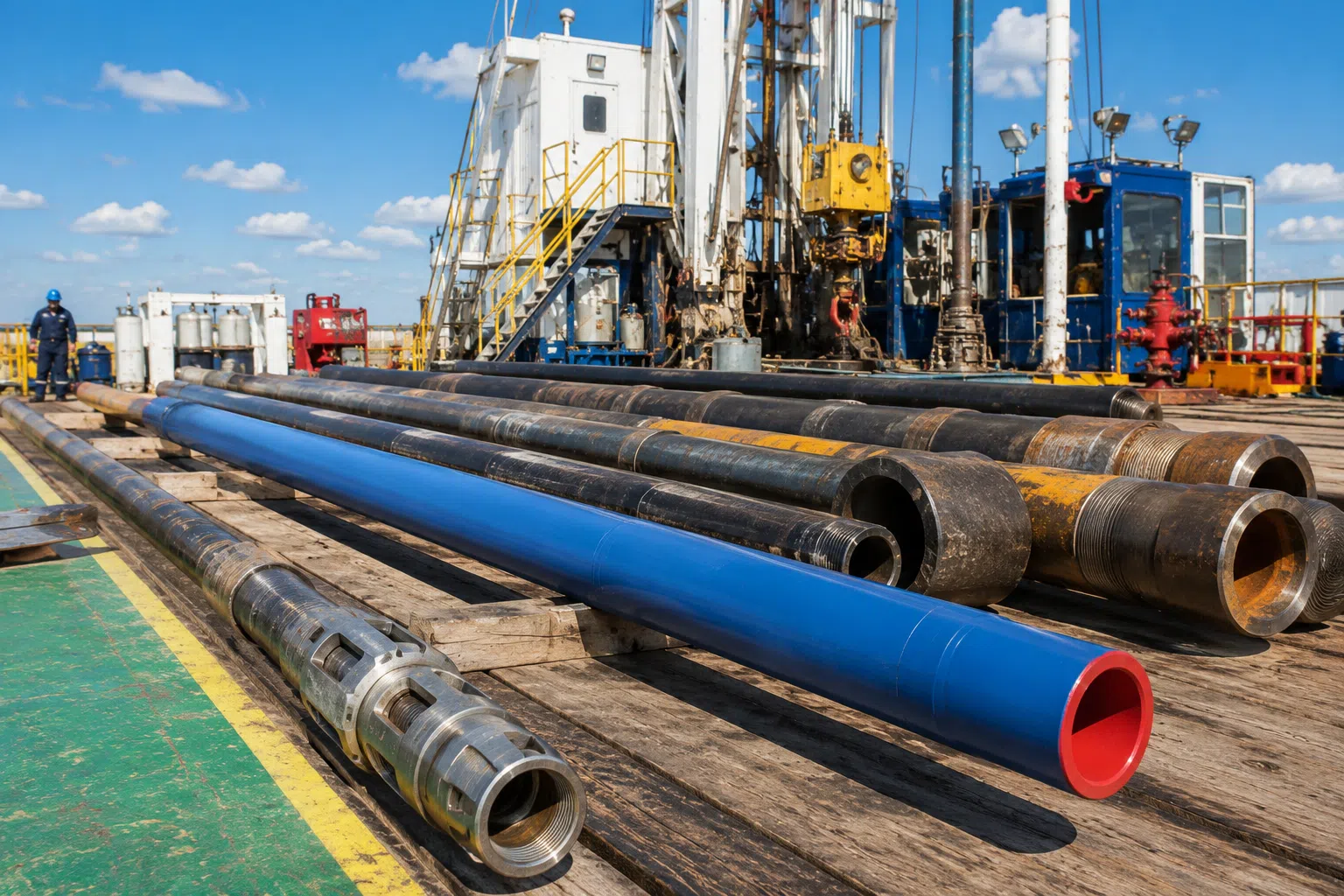
CSJ Series Valve
Hydraulic Chamber
Hydraulic vs mechanical fishing jar
Both jar types free stuck pipe; the decision between them is about control precision versus mechanical simplicity, not “better vs worse.” Mechanical fishing jars trigger at a preset tension through a spring-loaded or detent mechanism, reliable, fewer wear-prone components, and generally more tolerant of infrequent maintenance windows.
Hydraulic jars, including the CSJ series, trade a small amount of mechanical simplicity for stepless, field-adjustable delay timing and impact intensity, which matters most when your fishing string is running in variable well conditions and you can’t afford to pull the string just to re-set a fixed trigger.
Parameter matrix
| Factor | Mechanical Fishing Jar | Hydraulic Fishing Jar (CSJ Series) |
|---|---|---|
| Trigger mechanism | Spring-loaded / detent, fixed preset | Hydraulic metering valve, field-adjustable |
| Jarring tonnage control | Fixed at preset tension | Stepless control, 30–240s adjustable delay |
| Field re-adjustment | Requires surface reconfiguration | Delay/intensity adjustable without full teardown |
| Maintenance profile | Fewer wear components, longer service intervals | Seal and metering-valve condition require closer monitoring |
| Best-fit application | Consistent, well-characterized fishing runs | Variable well conditions, directional/high-angle strings, accelerator-paired operations |
Decision factors in practice
Mechanical Jar Optimization
An operator running the same well design repeatedly, in formations that haven’t historically produced sticking surprises, often gets full value from a mechanical jar’s simplicity.
- Fewer seals to monitor
- Longer intervals between teardowns
- A trigger point the crew already knows by feel
Mechanical jars reward consistency.
CSJ Hydraulic Optimization
That calculation shifts once you introduce variability: directional or extended-reach geometry, mixed formation types across a field program, or a fishing job where you genuinely don’t know how much overpull you’ll need until you’re already downhole.
- Field-adjustable delay earns its keep
- Not locked into a trigger tension decided at surface
Hydraulic jars reward flexibility.
Compare CSJ configurations against your last fishing job
REQUEST CUSTOM COMPARISON ►
DATA TELEMETRY
25–40%
of drilling NPT / total well cost attributable to stuck-pipe & differential-sticking incidents.
DATA SOURCE 01
IPTC-19394-MS
DATA SOURCE 02
SPE-142799-MS
WARNING / ENGINEERING NOTE
Where hard, citable numbers exist, we use them. Where only generic industry commentary exists (e.g., specific cycle-life counts), we don’t repeat them as measured facts. Ask our team for CSJ test data before treating a competitor’s published range as a benchmark.
TCO Framing: Exact payback depends on rig day-rate, depth, & string config. Request a specific estimate.
Order Documentation, Inspection & Supply Chain Control
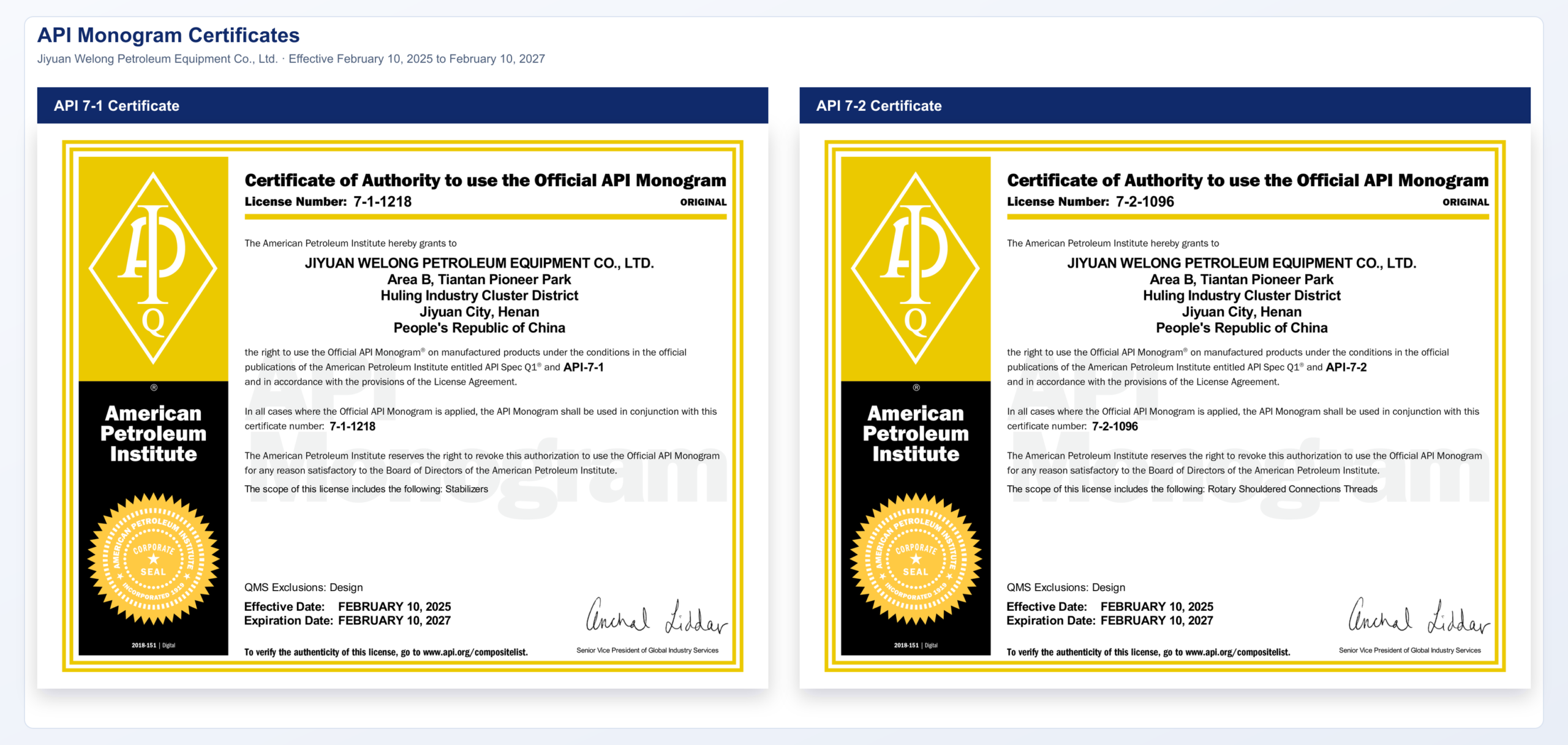
Welong supplies downhole fishing tools and identifies the responsible manufacturer in the quotation. For the selected CSJ unit, the quotation identifies the responsible manufacturer, in-process and final inspection scope, and required records.
Order Documentation
Confirm the selected unit’s document package
API Spec 7-1
Rotary Drill Stem Elements (company-disclosed)
In-Process + Final Inspection
Scope confirmed per order
SGS / DNV Optional
Third-party inspection tier
For the selected CSJ unit, buyers can request the agreed inspection scope and order documentation. The product and RFQ information on this page should be checked against the selected configuration rather than used as a blanket supplier-history claim.
For an international buyer evaluating an unfamiliar supplier, the practical question is rarely “does this company claim to be certified” — most do, it’s whether that certification is backed by a process you can actually inspect. For the selected fishing-jar order, the quotation identifies whether in-process and final inspection cover machining dimensions, assembly, sealing pressure and connection-thread requirements. Buyers who need a documented, independent sign-off in addition to that internal process can add third-party inspection through SGS or DNV as an upgrade, we would rather offer that option transparently than ask a buyer to take certification claims on faith.
Sourcing your hydraulic fishing jar supplier, logistics, terms & lead time
Choosing an oilfield fishing-tool supplier is rarely just a price comparison. In our own review of what drilling and fishing-tool buyers weigh most, five factors consistently come up: product quality, delivery reliability, technical expertise, after-sales support, and pricing in roughly that order of consequence when a stuck-pipe job is on the line and the wrong call costs rig days, not just dollars.
INSPECTION TIER
LOGISTICS HUB
PRICING FACTORS FRAMEWORK
Exact CSJ pricing depends on model size, API connection, order volume, inspection tier (standard vs. SGS/DNV third-party), and destination Incoterm. We don’t publish a flat price list because these variables move the number meaningfully between orders.
SUPPORTED TERMS
FOB / CIF / DDP / DDU
TRANSIT MODES
SEA / AIR / RAIL
▶ BUYER ADVISORY: CONFIRM BEFORE ORDER
Confirm your exact API connection and I.D./O.D. tolerance against your existing string to ensure seamless integration downhole.
Confirm which inspection tier you need (standard in-process + final, or third-party SGS/DNV certification).
Confirm your Incoterm and required delivery window early; lead time varies with inspection tier and current production load. This isn’t a “request a quote” afterthought, it’s the first conversation.
Engineering Tools
APP.01
CSJ Model Selector
APP.02
CSJ Model Comparison
APP.03
Stuck Pipe Cost Estimator
Frequently Asked Questions
A fishing jar and drilling jar are mechanically similar impact tools, but their applications differ: a drilling jar is run as part of the BHA to free stuck pipe during drilling, while a fishing jar is run as part of a fishing string to recover stuck or lost downhole equipment. The CSJ series is built for fishing and coring applications on the up-jarring side.
Mechanical jars trigger at a fixed preset tension through a spring or detent mechanism. Hydraulic jars, like the CSJ series, use a metering valve that regulates hydraulic fluid flow to create a field-adjustable time delay (30–240 seconds on the CSJ line), giving the operator stepless control over jarring tonnage rather than a single fixed trigger point.
Start with your API connection (it must mate with your existing fishing string), then check tensile load against expected overpull, then confirm I.D./O.D. against clearance requirements, see the Selection Matrix above. Our engineering team will cross-check your specific well data before quoting.
We recommend inspection after any run where unusual jarring forces were encountered, in addition to your standard scheduled maintenance intervals, disassembly, seal and metering-valve inspection, and pressure testing should be part of that check, following the applicable maintenance procedure confirmed for the selected CSJ unit. This applies whether you’re commissioning a new tool or requalifying a used hydraulic fishing jar already in your inventory. Exact intervals depend on run frequency and well severity; ask our team for a maintenance schedule matched to your operating tempo.
The quotation identifies the in-process and final inspection scope and required records for the selected CSJ unit.
Welong ships by sea, air, or rail and supports FOB, CIF, DDP, and DDU Incoterms, you can compare and select whichever fits your logistics setup and risk allocation preference.
No, this is a common misconception. The general rule of keeping a jar out of the drillstring’s neutral point holds well for vertical holes, but isn’t always practical in high-angle or extended-reach wells, where placement needs to be recalculated against actual string mechanics rather than applied as a fixed rule.
Procurement & Capability
Fishing Jar (Super / Hydraulic) Capability Review
China Welong reviews the buyer drawing, product specification and inspection scope before quotation.
This review is scoped to the Fishing Jar (Super / Hydraulic) configurations set out in the specification table on this page — 8 documented rows covering Model, Pull-Down Length, O.D. and I.D..
24 hEngineer-reviewed quotation on business days
2001Founded in 2001
30+30+ engineers on staff
5 yrStamped serial traceability
Quotation Scope and Commercial Terms
Pricing is prepared against the selected product configuration, material route, inspection scope and shipment terms.
- Quotes are returned within 24 hours on business days, reviewed by an engineer.
- T/T or L/C by wire transfer.
- We ship EXW, FOB, CFR or CIF; other Incoterms on request.
- We work from 2D drawings and 3D CAD models (AutoCAD, Pro/ENGINEER, SolidWorks; .dwg and .igs).
Production Planning
Production timing is confirmed with the quotation after quantity, process route and finishing scope are reviewed.
- We hold agreed items in stock and ship against your release to shorten delivery. Feasibility is confirmed at drawing review.
- Manufacturing at Xi'an, Shaanxi and at Jiyuan, Henan.
- 0.01 mm machining precision.
- Material standards to ISO, BS, ASTM, ASME, DIN, JIS and GB.
- Orders ship in standard export wooden cases, or the packing you specify.
Order Review and Responsibility
The responsible manufacturer, inspection scope and document package are identified for the selected item.
- Every quotation states whether the item is made in our own works or by an approved supplier we developed and supervise.
- We develop, audit and supervise the mills and workshops that make your parts: material mills are re-audited every two years and approved by Welong before they run your order.
- Forgings from 0.2 to 50 tons.
Specification and Inspection Evidence
The specification table on this page is the technical basis for this review: its numeric rows define what we quote, manufacture and inspect against.
- Each piece carries a stamped serial number and stays traceable for five years to its chemical composition, mechanical properties and measurement report, with the test coupon retained.
- An EN 10204-3.1B material certificate with chemical composition and mechanical properties, a dimensional measurement report, and UT and MT reports ships with your order.
- Inspection is by coordinate measuring machine, ultrasonic, magnetic particle and X-ray.
Request a Product Review
Send the drawing, product specification and inspection requirements for a quotation review.
![Choke & Kill Hose: [Field Guide]](https://welongoiltools.com/wp-content/uploads/2026/07/choke-kill-hose-guide-featured-1-150x150.png)