Get in touch with Welong Company
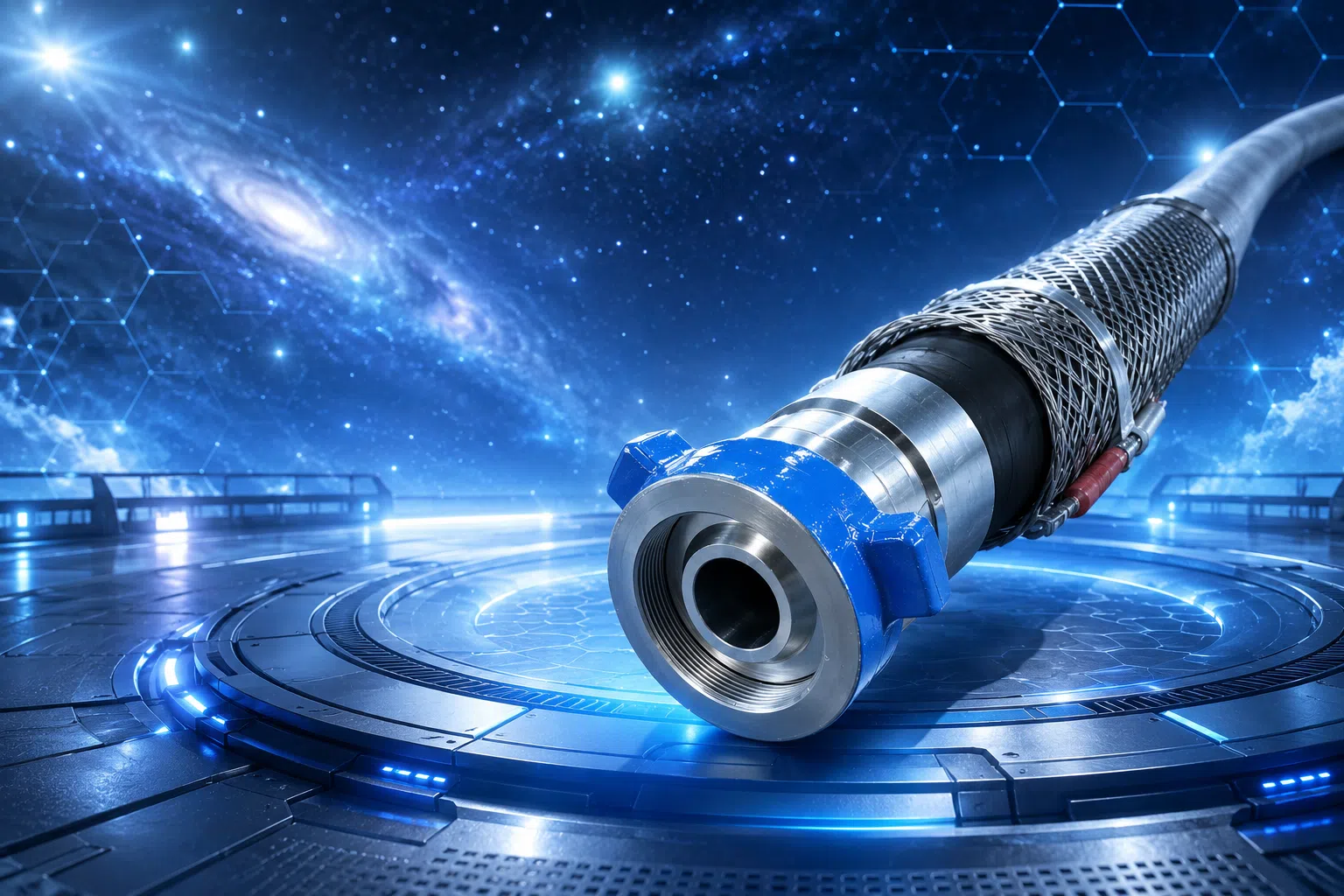
Sizes 2″–5″ | Working pressure 4,000–15,000 psi | Single lengths up to 60 m | −25°C to +121°C | H₂S-resistant
Drilling Hose: Kelly, Rotary & Vibrator Hose from 4,000 to 15,000 psi
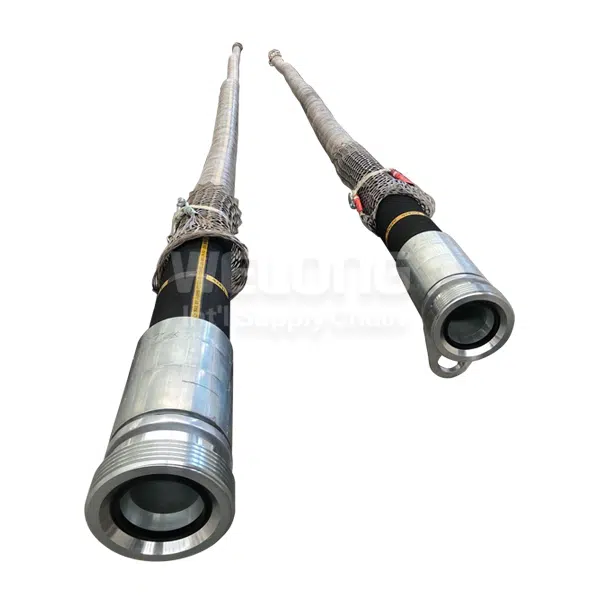
A drilling hose is the flexible, high-pressure line that carries drilling mud from the mud pump and standpipe up to the swivel and kelly on a rotary rig. Depending on your supplier or which textbook you read, it might also be called a kelly hose, a rotary hose, or a mud hose — all the same part. Choosing the right one comes down to bore, pressure class, and how it terminates, not what’s printed in the catalog.
Request a Quote →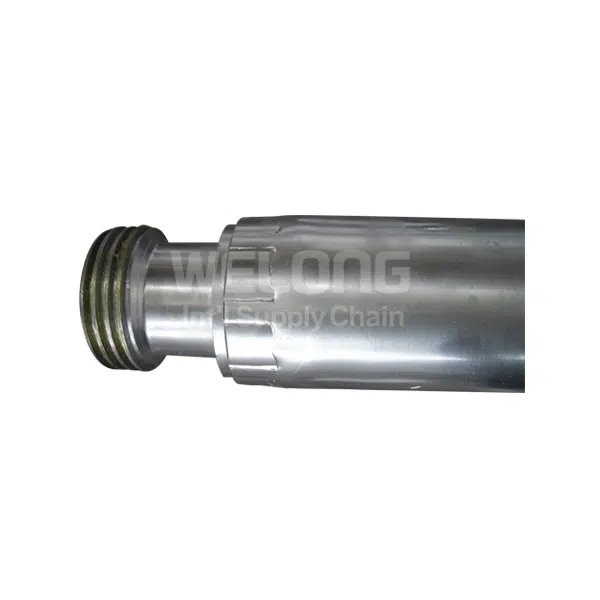
API_SPEC_7K
H₂S_RESISTANT
2″–5″
Bore range (50.8–127 mm)
15,000
psi max working
60 m
Max single length
+121°C
Upper temp limit
3 Types
Rotary · Vibrator · Dragchain
H₂S
Sour-service resistant
NOMENCLATURE // MUD_LINE_SYSTEMS
Kelly Hose vs Rotary Drilling Hose vs Vibrator Hose: One Mud Line, Many Names
Buyers often waste more time fussing over what to call the part than figuring out what it’s supposed to do. The U.S. Occupational Safety and Health Administration gives the official, government-issued definition: “The line that conducts the drilling fluid from the mud pump and standpipe to the swivel and kelly; also called the mud hose or the kelly hose.” So yes — kelly hose, rotary hose, and mud hose refer to one piece of equipment.
Where it sits in the circulation loop
Think of the hose as the flexible conduit that closes the mud loop — the one moving link in an otherwise fixed drilling system. Across every drilling process, fluid circulation starts at the mud pump, which pushes fluid through this line to the swivel, down the drill pipe, and out at the drill bits. Returning liquid then carries drill cuttings back up the wellbore annulus to be cleaned and recirculated, which is why flexible lines matter in an otherwise rigid system.
- Feeds: mud pump → standpipe → hose → swivel → drill string → downhole to the bit.
- Returns: cuttings-contaminated mud comes back up the casing annulus to be filtered and recycled.
- Function: By acting as a flexible connector, the hose can accommodate the vertical movement of the drill string in an oil well while the balance of the circulation system remains stationary.
“Kelly” hose on a rig that has no kelly?
That name goes back to the kelly-drive era. When a rig had a kelly (a square or hex rod that turns the drill string through the rotary table), the hose fed mud to the swivel at the top of the kelly. But when top drive systems became more common-now they’re standard-the rig still had a hose but no kelly. It just kept the name.
If you’re buying a “kelly hose,” then you’re ordering the mud line – not a line for a rig that must have a kelly. Don’t make this cosmetic mistake. The parts aren’t interchangeable. A choke & kill hose, for example, serves the blowout preventer (BOP) circuit… a different pressure regime, and a much more severe consequence of failure, than the mud line this page addresses.
The two-word trap: “mud hose”
They blur it on search so you’ve to name it correctly. The mud hose you find on a supplier catalogue is likely to be the low-pressure (around 300 psi) large bore suction and discharge line, not the 4,000-15,000 psi rotary hose that OSHA refers to. State the working pressure on your RFQ to eliminate the confusion that the nomenclature can’t fix. See our kelly hose vs rotary hose article for a side-by-side look.
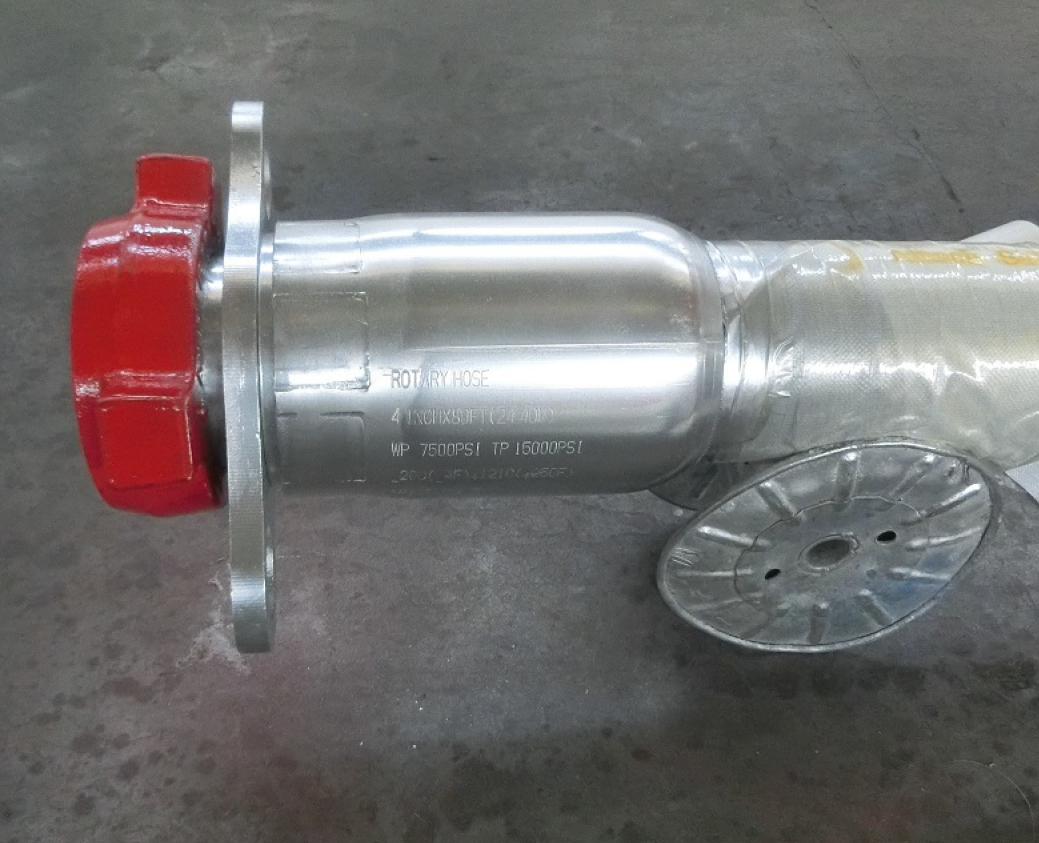
TAXONOMY // SAME PART OR DIFFERENT ONE?
Synonyms: kelly hose = rotary hose = mud hose (OSHA definition). Family cousins (different parts): vibrator hose, dragchain hose, cementing hose. Below is the family map no competitor wants to publish – it separates the part you want from those that belong in the next bin over.
| Hose Type | Where it mounts | What it carries | Pressure reference | On this page? |
|---|---|---|---|---|
| Kelly hose / rotary hose | Standpipe → swivel/gooseneck | Drilling mud | 4,000–15,000 psi | Yes — core product |
| Rotary vibrator hose | Mud pump → standpipe manifold | Drilling mud (pulsating) | 5,000–7,500 psi | Yes |
| Dragchain hose | Cable/energy chain runs, offshore | Mud / hydraulic media | Per duty | Yes |
| Jumper / mud booster hose | Inline between pump manifolds | Drilling mud | 5,000–10,000 psi | Related |
| Choke & kill hose | BOP stack → choke/kill manifold | Well-control fluid | 10,000–15,000 psi | No — well control |
| Cementing hose | Cementing pump manifold → head | Cement slurry | 5,000–8,000 psi | No — different service |
| Motion compensator hose | Subsea heave-compensation systems | Hydraulic / mud | Per duty | No — specialised |
| Marine riser / decoking hose | Offshore riser runs; refinery coke drums | Mud / high-pressure water | Per duty | No — different domain |
“
We treat the name on a purchase order as a starting point, never a specification. Before anything is sourced, we pin the four variables that actually define the hose, bore, working-pressure class, end fitting, and length, against the buyer’s rig position. It is where most cross-supplier mistakes are caught.
Drilling Hose Sizes × Pressure Class, What Each Bore Can Actually Carry
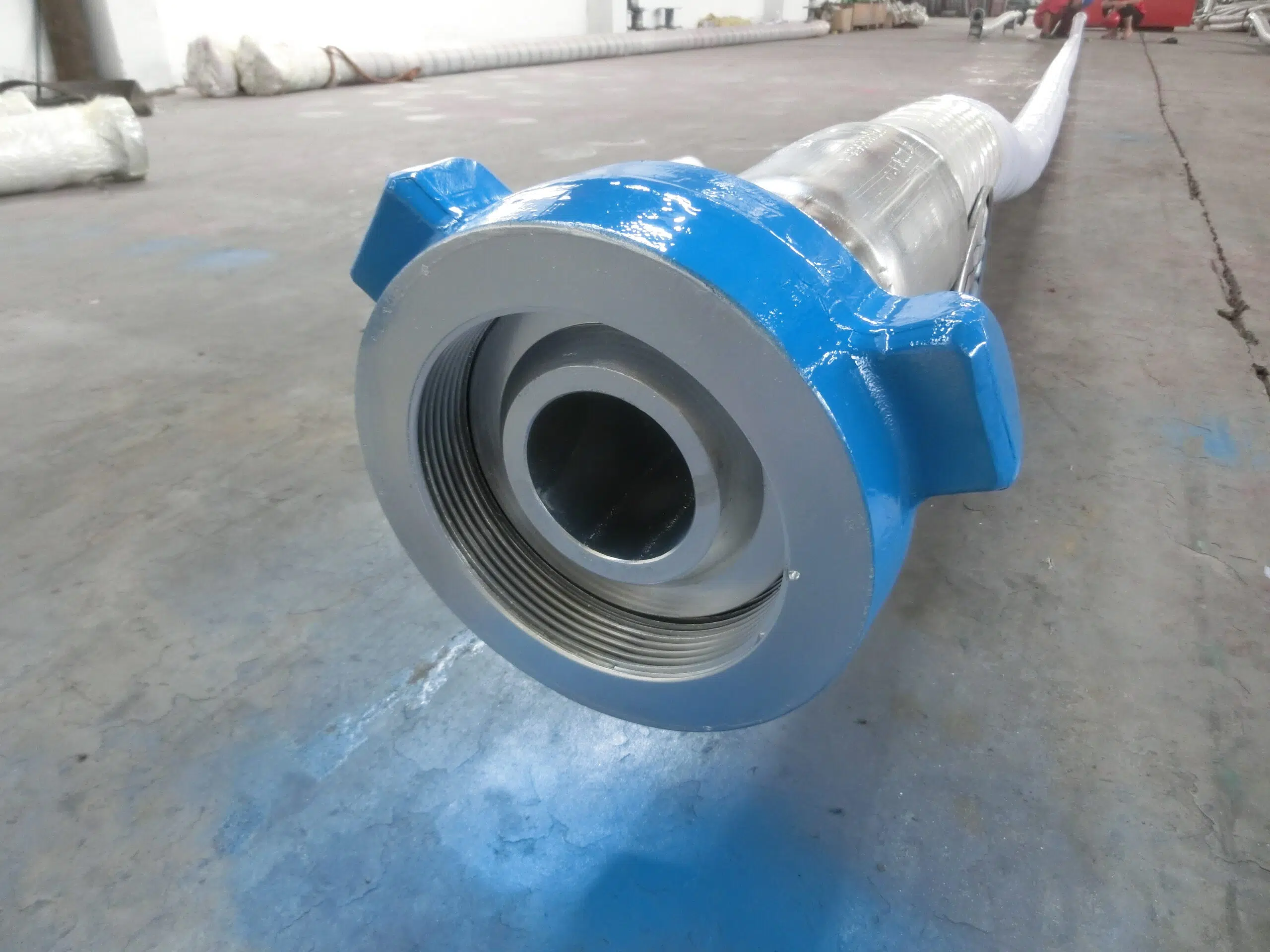
Before the numbers, there’s the build-which dictates the ceiling. A drilling hose is a three-layered assembly; it’s the center layer that establishes the pressure class.
/// How the hose is built
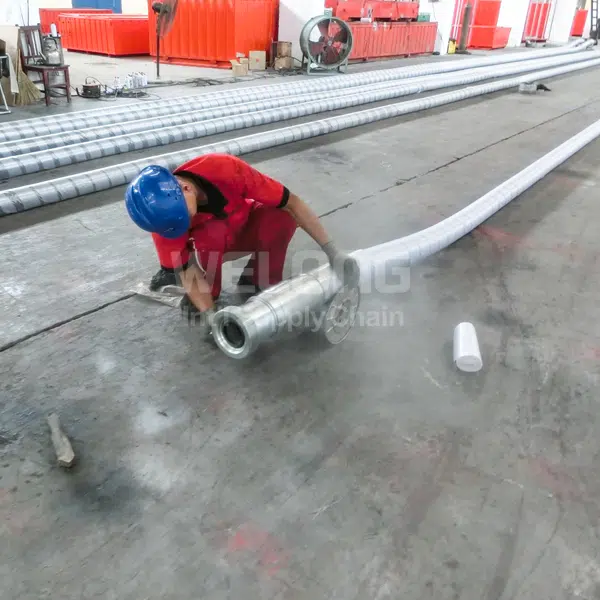
01 Tube
The oil- and corrosion-resistant polymer inner liner that will carry the mud. (NBR)
02 Reinforcement
Alternating helical layers of metallic steel-wire cable; more layers = higher pressure class. This load-carrying core is what produces the axial elongation you see under pressure.
03 Cover
An abrasive- and weather-resistant outer layer.
04 Terminations
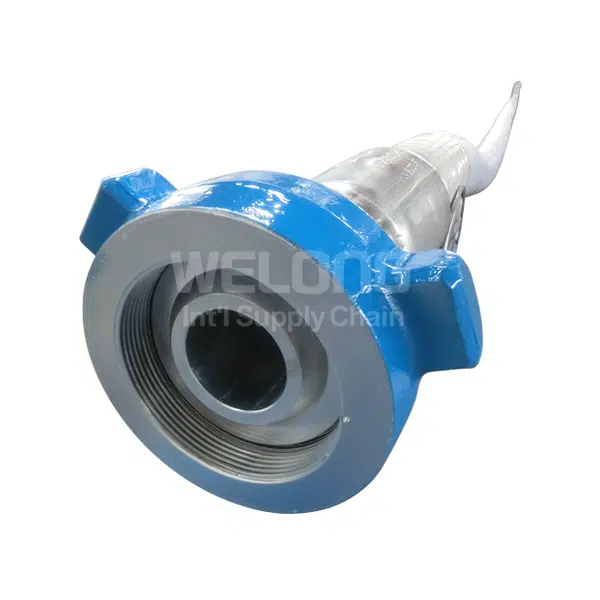
High-quality couplings, crimped-on or built-on, sized to the pressure class of the hose assemblies.
/// Availability, not physics
This really comes down to a trade-off, not a brick wall. In any pressurised wall, hoop stress follows σ = p·r/t — it rises with radius and falls with wall thickness. Keep the pressure constant and widen the bore, and the stress climbs in proportion, so the wall must carry more: more reinforcing layers, thicker, stiffer, a greater minimum bend radius, and, quite a bit more expensive, to the point where the market simply doesn’t stock the highest pressure classes in large bores. There’s no physics prohibiting a 4-inch, 15,000 psi hose, it just isn’t commercially sold as a line.
Bore
Class C
Class D
Class E
10,000 psi
15,000 psi
2″ (50.8 mm)
4,000
5,000
—
10,000
15,000
2½″ (63.5 mm)
4,000
5,000
7,500
10,000
15,000
3″ (76.2 mm)
4,000
5,000
7,500
10,000
15,000
3½″ (88.9 mm)
4,000
5,000
7,500
—
—
4″ (101.6 mm)
4,000
5,000
7,500
10,000
—
5″ (127 mm)
4,000
5,000
7,500
—
—
- 15,000 psi is a small-bore class: available in 2″, 2½″ and 3″ only.
- 4″ tops out at 10,000 psi; 3½″ and 5″ top out at Class E (7,500 psi).
- 2 inch skips class E, jumping from Class D (5,000 psi) to 10,000 psi.
- If your position requires both large bore and high pressure, a solution often involve using shorter lengths of smaller-bore hose instead of a custom, oversized line.
Your correct class depends on your drilling conditions, and those vary widely from one variety of drilling to the next, across many operations. A managed pressure drilling (MPD) or underbalanced program creates a different circulating-pressure profile from conventional mud drilling; mist or air drilling carries a much lower-density fluid; and a slim hole rotary hose alters the flow picture once more. Match the rating to the rotary hose in drilling rig service, not to the headline number on the rig.
Each of these alter loading of the hose so the driller need to select the class based on the actual circulating pressure at the standpipe rather than the rig’s headline rating. A single continuous run of up to 60 metres (about 197 feet) accommodates the most common standpipe-to-swivel configurations.
Send us your bore class length fitting and we’ll inform you, before you even lift a PO, whether it exists as a standard line.
Request Custom Review
→
HIGH_PRESSURE_DYNAMICS // REGULATION_PROTOCOL
High-Pressure Rules: What Changes Above 5,000 psi
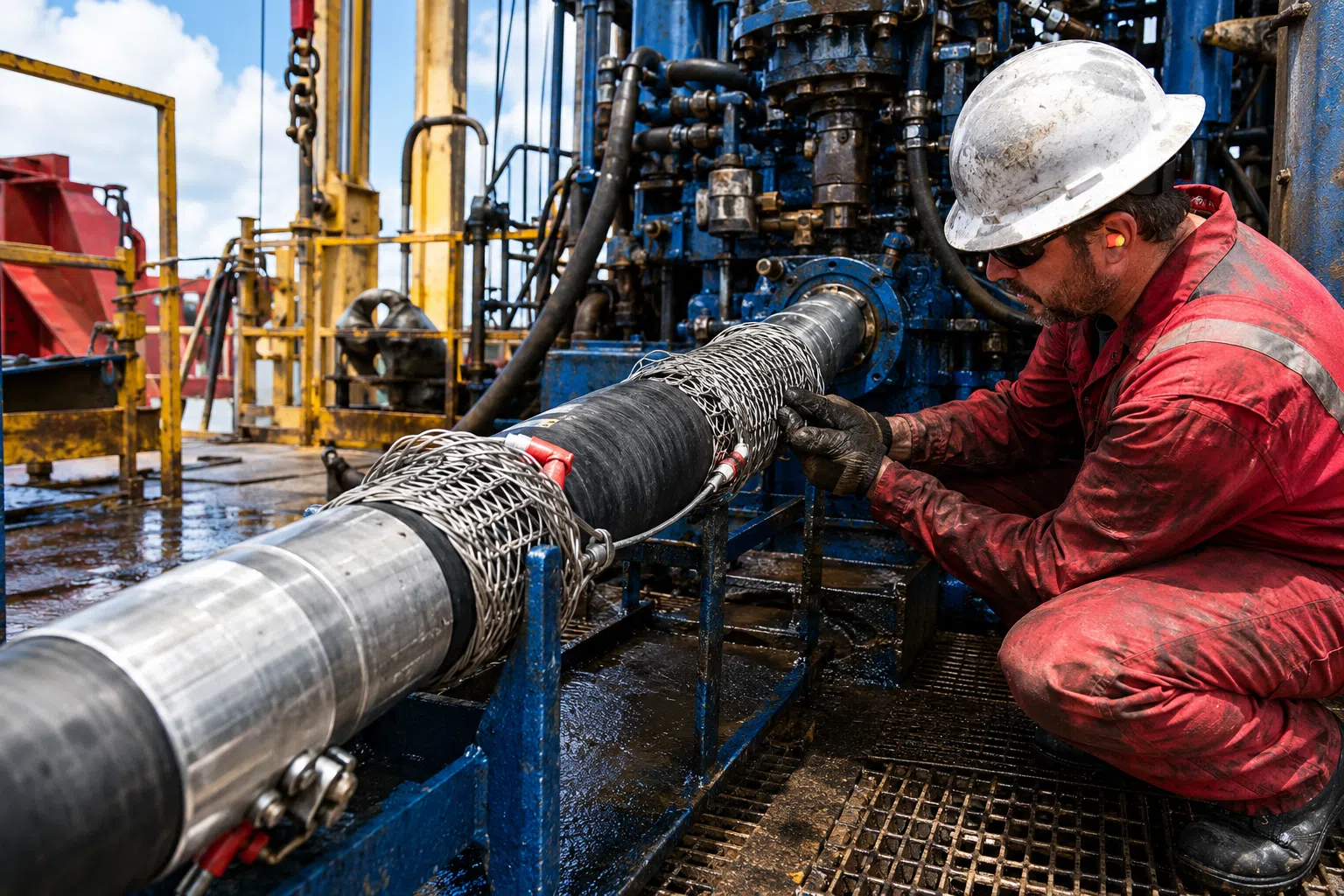
A hose failure can cause serious injury and property damage. The engineering discussion identifies connection and restraint requirements as pressure increases; confirm the selected hose’s pressure rating, restraint arrangement, and test documentation for the order.
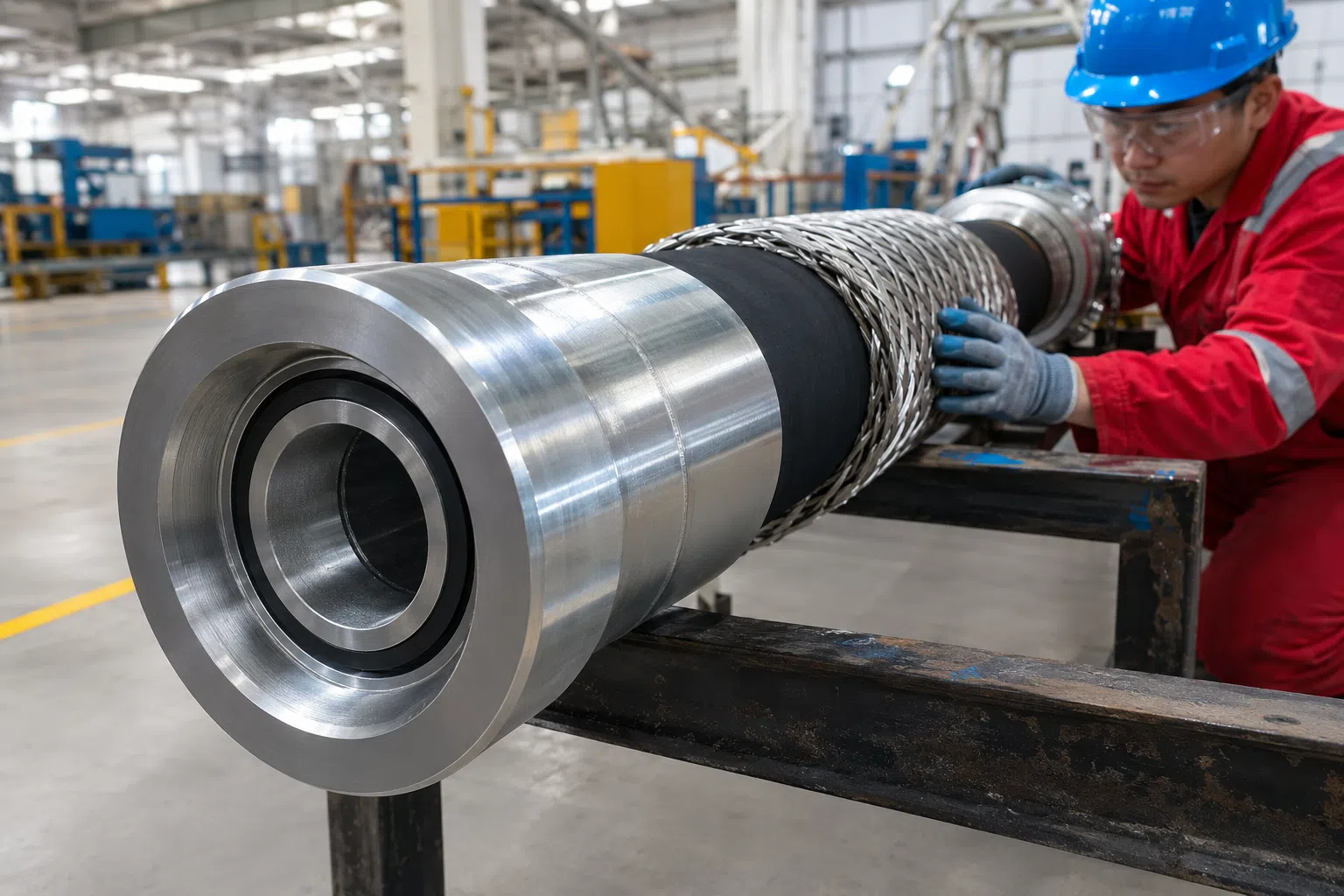
RULE 01
No threaded end connections
According to API RP 7L, no threads of any kind may be used to affix end connections to the hose coupling above 5,000 psi working pressure. Terminations move to butt-welded or integral couplings instead. For a selected hose at 7,500 psi or above, confirm the coupling construction and applicable API RP 7L basis in the quotation.
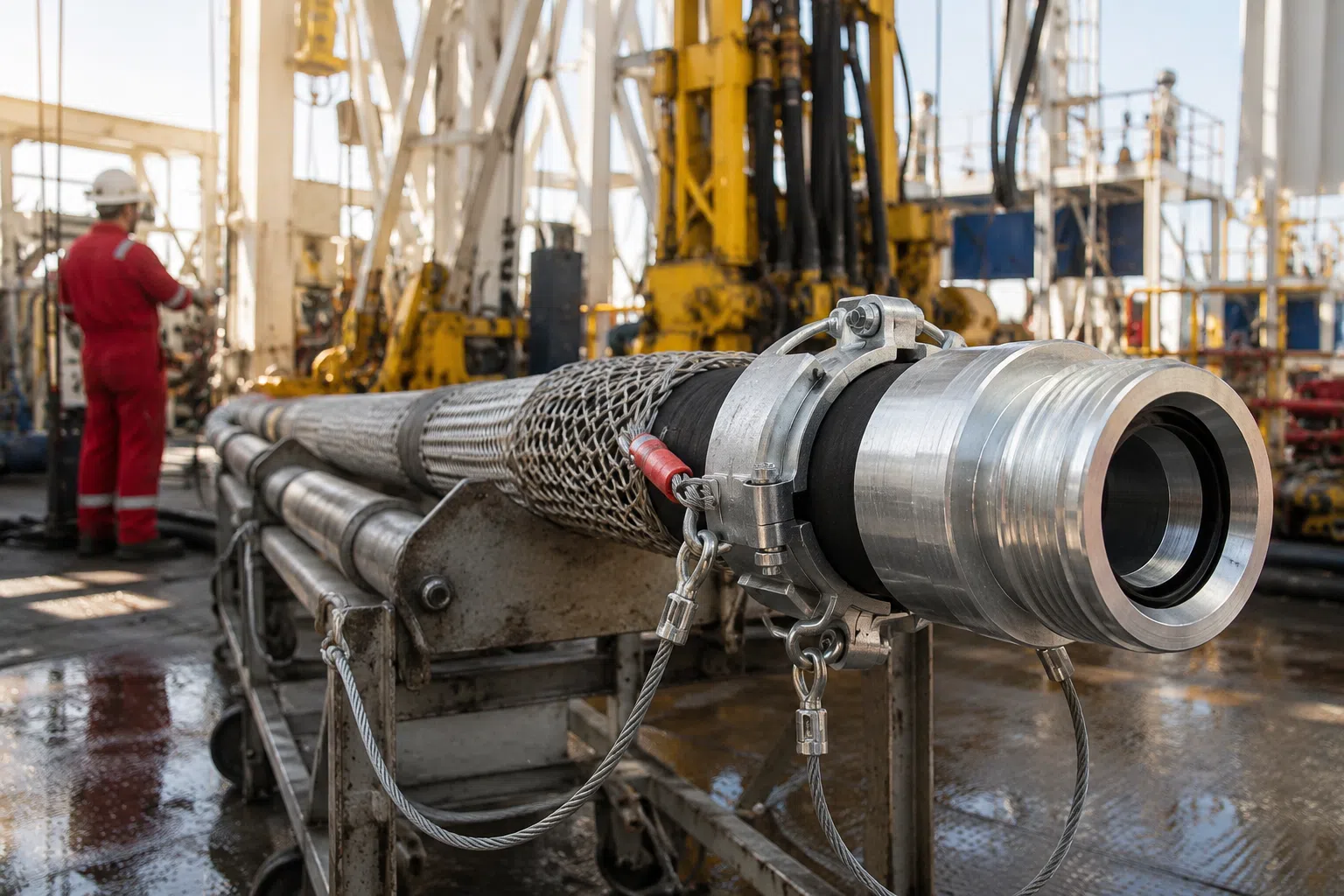
RULE 02
Mandatory restraint by the numbers
Safety clamps are mandatory and must be supplied by the manufacturer, with a minimum breaking strength of 16,000 lb up to 4″ ID and 32,000 lb for 5″ and 6″ ID. Because we supply up to 5″, the 32,000 lb clamp is the one that applies at the top of our range.
RULE 03
What counts as “high pressure”
API RP 7L defines “high operating pressure” as pressure greater than 80% of the hose working pressure. The 6,000 psi level applies on a 7,500 psi hose; 12,000 psi on a 15,000 psi hose. High operating levels require increased levels of restraint and inspections, not less.
Field practice that protects the assembly
Don’t twist during installation
Its reinforcement is alternating helical layers of wound wire; use the lay of the wires as an anti-twist reference following the lay of the wires.
Field-test within strict limits
Rate of pressure rise held between 1,000 and 10,000 psi per minute, and maximum test pressure held for no more than 10 minutes.
Retire, do not re-couple
Re-coupling a used hose compromises fitness for purpose, and original manufacturer markings should be removed when a hose is taken out of service.
Standardized Inspection Protocol
Obtain the High-pressure hose Inspection Checklist, derived from the requirements in the API RP 7L mentioned above.
SPECIFICATION // PRESSURE_DYNAMICS
Reading a Drilling Hose Spec Sheet: Working Pressure, Test Pressure and FSL
Three pressure values travel with every drilling hose, and vendors routinely blur them.
STAGE 01
Working Pressure
The rating you design to.
STAGE 02
Test Pressure
The hydrostatic proof value the hose is verified against.
STAGE 03
Minimum Burst
The failure floor.
On Welong’s published ratings, test pressure is 1.5× the working pressure and minimum burst is 2.5× — consistently, across all 24 rows of the table.
The letter you see is a class, not a grade
Catalogues label hoses “Grade C/D/E,” but API’s own free document on these hoses, API RP 7L, never uses letter grades — it classifies by Flexible Spec Level (FSL), designated temperature range, and a working pressure published by the hose manufacturer. In vendor tables the letter column is in fact headed “Class,” and it runs A-G.
“Grade E”
=
“Class E”
Both equal a 7,500 psi line
A “Grade E” and a “Class E” hose label should be checked against the selected hose’s pressure rating, FSL requirement, and test report.
HIDDEN SPEC 01
Temperature Range
−25°C to +121°C
Our hose runs from −25°C to +121°C. High-temperature service is a separate qualification the class letter doesn’t capture.
HIDDEN SPEC 02
Sour Service
H₂S Resistant
Resistance to hydrogen sulfide matters wherever you pressurize sour crude oil; state it in the RFQ, it isn’t implied by pressure class.
FIXED MULTIPLE TRAP
Vendor Multiples & Safety Factors
Be careful reading those ratios as a rule, though: a fixed multiple isn’t always industry truth. A vendor catalogue that markets its product as an api 7k hose publishes test ratios of 1.25, 1.60 and 2.00 across its classes – and two competitors quote a “safety factor” of 2.5 and 2:1 with no stated referent.
Sourcing High-Pressure Drilling Hose from China: What Welong Does
Every first-time buyer asks the honest question: why trust another Chinese hose supplier, especially one that doesn’t stamp a bold compliance badge across its page? Our straight answer is that we’re a sourcing and quality-control partner, not the mill – and that shapes what we’ll and won’t claim.
What this role means for you
Welong has run supplier development, purchasing supervision, and quality control out of China since 2001, for buyers in international industrial manufacturing, oil drilling, aerospace, and high-end medical. For drilling hose, our value isn’t a factory floor – it’s what happens between your order and your dock.
Est. 2001
Supplier review
Order records
Quality system
Class-A
China Customs grade
SGS · DNV
Third-party inspection
What we do
- Source, supervise, inspect
- Supplier development & management
- Purchasing supervision against your spec
- Inspection scope confirmed per order
- Optional added third-party inspection
What can be checked
- Established 2001
- Confirm order documentation
- China Customs Class-A enterprise
- Third-party inspection can be arranged for the selected order
Reach
- Each piece carries a stamped serial number and stays traceable for five years
- Onshore and offshore programs
- Part of the Welong oilfield rotary hose group
- Sea, air and rail; FOB, CIF, DDP, DDU
Where we sit in the standards system
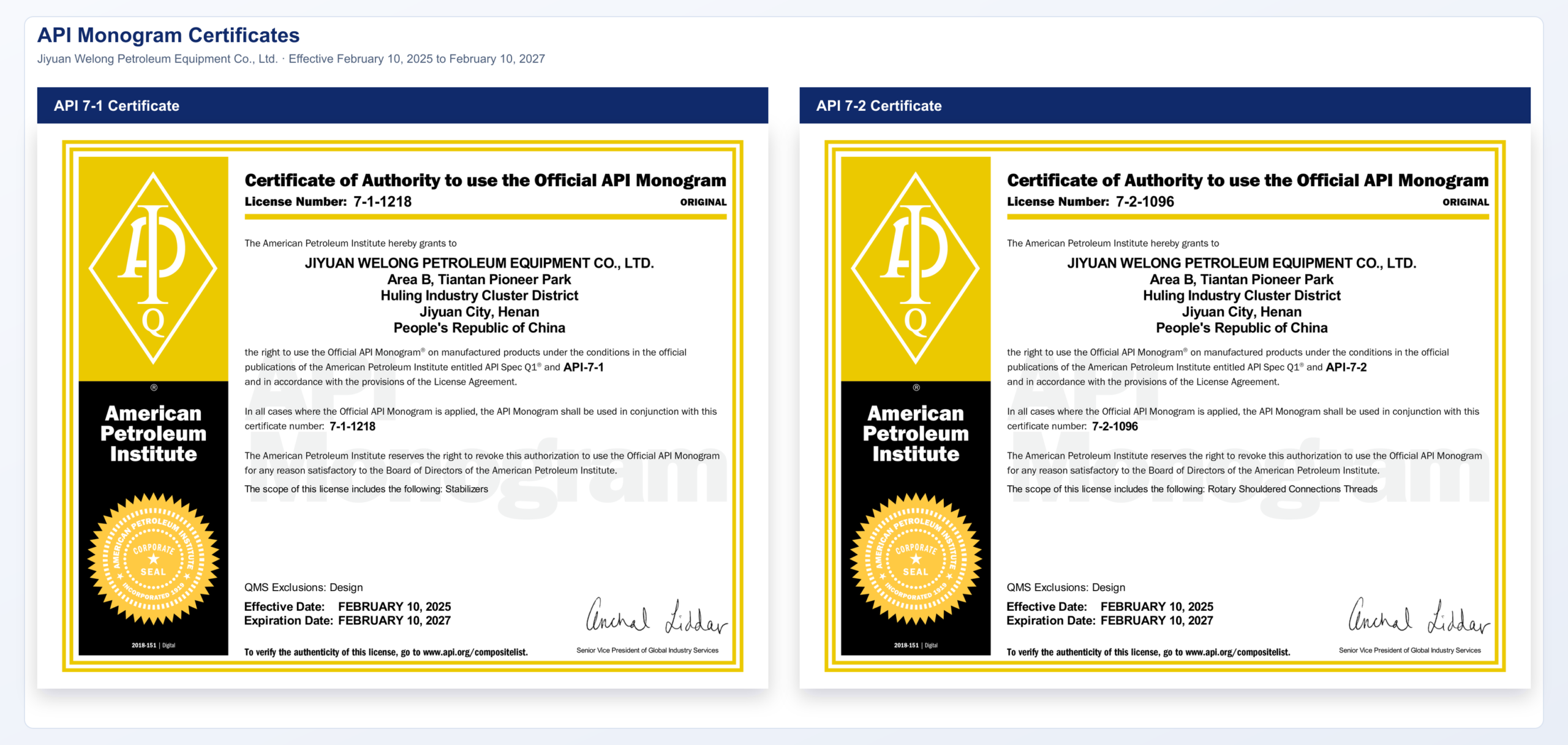
For the selected hose, confirm the applicable mill documentation, inspection scope, and agreed test records at RFQ stage.
Procurement: Lead Time, Incoterms and What Moves the Price
This is where the market lets buyers down completely: three of four hoses that came up in our teardown of the top terms for these words provided no price, lead time or Incoterms – and the fourth described the seven variables you need for an RFQ and then never offered one as a form. Since pricing a made-to-spec hose really depends on configuration, here’s how ours works.
Variable
Why it moves the price
What to send in your RFQ
Bore
More material and reinforcement per unit length
2″–5″ ID
Pressure class
Higher class = more wire layers, tighter QC
Working pressure, or Class C–G
Length
Single continuous run up to 60 m (about 197 ft)
Length per assembly
End fitting
Butt-weld/integral required above 5,000 psi (API RP 7L)
Fitting type & connection standard
Inspection level
Third-party inspection is an add-on
Standard or added third-party
What your Incoterm actually decides
These four terms – FOB, CIF, DDP and DDU – aren’t synonyms for “shipping”; they define where cost and risk pass from us to you as per ICC Incoterms: FOB ships responsibility at the port of loading; CIF adds ocean carriage and insurance to the port of destination; DDP puts responsibility for import clearance and duty with us; DDU (now DAP) leaves duty and import responsibility with you. Depending on a 15k 2-in versus a 5-in, that shift can matter a real lot.
Before you raise the PO
Send along bore size, pressure class, length, end fitting and inspection level. If you’re specifying our those five -whether a 15k kelly hose in a small bore or a 5-Class E assembly-we can confirm whether your configuration exists as standard stock, offer pricing against your preferred Incoterm and, if desired, include third-party verification of inspection procedures.
PROCUREMENT INITIATION
Request a Quote with your five values, and we’ll confirm configuration, availability, and Incoterm choices.
Start RFQ Process
→
Drilling Hose Configuration & Engineering Tools
SYS.TOOL // 01
Bore & Pressure Selector
Determine the optimal bore size and pressure class ceiling for your specific drilling fluid and standpipe conditions.
SYS.TOOL // 02
Safety Clamp & Coupling Checker
Verify termination compatibility, API RP 7L compliance, and safety clamp requirements for your hose assemblies.
SYS.TOOL // 03 [CONFIG]
RFQ Spec Builder
Compile your exact configuration, inspection levels, and Incoterms into a standardized request for immediate pricing.
Frequently Asked Questions
KNOWLEDGE BASE // ACTIVE
Source-backed rows
Drilling Hose Source-Backed Specification Rows
The original source rows are shown as a complete bore-by-pressure matrix so every pressure class is visible and the typography stays consistent across desktop and mobile.
| Bore ID | Metric ID | 4,000 psi | 5,000 psi | 7,500 psi | 10,000 psi | 15,000 psi |
|---|---|---|---|---|---|---|
| 2 in | 50.8 mm | Listed | Listed | Not listed in source row | Listed | Listed |
| 2.5 in | 63.5 mm | Listed | Listed | Listed | Listed | Listed |
| 3 in | 76.2 mm | Listed | Listed | Listed | Listed | Listed |
| 3.5 in | 88.9 mm | Listed | Listed | Listed | Not listed in source row | Not listed in source row |
| 4 in | 101.6 mm | Listed | Listed | Listed | Listed | Not listed in source row |
| 5 in | 127 mm | Listed | Listed | Listed | Not listed in source row | Not listed in source row |
Cells marked “Not listed in source row” replace the old dash placeholders so the table does not look like missing content.
Procurement & Capability
Drilling Hose Capability Review
China Welong reviews the buyer drawing, product specification and inspection scope before quotation.
This review is scoped to the Drilling Hose configurations set out in the specification table on this page — 6 documented rows covering Parameter, Current source wording, 2-inch bore pressure classes and 2.5-inch bore pressure classes.
24 hEngineer-reviewed quotation on business days
2001Founded in 2001
30+30+ engineers on staff
5 yrStamped serial traceability
Quotation Scope and Commercial Terms
Pricing is prepared against the selected product configuration, material route, inspection scope and shipment terms.
- Quotes are returned within 24 hours on business days, reviewed by an engineer.
- T/T or L/C by wire transfer.
- We ship EXW, FOB, CFR or CIF; other Incoterms on request.
- We work from 2D drawings and 3D CAD models (AutoCAD, Pro/ENGINEER, SolidWorks; .dwg and .igs).
Production Planning
Production timing is confirmed with the quotation after quantity, process route and finishing scope are reviewed.
- Manufacturing at Xi'an, Shaanxi and at Jiyuan, Henan.
- Orders ship in standard export wooden cases, or the packing you specify.
Order Review and Responsibility
The responsible manufacturer, inspection scope and document package are identified for the selected item.
- Every quotation states whether the item is made in our own works or by an approved supplier we developed and supervise.
- We develop, audit and supervise the mills and workshops that make your parts: material mills are re-audited every two years and approved by Welong before they run your order.
Specification and Inspection Evidence
The specification table on this page is the technical basis for this review: its numeric rows define what we quote, manufacture and inspect against.
Request a Product Review
Send the drawing, product specification and inspection requirements for a quotation review.
![Choke & Kill Hose: [Field Guide]](https://welongoiltools.com/wp-content/uploads/2026/07/choke-kill-hose-guide-featured-1-150x150.png)