Get in touch with Welong Company
Lifting Bails & Elevator Links for Drilling Rigs, Weldless Elevator Bails, 30 to 750 Tons
Elevator links, the paired, forged steel arms your crew also calls elevator bails or lifting bails, hang the elevator from the top drive system or hook and carry every joint you run in a drilling operation. A link that opens or cracks at the wrong moment drops the string. Welong supplies single-piece weldless elevator links and manages their production rated from 30 to 750 US tons to API Spec 8C, in eight stock models (DH50–DH750) plus swivel-bail and double-arm variants.
Rig-Floor Handling Starts at the Bail, What Elevator Links Do
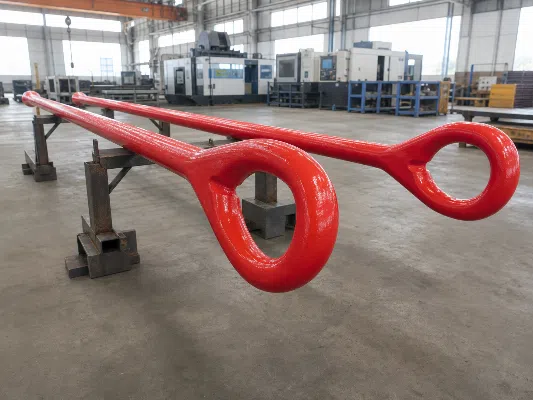
For the selected elevator link, confirm the alloy-steel grade, manufacturing route, and inspection records before purchase.
ENGINEERED INTEGRITY SPECIFICATIONS
Manufacturing Process
Seamless Monobloc Die Forging
Welded Seams in Load Path
Zero (Engineered Out)
Material Documentation
Confirm grade and records
Operating Load Capacity
Up to 750 US Tons Hook Load
On a live rig floor, the elevator links are the last mechanical connection between your hook load and the hole. They carry the elevator, and every joint of drill pipe, casing, or tubing in it, through the full hoisting cycle. Get the rating or the pairing wrong and the consequences land on the floor, not on a spec sheet.
For a selected elevator link, confirm the rated load, alloy-steel grade, manufacturing route, weld status, and load-test documentation. These records define the procurement basis without inferring certification from the material description alone.
How a link set actually works
Each link is a forged bar with an upper eye that hangs on the top-drive or hook link-ear and a lower eye that carries the elevator. Links run in matched pairs so the load stays balanced across the hoisting mechanism, a single arm is never run alone on a rated hoist.
The suspension principle is standardized: USPTO patent US10352112B2 describes the elevator bail as the member “for suspending loads from a bail of an elevator of a drilling rig,” and For the selected order, the quotation identifies the applicable ISO 13535 design and testing requirements and the evidence to be supplied.
SYSTEM / TERMINOLOGY ALIGNMENT
Elevator Bail vs Lifting Bail, Getting the Terminology (and the Tool) Right
SHORT ANSWER
An elevator bail (elevator link) is a paired, forged arm that hangs the elevator from the top drive to run a whole string, rated to API Spec 8C from 30–750 tons. A lifting bail more often means a cast-steel sub that threads onto one tubular to pick it up, or, outside the oilfield, a generic below-the-hook lifting device under ASME B30.20. Welong supplies the elevator link/bail on this page and identifies the responsible manufacturer in the quotation.
The distinction isn’t academic, order the wrong tool and you lose 3 days to a re-order, because a lifting sub threads onto a single joint whereas an elevator link carries the full 750 ton string in production. That naming mistake is common, so confirm against the API Spec 8C and ASME B30.20 scope before you raise the RFQ; unlike a generic bail, a certified 150 ton elevator link is a rated hoisting part, not a shackle.
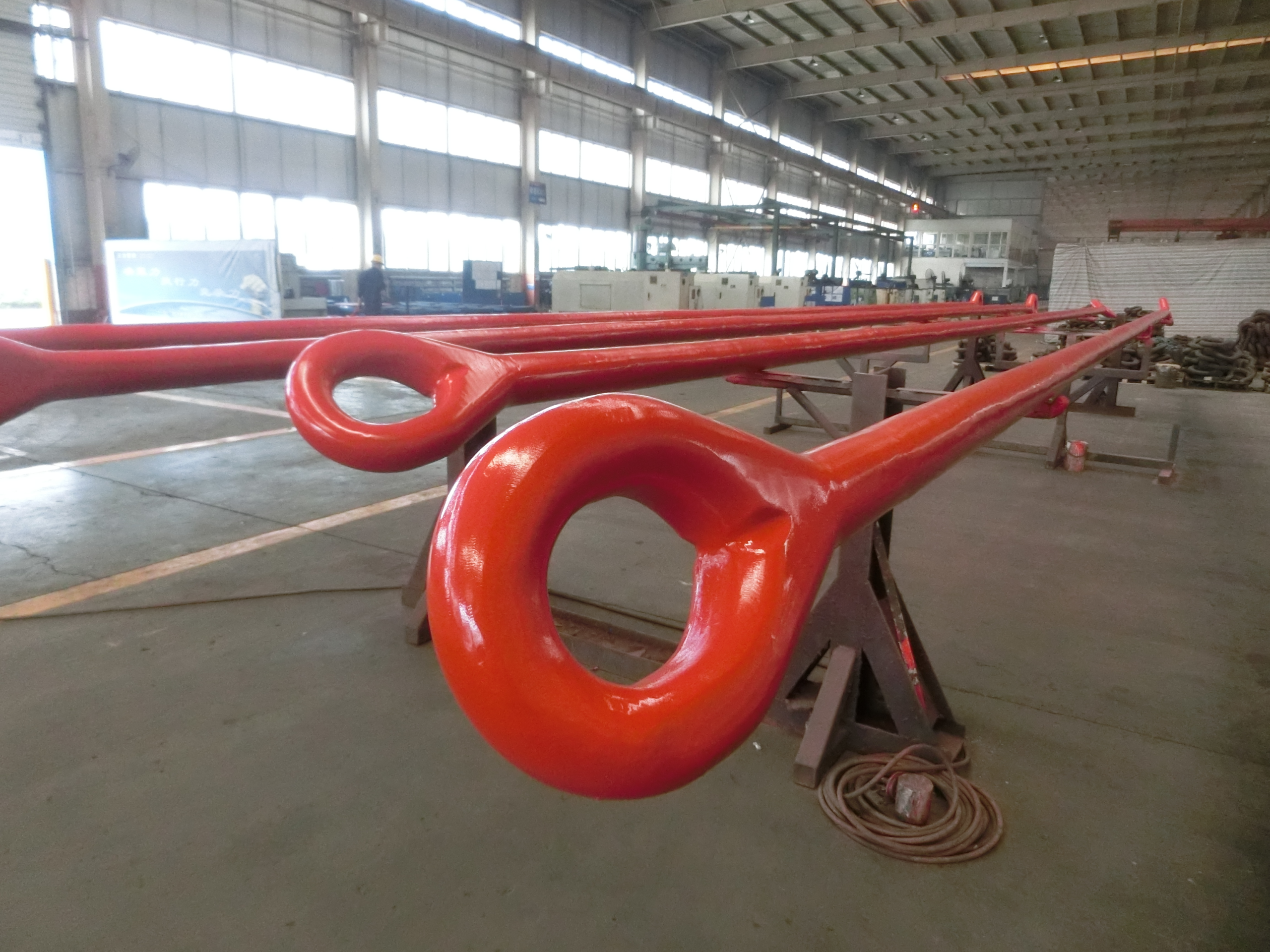
[X-Y AXIS SENSOR ACTIVE] HOVER TO INSPECT
Elevator Bail vs Lifting Bail Decision Table
| Tool | What it does | Governing standard | Welong? |
|---|---|---|---|
| Elevator link / bail | Paired arms hang the elevator from top drive/hook; run a full string of pipe, casing or tubing | API Spec 8C | Yes — this page |
| Cast-steel lifting bail / sub | Threads onto a single tubular (drill pipe, collar, bit) to pick up one joint | API thread specs | On request |
| Below-the-hook lifting device | Generic industrial lifter that attaches a load to a hoist (non-oilfield) | ASME B30.20 / BTH-1 | No |
If your application hangs an elevator on a drilling or workover rig, the part you want is the elevator link, regardless of which of the three names your purchasing system uses. Welong supplies the link; the responsible manufacturer, machining and heat-treatment scope, and order documents are identified in the quotation.
— SPECIFICATION & SELECTION
Welong Elevator Links, Models DH50 to DH750 & Selection
Welong supplies eight stock elevator-link models and manages their production from high-quality alloy steel, spanning the full 30–750-ton band. The ladder below is the complete set of elevator links dimensions, the numbers you drop straight into an RFQ or a rig-up load check, instead of guessing from a vague catalog range.
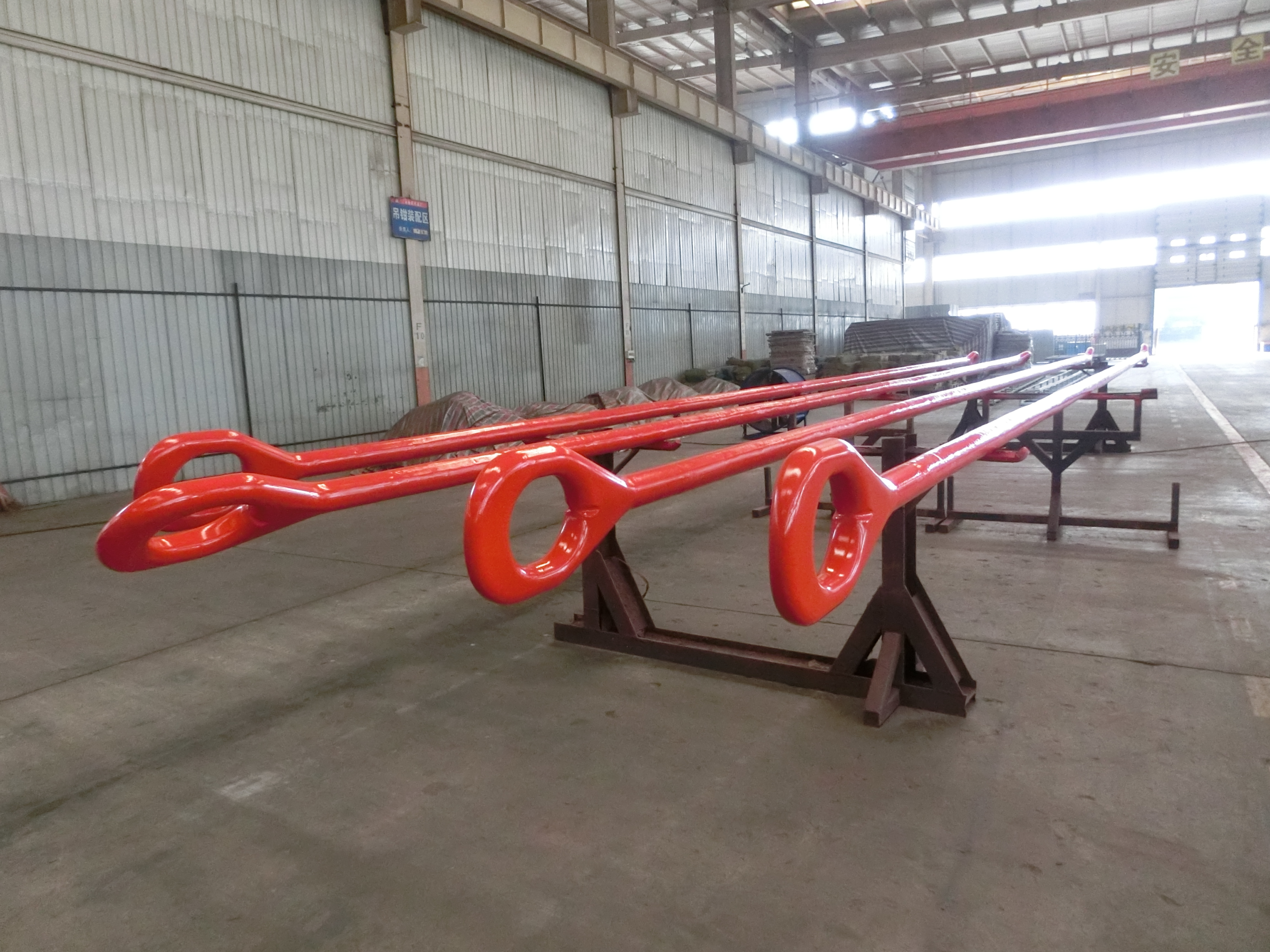
[CAD ALIGNMENT] CURSOR TRACKING ACTIVE
The DH50-DH750 Capacity Ledger
| Model | Capacity (US tons) | Eye Ø D (mm) | Length L (mm) | Weight (kg) |
|---|---|---|---|---|
| DH50 | 50 | 48 | 1100 | 58 |
| DH75 | 75 | 53 | 1500 | 90 |
| DH100 | 100 | 60 | 1500 | 118 |
| DH150 | 150 | 68 | 1800 | 165 |
| DH250 | 250 | 78 | 2700 | 346 |
| DH350 | 350 | 89 | 3300 | 462 |
| DH500 | 500 | 115 | 3600 | 890 |
| DH750 | 750 | 140 | 3660 | 1400 |
The risk of a mismatch is real: a 250 ton elevator run on a 150 ton link set over-stresses the eye, so match the model to the load. For a DH750 order, confirm the responsible manufacturer, eye geometry, heat-treatment route and acceptance records in the quotation.
Elevator link types, single-arm, double-arm, or swivel bail?
The three configurations aren’t interchangeable, each fits a different duty, and the wrong pick means a costly re-order. The decision matrix maps configuration to the application so you specify once.
| Configuration | Construction | Best-fit duty | Reference band |
|---|---|---|---|
| Single-arm elevator link | Forged, machined, surface-treated (weldless) | Medium-duty; onshore & shallow offshore | 30–250 t |
| Double-arm (Perfection) elevator link | Forged + welded | Heavy-duty / deep-well hoisting | 250–750 t |
| Swivel bail link | Forged with rotating eye | Where the load must rotate/align freely | 50–500 t |
Double-arm perfection links, big eye variants, and custom lengths sit on top of the stock ladder when your elevator or link-ear geometry needs them, unlike an off-the-shelf-only supplier, Welong supplies these to order and manages their production, including articulated top-drive link geometries of the kind covered by USPTO patent US4793422A.
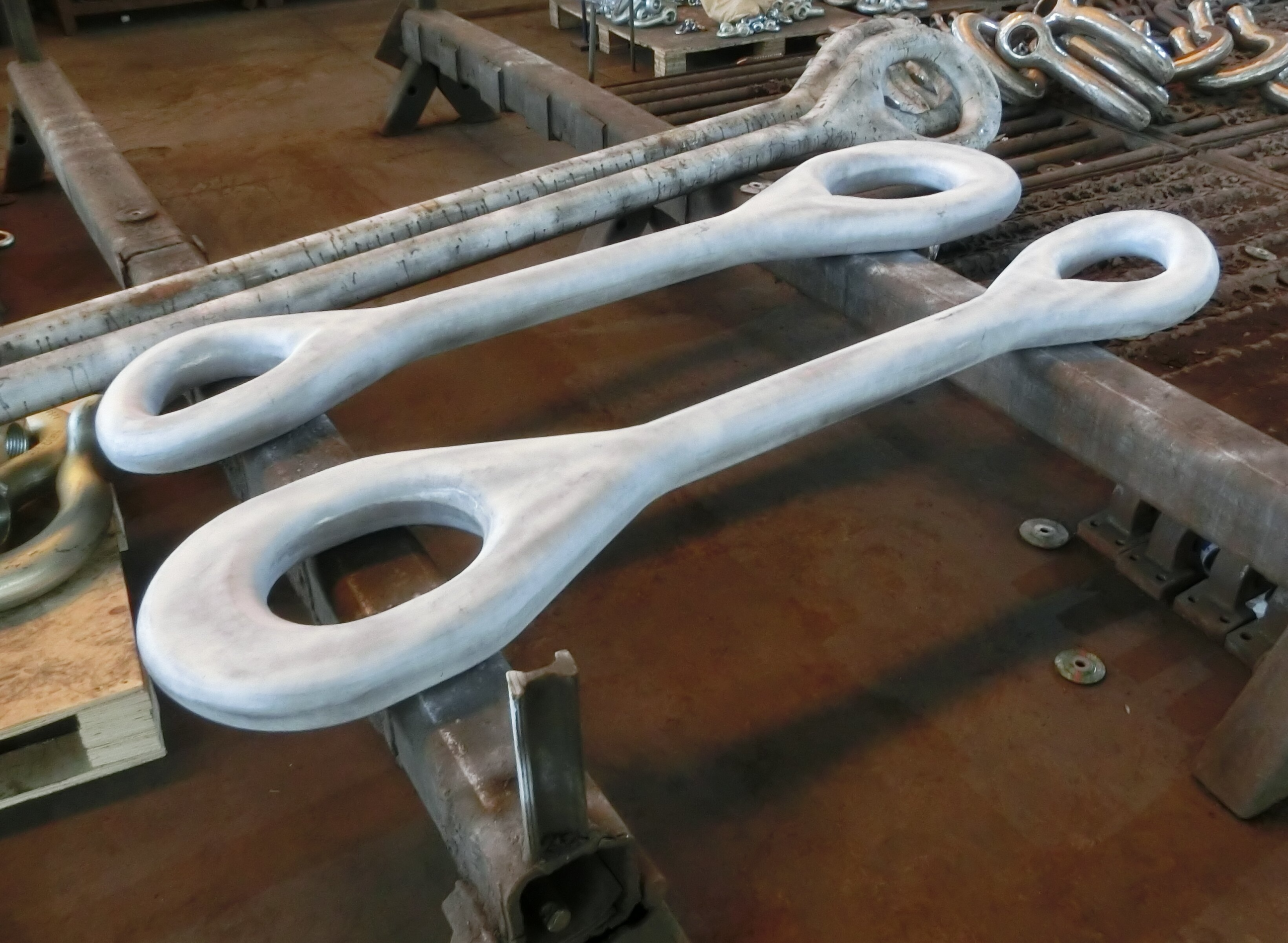
[INSPECT] GEOMETRY SCAN
ENGINEERING ANALYSIS
Weldless Forged vs Welded, How Construction Decides Service Life
Buyers sometimes treat “weldless” as marketing. The honest version is the opposite of a compromise: a weldless link is forged from a single piece of high-grade alloy steel, which removes the welded seams that can act as fatigue-crack initiation sites in a repeatedly loaded hoisting part. That isn’t a trade-off, it’s the stronger construction.
That single-piece forging is why single-arm links carry a full API 8C rating with no welded seam anywhere in the load path, the strength lives in the forging, and the eye is the one critical area that decides service life under the ISO 13535 hoisting baseline. On heavy double-arm (Perfection) links, where the 750 ton geometry needs it, welding is used in a controlled, qualified process, the quotation must identify the responsible manufacturer, welding or single-piece route, heat treatment and acceptance evidence for the selected unit.
| Property | Weldless single-piece forged | Welded / fabricated |
|---|---|---|
| Load-path welds | None | One or more seams |
| Crack-initiation risk | Lowest — no weld HAZ in load path | Weld heat-affected zones |
| Material | Single high-grade alloy-steel forging | Plate/bar + weld filler |
| Rating basis | Rated load = design load (API Spec 8C) | Depends on weld qualification |
Load Capacity & Sizing, Matching Bail Rating to Hook Load
Under API Spec 8C an elevator link’s rated load is numerically the design load, the number is the engineering limit, not a marketing headline. Links run in pairs, so a matched set shares the hook load, and the set rating is what you size against. The failure risk is under-sizing: a link run above its rating can crack or deform, which is why Welong rates every set on that API Spec 8C basis; the honest position is that we won’t quote the inflated fixed safety-factor multiples some catalogs claim without a test basis.
The Bail-to-Hook-Load Sizing Ladder
50–150 t
tubing and shallow drill-pipe running, workover rigs
150–350 t
routine drill-pipe and casing on land rigs, the most common production application
350–500 t
intermediate to deep casing strings
500–750 t
deep-well and heavy offshore hoisting
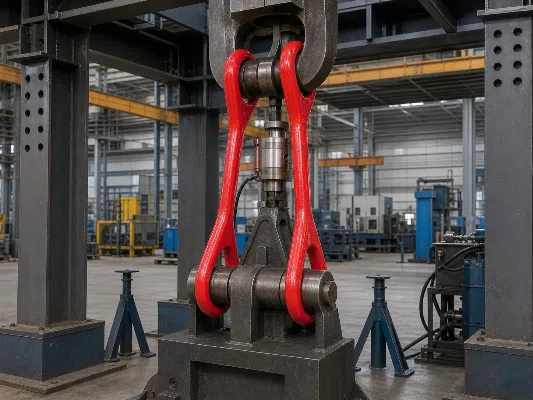
[LOAD PATH] VISUALIZER
Because the load path sees the heaviest string plus any overpull, size the 750 ton or 500 ton set to the maximum hook load it will ever see, not the average day, a discipline reinforced by OSHA drilling guidance.
Send us your rig’s top-drive rating and the heaviest string you plan to run, and Welong delivers the matching DH model and configuration, with the specific 68 mm or 115 mm eye that fits your link-ear, rather than leaving the calculation to you.
COMPLIANCE / TRACEABILITY
API Spec 8C Design Basis, Testing & Order Documentation
The certification question is where most China-sourcing decisions are won or lost, and the honest answer is that you shouldn’t take our word for it, you should verify it, because the tools to do so are public. A missing or expired certificate is the hidden risk that turns a cheap link into an expensive one.
API Spec 8C
Design & test
API RP 8B
In-service inspection
ISO 13535
Hoisting equipment
SGS / DNV
Third-party
API Spec 8C and ISO 13535 define design and testing requirements for elevator links, while API RP 8B addresses inspection, maintenance and repair after delivery. For the selected order, confirm the responsible manufacturer, applicable design basis, proof-load scope and document package in the quotation; crews additionally follow OSHA tripping guidance on the floor.
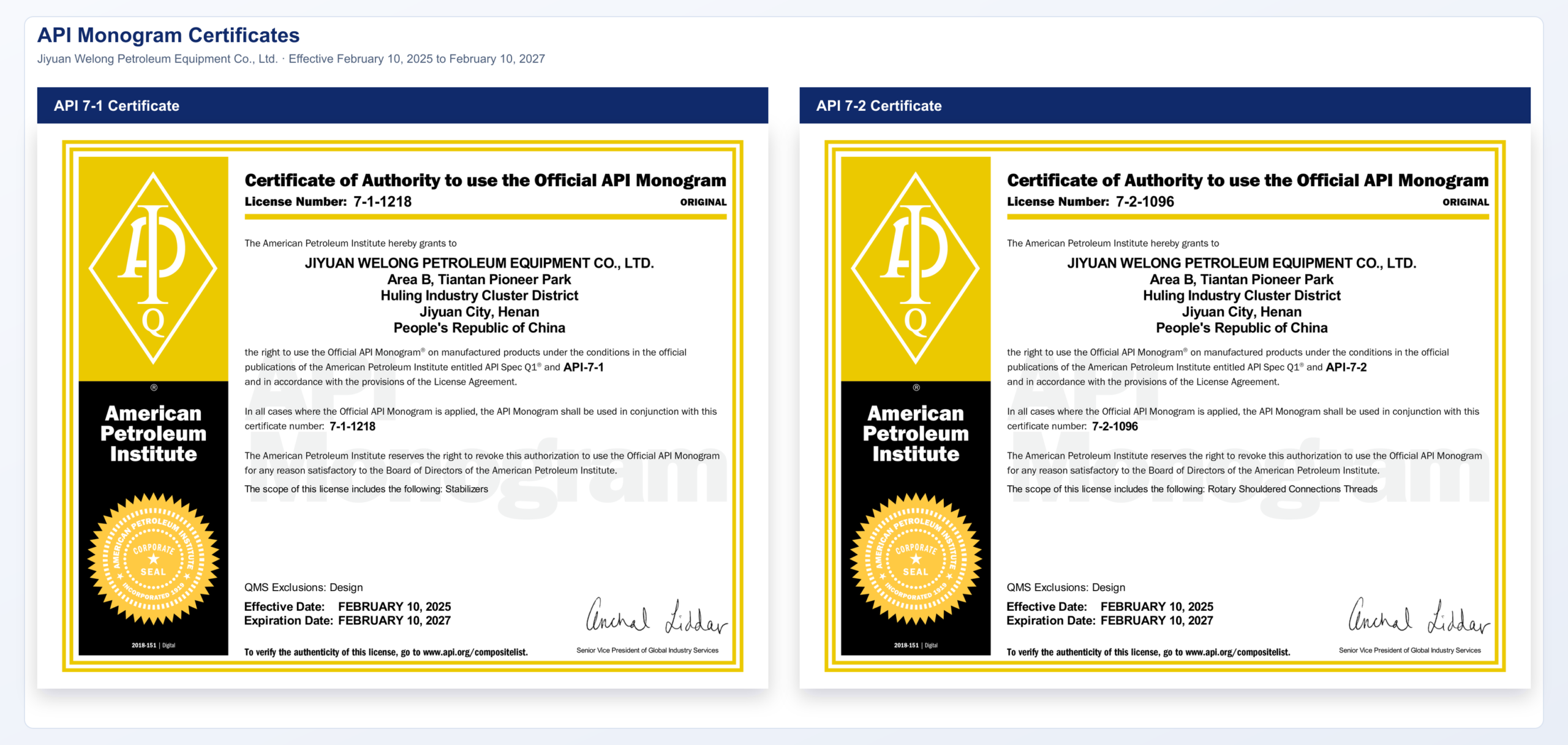
How to verify us before you buy
-
01Request the applicable product-scope and inspection documentation for the selected lifting bail.
-
02Ask for the per-unit load-test certificate and cross-check issue/expiry with the issuing body (SGS, DNV, or Intertek).
-
03Book a pre-shipment third-party inspection (SGS / BV / TÜV) — a standard drilling-tool inspection runs roughly US$250–350 with a photo report before the goods leave.
SUPPLY CHAIN & QUALITY CONTROL
Lifting Bail Inspection and Documentation
Brand familiarity should be supported by the selected product's load, material, and inspection documentation. USPTO US2613102A is an industry-history reference; it does not establish Welong patent ownership or conformity for the selected product.
Every quotation states whether the selected elevator link is made in Welong’s own works or by an approved supplier Welong develops and supervises. The quotation also identifies the manufacturing route, inspection scope and document package for that order.
“For the selected link, the quotation identifies the responsible manufacturer, proof-load scope and traceable records before the order is confirmed.”
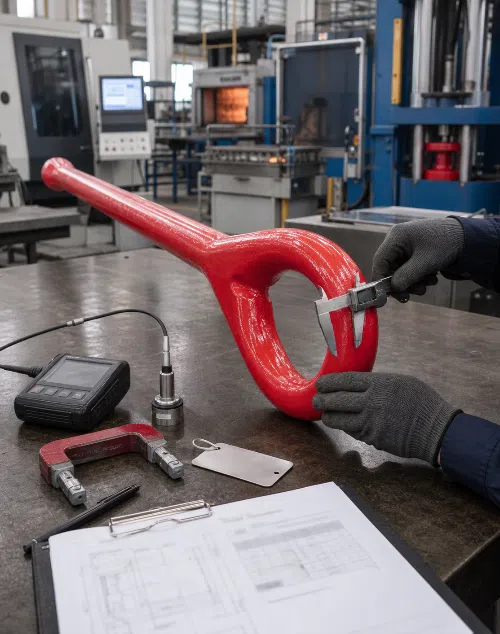
[INSPECT] QC VERIFICATION
Procurement Guide, MOQ, Lead Time, Trade Terms & Global Delivery
Elevator-link procurement should compare the model, configuration, quality-management framework as a general reference rather than evidence of Welong certification, inspection scope, delivery term, and quoted landed cost.
Because a 250 ton set and its packing weigh into freight, tell us the destination and the term you work on, and Welong delivers a landed-cost-comparable quotation rather than a bare FOB number. The quotation identifies the responsible manufacturer and the order-specific document package.
What drives your quotation
Model & configuration
DH band, single- vs double-arm, swivel or big eye
Certification scope
standard API 8C package vs added third-party inspection
Trade term
Welong quotes FOB, CIF, DDP, or DDU so you can compare like for like
Transport mode
sea, air, or railway, matched to your timeline
INTERACTIVE RESOURCES
Technical Selection & Procurement Tools
ACTION REQUIREMENT
Specify the right elevator link the first time
Send your top-drive rating, heaviest string, and destination. Welong returns the matching DH model, configuration, order-specific document package, and a landed-cost-comparable quotation, because a 750 ton hoist, built to ISO 13535, is not the place to guess.
RESOURCES / KNOWLEDGE BASE
FAQ, Elevator Links, Bails & Sizing
What is a lifting bail?
In the oilfield the term covers two tools: the elevator bail (elevator link) that hangs an elevator from the top drive to run a whole string, and the cast-steel lifting sub that threads onto a single tubular to pick it up. Welong supplies the elevator bail/link version and identifies the responsible manufacturer in the quotation, rated 30–750 tons to API Spec 8C.
What is the difference between an elevator bail and a lifting bail?
An elevator bail (link) works in pairs and carries the elevator plus the full string; a lifting bail/sub handles one joint at a time. Different tools, different standards, name the elevator link if you’re hanging an elevator, unlike a single-joint lifting sub.
What procurement documentation should be confirmed for an elevator link?
Request the selected product’s design and test basis, per-unit load-test records, and agreed inspection scope. If a licence is required, verify the named facility and product scope before purchase.
How often should elevator links be inspected?
Follow API RP 8B. Elevator links fall on a routine visual and functional check plus scheduled category inspections, often semi-annual (Category III) and a full inspection every 5 year interval (Category IV), or sooner if any crack, wear, or hinge play appears.
How do I choose between single-arm and double-arm links?
Single-arm weldless links suit medium-duty onshore and shallow-offshore application; double-arm (Perfection) links suit heavy-duty and deep-well hoisting. Both run in pairs, send us your hook load and Welong matches the model.
What material are the links made from, and why weldless?
High-grade alloy steel, forged as a single piece on single-arm models so there’s no weld in the load path, removing the heat-affected zones where fatigue cracks usually start. That’s the honest reason weldless outlasts a fabricated arm.
Procurement & Capability
Lifting Bail Capability Review
China Welong reviews the buyer drawing, product specification and inspection scope before quotation.
This review is scoped to the Lifting Bail configurations set out in the specification table on this page — 8 documented rows covering Model, Capacity (US tons), Eye Ø D (mm) and Length L (mm).
24 hEngineer-reviewed quotation on business days
2001Founded in 2001
30+30+ engineers on staff
5 yrStamped serial traceability
Quotation Scope and Commercial Terms
Pricing is prepared against the selected product configuration, material route, inspection scope and shipment terms.
- Quotes are returned within 24 hours on business days, reviewed by an engineer.
- T/T or L/C by wire transfer.
- We ship EXW, FOB, CFR or CIF; other Incoterms on request.
- We work from 2D drawings and 3D CAD models (AutoCAD, Pro/ENGINEER, SolidWorks; .dwg and .igs).
Production Planning
Production timing is confirmed with the quotation after quantity, process route and finishing scope are reviewed.
- We hold agreed items in stock and ship against your release to shorten delivery. Feasibility is confirmed at drawing review.
- Manufacturing at Xi'an, Shaanxi and at Jiyuan, Henan.
- 0.01 mm machining precision.
- Material standards to ISO, BS, ASTM, ASME, DIN, JIS and GB.
- Orders ship in standard export wooden cases, or the packing you specify.
Order Review and Responsibility
The responsible manufacturer, inspection scope and document package are identified for the selected item.
- Every quotation states whether the item is made in our own works or by an approved supplier we developed and supervise.
- We develop, audit and supervise the mills and workshops that make your parts: material mills are re-audited every two years and approved by Welong before they run your order.
- Forgings from 0.2 to 50 tons.
Specification and Inspection Evidence
The specification table on this page is the technical basis for this review: its numeric rows define what we quote, manufacture and inspect against.
- Each piece carries a stamped serial number and stays traceable for five years to its chemical composition, mechanical properties and measurement report, with the test coupon retained.
- An EN 10204-3.1B material certificate with chemical composition and mechanical properties, a dimensional measurement report, and UT and MT reports ships with your order.
- Inspection is by coordinate measuring machine, ultrasonic, magnetic particle and X-ray.
Request a Product Review
Send the drawing, product specification and inspection requirements for a quotation review.
![Choke & Kill Hose: [Field Guide]](https://welongoiltools.com/wp-content/uploads/2026/07/choke-kill-hose-guide-featured-1-150x150.png)