Get in touch with Welong Company
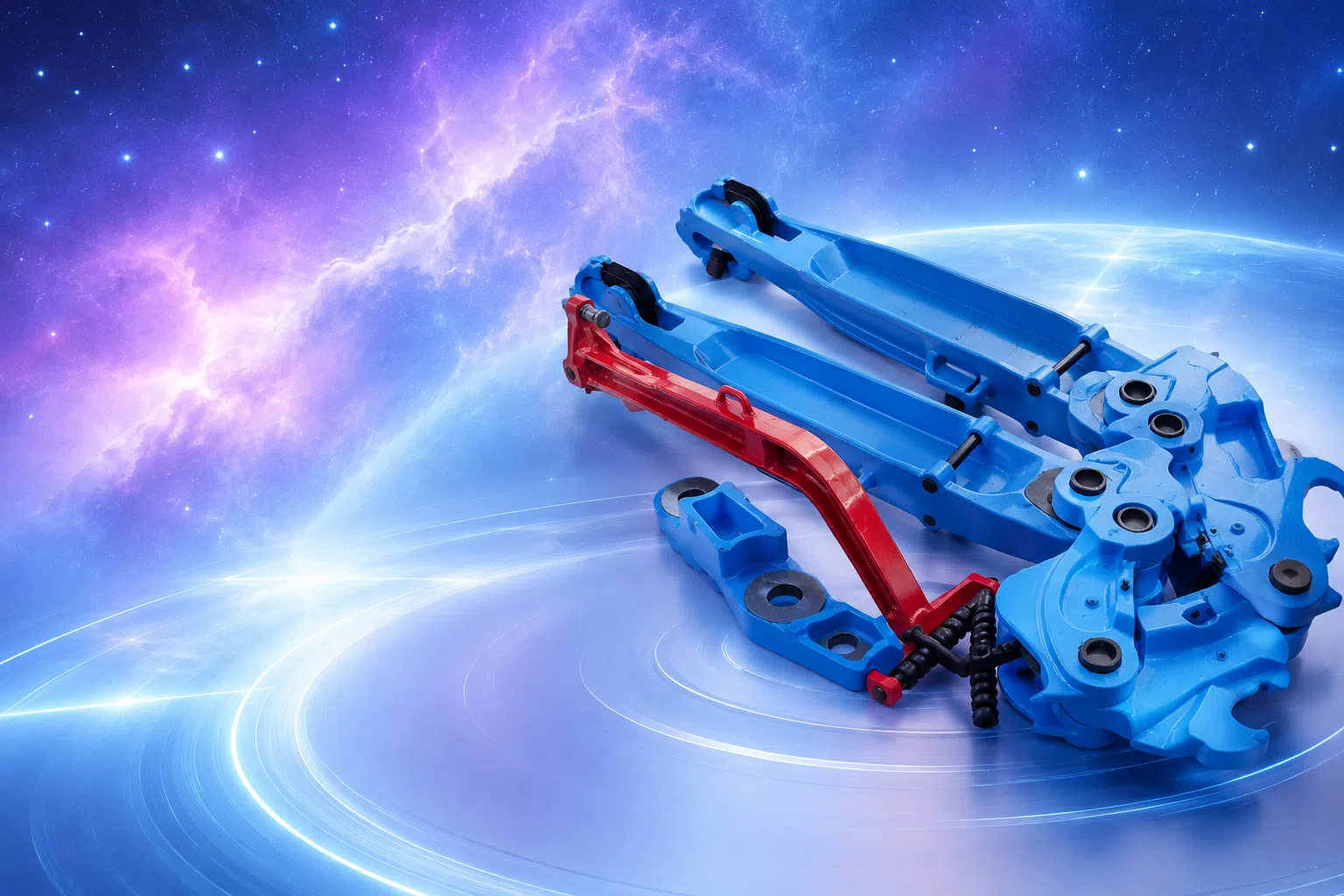
[ SPECIFICATIONS & COMPLIANCE ]
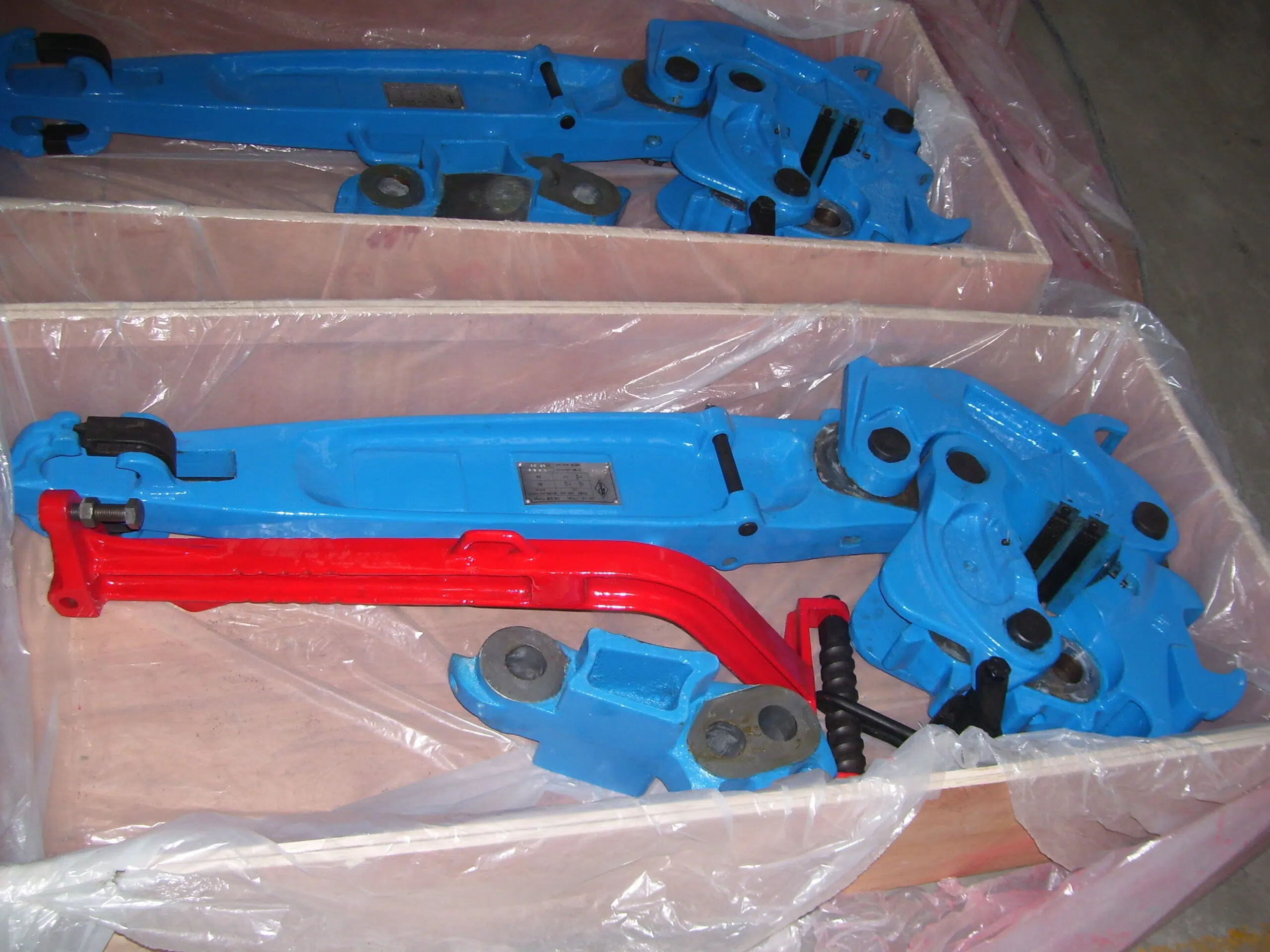
Manual Tong — API Spec 7K Oilfield Pipe, Casing & Tubing Handling Tools
Manual tong choice is not only a torque-rating lookup — the wrong pairing between tong type and pipe size is a known cause of thread damage, troubled make-up/break-out cycles, and rig-floor safety exposure. Welong supplies Type SDD, DB, SB, B, LF, C, Casing Tong, and Well Service Tong manual tongs and manages their production to API Spec 7K design and testing specifications, for 2-3/8″ to 36″ pipe, with 16K-140K ft-lbs of rated torque.
8
CONFIRMED TONG TYPES
16K – 140K
FT-LBS TORQUE RANGE
QUALITY MANAGEMENT
2-3/8″ – 36″
PIPE SIZE RANGE
API 7K
DESIGN & TEST COMPLIANCE
Class-A
CHINA CUSTOMS EXPORT CERT.
Manual Tong Selection Challenges — How the Right Torque Range Prevents Thread Damage and Downtime
SYS_ALERT // CRITICAL_FAILURE_POINT
Get the type-to-pipe-size combination wrong, and the results are not cosmetic: undersized jaws will slip and mar the pipe body, oversized tongs will apply a greater torque than a lighter connection is rated for.
A manual tong is a manually operated wrench used on the rig floor to make-up and break out threaded connections on drill pipe, casing, and tubing–gripping the pipe body while a second, anchored tong (or the same tong pivoting against a snub line) applies the counter-torque required for making up and breaking out the threaded joint–normally with mud circulation halted for the duration of the connection. Either error can lead to a compromised thread which fails downhole.
Industry technical guidance on torque tool selection is explicit on this: inaccurate torque may lead to thread damage, leakage, connection failure, or costly rework–and the guidance is equally direct that a lower-torque connection does not always require the largest tong possible. Matching tong capability to the actual joint, not over-specifying “to be safe”, is a skill in and of itself.
DATA_MODULE // SAFETY_BRIEFING
Field Safety Note — Snub Line and Swing-Radius Control
Snub line securement is what makes a manual tong safe to operate, more than any other single factor. U.S. OSHA incident records document instances where a released or undersized snub line allowed the tong to rotate uncontrolled across the rig floor once torque was applied…
FILE: IADC_GUIDANCE.DOC
…as one OSHA citation indicates it, “the tong became unsecured and its rotational movement uncontrolled” once the snub line released, allowing the tong to rotate free. IADC safety guidance on this type of failure points out that an over-length or under-tensioned snub line combined with a fully torqued breakout tong, leaves the operator no margin of safety. Standard field practice is explicit on this: inspect tong dies, counterweight cables and snub lines before every trip, and keep workers other than the tong operator outside its swing radius when torque is applied. These are exactly the failure modes later tong-latch patent designs was developed to overcome–an indicator that snub-line control is a recognized, engineered-around risk in this category of tool, not an edge case.
FILE: ENG_EXPERT_LOGS.TXT
Just for the record, one common misassumption should also be addressed: “Even though connections are heavily coated with phosphate, thread damage is not always prevented-coating reduces friction but it does not replace applying the correct torque with a correctly sized tong.” Welong’s Type SDD through Type C manual tongs are sized specifically so the jaw geometry and rated torque match the pipe range they are built for…
We size lug jaw sets to the pipe range printed on the tong, not the widest range a customer might want to cover with one unit — a Type LF asked to handle Type C loads is exactly the kind of mismatch that shows up as jaw slip on the rig floor.
Pre-Trip Inspection Points (Manual Tong)
ACTION_REQUIRED // BEFORE EACH TRIP, CHECK THE FOLLOWING:
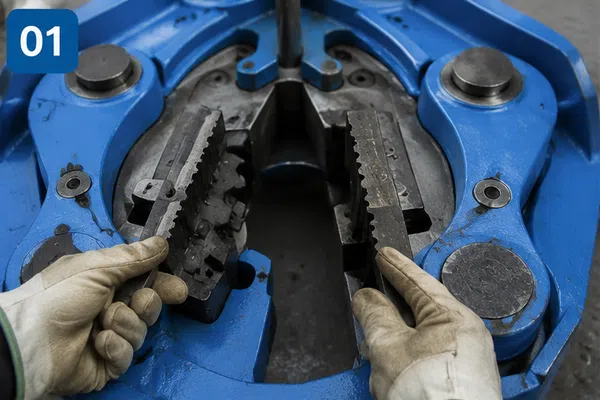
Tong dies / jaw inserts
Worn or chipped dies slip under load instead of gripping cleanly.
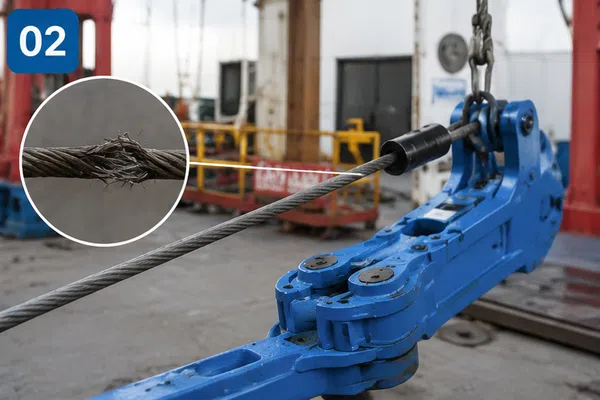
Snub line condition
Inspect for fraying and confirm the line is tensioned to the length specified for the tong, not lengthened for a non-routine setup without re-checking the geometry.
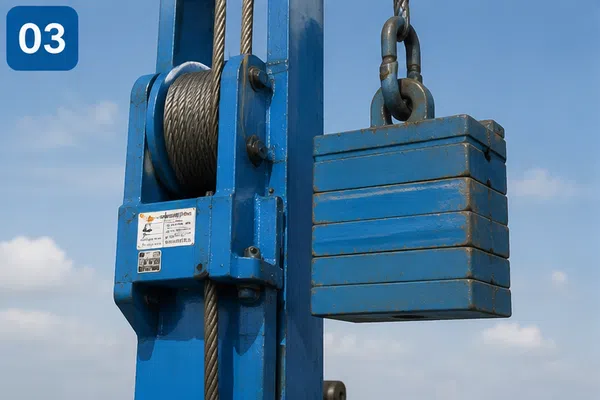
Counterweight cables
A failed counterweight changes how the tong swings once torque is released.
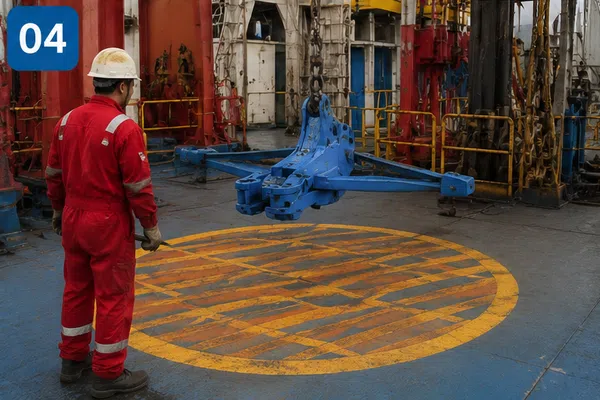
Swing radius clearance
Confirm personnel other than the tong operator are positioned outside the tong’s swing path before torque is applied.
None of this replaces your site’s own safety procedure; it is the baseline most field guidance agrees on and is worth building into your crew’s pre-tour checklist, no matter which manufacturer’s tong is on the floor.
Consult Engineering DataWelong Manual Tong Product Line — Type B/SB/DB/SDD/LF/C, Casing Tong & Well Service Tong Full Specifications
Welong lists eight manual-tong product types; the quotation confirms the pipe-size and torque band, responsible manufacturer and applicable API Spec 7K design and test requirements for the selected type. The type codes below (SDD, DB, SB, B, LF, C) follow the same designation system as used throughout the API 7K manual tong category-buyers who research by Welong’s type code, or by the equivalent HT-series designation common among other suppliers, will find the same physical tool.
Type SDD
4″ – 17″80–140 kN·m
Falls in the size/torque class other suppliers label HT-100. Heavy drill collars, high-torque casing.
Type DB
3-1/2″ – 17″55–90 kN·m
Falls in the size/torque class other suppliers label HT-65. Heavier drill pipe, large-OD tubing.
Type B
3-3/8″ – 13-3/8″55–75 kN·m
Falls in the size/torque class other suppliers label HT-55. Standard drill pipe & casing.
Type SB
3-1/2″ – 13-3/8″40–75 kN·m
Companion to Type B for specialized backup operations. Secondary torque applications.
Type LF
2-3/8″ – 7″16–22 kN·m
Falls in the size/torque class other suppliers label HT-14. Light tubing, workover.
Type C
2-3/8″ – 10-3/4″35–48 kN·m
Falls in the size/torque class other suppliers label HT-35. Mid-range drill pipe & tubing.
Casing Tong
13-3/8″ – 36″8–35 kN·m
Falls in the size/torque class other suppliers label HT-50. Large-diameter surface casing.
Well Service
2-3/8″ – 13-3/8″14–75 kN·m
Dedicated workover & well-servicing range tool. High utility for rig floors.
Since every one of those type codes falls within a torque and size band other suppliers often designate under an HT-series name, it’s a fairly common process when comparing quotes between manufacturers for the buyer to then hand-reference the two naming conventions. Below is a table that correlates Welong’s type codes to the size and torque class often represented by an HT-series name from other manufacturers.
| Welong Type | Comparable HT-Series | Handling Size Range | Rated Torque | Best-Fit Use Case |
|---|---|---|---|---|
| Type LF | ~HT-14 class | 2-3/8″ – 7″ | 16K–22K ft-lbs | Light tubing, workover |
| Type C | ~HT-35 class | 2-3/8″ – 10-3/4″ | 35K–48K ft-lbs | Mid-range drill pipe & tubing |
| Type B | ~HT-55 class | 3-3/8″ – 13-3/8″ | 55K–75K ft-lbs | Standard drill pipe & casing |
| Type SB | — (Type B companion) | 3-1/2″ – 13-3/8″ | 40K–75K ft-lbs | Backup/companion tong |
| Type DB | ~HT-65 class | 3-1/2″ – 17″ | 55K–90K ft-lbs | Heavier drill pipe, large-OD tubing |
| Type SDD | ~HT-100 class | 4″ – 17″ | 80K–140K ft-lbs | Heavy drill collars, high-torque casing |
| Casing Tong | ~HT-50 class | 13-3/8″ – 36″ | 8K–35K ft-lbs | Large-diameter surface casing |
| Well Service | — (workover class) | 2-3/8″ – 13-3/8″ | 14K–75K ft-lbs | Workover & well-servicing rig floors |
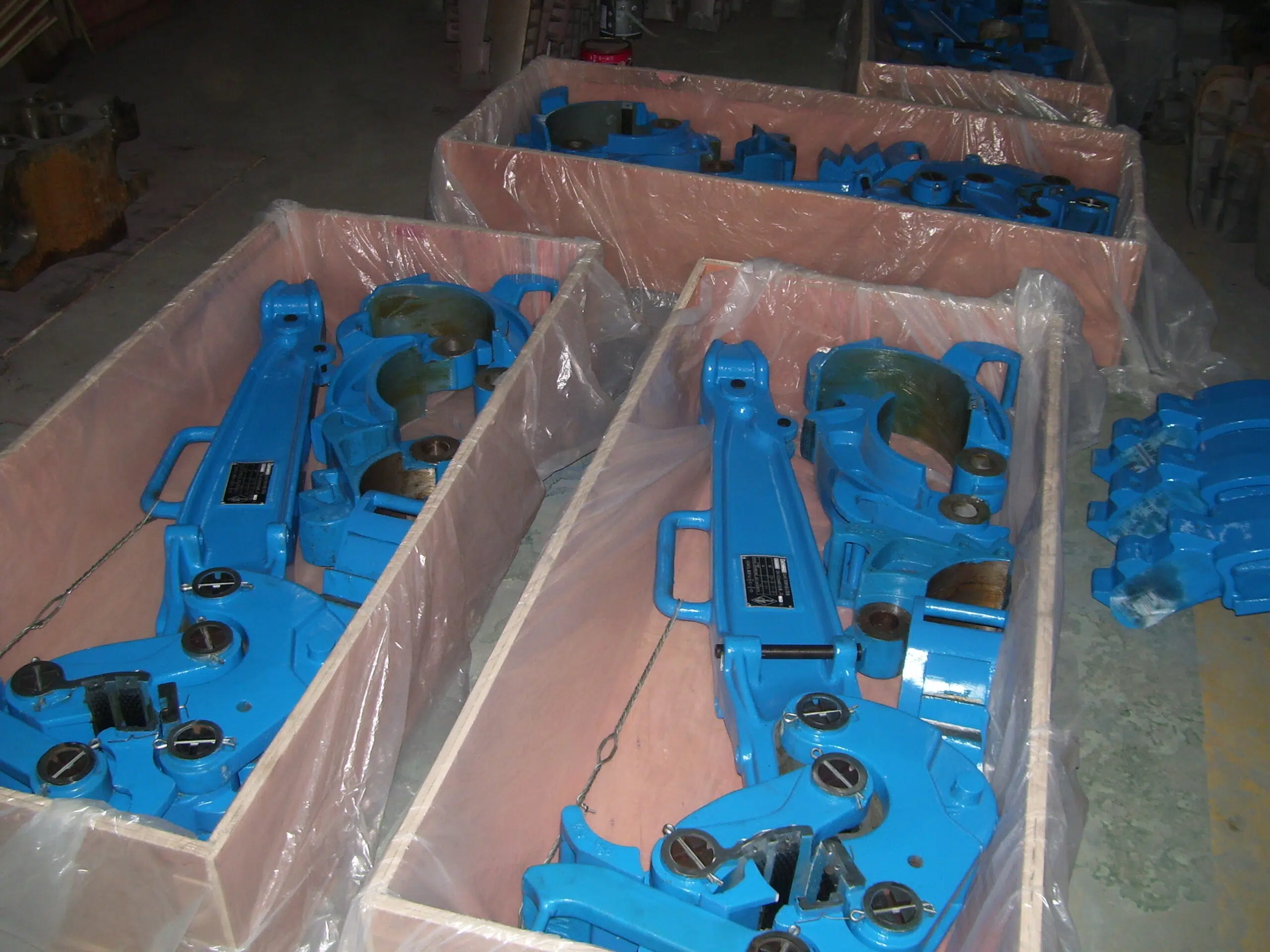
HEAT TREATED ALLOY STEEL
API SPEC 7K ORDER BASIS
REPLACEABLE JAW INSERTS
Material & Manufacturing Process
For the selected manual tong, the quotation confirms the responsible manufacturer, material grade and heat-treatment evidence. Alloy steels were chosen for impact resistance over just the highest degree of hardness, since overhardened to the point of being brittle tongs tend to fail catastrophically under an off-axis load more often than those tempered for impact resistance and toughness. The selected order should state the material, machining, heat-treatment and final-inspection scope, all in accordance with API Spec 7K standards for the relevant tests and provisions. Worn parts like jaw inserts and dies are field-replaceable; an old set of dies doesn’t necessarily necessitate a new tong body.
When deciding between two similar types (a Size B vs a Type SB, for example), the deciding factor often has less to do with the actual torque rating and more to do with what’s currently on the shelf and matched with a crew’s existing lug jaw supply; carrying two tong families with interchangeable jaws costs less across multiple well campaigns than standardizing on a single broad-range tong and hoping it never gets pushed past its limits.
Anyone cross-referencing manual tong sizes across different manual tong manufacturers will notice the same general size-to-torque bands showing up under different product names; a manual rig tongs listing from one supplier and a tong falling in the ~HT-100 class from another are frequently in the same physical size/torque class, though not necessarily identical products.
Fleet managers are who the above chart correlating type and HT series sizes is truly intended for. Contractors running a spread of drilling or workover rigs across similar pipe-size ranges usually standardize on one or two adjacent types (say, Type B and Type C) instead of buying a separate tong for every possible size; you get full coverage of the working range without carrying spares for types rarely called into use. That inventory needs to be organized based on a single, easy reference, and that’s what this chart is for.
► OPERATIONAL ANALYSIS SYS
Manual Tong vs. Power Tong — Which Fits Your Rig Operation
Whether it’s a manual tong or a power (hydraulic) tong, the fundamental job is the same: make up and break-out well connections. What differs are the tradeoffs in crew size, initial investment, and rate of operations. Neither option is the only solution; the comparisons that follow assume you’re already looking at different torque ranges and price structures when evaluating your options. For the purposes of comparison on the power side, hydraulic tubing tongs and hydraulic casing tong both address this space. Regardless of torque class, a manual tong drill pipe connection can be made up with manual power just as readily.
| Operational Factor ▼ | Manual Tong (Welong) | Power Tong (Hydraulic) |
|---|---|---|
| Torque range | 16,000–140,000 ft-lbs | 22,000–230,000+ ft-lbs on heavy-duty units |
| Power source | None — human-operated lever action | Hydraulic power unit required on-site |
| Reference unit cost | ~$2,500–$7,000 (market reference range) | Substantially higher capital cost due to drive |
| Crew required | 1–2 operators plus snub-line rigging | Usually 1 operator with hydraulic assist |
| Best-fit setting | Workover rigs, remote sites, backup tool | High-tempo drilling programs (continuous) |
| Maintenance profile | Jaw/die replacement, snub line — no hydraulics | Hydraulic seals, power unit, control system |
Most buyers really aren’t deciding ‘which is better,’ they are deciding whether the rig they have, or are contracting, needs (and can justify) an onboard hydraulic power unit. Whether remote workover rig, backup tong to an out-of-service power tong, or lower-tempo well-servicing work, a properly sized manual tong is often the safer, more justifiable, less-costly selection, not an inferior choice.
In reality, a lot of contractors don’t pick either-or – they make up the work with a power tong and keep a correctly sized manual tong on the rig for just such times that the hydraulic unit goes down, is being serviced, or for jobs too small/remote to bring a power unit. Such is a good reason to have that back-up manual tong correctly sized.
Ready to compare Welong’s Type SDD against your current tong inventory?
Request a Custom Comparison
►
SYS_DIAGNOSTICS // VISUAL ANNOTATION
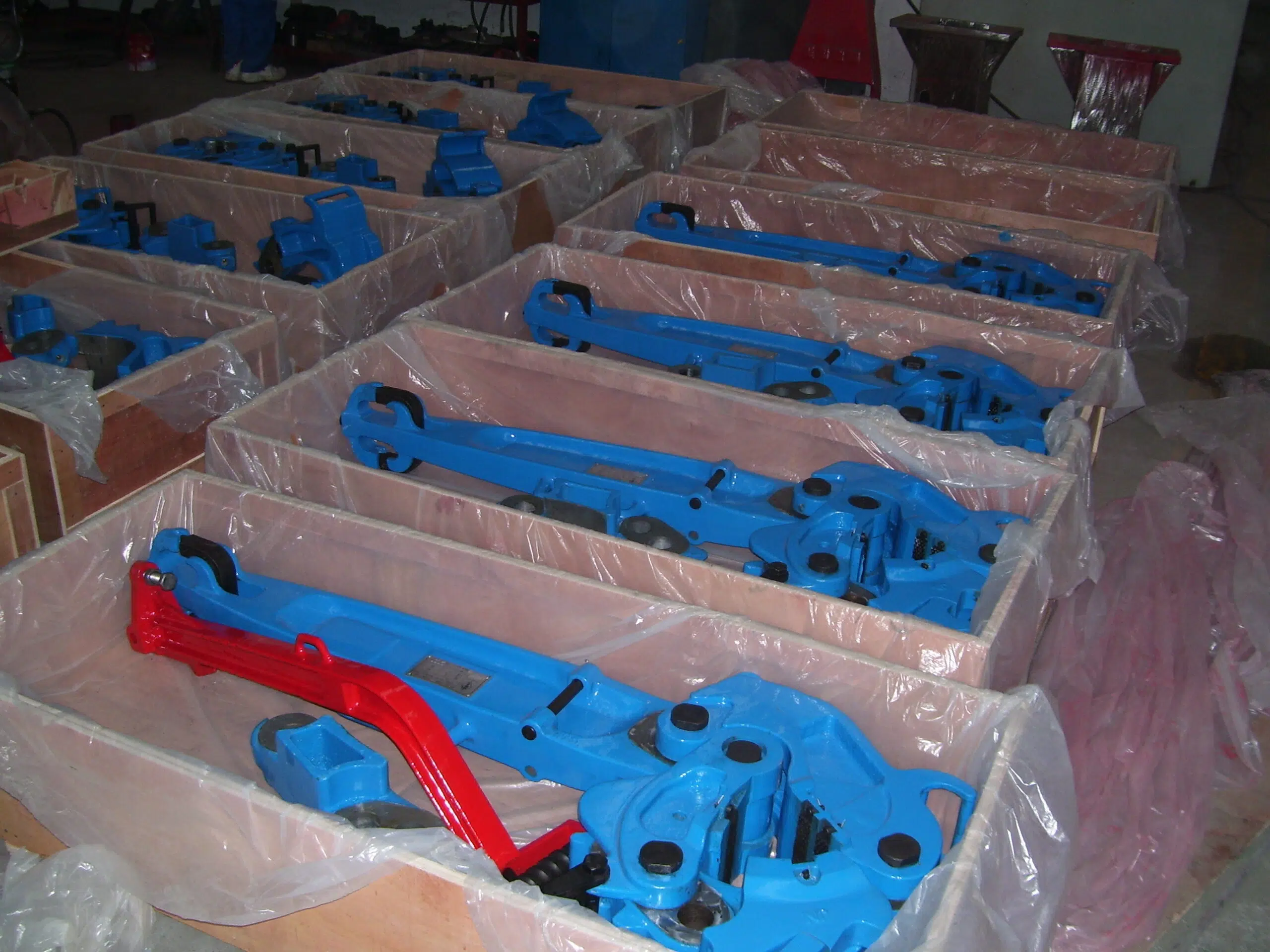
TORQUE VECTOR
LEVER ACTION
INTERFACE ZONE
Field Applications & Supply Assurance — Onshore, Workover & Offshore Sourcing
The Manual Tong remains the most widely used equipment on the rig floor for make-up of tubular connections, making the necessary torque while avoiding gouging or crushing the pipe body, whether that pipe string is drill pipe on an onshore rig, casing on a workover, or tubing on a well-servicing rig. We note the industry has seen more automated, high-tempo drilling over the last several years, yet the manual tong continues to be the most used standard tool on workover rigs, well-servicing units and as back-up to a power tong.

Key Buyer Considerations & Logistics
There are three key buyer considerations we see and hear regularly that often distinguish how manual tongs are used, more on logistics and redundancy than specific torque considerations:
01. ONSHORE
A drill string on a lower-tempo rig onshore might use a manual tong as the primary make-up tool, or as a secondary back-up to a power tong.
02. WORKOVER & SERVICING
Workover and well-servicing rigs-which pull and run more than continuously drill-will be much more likely to favor a manual tong for routine connection make-up, as the per-job connection count will be much lower, and it may not be economical to bring a full hydraulic power tong set up for the job.
03. OFFSHORE PLATFORM
An offshore platform must balance torque requirements against space and crane requirements on the deck, thus favoring a smaller number of tongs of different sizes to service all pipe handled.
Oilfield Tong & Bucking Unit Division
This line of manual tongs is being brought to market as part of a larger Oilfield Tong & Bucking Unit product division, supported by the supply-chain infrastructure of China Welong, the same organization that has offered Supplier Development & Management, Purchasing Supervising, and Quality Control services for industrial manufacturers internationally since 2001.
⚠ TORQUE SELECTION WARNING
Selecting the correct torque avoids potential damage to the tubular connection threads, subsequent connection leaks and the repair costs highlighted in industry technical guidance related to tubular connections. Based on tubular connection torque selection guidance per published literature; cost impact will vary based on specific rig, connection type, and other variables.
VERIFICATION // QUALIFICATION_STANDARDS
Order Documentation & Quality Control — API Spec 7K Design Basis
For the selected manual tong, the quotation confirms the responsible manufacturer, applicable API Spec 7K design and test requirements, and required documentation.
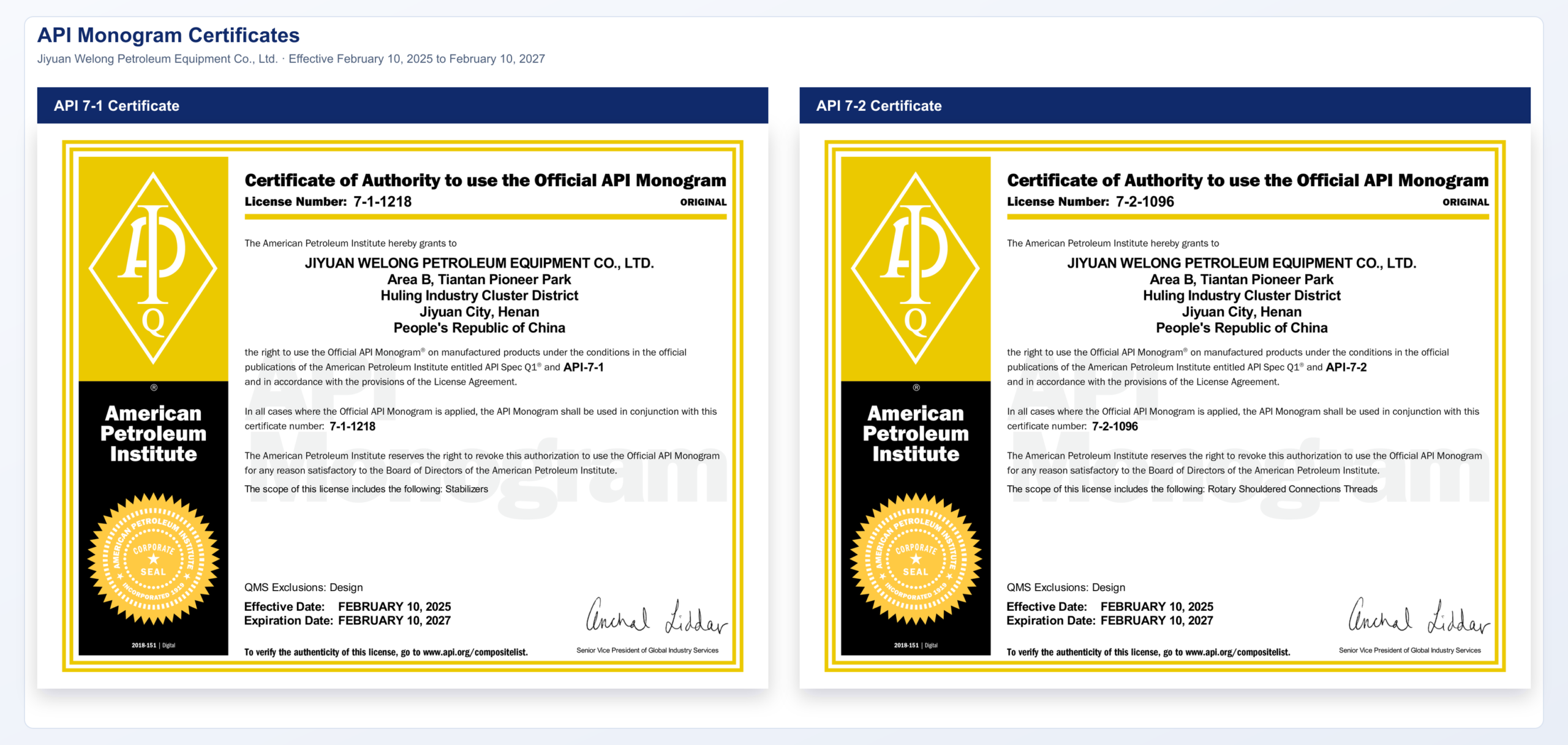
API Spec 7K
Design & test compliance
Quality management
Order Documentation
Confirmed for the selected order
A Note on API terminology
The API Spec 7K wording describes the documented design and test basis stated for the tool. For the selected order, confirm the product documentation, inspection scope, and supplier-qualification requirements before purchase.
Governing Specification Protocols
The governing specification, API Spec 7K, provides design requirements as well as material and testing criteria for rotary and pipe-handling tools such as manual tongs. It covers both destructive and non-destructive testing of the load-bearing components before any tool is allowed out into the field — a common industry proof-test practice under this category of specification is to torque-test a tong after manufacture or repair to 1.5 times its rated torque before it ships.
BUYER RECORDS // KEY CHECKPOINTS
For the buyer’s records, three material/testing items are the key checkpoints to request from any tool supplier:
- Traceable material records for the tong body and jaw inserts;
- Documentation of the dimensional and functional testing on that particular production lot;
- Documentation specifying the specific type/torque class for which the supplier is claiming compliance (simply stating “API 7K compliant” for a product line is not necessarily a statement of conformity for specific types).
Need the full compliance records package for your procurement file?
Request product information
Procurement Guide — Pricing, Lead Time, MOQ & Global Shipping
Pricing Factors Framework
Manual tong pricing is determined by a small number of standard factors, not a fixed per-unit price:
Please contact Welong for a quotation on your specific type, torque class and order volume at:
Contact for quote →
01
Type & Torque Class
Type LF units have different material mass and machining requirements than Type SDD units, for example.
02
Jaw/Die Configuration
The number of lug jaw sets supplied for your specific operational size range.
03
Customization
Non-standard handle length, custom die patterns, or proprietary markings applied.
04
Order Quantity
Unit economics improve for multi-unit orders across a project’s entire tong inventory.
Global Shipping & Inspection
Welong will ship manual tong orders via sea, air or rail freight under Incoterms of FOB, CIF, DDP or DDU, allowing you to choose the Incoterm best suited to your shipping and customs-handling capacity. In-process inspection for the tool’s machining and heat treatment is conducted, with final inspection prior to shipment; SGS or DNV inspection services may also be requested by buyers needing third-party confirmation prior to shipment.
Sourcing Advice & Risk Avoidance
One of the biggest mistakes that international buyers make when sourcing industrial tools from China is that they assume that any fit problem will be taken care of by a return of product after delivery – international freight and customs will make that an expensive solution. A more dependable method is to check size range, torque rating and jaw configuration against your own pipe inventory before you pay for the order to be shipped – that is precisely what the type / HT-series cross-reference table above is designed for.
Manual Tong Engineering Tools & Operational Protocols
APP_01
Torque Size Selector
Input your tubular OD and required make-up torque to automatically identify the exact manual tong model and lug jaw configuration needed for your rig floor.
APP_02
Manual vs Power Decision Guide
Compare tripping frequency, deck footprint limitations, and operational economics to determine the most efficient tong configuration for your specific well program.
APP_03
Pre-Trip Safety Checklist
Access standardized field safety protocols for inspecting snub lines, counterweights, jaw inserts, and swing-radius clearances prior to running tubulars.
Technical FAQs & Engineering Reference
A manual tong is a hand-operated wrench used on the rig floor to make up (tighten) and break out (loosen) threaded connections on drill pipe, casing, and tubing, applying controlled torque without an external power source.
Match your pipe OD to the handling-size range in the type-to-HT-series table above. If your pipe size falls near the boundary between two types (for example, 13-3/8″ sits at the top of the Casing Tong range and within Type B/SDD ranges), the deciding factor is usually your maximum required torque rather than size alone — contact us with your pipe spec and connection torque requirement for a direct recommendation.
If your site has hydraulic power available and runs a high tempo of connections, a power tong reduces crew size and cycle time. If you’re on a workover rig, a remote location without hydraulic supply, or want a backup tool independent of your power tong, a correctly sized manual tong is the more practical choice. See the comparison table above for torque, cost, and crew tradeoffs.
No. A Bucking Unit (also called a breakout or make-up machine) is a separate, larger hydraulic machine that provides stationary counter-torque for coupling and threading operations, often used in threading and repair shops rather than on the rig floor itself. A manual tong is the hand-operated rig-floor tool covered on this page. Welong supplies both product lines and identifies the responsible manufacturer in the quotation — contact us if you need a Bucking Unit specifically.
For the selected manual tong, confirm the product documentation, inspection scope, and supplier-qualification requirements before purchase.
Lead time and minimum order quantity depend on type, torque class, and current production schedule. Contact Welong with your required type(s) and quantity for a project-specific lead time estimate — Request lead time estimate →.
Yes — Welong supports custom handle length, jaw/die configuration, and private-label marking on manual tong orders, in line with its broader OEM/custom packaging capability across its supply chain services.
The selected manual tong body is specified in heat-treated alloy steel; confirm the responsible manufacturer, material grade and test records in the quotation. Material traceability documentation and test records for your production batch are available on request — ask for these as part of your procurement file rather than assuming a general compliance statement covers the specific type and torque class you’re ordering.
Procurement & Capability
Manual Tong Capability Review
China Welong reviews the buyer drawing, product specification and inspection scope before quotation.
This review is scoped to the Manual Tong configurations set out in the specification table on this page — 8 documented rows covering Welong Type, Comparable HT-Series, Handling Size Range and Rated Torque.
24 hEngineer-reviewed quotation on business days
2001Founded in 2001
30+30+ engineers on staff
5 yrStamped serial traceability
Quotation Scope and Commercial Terms
Pricing is prepared against the selected product configuration, material route, inspection scope and shipment terms.
- Quotes are returned within 24 hours on business days, reviewed by an engineer.
- T/T or L/C by wire transfer.
- We ship EXW, FOB, CFR or CIF; other Incoterms on request.
- We work from 2D drawings and 3D CAD models (AutoCAD, Pro/ENGINEER, SolidWorks; .dwg and .igs).
Production Planning
Production timing is confirmed with the quotation after quantity, process route and finishing scope are reviewed.
- We hold agreed items in stock and ship against your release to shorten delivery. Feasibility is confirmed at drawing review.
- Manufacturing at Xi'an, Shaanxi and at Jiyuan, Henan.
- 0.01 mm machining precision.
- Material standards to ISO, BS, ASTM, ASME, DIN, JIS and GB.
- Orders ship in standard export wooden cases, or the packing you specify.
Order Review and Responsibility
The responsible manufacturer, inspection scope and document package are identified for the selected item.
- Every quotation states whether the item is made in our own works or by an approved supplier we developed and supervise.
- We develop, audit and supervise the mills and workshops that make your parts: material mills are re-audited every two years and approved by Welong before they run your order.
- Forgings from 0.2 to 50 tons.
Specification and Inspection Evidence
The specification table on this page is the technical basis for this review: its numeric rows define what we quote, manufacture and inspect against.
- Each piece carries a stamped serial number and stays traceable for five years to its chemical composition, mechanical properties and measurement report, with the test coupon retained.
- An EN 10204-3.1B material certificate with chemical composition and mechanical properties, a dimensional measurement report, and UT and MT reports ships with your order.
- Inspection is by coordinate measuring machine, ultrasonic, magnetic particle and X-ray.
Request a Product Review
Send the drawing, product specification and inspection requirements for a quotation review.
![Choke & Kill Hose: [Field Guide]](https://welongoiltools.com/wp-content/uploads/2026/07/choke-kill-hose-guide-featured-1-150x150.png)