Get in touch with Welong Company
China Welong · Founded in 2001; supplier coordination
Oilfield Tongs and Bucking Units for Casing, Tubing and Drill Pipe
China Welong coordinates manual tongs, hydraulic power tongs and bucking units against the buyer tubular specification and required inspection scope. The quotation identifies the responsible manufacturer and proposed route for each selected model.
Make-Up & Break-Out Without the Rig-Floor Risk
Oilfield tongs are the make-up and break-out tools that grip and rotate casing, tubing, and drill pipe to torque threaded connections on the rig floor or in the shop. A power tong holds one section of pipe stationary with a backup while a second set of jaws rotates the next joint to make up or break out — an oilfield handling tool, not the agricultural or shop kind of “tong.”
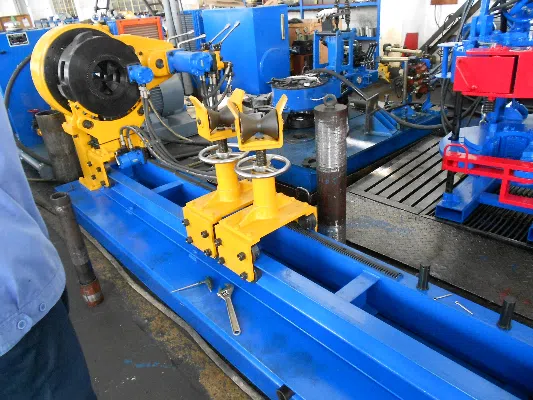
- Every joint in a well is a threaded connection, and every connection is a leak path if the torque is wrong. Under-torque backs out; over-torque galls the thread and destroys the shoulder.
- Manual tong lines and spinning chains put hands and backs in the swing radius of heavy steel.
- A mis-made casing connection is found downhole, after the string is run, the most expensive place to find it.
- Long lead times and missing spares stall a rig at day-rate cost.
Mechanizing the torque is what took the danger out of the job. As reported by SPE’s Journal of Petroleum Technology (2013), US Gulf of Mexico casing and pipe-handling incident rates fell from almost 14% in 1997 to 0.09% as manual tongs gave way to power tongs and controlled make-up, with the North Sea and Australia showing the same trend.
Engineering Note, why “reduce” not “eliminate”
Power and bucking tongs remove the manual handling that causes most tong injuries, but the tools themselves carry struck-by, backlash, and snub-line hazards and must be operated to procedure. What you gain is control: highly accurate torque that’s displayed and recorded on every joint, for both API and premium threads.
Torque class, tubular size, jaw configuration and inspection scope are confirmed for the selected tong or bucking-unit model in the quotation.
Matching a tool to your string?
Request the figures for your exact OD and torque →
The China Welong Oilfield Tong Range, Three Families, One Supply Chain
Grip mechanism, torque class and tubular dimensions must match the selected model. The quotation identifies the responsible manufacturer and agreed inspection scope.
These three families split by how the torque is applied and by which tubular they handle. Match the family to the operation first, then size the model to your OD and torque.
1 · Manual Tongs, rig-floor and workover make-up
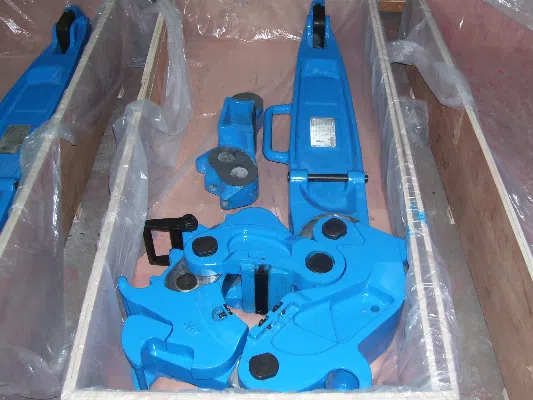
The job workhorses are manual tongs – the lever-and-jaw variety – used to make and break drill pipe, casing, and tubing whenever a hydraulic power tong isn’t required. Welong WL series manual tongs and its heavy-caliber/well-servicing type span a wide handling range. Manual tongs remain an eligible product category under API Spec 7K’s current licensing programme, and the quotation names the manufacturer that holds the licence.
| Type | Model | Handling size (in) | Max torque (kN·m) |
|---|---|---|---|
| Type B | WLB | 3⅜ – 13⅜ | 75 |
| Type SB | WLSB | 3½ – 13⅜ | 75 |
| Type SDD / DB | WLAAX | 2⅞ – 13⅜ | 75 |
| Type C | WLC | 2⅜ – 10¾ | 48 |
| Well Service | WLWC | 2⅜ – 10¾ | 27 |
| SDD (heavy) | — | 4 – 17 | 140 |
| Heavy Calibre | — | 13⅜ – 30 | 35 |
Browse the complete types list and all available jaw choices on the Welong manual tong page.
2 · Power Tongs, hydraulic make-up for casing, drill pipe & tubing
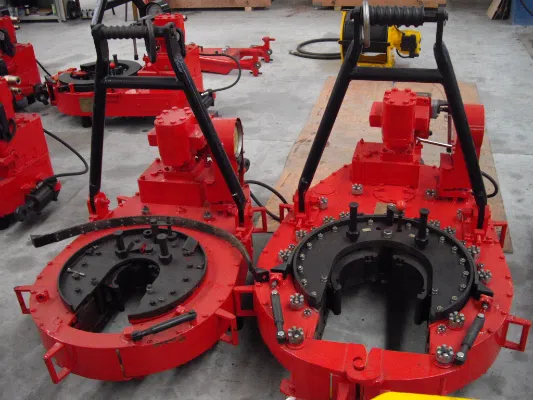
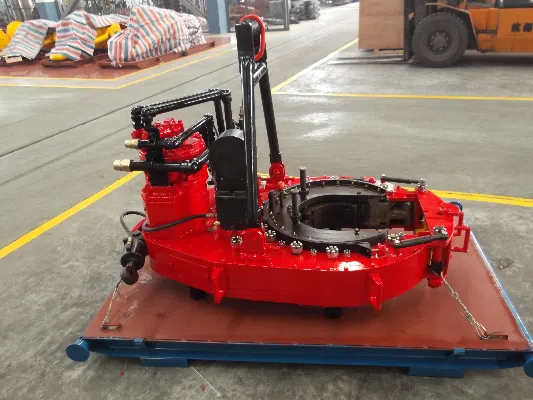
When hydraulic-powered high torque and precise speed control are necessary and impossible for a manual tong to deliver, there’s the hydraulic power tong: a rotating master tong combined with a non-rotating backup to hold the lower joint against reaction torque. Welong coordinates supply for three different styles of hydraulic power tong – casing, drill pipe, and tubing – each designed and manufactured to API Spec 7K requirements.
| Line | Model | Size range | Max torque | Weight |
|---|---|---|---|---|
| Casing (TQ) | TQ178-16 | 101.6–178 mm | 14.5–17.5 kN·m | 580 kg |
| Casing (TQ) | TQ340-85Y | 114.3–340 mm | 85–90 kN·m | 1700 kg |
| Casing (TQ) | TQ508-70Y | 244.5–508 mm | 48.9–70.5 kN·m | 1550 kg |
| Drill pipe (ZQ) | ZQ127-25 | 65–127 mm | 25 kN·m (18,440 ft·lbf) | 620 kg |
| Drill pipe (ZQ) | ZQ203-100 | 127–203 mm | 100 kN·m (73,750 ft·lbf) | 2400 kg |
| Tubing (XQ) | XQ89/3C | Φ60–89 mm | 3,300 N·m (low gear) | — |
| Tubing (XQ) | XQ140/20Y | Φ60–140 mm | 20,000 N·m (low gear) | — |
Welong is a tong supply coordinator, offering replacement casing running tool parts, dies and jaws to maintain your power tong at full operational readiness. All models, with corresponding gears and HPU options, are on the casing, drill pipe & tubing power tong page.
3 · Bucking Units, off-line, torque-controlled make-up & break-out
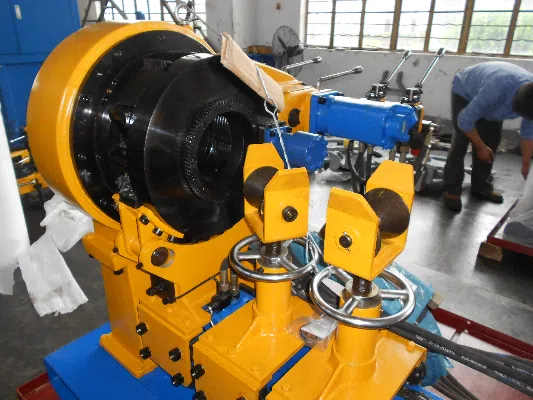
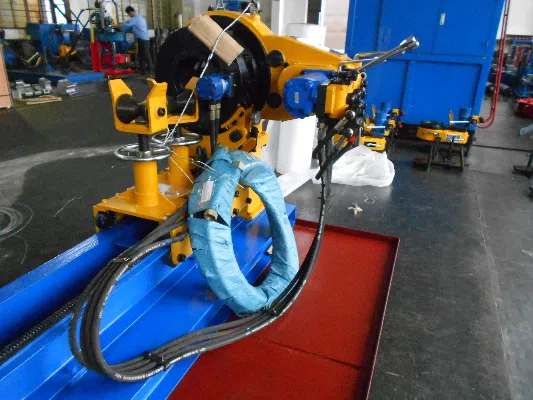
The shop floor rig alternative, the bucking unit (sometimes called a breakout unit), is designed to make and break threaded tubular components and couple tubing, casing and drill pipe. It can be used to make up stands of drill pipe or re-torque premium connections under computer controlled torque monitoring. Making up pipe in the shop avoids a long run and keeps work from becoming part of a critical rig path.
| Model | Application range | High-gear torque (kN·m) | Weight |
|---|---|---|---|
| WL178-20 | 2⅜″–7″ (60.33–177.8 mm) | 0.7 (low gear 20) | 4000 kg |
| WL273-45 | 2⅜″–13⅜″ (60.33–340 mm) | 18 (low gear 45) | 5000 kg |
| WL340-55 | 7″–20″ (177.8–508 mm) | 27 (low gear 55) | 6000 kg |
| WL760-134W | 13⅜″–30″ (340–762 mm) | 110 | 8000 kg |
Built to comply with API tubing thread connection practice, the Welong bucking unit can operate in manual, semi-automatic, or fully-automatic modes and is the recipient of a design in China. It runs in rotational and non-rotational configurations for tubular assembly in oil and gas threading and completion shops, with or without the torque-recorder option, full specifications are on the oilfield bucking unit page.
Need the numbers for your string?
Request the full figures →
How to Choose, The Welong Oilfield Tong Selection Matrix
A common mistake when selecting a tong is assuming that selecting based on the highest possible torque number is the right path. In truth, break-out torque alone can run two to three times the make-up torque, and a single torque reading can mask connection issues a torque-turn recording could have uncovered. Selecting the appropriate tong should be based on a balance between your required gripping mechanism, breakout capacity, and your quality assurance needs, not on a single value.
Think of your operation first, and catalog second – this is a sound selection process because the biggest torque number doesn’t always make for the correct tool. The following chart uses Welong’s internal ranges from 65mm up to 762mm to illustrate how job requirements translate to a tong family and specific model band, a selection principle that must be checked against the chosen model and well program.
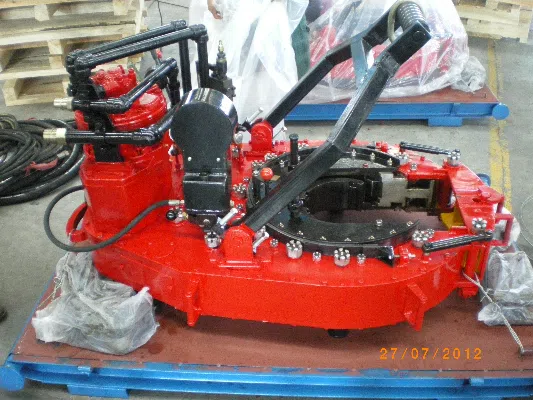
| Operation | Tubular / OD | Torque need | Recommended tool |
|---|---|---|---|
| Running casing (onshore/offshore) | 4½″–20″ | High, high break-out headroom | Casing power tong TQ340-35 → TQ508-70Y |
| Running / pulling tubing, workover | 2⅜″–5½″ | Moderate, backup essential | Tubing power tong XQ series |
| Making up drill pipe / BHA | 2⅜″–8″ | High, spinning + torque | Drill pipe power tong ZQ series |
| Light rig / occasional make-up | 2⅜″–13⅜″ | Lever-applied | Manual tong WLB / WLC / WLSB |
| Shop / off-line coupling & premium re-torque | 2⅜″–30″ | Computer-controlled, recorded | Bucking unit WL series |
Engineering Note, grip mechanism follows the tubular
As the applied torque increases, cam-curve gripping generates additional clamping force, which in practice protects thin-wall casing and tubing from being crushed. High-torque work needs independent hydraulic clamping instead, because a cam curve can’t deliver the radial force. The trade-off is real: more grip discipline for thin wall, more torque headroom for large casing, so, application by application, it’s the product family, not simply the maximum torque, that decides the right tool for the OD in front of you.
“
When a buyer sends us an OD and a torque number, our first question back is always about the connection and the record they have to hand to QA, because a tong that hits the number but can’t show a clean torque-turn curve fails the audit that matters.
Not sure which family fits your program?
Request a custom sizing recommendation for your OD and torque →
China Welong vs Imported & Manual Solutions, What Actually Drives Cost
Compare the selected tong against the buyer tubular, torque and inspection requirements; commercial terms and route are confirmed in the quotation.
| Dimension | Manual tong only | Imported branded power tong | Quoted configuration |
|---|---|---|---|
| Torque control / record | Operator feel + line pull | Gauged / torque-turn | Gauged; torque recorder option |
| Configured product families | Manual only | Usually one family | Selected family and size range confirmed by the quoted manufacturer |
| Build standard | Varies | API 7K design | Power tongs to API 7K reqs; SY-T5074 |
| Unit price | Lowest, hidden rig-time cost | Highest | Commercial terms confirmed by quotation |
| Terms | — | Often EXW/FOB only | FOB / CIF / DDP / DDU |
What actually drives your landed cost
An FOB tong price isn’t a landed cost. The real number is set by a few levers, and moving any one of them changes the quote more than the sticker does.
- Model torque class and the degree of automation (manual vs semi- vs full-auto bucking).
- If it covers a hydraulic power unit, torque recorder and a spare set of jaws.
- FOB vs. DDP – Incoterm and destination duty difference
- Inspection level, from standard in-process/final to added third-party witness.
Because the program specification varies, rather than offer an on list price, Welong prices against your requirements.
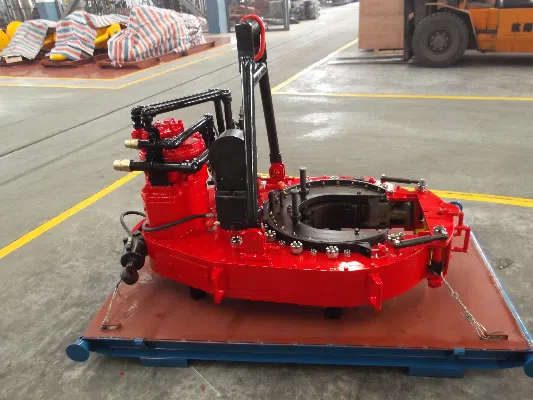
26 h
A 17,000-ft casing string run in 26 hours off controlled make-up, versus 41 hours running single joints — an industry data point on what recorded, mechanized torque saves in rig time.
Source: SPE Journal of Petroleum Technology (Weatherford GOM data). Illustrative of the method, not a Welong-measured result.
Want an apples-to-apples number for your spec?
Request a custom comparison & landed-cost estimate →
Specifications and Independent Inspection
For the selected model, the quotation identifies the responsible manufacturer, applicable specification and agreed inspection scope.
API Spec 7K
Power tongs designed & specified against the applicable requirements
API 7K (Manual)
Manual tongs remain an eligible product category under API’s 7K licensing programme; the licensed manufacturer is named on the quotation
API Tubing Thread
Bucking unit thread-connection practice (API 5B domain)
SY-T5074
Chinese drilling-equipment standard
SGS · DNV
Third-party inspection experience
How to check us yourself
Buyers who know and buy in the real world check oilfield manufacturers against API’s own searchable Composite List, the primary register API maintains. They do, we want them to. One nuance keeps the standards claim checkable: the quoted manufacturer builds and tests the selected power tong to API Spec 7K requirements, and the quotation names that manufacturer so the scope can be verified independently.
- Inspection routine: in-process & final upon each order plus 3rd-party witness (SGS/DNV) option, in line with API RP 7L inspection practice.
- We have the following test procedures available upon request: UT, MT, Load Test and Dimensional Inspection with photo verification for those who can’t travel to the facility.
- Founded in 2001; supplier, route and inspection scope are identified for the selected model.
- For a selected model, request the applicable drawing, manufacturer details and agreed inspection documentation with the quotation.
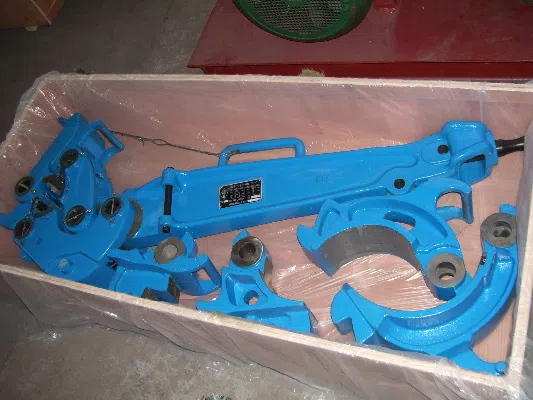
Procurement Guide, Lead Time, Terms, Custom & After-Sales
A complete RFQ identifies the tubular, thread family, torque range, selected model and inspection scope so the quotation can identify the responsible manufacturer and route.
Incomplete parameters are what usually make quotes take too long. Provide the information below and we’ll send back a quote complete with everything that is and isn’t included, from standard models to automated 508mm and 762mm designs.
- Product and model (or range of ODs and torques needed).
- Tubular type, thread family (API or premium), working pressure.
- Destination country and Incoterm desired – FOB, CIF, DDP, DDU.
- Required inspection level and any third-party witness.
Lead time, terms & support
Lead time varies by model, torque, automation level, and the inspection plan chosen – in most cases oilfield tongs and bucking units like this are produced and shipped to the schedule confirmed in the quotation once the specification is confirmed. Welong will send you a production and shipping schedule and keep you updated along the way. We’ll coordinate supply against your drawings if an OEM project, handle the sea/air/rail shipping, and facilitate in-process, final, and 3rd-party inspection with pictures.
Any post-delivery spare-parts scope is confirmed in the supply contract: jaws, dies, torque-gauge mechanisms – the tongs in the field stay in the field.
Engineering Tools & Calculators
Access our technical utilities to calculate torque headroom, convert operational units, and specify the exact tong model for your tubulars.
MODEL AND RFQ SPECIFICATION
Get the Right Oilfield Tong for Your String
Send your OD range, torque, thread family and destination, and we’ll find your model and return a quotation identifying the responsible manufacturer with the inspection plan put in writing.
Oilfield Tong FAQ
Oilfield tongs are make-up and break-out tools that grip and rotate casing, tubing, or drill pipe to torque threaded connections. They range from lever-operated manual tongs to hydraulic power tongs and off-line bucking units.
A manual tong applies torque through a lever and line and suits light or occasional make-up. A hydraulic power tong drives a rotating master jaw against a backup for higher, controlled, and recorded torque, the standard for casing, drill pipe, and production tubing.
An oilfield bucking unit is a shop machine that coordinates supply for up and breaks out threaded tubular connections off the rig, under computer torque control. It’s used for coupling casing and tubing, building drill-pipe stands, and re-torquing premium connections, not to be confused with the agricultural machine of the same name.
China Welong coordinates manual tongs, power tongs and bucking units against the selected tubular, torque and inspection requirements. The quotation identifies the responsible manufacturer.
Power tongs are designed and manufactured to API Spec 7K requirements and to SY-T5074; manual tongs remain an eligible product category under API 7K’s current licensing programme, with the licensed manufacturer named on the quotation. Power tongs are quoted as built and tested to API Spec 7K requirements, with the responsible manufacturer named on the quotation.
Yes. Torque class, size range, jaw configuration, gears, hydraulic power unit, and torque recorder are all built to your application, and the quoted manufacturer supplies to your drawing for OEM programs. Send the OD range, the thread family, and the torque window you work in, and we configure the model, jaws, gears, and recorder included, around those exact parameters rather than a fixed catalog build, so the tool matches your string instead of the other way around.
Not on its own. Break-out torque can be 2½–3 times make-up torque, and the torque-turn curve reveals shoulder and thread behavior that a single final number hides, which is why recorded make-up matters for premium and audited connections.
Lead time is set by model and inspection scope and is confirmed with a firm plan once the spec is agreed. We ship on FOB, CIF, DDP, or DDU terms by sea, air, or rail, with in-process, final, and optional third-party inspection.
Working with China Welong
Order Terms, Evidence and Next Steps
The commercial terms below apply to every oilfield tools order we quote. They are the same terms our quotation repeats back to you, so nothing on this page has to be re-negotiated once a drawing is on the table.
What we make, and from what
We work from 2D drawings and 3D CAD models (AutoCAD, Pro/ENGINEER and SolidWorks; .dwg and .igs).
Founded in 2001. Manufacturing at Xi’an, Shaanxi and at Jiyuan, Henan, with 30+ engineers on staff.
Forgings from 0.2 to 50 tons, finished to 0.01 mm machining precision. Material standards to ISO, BS, ASTM, ASME, DIN, JIS and GB.
How the price is set
Send a drawing and we reply within 24 hours; a drawing-based quotation follows in 1–3 working days.
Payment is T/T or L/C. We ship EXW, FOB, CFR or CIF; other Incoterms on request.
Orders ship in standard export wooden cases, or the packing you specify.
When it ships
Production lead times are confirmed with your quotation, based on quantity, process route and finishing scope.
We hold agreed items in stock and ship against your release to shorten delivery.
Who makes it, and who answers for it
Every quotation states whether the item is made in our own works or by an approved supplier we developed and supervise.
Material mills are re-audited every two years and approved by Welong before they run your order.
The evidence that travels with the order
An EN 10204-3.1B material certificate with chemical composition and mechanical properties, a dimensional measurement report, and UT and MT reports ship with your order.
Inspection is by coordinate measuring machine, ultrasonic, magnetic particle and X-ray.
Each piece carries a stamped serial number and stays traceable for five years to its chemical composition, mechanical properties and measurement report.
What to send to start
Send the drawing or a photograph of the part, the dimensions, the material requirement and the quantity to oiltools@welongpost.com, call +86 029 88331331 or message WhatsApp +86 135 7217 2362, or use the enquiry form on our contact page.
An engineer reviews it and comes back within 24 hours.
| Term | What we commit to |
|---|---|
| Quotation turnaround | Reply within 24 hours; drawing-based quotation in 1–3 working days |
| Production schedule | Confirmed with your quotation, by quantity, process route and finishing scope |
| Drawing formats | 2D drawings and 3D CAD models (.dwg, .igs) |
| Company | Founded in 2001 |
| Machining precision | 0.01 mm |
| Forging envelope | 0.2 to 50 tons |
| Serial traceability | 5 years, with the test coupon retained |
| Documents with shipment | EN 10204-3.1B certificate, measurement report, UT and MT reports |