Get in touch with Welong Company
Overshot Fishing Tools & Junk Baskets Built for Fast, Certain Fish Recovery
API 7-1 overshot, junk basket, reverse circulation junk basket and junk sub from a single supply chain, serving Europe, the US, the Middle East, Russia and South America.
2
Grapple types (Spiral & Basket)
3
Product lines (Overshot, Junk Basket, Junk Sub)
2⅜”–6⅝”
API REG/NC connections covered
2001
Founded
2
Catch-length options (Short & Standard)
4
Incoterms options (FOB/CFR/CIF/EXW)
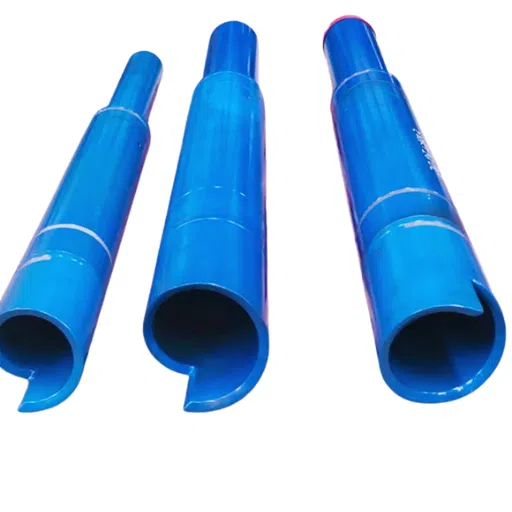
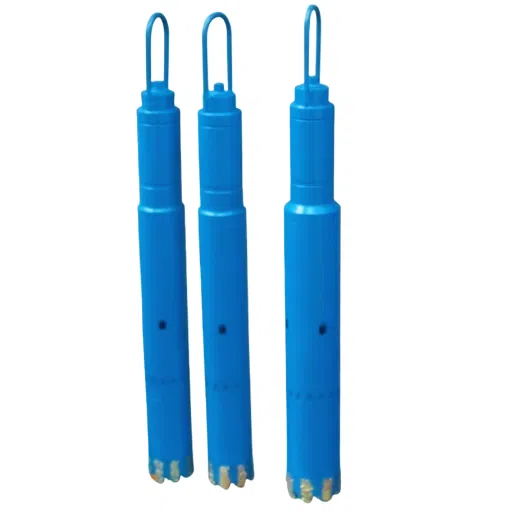
Stuck Fish, Lost Rig Time, Matching the Right Retrieval Tool to the Problem
Industry pipe-recovery references widely cite stuck-pipe downtime at $10,000 to over $1,000,000 per day depending on rig type (a figure repeated across multiple secondary sources, not a single audited study), which is why the tool you run on the first trip matters more than its unit price. Overshot fishing tools and junk baskets solve two different downhole problems that both stop a rig cold. Welong supplies both product families, plus the junk sub that supports them, from a single API-connection lineup.
Condition Mapping
-
A fish with a defined top end (parted drill pipe, tubing, sucker rod)Overshot (external catch, positive engagement)
-
Loose junk or debris at the bottom of the hole (bit cones, slips, hand tools, cuttings)Junk Basket or Reverse Circulation Junk Basket
-
Heavy debris that a bit or mill throws up while cutting (carbide teeth, bearings)Junk Sub run just above the bit
What a Fishing BHA Looks Like
A fishing bottom hole assembly runs the catch tool (overshot, spear, or mill) at the bottom, followed by a bumper sub for downward jarring blows, a hydraulic or mechanical jar, an accelerator to intensify the jarring action, and drill collars sized to the fish weight.
Sources: Drilling Manual, BHA Components · Drilling for Gas, Fishing Guidelines · GA Drilling Glossary
Not sure which tool your fish needs? Check My Fish-to-Tool Compatibility →
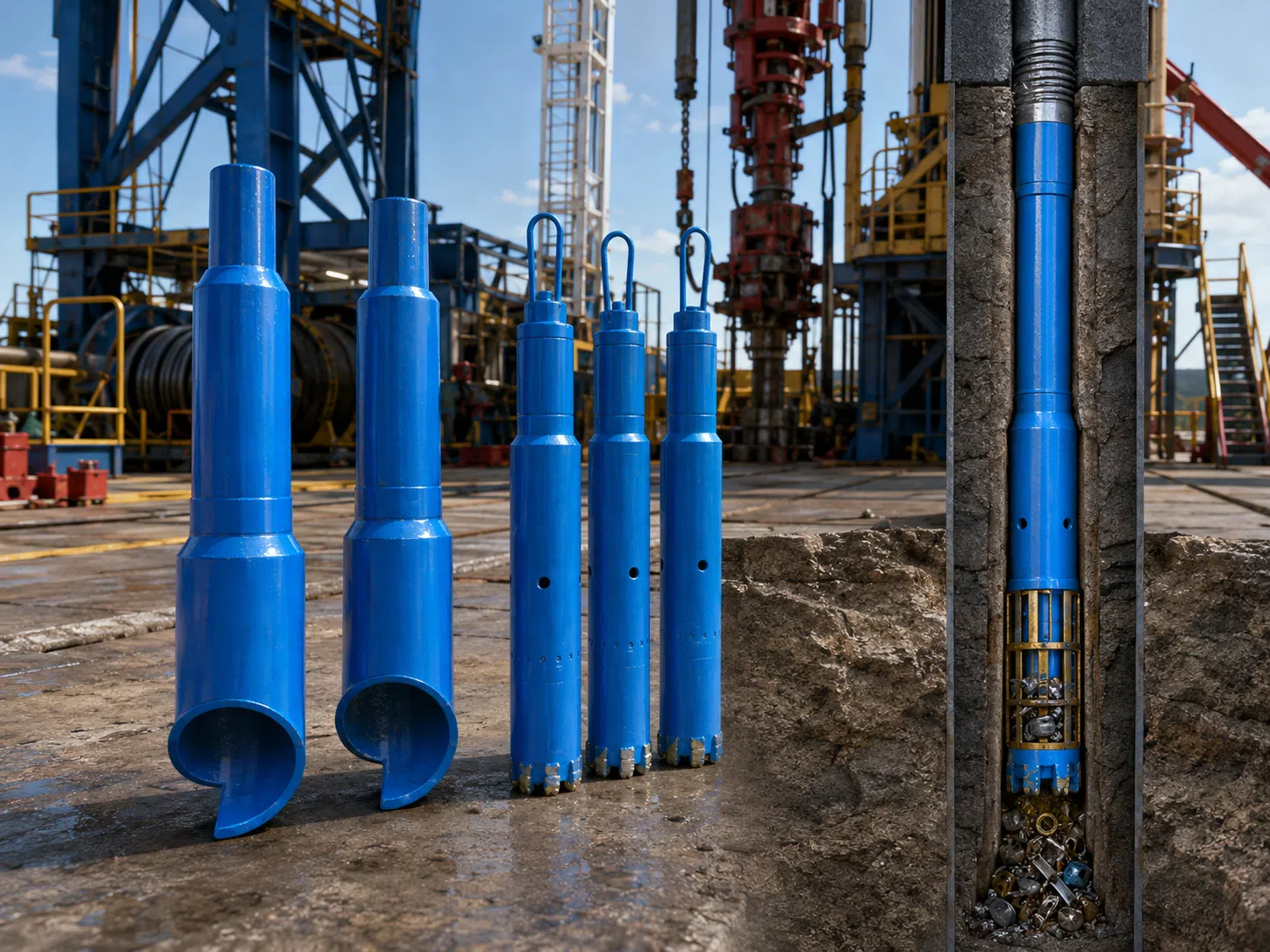
Junk Basket, Reverse Circulation Junk Basket & Junk Sub, Retrieval Product Line
Not every trip into the hole require an overshot to retrieve a broken fish. Debris requires a different approach; the goal is to catch and hold it, not grip and pull, and running the wrong tool for the debris type will send you home without it just as effectively as the wrong overshot.
Welong machines and inspects every junk basket, reverse circulation junk basket, and junk sub to the same API 7-1 connection baseline used across our overshot line, with in-process and final inspection standard on every order. Treating these three tools as interchangeable commodities is the mistake to avoid, because unlike a generic basket built to no stated connection standard, each Welong unit ships with its class and catch data defined, backed by our record of matching tool to fish description.
Reverse Circulation Junk Basket Size Range (Industry Reference)
A published product range for this tool class starts around 102 mm and goes up to 381 mm for the external body OD; the maximum catch size scales correspondingly up to 300 mm across the different connection sizes.
“We usually specify a particular type of tool then have Welong quote it,” notes one long-time customer of these retrieval tools, which Welong describes in terms of application rather than product type. (All of the Welong tool range is cross-referenced from published manufacturer catalog specifications; Welong is happy to supply the specific size and connection lineup information on request.)
Have your casing/hole size on hand?
API 7-1 Dashboard
Junk Basket, Circulating Debris Collection
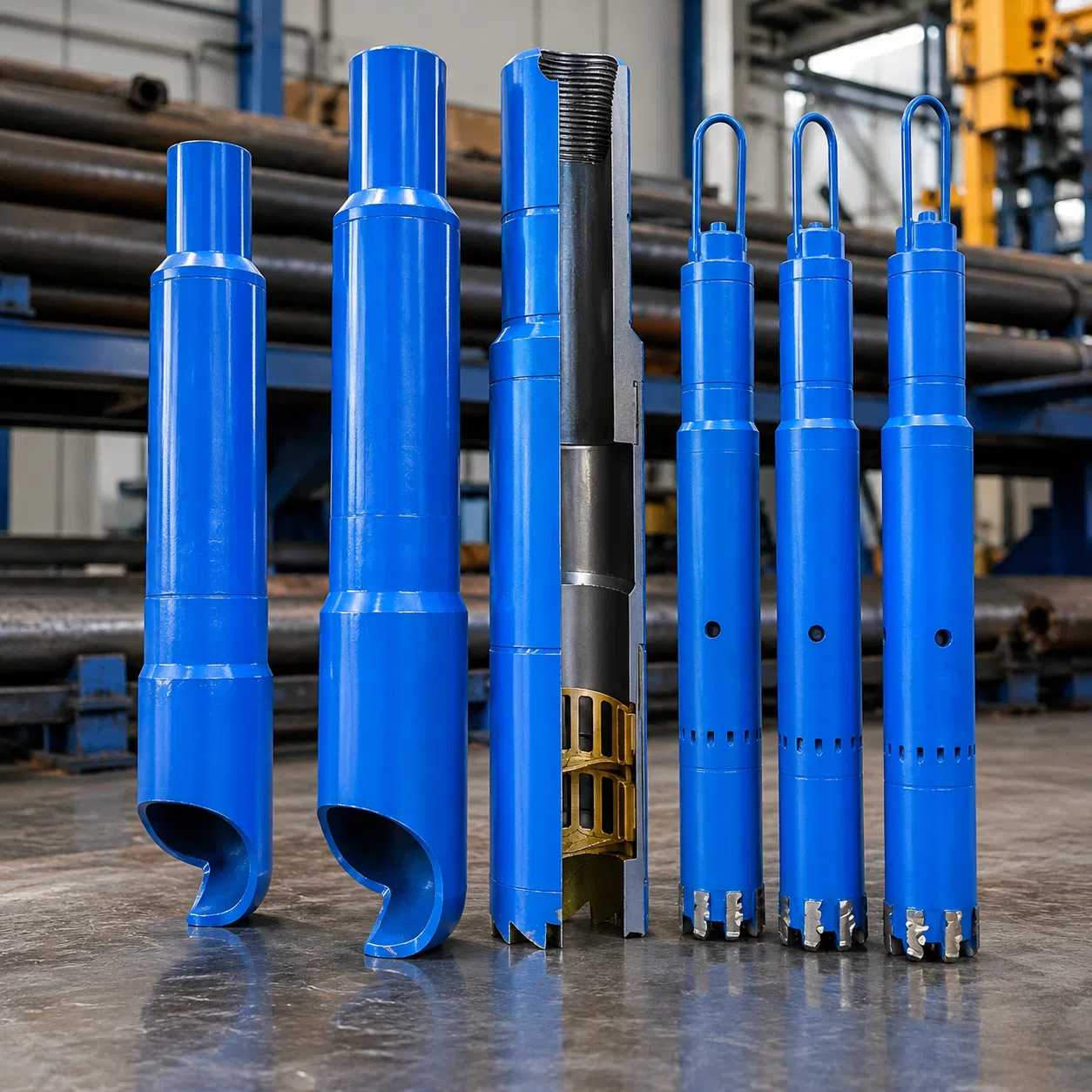
A junk basket run into the wellbore to collect any retrieve junk from the bottom of the hole. It uses reduced annular velocity so that the junk will settle into a steel barrel while the drilling mud is pumped around it by the rig’s mud pump. It’s the tool of choice for small metallic items, bit cones and tools dropped into the hole by a bit or mill.
Some junk baskets are convertibles to field fish magnets: the fingers are replaced by a magnet when the junk is known to be ferrous; this is useful if one trip must recover mixed junk and magnetic junk. A guide shoe at the bottom of the barrel centers the tool over debris, on the way down; a small improvement that’s the difference between a clean trip and a missed trip.
Reverse Circulation Junk Basket, When Standard Circulation Fails
A reverse circulation junk basket reverses the fluid path in a reverse flow valve, sending junk down the barrel rather than letting it settle. They can retrieve small junk on one trip that normal circulation junk baskets would miss. There are numerous published reports describing the successful use of reverse circulation junk baskets; for instance, one academic paper reports use of a 9.75” Junk Basket over several runs during a research drilling program.
A Limitation Worth Knowing Before You Order
Honestly, a reverse circulation junk basket can’t retrieve everything. Basket wall thickness is a geometrical consideration that can prevent successful recovery: if the internal bore is smaller than the external OD, and the fish is large in comparison to the hole, it’s possible it won’t fit downhole close to the bit. Very large single-piece fish generally call for an overshot rather than a large basket; verify the numbers with the list below, or ask for assistance.
Junk Sub, Companion Tool for Milling & Drill-Out Debris
A junk sub is a tool run below the bit with a specially profiled surface and a catch cup designed to trap and remove debris, or junk, from the wellbore, a design documented in published junk-retrieval sub patent filings. Junk Subs can effectively remove more difficult material than can be circulated out, such as tungsten carbide fragments from teeth and bits, and bits or bearings that are too heavy. They prevent debris from reaching and damaging the bit or downstream tools.
Similar work to the description above is found under the heading manufacturer: to catch and remove the ‘shivers and fallen objects that are too heavy to circulate out of the well’. It’s generally run just above the bit and proves its worth on every milling operation, not just when something goes wrong.
A junk basket is also run above the bit ahead of a core barrel or diamond bit in order to clear debris that might otherwise damage the expensive cutting bit, rather than purely for cleanup after a failure occurs. While many competitor catalogs don’t point this out, this proactive use of the junk basket protect equipment.
Overshot, Junk Basket or Junk Sub? — Fish-Condition Decision Tree
It’s possible to pick the wrong tool family entirely. This will require a full trip in and out of the hole, at whatever the prevailing daily rate happens to be. Asking just three questions in sequence will ensure you choose the right tool before ordering any equipment. This framework is used, since each family below is based on a unique method of catching or retaining material, not on any arbitrary product-numbering scheme.
Our field experience listening to engineers’ fish descriptions over the phone have informed this approach to classifying the fish capture process, it’s far more accurate than just defaulting to a single generic “fishing tool” product line, which could be entirely wrong if you’ve a graspable fish rather than small pieces of loose debris.
Question 1: Does the fish have a graspable top end?
- Yes, intact top: Go to Question 2 (Overshot family)
- No, loose debris or fragments with no top to grab: Go to Question 3 (Basket/Sub family)
Question 2: Is the fish diameter close to the hole diameter?
- Yes, tight clearance → Spiral Grapple Overshot
- No, normal clearance → Basket Grapple Overshot
- Top end damaged, or short of a standard bowl’s shoulder: Short Catch Overshot (either grapple)
Question 3: Is the debris being generated now (during milling) or already settled at bottom?
- Generated while bit is working, such as during a milling or drill-out run: Junk Sub
- Already settled, standard-size fragments → Junk Basket
- Already settled, such as small or fine particles missed by a standard basket: Reverse Circulation Junk Basket (if the fish is very near the bit diameter; see limitation above)
“Buyers usually call about which tool to run before they call about price. Get the fish diagnosis wrong on the first trip and you’re pulling the string to try again, that costs more than any of these tools ever will.” — Senior Application Engineer, Welong Fishing & Milling Tools
Skipping this sequence and guessing from habit, not confusion about the tool types, is the mistake we see most often. Welong built this decision tree because a wrong first guess costs a full trip, not just a wrong tool: unlike a supplier that quotes whatever you ask for, we quote what your fish description says you actually need.
Spiral Grapple Overshot
Condition
Parted drill pipe/tubing/sucker rod, tight fish-to-hole clearance
Why
Left-hand helix engages progressively without needing full bowl seating
Basket Grapple Overshot
Condition
Parted drill pipe/tubing, normal clearance
Why
Closes around full fish circumference, standard default
Short Catch Overshot
Condition
Damaged or short fish top
Why
Built specifically for tops too short for a standard bowl
Junk Basket
Condition
Loose bit cones, slips, hand tools at bottom
Why
Reduced annular velocity settles debris into the barrel
Reverse Circulation Junk Basket
Condition
Fine debris a standard basket misses (fish OD well under hole ID)
Why
Reverse flow path catches smaller junk in one trip
Junk Sub
Condition
Carbide teeth/bearings generated during active milling
Why
Run above the bit, traps heavy fragments before they travel further
Built to API 7-1, Manufacturing, Materials & Quality Control
A fishing tool failure inside the hole does more than simply result in the loss of the tool itself; it can turn what would have been a short recovery into a much longer process. As a fishing tool manufacturer, Welong built its supplier qualification process around the specific goal of anticipating questions from buyers before they’ve the chance to ask them.
Est. 2001 Oilfield tool manufacturing
In-Process Inspection
Standard on every order
Final Inspection
Standard on every order
SGS / DNV
Third-party inspection available
API REG / NC
Standard connection gauging
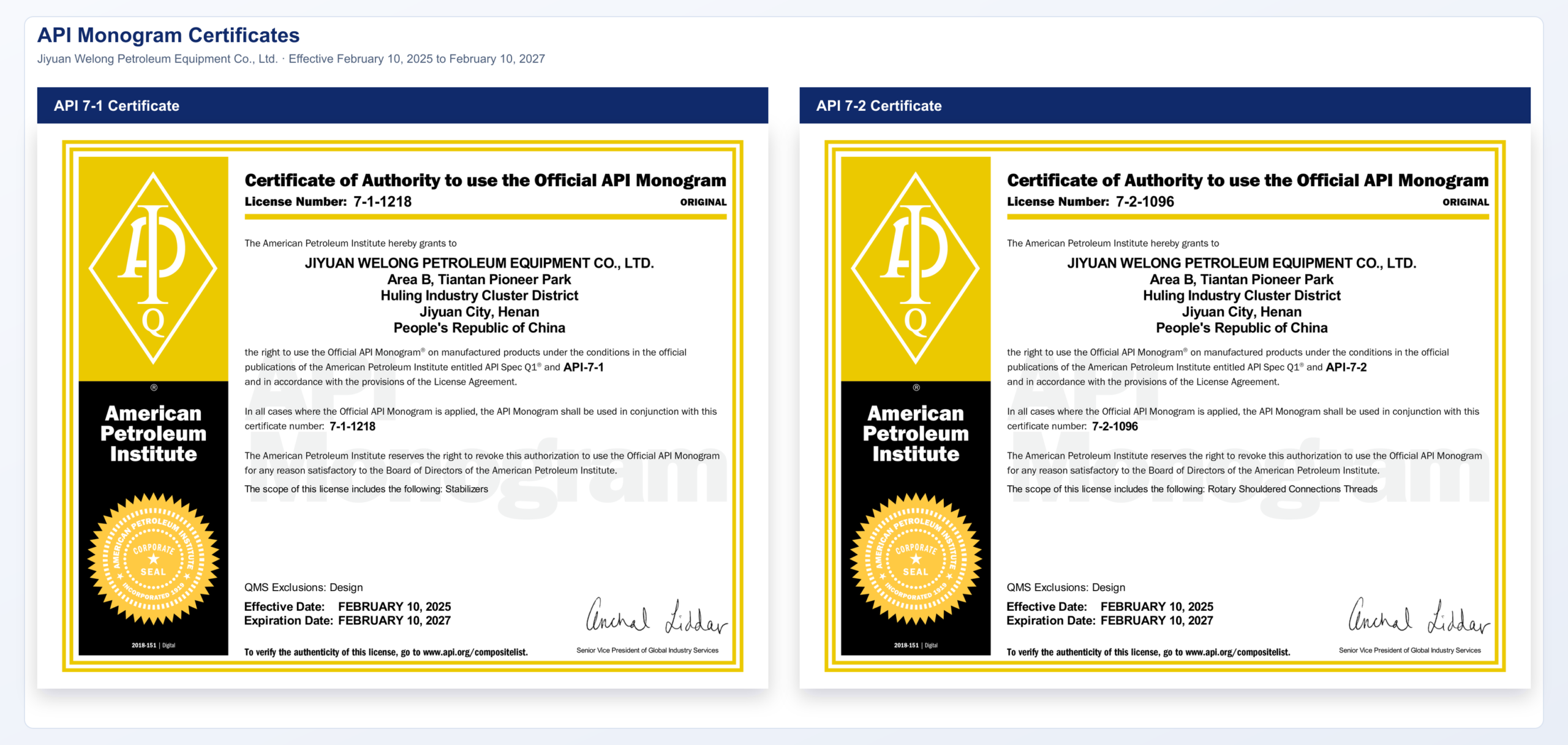
Connections for overshot and junk basket equipment are made in compliance with ANSI/API Specification 7-1, Rotary Drill Stem Elements. This standard details required thread and gauge specifications, with which all connections of each fishing string must conform. This is the same standard that Welong’s other fishing and milling tools follow, so all of Welong’s tools in a single tool-string share a common connection baseline rather than varying connection protocols from multiple suppliers.
Public patent files regarding overshots and junk baskets range from initial spring-loaded or wide-catch versions to recent improvements in catch-range, though no patent filings dated 2024-2025 were observed. This observation suggest that the overshot and junk basket designs have matured to a standardized, reliable technology instead of a rapidly developing design. Consequently, a product designed according to a stable standard rather than a changing specification is preferable.
Third-party inspection bodies such as SGS and DNV conform to internationally recognized standards for conformity assessment of inspection, such as ISO/IEC 17020. This is the foundation of Welong’s optional third-party inspection tier, in addition to our in-house program. For a purchasing manager working for an OEM to carry out a multi-well project on a strict schedule, proof of third-party inspection must be obtained prior to shipment of the first tool, and before any problems arise in the field. Since Welong ships to the Middle East, Russia, the US, Europe, and South America, familiarity with export documents and Incoterms is included in the normal scope of operations, unlike suppliers that treat export documentation as a low-priority add-on. With an extensive supply chain background serving international drilling equipment brands, Welong has also provided Supplier Development & Management, Purchasing Supervision, and Quality Control services since 2001.
SWIPE OR CLICK CARDS
Procurement Guide, Pricing, Lead Time & Incoterms
Industry references widely cite stuck-pipe downtime costs from $10,000 to in excess of $1,000,000 per day (depending on the rig and location; again, this is a common range cited by secondary sources, not a single official study), so the real risk associated with ordering a fishing tool is selecting the wrong one and losing the trip rather than its unit price. Our internal team bases pricing on field experience in grapple types, connections, and inspection tiers rather than a standard flat rate card.
$10K–$1M+
Published range for stuck-pipe rig downtime cost, per day (sector-wide published data, not Welong-specific)
Source: figure repeated across multiple independent pipe-recovery service providers and reference summaries (Wikipedia “Pipe Recovery Operations”; Renegade Pipe Recovery Services; Heavy Equipment Appraisal; U.S. Energy Information Administration drilling cost analyses), not a single primary study. Silver-tier TCO context, not a guaranteed savings claim.
Inspection tier levels are available in standard (in-process plus final) and standard plus third party (SGS/DNV).
We support FOB, CFR, CIF, and EXW options, comparing overall landed costs rather than only unit costs.
Shipping options include sea (standard) and air (urgent)
Match connection, grapple/catch-length, or basket type from the above tables before requesting a quote.
Which Incoterm Should You Pick
FOB places freight and import duties in your control, ideally for purchasers who work with a freight forwarder. EXW further places cargo loading responsibilities on your side, offering the most competitive price if your logistics team has ample experience. CFR and CIF positions are in the middle ground; we arrange insurance and freight to different degrees, so choose one based on who’s best suited to manage each element rather than solely on unit price.
Ordering overshot, junk basket, and junk sub together on one Incoterm and one inspection pass avoid three individual customs entries compared to purchasing from three suppliers. Procurement teams look at total cost of ownership, not lowest line item, a price-per-unit view misses the rig-day cost and risk that a one-stop-shop order removes for a procurement lead running a multi-well program today.
The trade-off buyers get wrong is picking the cheapest per-unit quote without checking total landed cost across all three tools; in practice, an industrial buyer running a multi-well program pay more when parts arrive on three separate schedules from three separate vendors. Welong’s combined quote avoids that, unlike vendors who price each tool in isolation.
Pipe recovery & procurement digital toolkits
Access our interactive engineering calculators and logistics evaluators to optimize your fishing operations.
Fish-to-tool selector
Input your debris type or fish conditions to instantly determine whether an overshot, junk basket, or junk sub is the optimal choice for your recovery operation.
Launch SelectorFish OD & hole ID checker
Calculate geometric clearances between your fish outer diameter and the wellbore inner diameter to ensure safe catch-and-retrieve limits.
Open CalculatorIncoterm & landed cost picker
Compare FOB, CFR, CIF, and EXW logistics models to find the most cost-effective shipping arrangement for your multi-tool procurement.
Start EvaluationFrequently asked questions
Technical specifications and procurement insights
When the fish has a grabbable top, drill pipe, tubing, or sucker rod, an overshot is the right tool. If loose debris with no grabbable top is present, such as bit cones or hand tools, run a junk basket instead. The Fish-Condition Decision Tree shown above takes the user down either path.
A junk sub is a down-hole tool with a profiled external surface that catches large, heavy debris like carbide teeth, bit fragments, and bearings from an active milling or drill-out run. They’re usually run just above the bit and not on their own fishing trip.
When the fish diameter sits close to the hole diameter, a spiral grapple work best since it’s designed with a left-hand helix. A basket grapple surrounds the entire fish circumference, the more common solution when there’s normal clearance.
Not always. Basket grapple wall thickness reduces internal catch bore relative to the basket’s outside diameter. If the fish is large in relation to the hole size or near the bit diameter, a reverse circulation junk basket might not clear it. Large single piece fish require an overshot or alternative retrieval.
Yes, standard on every order are both an in-process and a final inspection. If an independent third party certificate is required by the customer’s compliance framework, SGS and DNV third-party inspection are available as additional options.
Yes. The standard catch length and connection classes for both spiral and basket grapples can be combined to meet specific customer catch ranges. Customers simply provide their required specification, which is covered under our same inspection and Incoterms framework.
These three tools commonly occur together during the same fishing or milling operation. When ordered as a combined purchase, all three ship under a single Incoterm and one inspection pass. That reduces coordination effort for the three distinct suppliers and avoids three customs entries.
It depends. While these three tools do clear debris after a problem has occurred, junk baskets also protect bit cutting tools from debris damage when used proactively ahead of core bits or diamond bits, prior to the start of the run’s drill-out operation.
ANSI/API Specification 7-1, Rotary Drill Stem Elements, defines the thread and gauge specifications for REG and NC connections that Welong uses across its entire overshot, junk basket, and junk sub product line.
Assuming one tool can handle both a grabbable fish and loose debris is the most common mistake. Because each has a distinct operating principle, external catch versus internal collection, selecting the wrong tool means an additional run at significant rig-day cost.
Yes. Short catch overshots are built for fish tops too short or too damaged to engage in a standard-length bowl, available across Welong’s connection range in both spiral and basket grapple configurations.
Types of overshot break down by grapple (spiral or basket) and by catch length (short catch, standard or wide catch). The parts of the overshot include the top sub, bowl, grapple, grapple control and guide as explained in the previous sections.
Procurement & Capability
Overshot & Junk Basket Capability Review
China Welong reviews the buyer drawing, product specification and inspection scope before quotation.
24 hEngineer-reviewed quotation on business days
2001Founded in 2001
30+30+ engineers on staff
5 yrStamped serial traceability
Quotation Scope and Commercial Terms
Pricing is prepared against the selected product configuration, material route, inspection scope and shipment terms.
- Quotes are returned within 24 hours on business days, reviewed by an engineer.
- T/T or L/C by wire transfer.
- We ship EXW, FOB, CFR or CIF; other Incoterms on request.
- We work from 2D drawings and 3D CAD models (AutoCAD, Pro/ENGINEER, SolidWorks; .dwg and .igs).
Production Planning
Production timing is confirmed with the quotation after quantity, process route and finishing scope are reviewed.
- We hold agreed items in stock and ship against your release to shorten delivery. Feasibility is confirmed at drawing review.
- Manufacturing at Xi'an, Shaanxi and at Jiyuan, Henan.
- 0.01 mm machining precision.
- Material standards to ISO, BS, ASTM, ASME, DIN, JIS and GB.
- Orders ship in standard export wooden cases, or the packing you specify.
Order Review and Responsibility
The responsible manufacturer, inspection scope and document package are identified for the selected item.
- Every quotation states whether the item is made in our own works or by an approved supplier we developed and supervise.
- We develop, audit and supervise the mills and workshops that make your parts: material mills are re-audited every two years and approved by Welong before they run your order.
- Forgings from 0.2 to 50 tons.
Specification and Inspection Evidence
The specification table on this page is the technical basis for this review: its numeric rows define what we quote, manufacture and inspect against.
- Each piece carries a stamped serial number and stays traceable for five years to its chemical composition, mechanical properties and measurement report, with the test coupon retained.
- An EN 10204-3.1B material certificate with chemical composition and mechanical properties, a dimensional measurement report, and UT and MT reports ship with your order.
- Inspection is by coordinate measuring machine, ultrasonic, magnetic particle and X-ray.
Request a Product Review
Send the drawing, product specification and inspection requirements for a quotation review.
![Choke & Kill Hose: [Field Guide]](https://welongoiltools.com/wp-content/uploads/2026/07/choke-kill-hose-guide-featured-1-150x150.png)