Get in touch with Welong Company
How to Order, MOQ, Lead Time, Incoterms & Custom Packaging
BOP Hose, API 16D Fire-Resistant BOP Control Lines
The hydraulic lifeline that has to survive the one event your whole blowout preventer exists to stop.
A BOP hose is the high-pressure hydraulic hose that carries the command to close a blowout preventer, so it earns its keep only in an emergency. Welong supplies these industrial control lines in 1/2” to 1-1/2” bore, in 5,000 psi and 10,000 psi working-pressure classes, built to the fire-test requirements of API Spec 16D 10.1.2. As a supply-chain and quality-control company rather than a hose brochure, we wrote this page to help you specify and audit the line, not to sell you a slogan.
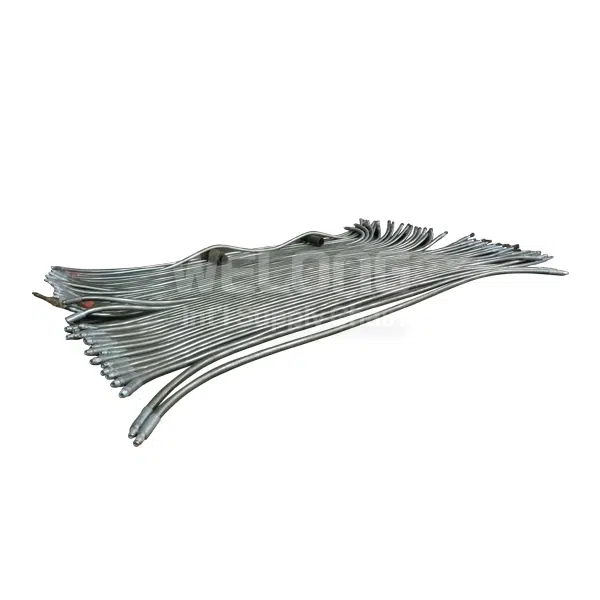
1/2″–1-1/2″
Inside diameter range
5k / 10k psi
Working-pressure classes
1300°F
Fire test, 5 min (API 16D §10.1.2 criterion)
-40 to +121°C
Service temperature
S.S. armor / polymer
Two cover constructions
Per-lot docs
Test report + conformance
The Control Line Is Not Where BOPs Usually Fail, Until There Is a Fire
01 / API 16D Signal
If it fails before the preventer closes, the closure signal doesn’t arrive, and this is the sole circumstance under which the API 16D 10.1.2 fire test is required.
02 / Barrier Failure
Well-control barrier failures aren’t academic. The January 2018 Pryor Trust gas-well blowout and fire in Oklahoma, investigated by the US Chemical Safety Board, killed five workers after the primary and secondary well-control barriers both failed, a sequence detailed in OSHA’s well-control guidance.
03 / Safety Reqt
When a well has to be shut in to protect rig personnel, that control line has to be dependable, and its fire rating becomes a drilling-safety requirement.
04 / Verification
Reliability that shows up only during extreme events is the hardest thing to confirm on a spec sheet, which is why the certificate and test report tell you far more than marketing material.
05 / Definition
A “BOP hose” here refers specifically to an oil and gas well blowout-preventer control line, not to an expandable gardening hose or a kill/choke line (covered separately below).
06 / Hydraulics
Its function is hydraulic transmission of a shut-in command to a blowout preventer during drilling operations, holding well pressure under high pressure.
07 / The Ultimate Constraint
Its constraint is to survive flames long enough for that operation to complete.
References: U.S. Chemical Safety Board; Pryor Trust investigation; OSHA Well Control eTool; peer-reviewed analysis of BOP failure data (arXiv2301.00844). Note: We cite the Pryor Trust investigation to provide context, not as an example of BOP hose failure.
Welong BOP Hose Line, Sizes, Pressure Classes and How to Pick One
In this category, one error in specifying is pervasive: the belief that a larger bore size closes the preventer more quickly. Hydraulic models of BOP control systems have repeatedly shown that the reverse is true; a larger bore can increase fluid volume and return line friction, potentially delaying closure.
Bore size is a match, not a maximum
Too small a bore causes a high loss of pressure and heat that degrade the tube. Correct sizing means matching bore to closure volume, not grabbing the biggest one on the shelf.
Stainless-Steel Armor Type
High-tensile steel wire reinforces the tube under a stainless-steel outer casing, giving a rugged control line that needs direct-flame protection and mechanical abrasion resistance on the rig floor.
High-Molecular Polymer Type
A polymer-jacketed construction where light weight and flexible routing matter more than steel armor, while keeping the oil-resistant tube and fire-resistant cover.
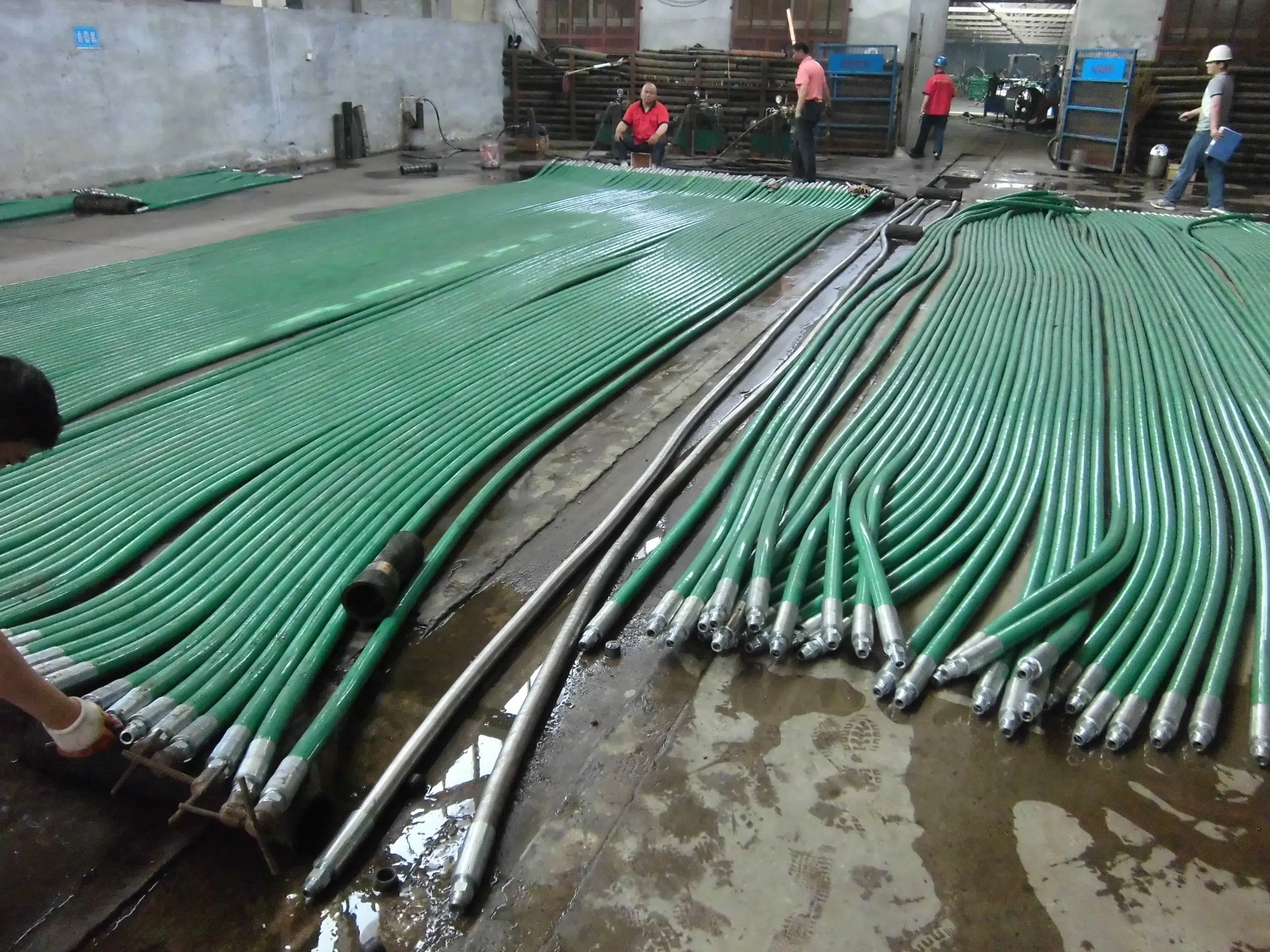
The quotation identifies the proof-test scope and records for the selected assembly, and both constructions share an oil-resistant synthetic-rubber (nitrile) inner tube, spiral or braided steel-wire reinforcement, and a flame-resistant cover, an arrangement whose fire-guarded lineage traces to US Patent 4,367,889. Unlike a generic hydraulic hose, a BOP control line is built for one fire-exposed duty, which is why the tolerance on bend radius and cover integrity matters. The full dimensional range is below.
Standard
US Patent 4,367,889
Quality
Proof-Test Scope per Order
| Inside Dia. (in) | Inside Dia. (mm) | Working Pressure (psi) | Working Pressure (MPa) | Test Pressure (psi) | Min. Burst (psi) | Min. Bend Radius (mm) |
|---|---|---|---|---|---|---|
| 1/2 | 12.5 | 5,000 | 34.5 | 7,500 | 15,000 | 210 |
| 1/2 | 12.5 | 10,000 | 69.0 | 15,000 | 25,000 | 210 |
| 3/4 | 19.0 | 5,000 | 34.5 | 7,500 | 15,000 | 280 |
| 3/4 | 19.0 | 10,000 | 69.0 | 15,000 | 25,000 | 280 |
| 1 | 25.0 | 5,000 | 34.5 | 7,500 | 15,000 | 360 |
| 1 | 25.0 | 10,000 | 69.0 | 15,000 | 25,000 | 360 |
| 1-1/4 | 31.5 | 5,000 | 34.5 | 7,500 | 15,000 | 460 |
| 1-1/4 | 31.5 | 10,000 | 69.0 | 15,000 | 25,000 | 460 |
| 1-1/2 | 38.0 | 5,000 | 34.5 | 7,500 | 15,000 | 560 |
| 1-1/2 | 38.0 | 10,000 | 69.0 | 15,000 | 25,000 | 560 |
Decision matrix, matching bore and pressure to the job
| If your control system is… | Reference bore | Pressure class | Cover to specify |
|---|---|---|---|
| Surface stack, standard accumulator | 1/2″ – 3/4″ | 5,000 psi | S.S. armor |
| Higher-flow function lines | 1″ – 1-1/4″ | 5,000 psi | S.S. armor |
| Elevated working-pressure requirement | 1/2″ – 1-1/2″ | 10,000 psi | S.S. armor |
| Weight / routing-constrained runs | 1/2″ – 1″ | 5,000 psi | Polymer type |
API 16D vs 16C vs 7K vs 16A, The 4-Standard Decoder
Confirm the applicable standard and product-lot documentation before issuing the purchase order.
STANDARD DECODER MATRIX
API 16D
TARGET SPEC
Governs
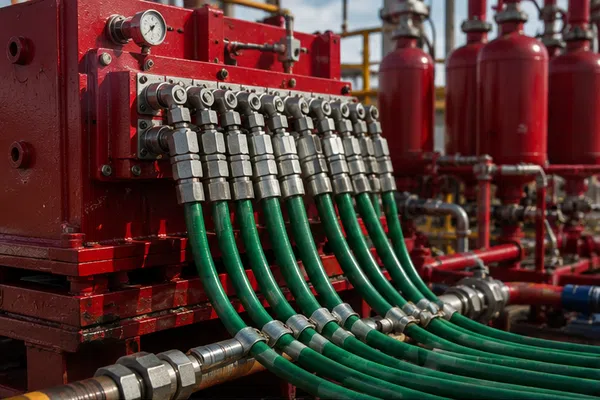
Control systems for well-control equipment — the BOP control line
Reference Pressure
5,000–10,000 psi hydraulic control
Where it lives
Accumulator unit to the BOP stack
API 16C
Governs
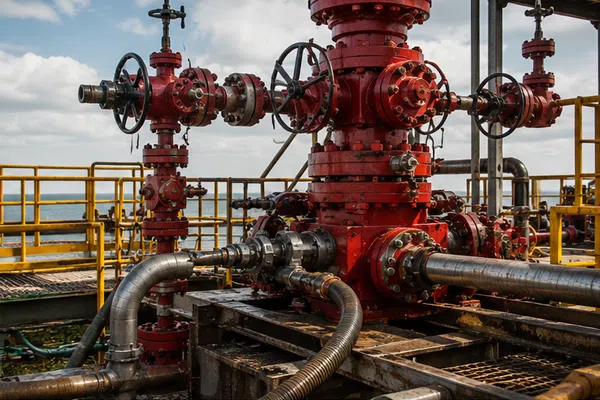
Choke & kill systems handling wellbore fluid
Reference Pressure
10,000–15,000 psi flow
Where it lives
Choke and kill manifold lines
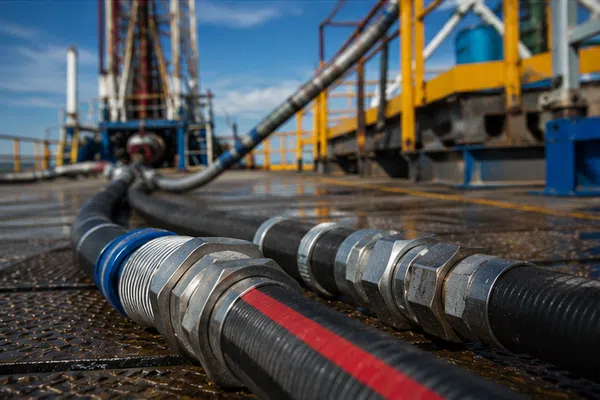
API 7K
Governs
Rotary, vibrator and cement / mud hoses
Reference Pressure
5,000–7,500 psi circulation
Where it lives
Standpipe, swivel, mud circuit
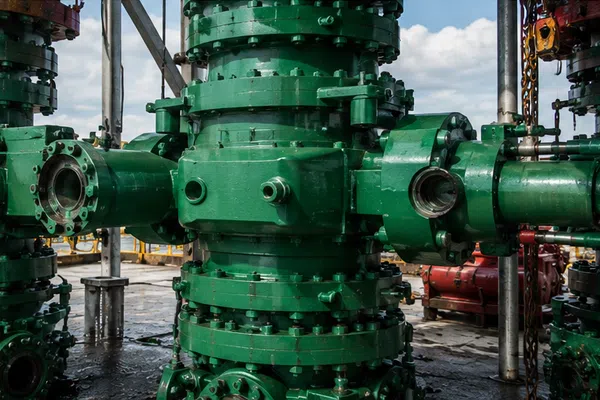
API 16A
Governs
The drill-through BOP equipment itself
Reference Pressure
Equipment spec, not a hose
Where it lives
The preventer body, not its lines
API 16D is the control-line standard, and getting it wrong is the mistake that fails an audit, so Welong quotes only the API 16D control-line specification for a BOP control line, never a 7K or 16C substitute. That resolves the two questions engineers ask most, and both answers are no:
VS API 16C
Click to reveal structural difference
A BOP control hose is not the same as an API 16C choke-and-kill hose, which runs a higher pressure regime and a different fluid compatibility.
VS API 7K
Click to reveal operational difference
It is not an API 7K rotary drilling hose either, since that circuit carries mud rather than a shut-in command. Buying across those lines is how a compliant-looking hose fails an audit.
API 16D Design Basis and Order Evidence
Confirm the applicable requirement for the individual hose assembly rather than relying on a blanket label.
Confirm the product-lot test report and the applicable standard requirements for the hose assembly.
So the pertinent question isn’t “Is it certified?” It’s “What does the piece of paper in front of me actually say?” An API 16D BOP control line achieves respect, much like an accumulator does – through an accredited third-party fire test documenting its fire resistance and the resulting supporting evidence in a traceable format.
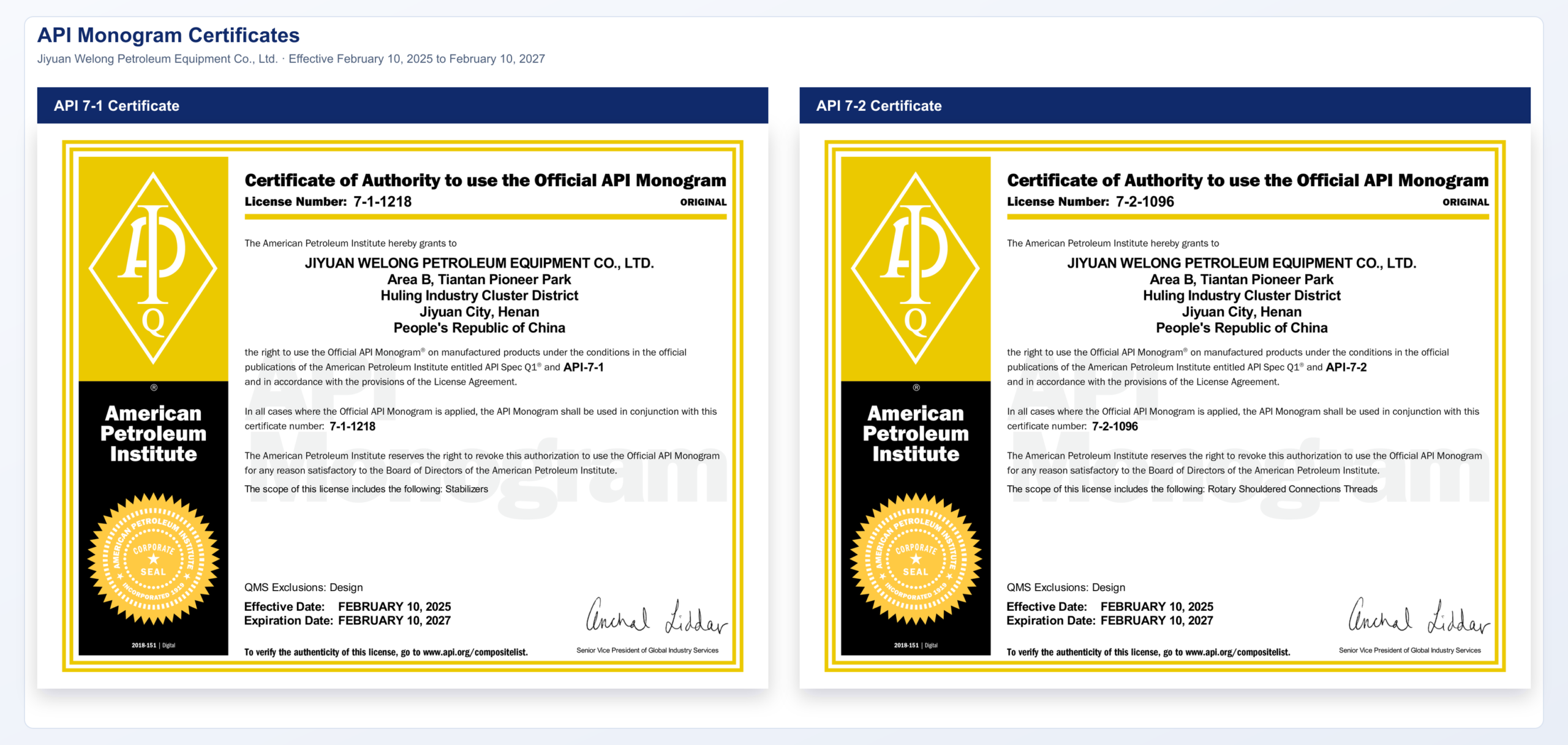
The 5-Line Certificate Check
Before you take any BOP control hose against an API 16D claim, ensure the certificate contains these five items:
An accredited entity such as Lloyd’s Register, not the manufacturer’s stationery.
An item of reference you can use.
The precise fire-test criteria you’ve identified, e.g., API 16D 10.1.2 and Lloyd’s OSG1000/499.
Genuine beginning and ending dates; certificates have an expiration.
A designation of whether it covers a system, component, or hose in a particular range of sizes.
Fire-performance requirements should be confirmed from the applicable test report for the selected BOP control hose.
For the selected hose assembly, request the applicable fire-test report and product-lot documentation before purchase.
CRITICAL SURVIVAL INTERVAL
1300°F / 5 MIN
The industry fire-test criterion a BOP control line is built to hold — the interval in which a closing command must still complete.
Criterion associated with API 16D §10.1.2 & the Lloyd’s Register 1000/499 fire test. Test report issued per lot on request.
Confirm quality records
Supplier Review
Confirm declared status
Founded 2001
SGS / DNV
Third-party inspection
Auditing a supplier’s claim right now?
Verify the maker’s applicable product documentation before purchase.public API Composite List.
Request product information
→
Verify the maker’s applicable product documentation before purchase.public API Composite List.
PROCUREMENT // 16D
System section 09 // 16d
Procurement guide
Quote variables & lead time
Quoted pricing is only a saving if the total landed cost holds up. Re-certification, rework and delivery risk are where an apparent bargain quietly erodes, so we publish the variables that drive a quote and the document trail that US offshore rules expect.
Trade terms
FOB, CIF, DDP and DDU as appropriate for your transport and logistics plan.
Transport
By sea, rail or air is dictated by the destination and required lead-time.
Inspections
Third-party inspection may be arranged for selected orders; the quotation confirms the provider, scope, hold points and records.
Tell us those five and the application to get an application-specific quotation instead of a catalogue number. Variables set to your order.
Engineering Toolkits
TOOL // 01
API Standard Decoder
Evaluate BOP control line specifications against API 16D testing protocols and fire-rating criteria.
Access API Decoder →TOOL // 02
Certificate Auditor
Verify pressure test records, material traceability, and third-party inspection documentation.
Launch Auditor →TOOL // 03
Bore & Pressure Selector
Determine required internal diameter and pressure class based on accumulator volume and stack requirements.
Start Bore Selector →Frequently Asked Questions
What is a BOP hose?
A BOP control hose carries a hydraulic closing signal from an accumulator unit to a blowout preventer. For the selected hose, confirm the applicable API 16D 10.1.2 fire-test requirement, responsible manufacturer and test report in the quotation.
Does API 16D certify the individual hose assembly?
A hose assembly should be supplied with the applicable fire-test report and product-lot documentation.
Can this hose be used as an API 16C choke and kill hose?
No. API 16C covers choke and kill hoses which carry wellbore fluid at higher pressures. A blowout preventer control hose and a choke-and-kill hose are distinctly different components and aren’t interchangeable even if the bore size appears to be the same.
Is a BOP control hose the same as an API 7K rotary drilling hose?
No. API 7K applies to rotary, vibrator, and mud hoses which circulate drilling fluids. A blowout preventer control hose transmits a hydraulic closing command and is specified to API 16D.
Does a larger inside diameter always close the BOP faster?
No, and this one trips up many people. Using an oversized bore can increase volume and add resistance, thereby delaying system response time, whereas an undersized bore causes pressure drops and adds heat which can degrade the tube material. Always specify the hose bore size based on the closing volume required, the hydraulic system pressures and confirmed with the accumulator sizing, rather than arbitrarily choosing the largest bore size.
What working pressures and blowout preventer hose sizes are available?
Two different pressure classes are available; 5,000 psi (34.5 MPa) and 10,000 psi (69 MPa), for all available sizes from 1/2″ to 1-1/2″ ID, corresponding to the requirements of your accumulator and blowout preventer stack.
What temperature range does the hose handle?
Operating range is -40°C to +121°C. The quotation must confirm whether the selected hose has evidence against the applicable API 16D 10.1.2 fire-test criterion; that criterion describes a short-term flame-survival test rather than a continuous rating.
How often should a BOP control hose be replaced?
When your well-control maintenance program indicates replacement, due to issues such as kinking, cover abrasion, armor corrosion, or excessive pressure-cycle fatigue, replace the hose as a complete assembly. Don’t field-repair.
What information do you need to replace an existing hose?
Key details include inside diameter, pressure class, assembly length, end connection type, and cover type. Simply provide the specification of the existing hose, and we’ll furnish a direct cross-reference and associated test documentation package.
Can a damaged BOP hose be repaired?
Never repair a safety-critical control hose in the field. For a replacement assembly, confirm the applicable API 16D 10.1.2 fire-test basis, responsible manufacturer and current test documentation in the quotation.
How do I verify a supplier’s API 16D claim?
Use a numbered, dated, clause-specific test report to verify the fire-rating requirement.
Are Welong hoses available in armored and non-armored construction?
Yes. Stainless steel armor for direct flame and abrasion protection, and a high-molecular-weight polymer type where the application’s need for low weight and routing flexibility leads. In both cases, you still retain the oil-resistant tube and fire-resistant cover.
Procurement & Capability
BOP Hose Capability Review
China Welong reviews the buyer drawing, product specification and inspection scope before quotation.
This review is scoped to the BOP Hose configurations set out in the specification table on this page — 10 documented rows covering Inside Dia. (in), Inside Dia. (mm), Working Pressure (psi) and Working Pressure (MPa).
24 hEngineer-reviewed quotation on business days
2001Founded in 2001
30+30+ engineers on staff
5 yrStamped serial traceability
Quotation Scope and Commercial Terms
Pricing is prepared against the selected product configuration, material route, inspection scope and shipment terms.
- Quotes are returned within 24 hours on business days, reviewed by an engineer.
- T/T or L/C by wire transfer.
- We ship EXW, FOB, CFR or CIF; other Incoterms on request.
- We work from 2D drawings and 3D CAD models (AutoCAD, Pro/ENGINEER, SolidWorks; .dwg and .igs).
Production Planning
Production timing is confirmed with the quotation after quantity, process route and finishing scope are reviewed.
- We have 30+ engineers on staff. Manufacturing sites are at Xi'an, Shaanxi and at Jiyuan, Henan.
- Orders ship in standard export wooden cases, or the packing you specify.
Order Review and Responsibility
The responsible manufacturer, inspection scope and document package are identified for the selected item.
- Every quotation states whether the item is made in our own works or by an approved supplier we developed and supervise.
- We develop, audit and supervise the mills and workshops that make your parts: material mills are re-audited every two years and approved by Welong before they run your order.
Specification and Inspection Evidence
The specification table on this page is the technical basis for this review: its numeric rows define what we quote, manufacture and inspect against.
Request a Product Review
Send the drawing, product specification and inspection requirements for a quotation review.
![Choke & Kill Hose: [Field Guide]](https://welongoiltools.com/wp-content/uploads/2026/07/choke-kill-hose-guide-featured-1-150x150.png)