Get in touch with Welong Company

Quotation-confirmed inspection scope
Tricone Drill Bit
Tricone Drill Bit Supply | Welong
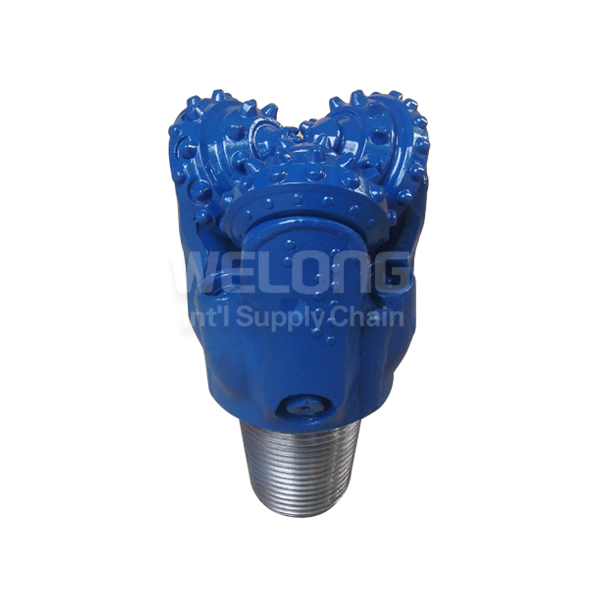
Your tricone drill bit translates weight and rotation into a cutting action on the formation, chipping and grinding to produce broken chips – when the tooth type, bearing assembly and IADC series are suited to the rock being drilled. Milled tooth and TCI tricone drill bits are supplied through a quotation-confirmed production route and are available from 43/4 inches up to 36 inches across multiple connection sizes compliant to API 7-1 – with a recommendation supported by a matrix rather than a catalogue sheet.
Request a Bit Selection Quote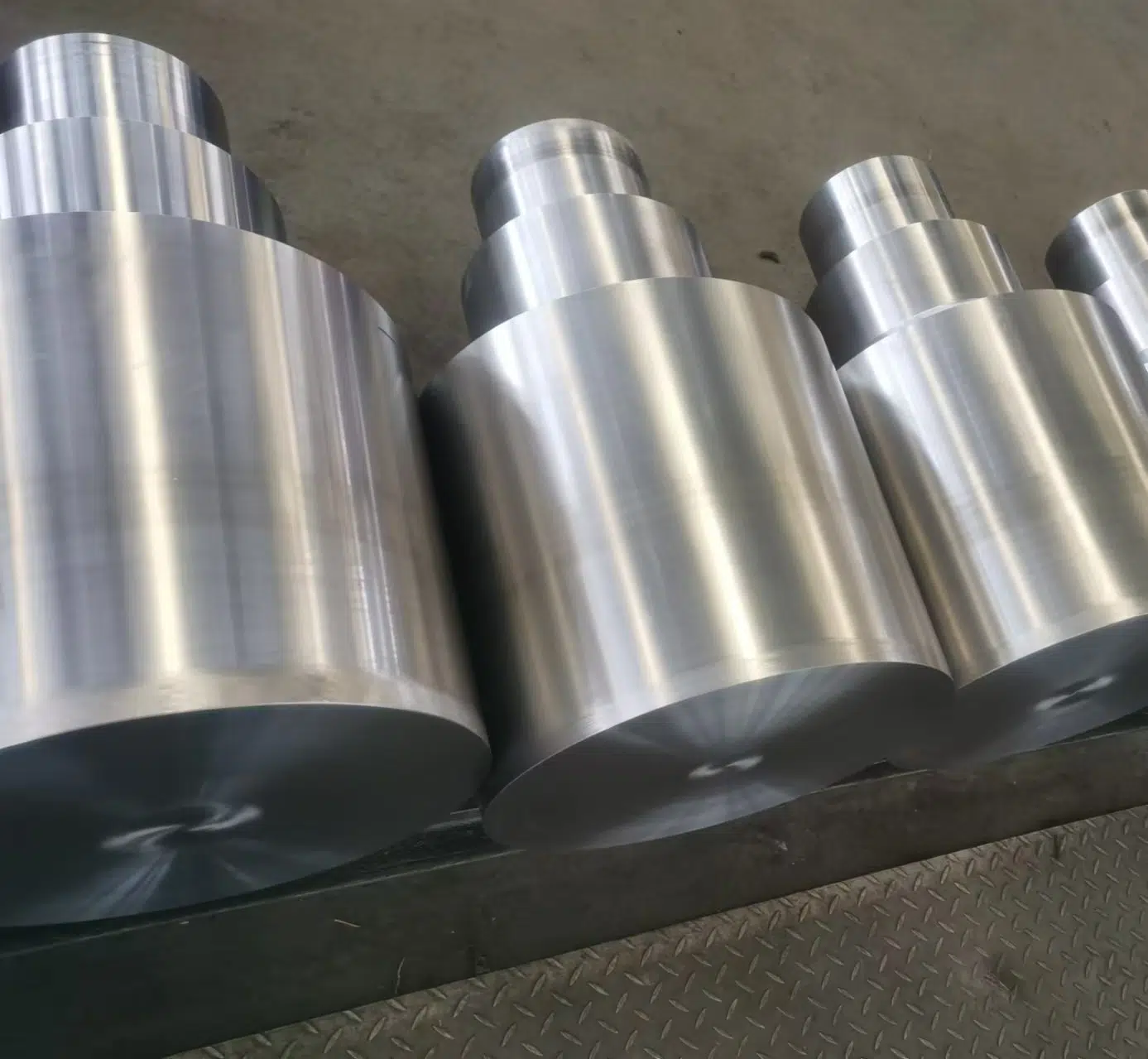
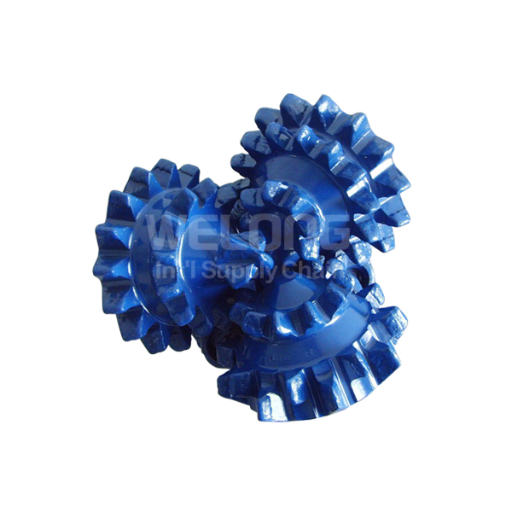
4 3/4″–36″
Size Range
2 Types
Milled Tooth + TCI
3 Bearing Options
API 7-1 Connection Standard
Since 2001
Supply & Inspection Scope
Formation Challenges, How Tricone Bits Solve Them
Rock and Geology
Drilling crews who operate a single bit configuration through a variable hole section within a given rock formation do it to their detriment with the loss of Rate of Penetration (ROP), chipped inserts or a failure of the bearings before the run is completed, impacting the effective bit life and causing unnecessary rig time and delays. Instead of what a PDC bit provides with constant shearing, a tricone bit – also known as a roller cone bit, a design lineage traceable to the original three-cone rock-bit patent – consists of three individually mounted and freely rotating cones, which are armed with either milled steel teeth or tungsten carbide inserts, and which will ride over the hole bottom and create a chipping and crushing action by gouging the rock while under weight and in rotation. It’s this rocking and crushing action, not the constant shearing that the bits that feature a fixed-cutter or fixed body will undergo, which enable a tricone to effectively work its way through a fracced or interbedded formation without damaging the bits.
For a purchaser, the practical question is almost never “what brand” – it’s whether the cutting structure, the type of bearing and the IADC series really align with the formation hardness profile of the interval in which the well is being drilled. If that match isn’t made, the bit wear prematurely relative to the needed run length (steel in abrasive) or the run cost will exceed need (TCI in soft, non-abrasive clay). This is why the matrix below exists: to make that match before the bit start out of the hole at the end of the BHA and drill pipe string, not when a long run return to the surface.
This plays out differently depending on who’s on the phone: Drilling/procurement engineers: They require IADC code/bearing types to be cross-referenced against mud log formation description before sending out RFQ-not when the bit is already sitting on the drill floor; procurement managers are trading off bit costs against the number of additional runs they avoid by not picking the wrong one (this is more a re-order lead time problem than just price); the ops/purchasing directors are generally those that eat the NPT bill, so the selection logic presented below is for a non-metallurgist to vet.
Welong supplies tricone bits that are used in oil & gas drilling, water well drilling, geothermal drilling, mining boreholes and directional drilling (HDD). This 3-cone concept used in the tricone bit is the same regardless of whether drilling oil & gas, water wells, geothermal, mining, or directional drilling. Only the type of the cone, or the IADC series changes according to the rock formations encountered.
Tricone Drill Bit Range, Type & Bearing Selection Matrix
Welong supplies both main roller cone bit types below, Milled Tooth and Tungsten Carbide Insert (TCI) — and pairs each with the bearing configuration your formation and run length actually call for, rather than a single default.
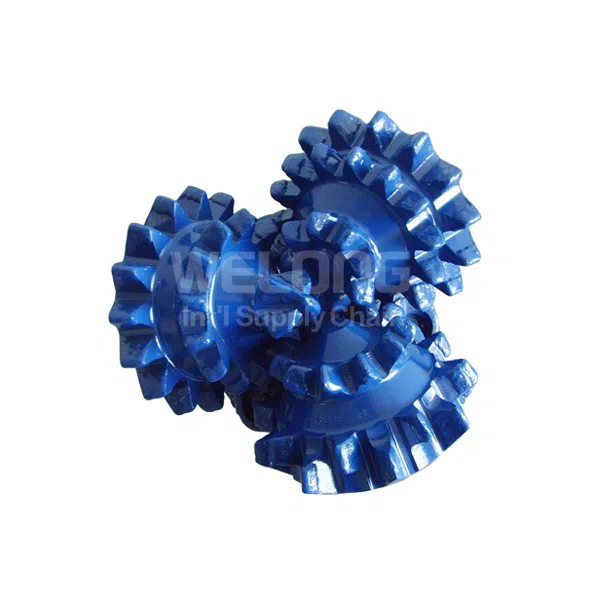
Milled Tooth (Steel Tooth) Tricone Bits
Teeth are milled directly into the steel cone and hardfaced with premium tungsten carbide on the tooth surfaces to increase wear resistance without sacrificing the aggressive gouging action for which steel teeth are selected. Best choice for soft to medium non-abrasive formations such as clay, soft shale and soft-to-medium limestone where long teeth and high penetration rates take precedence over abrasion resistance.
Tungsten Carbide Insert (TCI) Tricone Bits
Tungsten carbide inserts are pressed into the cones with new formulas and pressing methods to create added strength under impact. Designed for medium-to-extremely hard abrasive formations like granite, hard sandstone, and quartzite, where a milled steel tooth would be dulled well before the end of the interval.
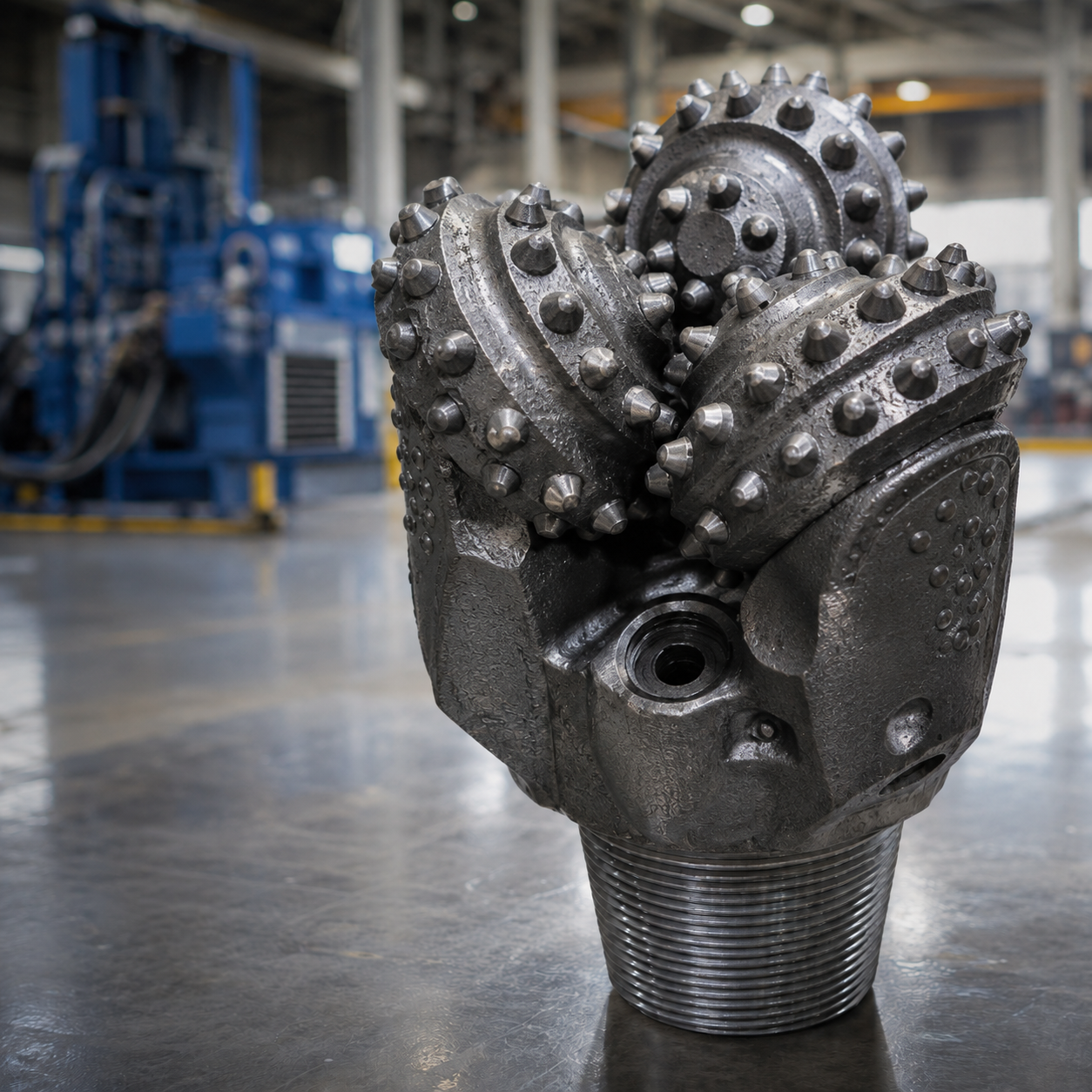
While this provides a baseline guide, these aren’t the only possible answers: MilledTooth is appropriate for softer, less abrasive zones, while TCI excels at medium-to-very-hard, abrasive zones. Push either beyond those parameters and wear increases rapidly. These bits are built for actual, real-world drilling scenarios and manufactured on demand to suit individual specifications – not picked off a static size list. Diameter, connection type, bearing and seal configuration, and even jet nozzle configuration can be custom tailored to your rig and hole plan rather than tailoring your program to a pre-made SKU. This custom specification is achieved by specifying the formation, hole diameter, and connection size that your operation require and then IADC is determined from these requirements – the reverse doesn’t apply.
IADC Code Selection Matrix
IADC – the International Association of Drilling Contractors, the industry body that has maintained bit classification and dull-grading standards for founded in 2001 – assigns a 4-digit code that, in the way it’s consistently read and applied across bit manufacturers and distributors, serves as shorthand for what the tricone bit was built to do. The first two digits define the cutter type and the relative hardness of formations it’s designed to penetrate; the third digit specifies the bearing type; and a fourth letter (when used) denotes a feature, such as A (air drilling), G (gauge protection), J (jet nozzles), or S (standard). Knowing how to read that code prior to ordering is the most direct path to selecting the appropriate bit for your geological formations; purchasing from a size chart without considering the IADC code is little more than a guess masked as a specification. This represents the fundamental logic of wise drill bit selection: you need to match the code to maximize the rate of penetration and the life of the bearing, not just the size of the bit.
Academic studies on drilling rates provide empirical support for the mechanical, not merely procedural, importance of this matching: published rock-bit modeling (Deng et al., Journal of Natural Gas Science and Engineering, 2016) shows that penetration rate depends not only on weight on bit and rotational speed, but also on rock strength inversely. Simply stated, for harder and stronger rock formations, the cutting structure and bearing assembly of a roller cone bit-not just your surface parameters of WOB and RPM-have an increased role in determining drilling efficiency.
IADC series mapped to cutter type, formation hardness, and bearing — example codes shown are real IADC codes in selected industry use, not Welong-exclusive designations.
| IADC Series (1st digit) | Cutter Type | Formation Hardness (2nd digit) | Bearing Type (3rd digit) | Example Codes |
|---|---|---|---|---|
| 1–3 | Milled Tooth | Soft → Medium-hard | 1–2 open roller, 3 sealed roller | 111, 211, 231, 321 |
| 4 | TCI | Soft formations | Roller (open/sealed) | 411 |
| 5 | TCI | Medium formations | Roller / sealed roller | 521, 523, 527, 531, 537 |
| 6 | TCI | Medium-hard, semi-abrasive | Sealed roller / friction | 613, 621, 631 |
| 7–8 | TCI | Hard → extremely hard, abrasive | Sealed friction / journal | 715–747 |
Bearing Structure & Type Selection
Two-thrust-face roller bearing and a ball lock retain the cone; the leg bearing is sized to fit in a machined groove on the cone hole, which allows it to withstand more weight-on-bit and achieve higher RPM without premature failure. Thrust faces are hard-faced with a wear-resistant alloy in order to prevent wear and seizure under load – the same bearing-seal engineering problem that continues to draw ongoing patent activity in the industry today.
Field experience with lighter, open-bearing configurations backs this up: they’re good for mild overburden and shallower, less demanding intervals, but effectiveness in harder rock drops off fast, the bit will still cut, just at a much higher wear rate than a sealed or journal-bearing setup would show over the same run.
| Bearing Type | Design | Best For |
|---|---|---|
| Open (Roller) | Unsealed, lubricated by drilling fluid | Shorter, shallower runs where cost matters more than bearing life |
| Sealed Roller | Grease-sealed against fluid and cuttings ingress | Longer runs, moderate WOB/RPM, extended bearing life |
| Journal (Friction) | Sliding friction surface, hardfaced thrust faces, no rolling elements | High WOB/RPM, severe or deep runs where bearing failure is the limiting factor |
“We set cone offset and tooth spacing differently for a milled-tooth bit going into soft shale versus a TCI bit going into fractured limestone; we miss either one and the bearings-not the teeth-are what go first.”
Shop-floor product record
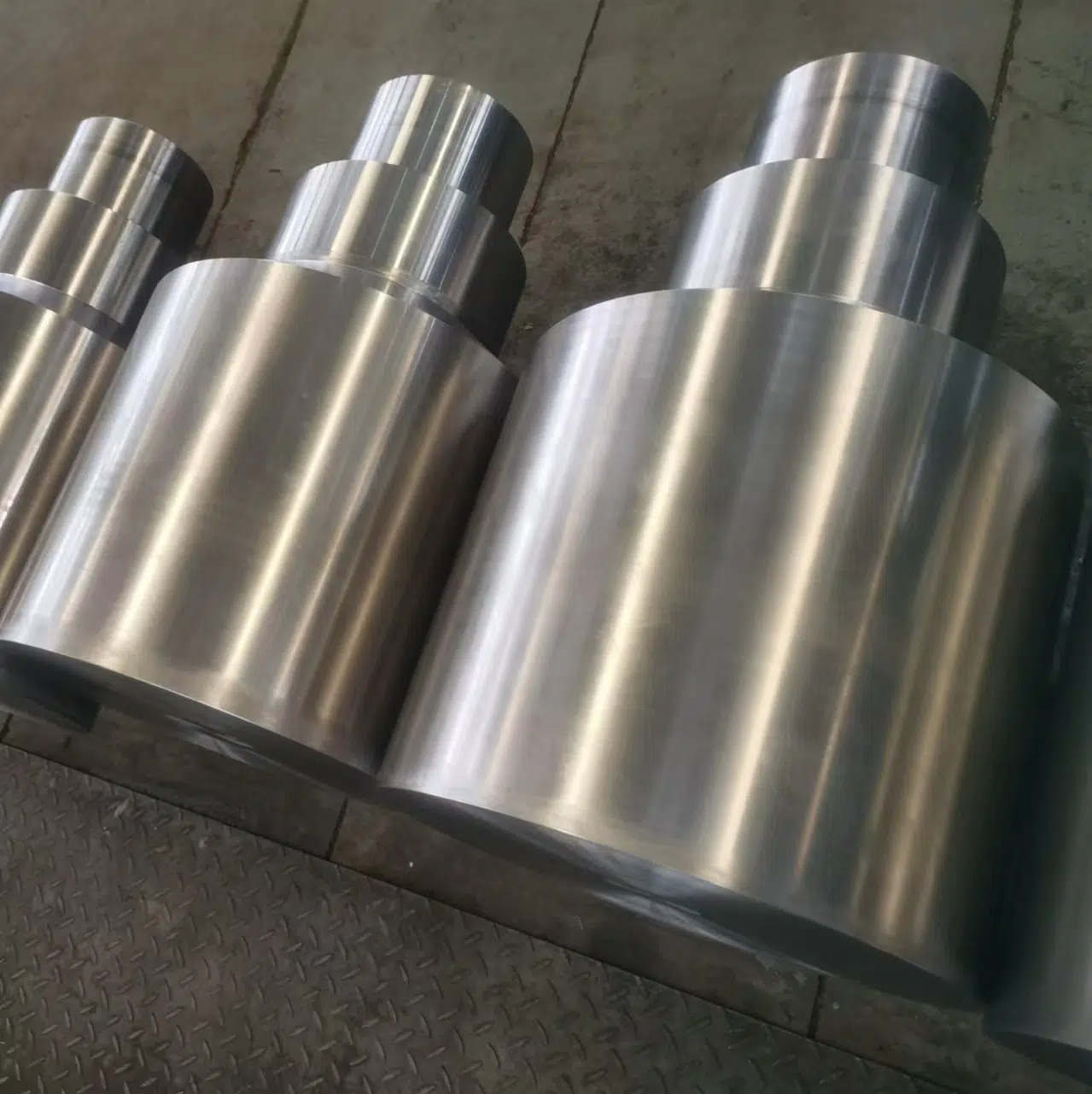
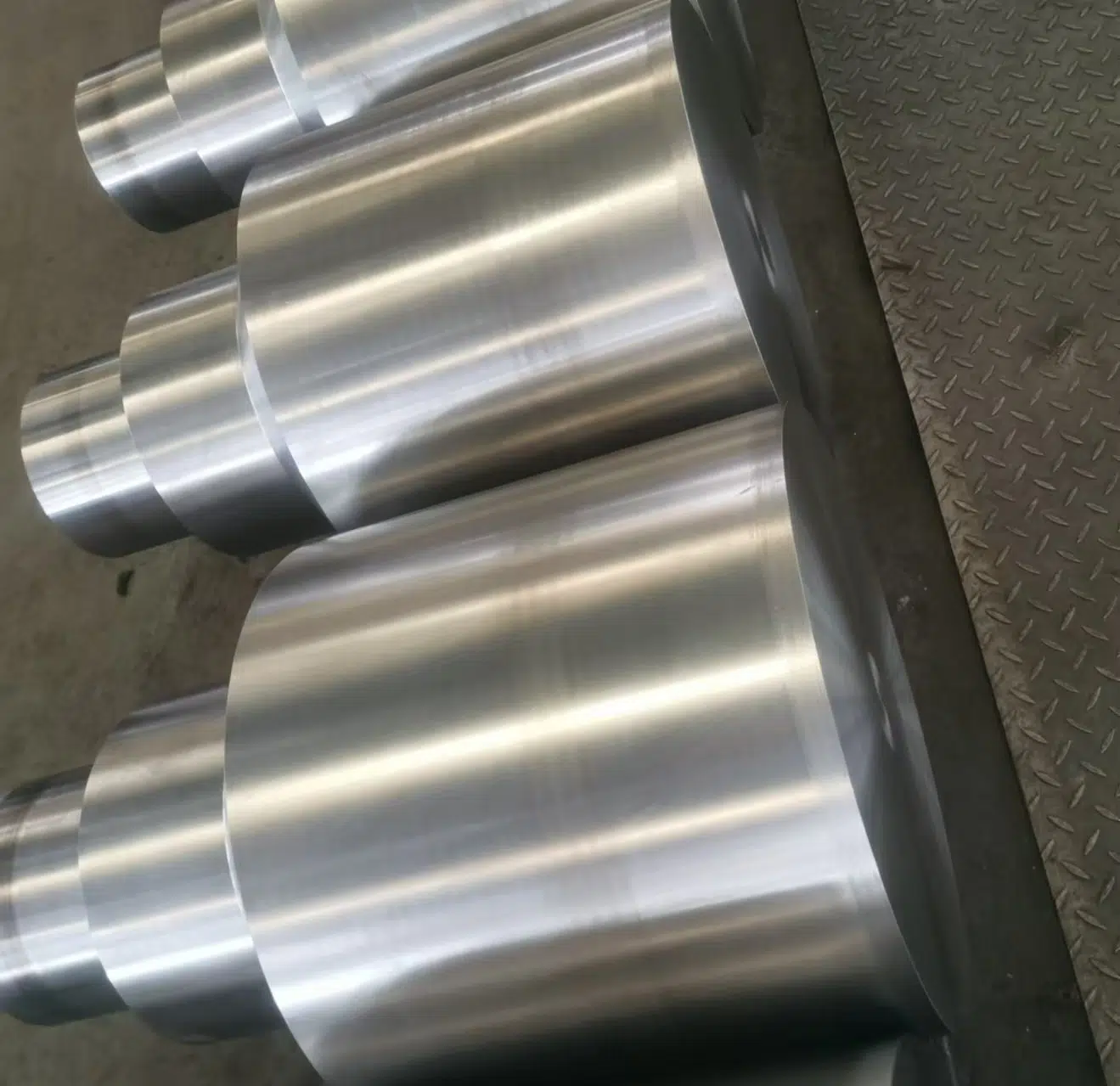
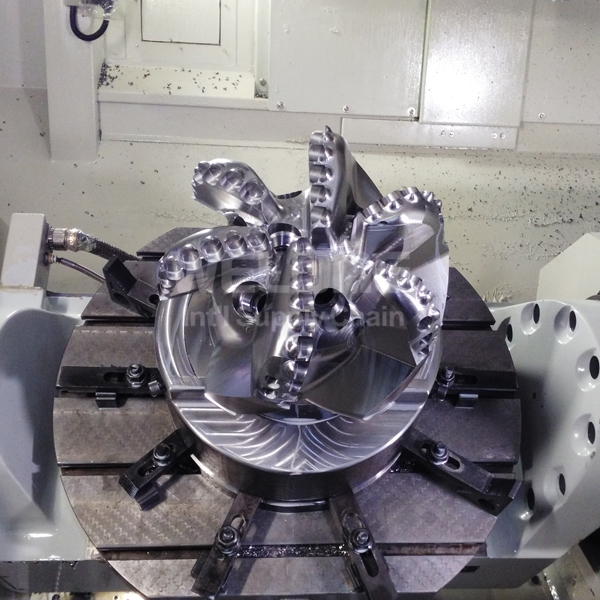
Real Drill Bit Forging Stock for Review
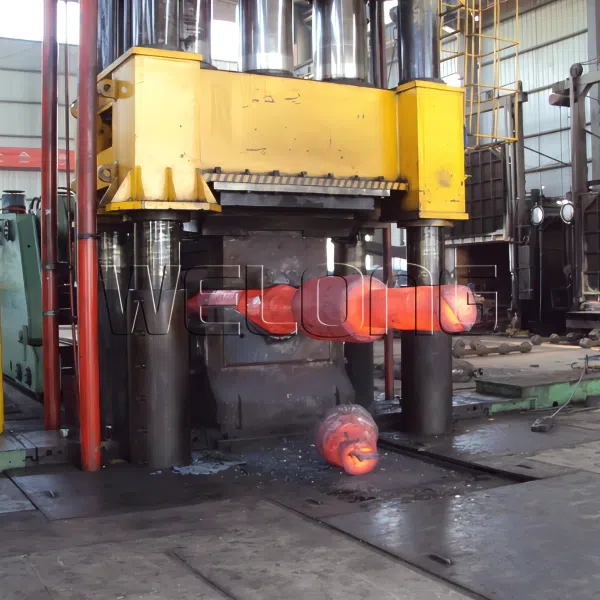
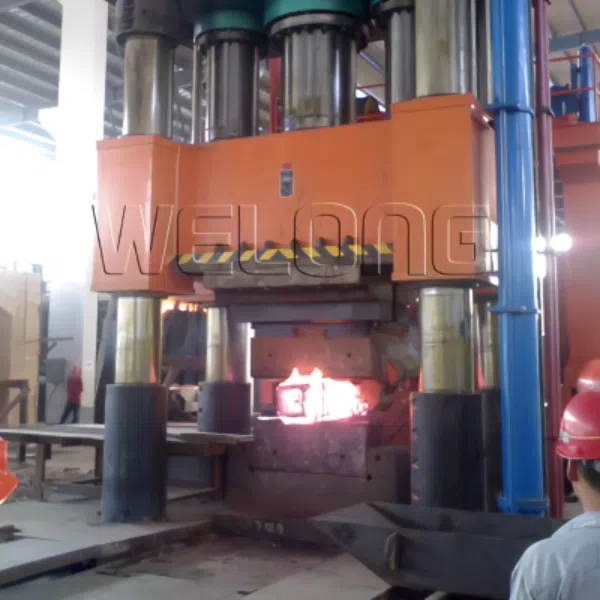
These shop-floor photos provide forging and machined-component references near the type and bearing selector. Buyers can review component form and surface condition before confirming the drill bit route.
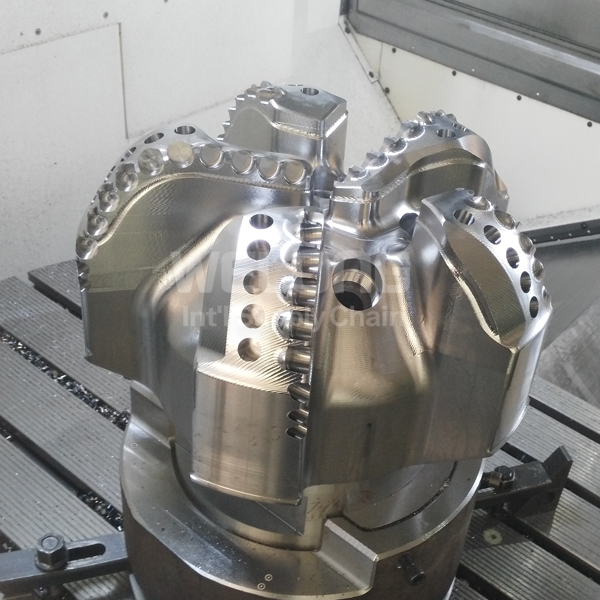
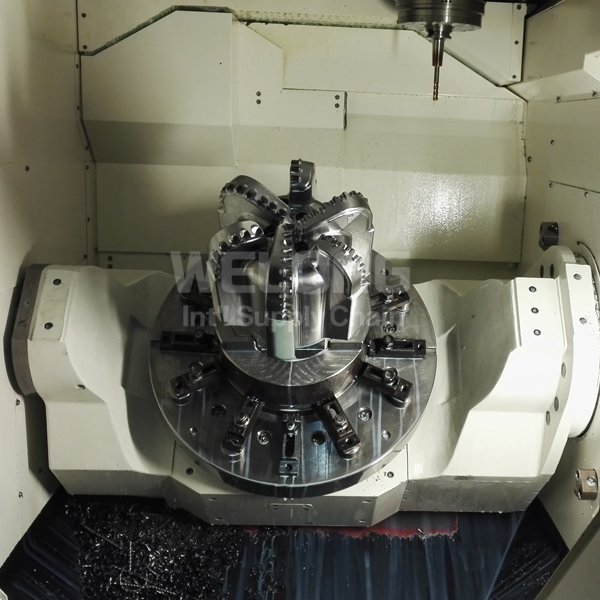
Drill bit component - view 1Drill bit component - view 2Drill bit component - view 3
Tricone vs PDC vs Rock Bit, Performance Comparison
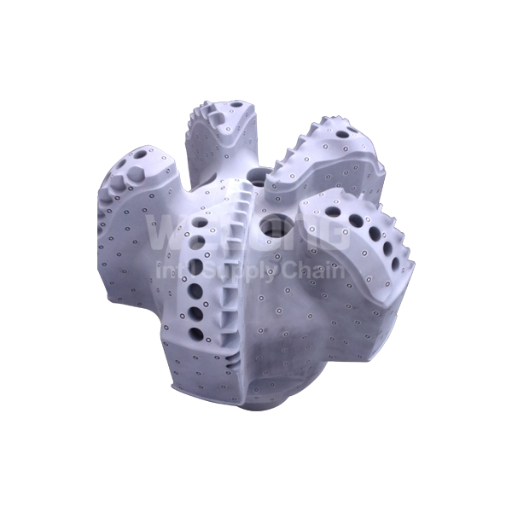
Tricone bits may not be the fastest choice for every alternative application, and “rock bit” is an older field name that's sometimes used synonymously for all tricone and roller-cone bits, which share a cutting structure but come in different configurations; it isn't a third distinct type. For drilling operations, the relevant comparison is between the tricone drill bit and the PDC drill bit (polycrystalline diamond compact, a fixed-cutter structure with no moving parts).
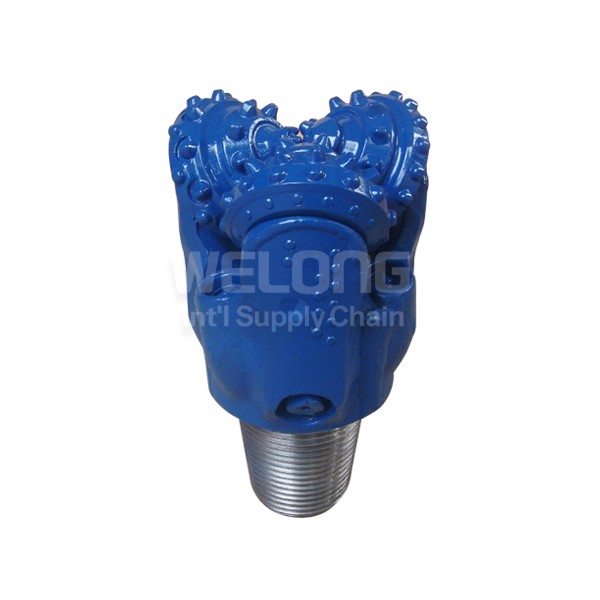
| Parameter | Tricone — Milled Tooth | Tricone — TCI | PDC (Fixed Cutter) |
|---|---|---|---|
| Cutting mechanism | Crushing/gouging via 3 rotating cones | Crushing/chipping via carbide inserts | Continuous shearing via fixed diamond cutters |
| Best-suited formation | Soft, non-abrasive (clay, soft shale, soft sand) | Medium–extremely hard, abrasive (granite, hard sandstone, quartzite) | Soft–medium-hard, homogeneous, less abrasive |
| Moving parts | 3 independently rotating cones + bearings | 3 independently rotating cones + bearings | None — fixed body |
| Specified wear failure mode | Tooth wear, bearing wear | Insert loss, bearing wear | Cutter wear, body erosion |
This is where a “universal” answer begins to break down: The optimum is highly formation-dependent. For interbedded, fractured, or heterogeneous formations, the ability of tricone bits to adjust their three rotating cones independently as the lithology change may be advantageous over a fixed-body PDC that may damage cutters mid-run. In homogeneous, uniform hard rock (e.g., laboratory testing of granite indicates higher penetration rates for PDC bits over tricone bits over a specific interval, with lower cutter wear but reduced overall efficiency), the comparison favors a PDC bit, though not every hard rock situation will reflect these published results, the honest version is that the choice is about which bit matches the geological profile better, not which one wins a marketing claim.
New vs Re-tip / Re-run (Used Market)
A significant percentage of tricone bit sales are used: steel-tooth “re-tips” (new bits refurbished with new steel teeth for non-oilfield rotary applications) and “re-runs” (new carbide-insert bits that have been cleaned, repaired, and often repainted) sold at reduced prices. Although new bits have a predictable lifespan since they're run into the ground without previous wear, the expected performance of a re-tip or re-run is a function of the specific repair quality and how much wear was incurred before the refurbishment-factors that are often impossible to quantify before purchase. That's the honest trade-off buyers are actually weighing, not just the sticker price.
Bearing and cutting structure designs play a role, but the impact on performance is frequently understated: a published 2016 study of plug drill-out applications (a distinct but useful reference for comparing the performance impact of different bearing and cutting-structure designs) found a dual-cutting-structure roller-cone bit averaging 8.1 minutes per plug across a 57-well study, roughly 13.6% faster than standard-tooth bits in the same field at the time. While not every tricone bit would perform to this level, it shows that bearing and cutting-structure designs have demonstrable performance benefits beyond just sales brochures.
Cutting Structure, Gauge Protection & Manufacturing Detail
A bit that loses gauge even a few dozen feet before trip-out doesn’t fail cleanly-it undersizes the hole by a millimeter or more, and that gap get discovered at casing run, not at the bit breaker, where a reaming trip is expensive and unplanned. That risk is structural: gauge and tooth wear happen gradually and rarely announce themselves on surface torque or WOB readings until the hole is already out of spec. Welong's cutting structure and gauge protection are engineered against that specific failure mode, not added as a generic durability claim.
Cutting Structure
Tooth wear resistance is built up with premium tungsten carbide hardfacing applied directly to the tooth surfaces on steel-tooth bits through the selected supply and production route. On insert bits, the tungsten carbide inserts themselves are managed through the selected supply and production route using updated formulas and pressing techniques aimed at improving durability under repeated impact loading, rather than relying on insert geometry alone the way a lower-cost, unhardfaced tooth profile would - the same bearing-insert engineering problem covered in recent roller-bit bearing patents.
Gauge Structure
Gauge protection is built in at multiple points rather than one: gauge trimmers on the heel of the cone, gauge inserts on the cone's gauge surface, and tungsten carbide inserts plus hardfacing on the shirttail. Together these increase gauge-holding capability and extend bearing life by keeping the hole diameter consistent for longer - the right call when the alternative is an out-of-gauge hole discovered at the casing run, not a marginal cost saving on the bit itself.
"We hardface every steel-tooth cone with premium tungsten carbide before it goes anywhere near a rig - the tooth profile is what sets the initial penetration rate, but the hardfacing is what determines whether that rate holds for the whole run instead of falling off after the first third."
founded in 2001
Production route
API 7-1
Connection Standard
Quotation-confirmed
Standard Inspection
Third-party on request
Third-Party Option
Logistics & Incoterms
Shipping is by sea, air, or rail, as appropriate for the size of your order and its destination; we offer FOB, CIF, DAP and DDP based on the current Incoterms 2020 framework from the International Chamber of Commerce. We determine the suitability of DDP based on the import clearance regulations of the destination country. Oilfield drilling equipment shipments must adhere to international trade controls and regulations in the destination country; we assess this per shipment rather than universally.
Choosing An Incoterm
FOB and CIF will require you to handle shipping/insurance as part of your existing customs/import process; in service the most appropriate for buyers already established in international shipping. DAP and DDP make things simpler on your end by placing more shipping/insurance/customs burden on Welong. However, please note that for DDP we'll need to verify that import clearance can be performed legally on the seller’s end for your destination country; DDP isn't always an option every where.
QUALITY
Certifications & Trust
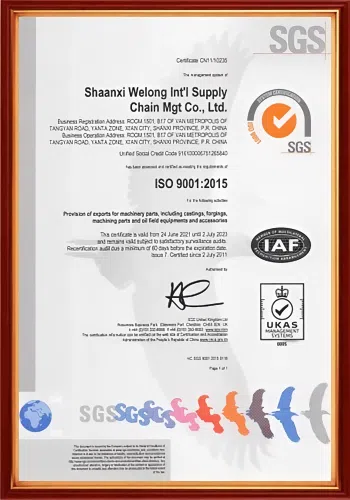
We supply tricone drill bits to API 7-1 specifications; the quotation confirms the responsible manufacturer and inspection scope.
One challenge for an overseas supplier such as Welong is demonstrating that the delivered bit matches the quoted specification. The quotation identifies the responsible manufacturer, inspection scope, and available records; third-party inspection may be arranged for selected orders.
The “real” risk for a procurement manager considering an overseas manufacturer instead of a domestic distributor isn’t usually the per-piece cost but rather the risk that the relationship will fail if something goes wrong post-sale.
Welong does not claim certifications that are not documented for the selected item. The quotation identifies the responsible manufacturer, inspection scope, and available records; third-party inspection may be arranged for selected orders.
×
![Enlarged Image]()
Premium Tricone Drill Bits — Engineered for Ultimate Drilling Efficiency
Tricone Drill Bit Engineering & Selection Tools
Formation-to-Bit Selection Advisor
Answer three questions about the interval you're drilling and get a starting-point IADC series, cutter type, and bearing recommendation — then confirm it against your actual mud-log formation description before ordering.
IADC Code Decoder
Type in a tricone bit's IADC code (e.g. 537 or 111A) and see what each digit is telling you about cutter type, formation hardness, and bearing configuration.
Tricone vs PDC Decision Guide
Three quick questions about the interval — get a directional recommendation on whether a tricone bit, a PDC bit, or a closer look with our team is the better starting point.
Bit Selection & Quote Request Builder
Fill in what you know about the job — we'll turn it into a structured request so our team can return an IADC-matched recommendation alongside your quote, instead of a generic price list.
New vs Re-tip / Re-run: What You're Actually Weighing
A meaningful share of the tricone bit market is refurbished. This isn't a price calculator — those numbers depend on your specific spec — it's a side-by-side of what changes between new and used, so the trade-off is explicit before you buy on price alone.
Tricone Drill Bit FAQ
Expanded: 0 / 11
What is a tricone drill bit used for?
Tricone (roller cone) bits are used to drill oil and gas wells, water wells, geothermal wells, and mining boreholes through all formation hardness ranges, crushing and chipping the formation with three individually rotating, toothed or carbide insert cones.
How do jet nozzles and circulation affect bit selection?
Regular and jet circulation configurations may be used to direct drilling fluid to the face of the bit - jet nozzles take the fluid flow and direct it into the formation to more aggressively clear cuttings in soft, high-ROP formations, while regular circulation will in service be enough in hard, slow drilling intervals. This is specified along with bearing type and IADC series rather than as an afterthought, since insufficient hole cleaning appears as slow ROP regardless of the matching cutting structure to the rock.
What's the difference between a Milled Tooth and TCI tricone bit?
Milled Tooth bits have teeth machined from the cone body and hardfaced with tungsten carbide, built for soft-to-medium, non-abrasive formations. TCI (Tungsten Carbide Insert) bits have carbide inserts pressed into the cones and are built for medium-to-extremely-hard, abrasive formations where a milled tooth would wear too fast.
What do the IADC codes on a tricone bit mean?
IADC codes follow a 4-digit structure: cutter type and formation hardness (first two digits), bearing type (third digit), and optional special features (fourth letter). For example, IADC 537 generally refers to a TCI bit designed for medium-hard formations with a sealed bearing setup. Use the selection matrix above to see the entire series.
Who invented the tricone drill bit?
Howard R. Hughes Sr. and his partner Walter Sharp filed companion patent applications on November 20, 1908, and both were granted on the same day, August 10, 1909: US Patent 930,759 covers a two-cone rotary rock bit, and US Patent 930,758 - filed and granted alongside it - already covers a three-cone design, so the "tricone" concept isn't strictly a 1933 invention. What Hughes Tool Company's engineers did in 1933 was refine and commercialize the three-cone configuration as the company's dominant product line, and by 1934 it had captured nearly the entire U.S. drilling-bit market. Some historians note similar rotary-bit concepts existed before Hughes secured his patents; his real advantage was thorough patent protection across both designs, which built Hughes Tool Company - later part of Baker Hughes. The two-cone-to-tricone technology lineage was declared a Historic Mechanical Engineering Landmark by ASME in 2009.
What is the strongest drill bit on the market?
No single "strongest" bit type exists independent of formation: While TCI tricone bits and PDC bits are in service considered the most durable and versatile for hard, abrasive rock in oilfield, oil and gas exploration and mining drill applications, relative speeds and efficiencies depend on whether formations are fractured/interbedded (favoring tricone) or consistently hard and homogeneous, with possible softer zones (favoring PDC’s faster cutting rates and higher efficiency).
What tricone sizes are available?
Welong tricone drill bit sizes are available from 4 3/4” up to 36” in diameter in both Milled Tooth and TCI configuration - if you require the complete listing of available TCI tricone bit sizes by connection, ask for the TCI tricone bit size chart with your quote.
Can I get third-party inspection on my order?
Inspection scope and records are confirmed in the quotation. For selected orders, third-party inspection may be arranged; the provider, scope, and records are confirmed in the quotation.
New tricone bit vs re-tip/re-run, which should I buy?
Buying new provides a known, reliable remaining service life from the start, whereas a re-tip or re-run bit may offer a lower upfront cost but its true remaining service life depends on quality of refurbishment and wear characteristics that may be impossible to confirm before deployment downhole - factor that risk into the total price.
What connection sizes are available?
Bit connection size corresponds with bit diameter and drill string - Specified API Reg pin connections vary from 2 3/8” on small bits up to larger API Reg or API Full Hole connections on bits over 8”. Please confirm your drill string connection size when requesting a quote, and your bit will be built with the correct pin.
Is there a minimum order quantity?
Welong supplies bits to order, and doesn’t impose fixed MOQs on our full product line, so whether your requirement is for a single unit or a small batch order, it will be handled on an individual basis (though price per unit and lead times will be adjusted for volume and quantity). State quantity when requesting a quote.
Procurement & Capability
Tricone Drill Bit Capability Review
China Welong reviews the buyer drawing, product specification and inspection scope before quotation.
This review is scoped to the Tricone Drill Bit configurations set out in the specification table on this page — 5 documented rows covering IADC Series (1st digit), Cutter Type, Formation Hardness (2nd digit) and Bearing Type (3rd digit).
24 hEngineer-reviewed quotation on business days
2001Founded in 2001
30+30+ engineers on staff
5 yrStamped serial traceability
Quotation Scope and Commercial Terms
Pricing is prepared against the selected product configuration, material route, inspection scope and shipment terms.
- Quotes are returned within 24 hours on business days, reviewed by an engineer.
- T/T or L/C by wire transfer.
- We ship EXW, FOB, CFR or CIF; other Incoterms on request.
- We work from 2D drawings and 3D CAD models (AutoCAD, Pro/ENGINEER, SolidWorks; .dwg and .igs).
Production Planning
Production timing is confirmed with the quotation after quantity, process route and finishing scope are reviewed.
- We hold agreed items in stock and ship against your release to shorten delivery. Feasibility is confirmed at drawing review.
- Manufacturing at Xi'an, Shaanxi and at Jiyuan, Henan.
- 0.01 mm machining precision.
- Material standards to ISO, BS, ASTM, ASME, DIN, JIS and GB.
- Orders ship in standard export wooden cases, or the packing you specify.
Order Review and Responsibility
The responsible manufacturer, inspection scope and document package are identified for the selected item.
- The quotation records whether the item is made in our own works or by an approved supplier and confirms the responsible manufacturer and inspection scope.
- Production-management review is re-audited every two years; the quotation confirms the responsible manufacturer and inspection scope for the selected item.
- Forgings from 0.2 to 50 tons.
Current Product Specification Evidence
These product-scoped numeric rows reproduce current-page wording. The quotation confirms the responsible manufacturer and inspection scope for the selected item.
- Each piece carries a stamped serial number and stays traceable for five years to its chemical composition, mechanical properties and measurement report, with the test coupon retained.
- An EN 10204-3.1B material certificate with chemical composition and mechanical properties, a dimensional measurement report, and UT and MT reports ships with your order.
- Inspection is by coordinate measuring machine, ultrasonic, magnetic particle and X-ray.
| Parameter | Current source wording |
|---|---|
| Available diameter range | 4¾"–36" |
| IADC milled-tooth series | 1–3 Milled Tooth Soft → Medium-hard 1–2 open roller, 3 sealed roller 111, 211, 231, 321 |
| IADC TCI soft-formation series | 4 TCI Soft formations Roller (open/sealed) 411 |
| IADC TCI medium series | 5 TCI Medium formations Roller / sealed roller 521, 523, 527, 531, 537 |
| IADC TCI hard series | 6 TCI Medium-hard, semi-abrasive Sealed roller / friction 613, 621, 631 |
| IADC TCI very-hard series | 7–8 TCI Hard → extremely hard, abrasive Sealed friction / journal 715–747 |
Request a Product Review
Send the drawing, product specification and inspection requirements for a quotation review.
![Choke & Kill Hose: [Field Guide]](https://welongoiltools.com/wp-content/uploads/2026/07/choke-kill-hose-guide-featured-1-150x150.png)