Get in touch with Welong Company
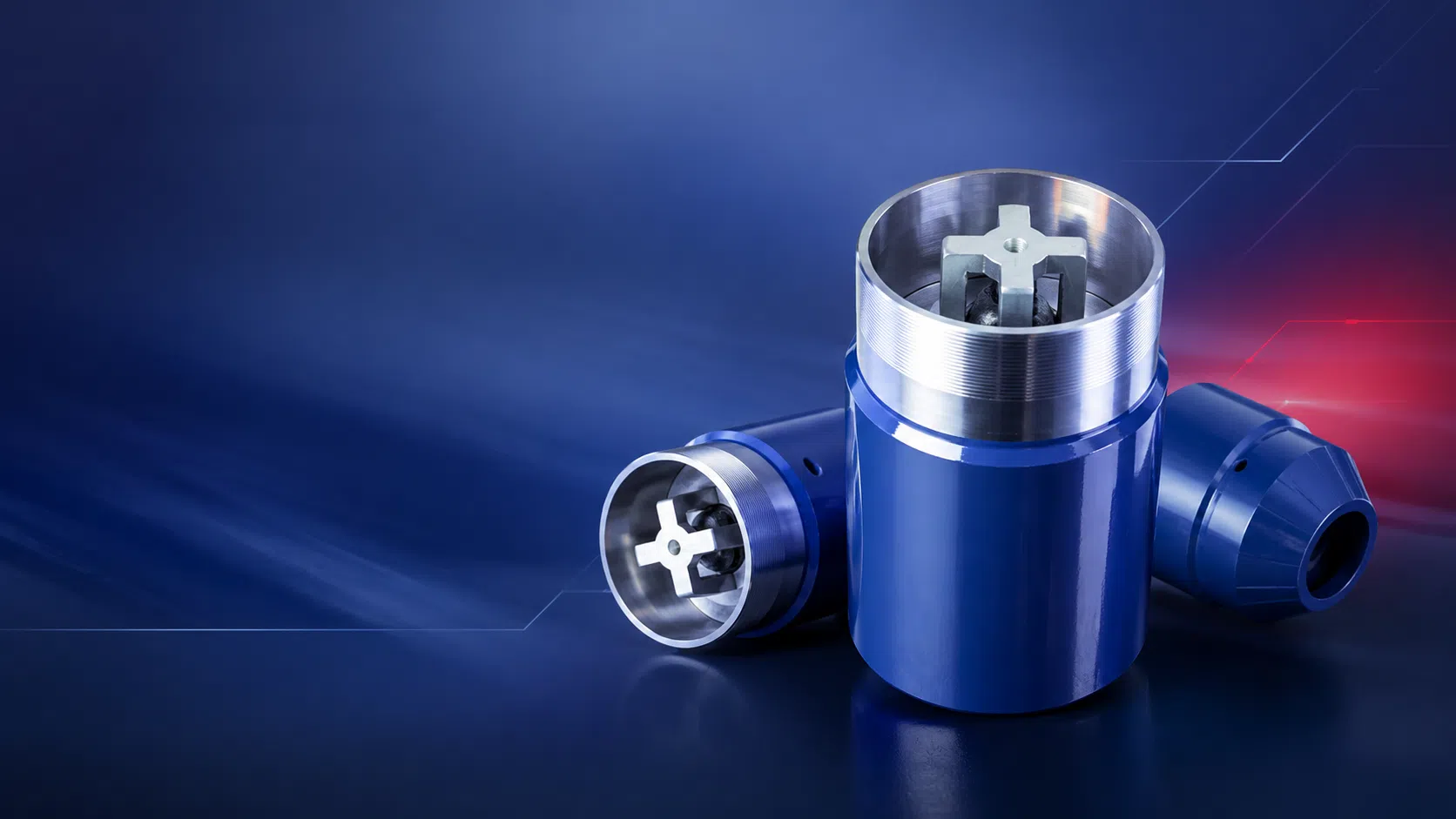
Float Shoe, Float Collar & Guide Shoe for Casing Cementing
Float shoe, float collar, and guide shoe failures are among the costliest setbacks in casing cementing — a compromised shoe track can turn a routine primary cement job in an oil and gas well into a six-figure remedial squeeze. China Welong supplies and supplies all three across 5½″–13⅜″ casing sizes, all built to the API Spec 10F design-type test criteria. We pick every valve, nose, and drillable insert for one job: getting your casing to bottom and keeping cement where it belongs.
Request a Quote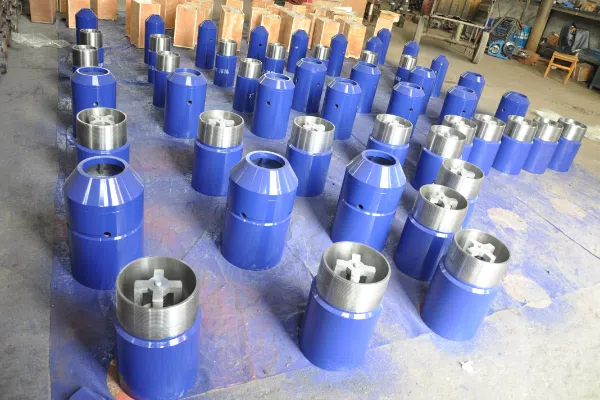
Product Specification and Selection Review
Float equipment is the small hardware assembly at the bottom of your casing string: the float shoe, the float collar one to three joints above it, and the guide shoe that pushes the casing through wellbore ledges. If the float equipment’s back-pressure check valve leaks or converts early, cement slurry will U-tube back into the casing and contaminate the shoe track.
When that happens, the problem can snowball. The failure of the float equipment manifests later in a failed formation integrity test (FIT) or leak-off test (LOT) and requires a costly remedial squeeze.
During a primary cementing job, mud is followed by cement slurry pumped down the casing, cement plugs wipe out excess mud, and the float valves retain the column-the same process in onshore and offshore wells. If you spec your float equipment incorrectly, any one of those critical steps is at risk.
That means the actual specification for your float equipment isn’t based on looks alone; it needs to be able to hold back-pressure through a complete circulation, drill out cleanly on a PDC bit, and be supported by provable results from the manufacturer. Here’s how we ensure Welong float equipment measures up on these requirements, part by part.
$450M+ / yr
Industry estimates put remedial squeeze cementing at over USD 450 million a year, with roughly 15% of primary cement jobs failing and single failures running from $500,000 into the millions once workover or plug-and-abandonment is involved.
Source: industry estimates, Drilling Daily — Primary Cement Job Failure Modes (2025).
Welong Float Shoe, Float Collar & Guide Shoe — Models, Valves & Sizing
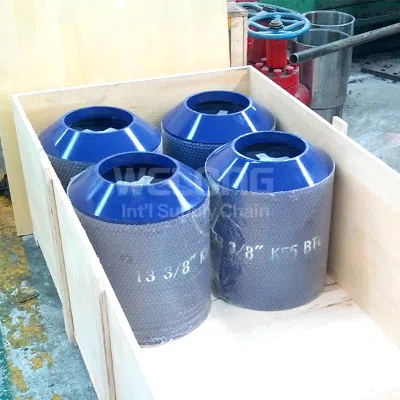
Welong supplies float equipment as matched components because they run together as a system in the shoe track. Over-specifying or mixing-and-matching float equipment from different manufacturers is a selected cause of failures. We can also supply casing centralizers and reamer shoes to match the float equipment so that your entire accessory package can be shipped from a single supplier.
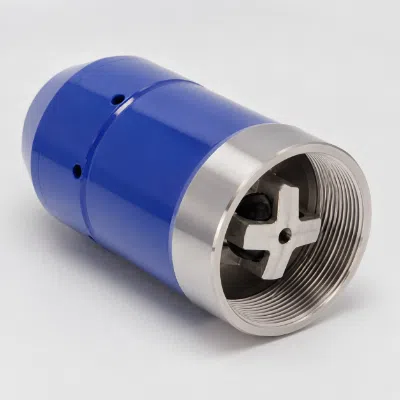
Runs at casing bottom
Float Shoe
The Welong Float Shoe The float shoe is threaded onto the bottom joint of the casing string. Its rounded nose provides excellent guidance through ledges and obstructions, while the built-in back-pressure valve helps reduce rig hook load as the casing runs by providing buoyancy and preventing cement slurry from U-tubing.
Best For: Guidance and the Primary Back-Pressure Barrier
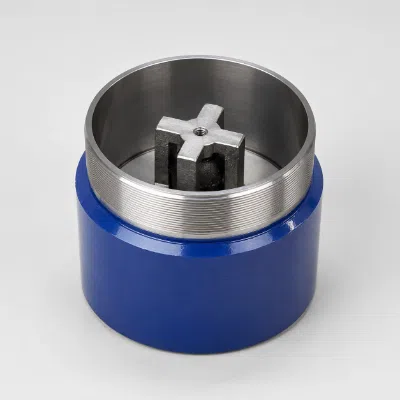
Runs 1–3 joints above the shoe
Float Collar
The Welong Float Collar The float collar is installed one to three joints above the float shoe and adds a second, redundant check valve-crucially, it also serves as the landing seat for cement wiper plugs, preventing over-displacement and defining the top of the shoe track.
Best For: Plug Landing, Redundancy, and Protecting the Float Shoe
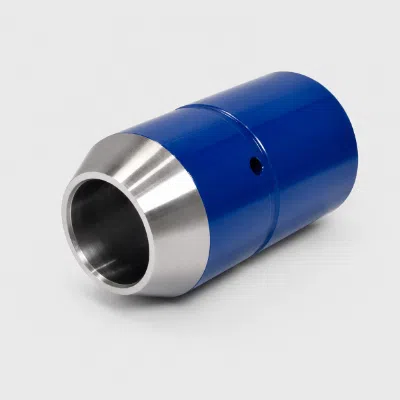
Open float equipment (no valve)
Guide Shoe
The Welong Guide Shoe The guide shoe is installed on the bottom of the casing string when it will be run into open hole or overbalanced. It reinforces the bottom of the casing string and guides it to cementing depth when no back-pressure valve is required.
Best for: straightforward casing runs where guidance, not back-pressure control, is the requirement.
Casing-Size Reference Table
Following are catalog sizes; other casing sizes and connections are manufactured on request. Each tool threads to the matching casing pipe and seats cement at the casing shoe. All bodies are drillable on PDC or rock bits, with easily-drillable aluminum-alloy internals.
| Casing size | Body OD | Bore ID | Through-bore | Connection |
|---|---|---|---|---|
| 5½″ | 6″ | 4¾″ | 2″ | 5½″ LCSG |
| 7″ | 7⅝″ | 6¼″ | 2⅜″ | 7″ LCSG |
| 9⅝″ | 10⅝″ | 8⅝″ | 2⅜″ | 9⅝″ LCSG |
| 13⅜″ | 14⅜″ | 12⅜″ | 2⅜″ | 13⅜″ LCSG |
Engineering Note —Connections & Compatibility
For a technical buyer, thread and grade compatibility matters more than nominal OD. Welong float equipment connects directly to casing of the same grade and can be supplied with API and premium connections, so the float valve, casing coupling, and running string share one verified thread form. The multi-purpose, matched-set approach echoes long-established float-equipment design practice (see USPTO US6679336B2). Confirm your casing grade and connection when you request a quote – that single line prevents most field make-up problems.
Get the full float equipment sizing chart → —matched shoe, collar, and guide-shoe options for your casing program.Float Equipment Duty-Match Matrix — Component & Valve Selection
More valves is not always better. A selected purchasing reflex is to spec a double-valve float collar for every job “to be safe.” But adding valves does not increase durability or back-pressure rating – engineering references are explicit on this point. The right choice is a duty match: pick the component and valve for the well, not the highest valve count. The honest trade-off is simple —a second valve buys backflow redundancy, not a higher rating.
As valve technology has matured – from simple ball checks to differential-fill designs – the temptation to over-spec has grown, not shrunk. This matrix maps the downhole duty to the component and valve configuration Welong recommends. Use it to right-size, not to over-spec.
| Downhole duty | Component | Valve configuration | Notes |
|---|---|---|---|
| Guide casing past ledges, no bottom valve needed | Guide shoe | None (open) | Simplest, cheapest run-in |
| Standard well, single back-pressure barrier | Float shoe + float collar | Single valve | Most selected configuration |
| High-pressure / high-risk, backflow redundancy | Float shoe + float collar | Double valve | Redundancy, not higher rating |
| Long / deviated run, reduce running time & collapse risk | Auto-fill float shoe + collar | Auto-fill (differential-fill) | Fills as it runs; converts before cementing |
| Save cement, stab-in cementing | Stab-in float collar | Stab-in | Reduces slurry volume |
Valve Configuration — Single, Double, Auto-Fill & Flapper
- Single valve – one spring-loaded ball or flapper valve; the default back-pressure barrier for standard wells.
- Double valve – a second check valve for redundancy in high-pressure or high-risk wells; it backs up the first valve, it does not raise the pressure rating.
- Auto-fill / differential-fill – lets mud enter the casing as it runs to cut surge pressure and running time, then converts to a check valve before cementing. Documented in USPTO-published designs such as US11391119B2 (differential fill valve) and US20110290344A1 (large-bore auto-fill).
- On flapper vs ball – flapper valves handle high flow rates and lost-circulation material; spring-loaded ball valves are simple and reliable for conventional slurry.
“We pressure-test each float valve design against the API 10F leakage and back-pressure criteria before it goes into production. A valve that passes on paper but weeps at 3 a.m. on the rig floor is the most expensive part in the whole string —that is the one thing we refuse to guess on.”
— Welong Cementing Tools Engineering Team
Request a custom duty-match review →
—send your casing program and we will spec the component and valve set.
API 10F Compliance, Third-Party Inspection & Quality Control
Buyers evaluating a supplier they have not used before care less about the length of a certificate list and more about whether the claims can be verified. Welong’s quality position is built to be checked, not just read.
- API Spec 10F Built to the 2018 design-type test criteria
- ISO 10427-3 Water-based fluid performance method
- Third-party inspection Third-party inspection on request
- Inspection scope Pressure and dimensional checks
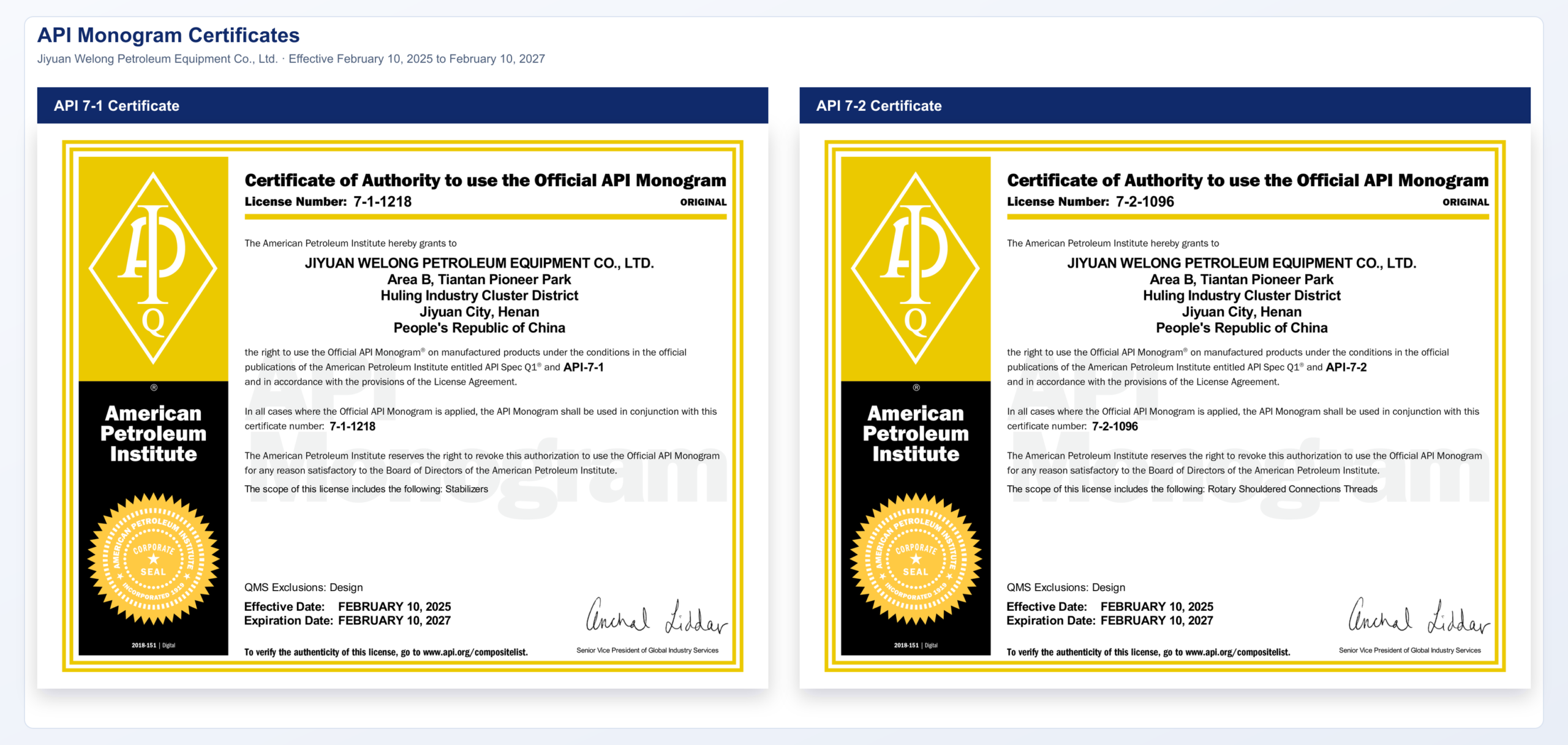
What “API 10F” Actually Means — Read This Before You Compare Suppliers
API Spec 10F (published 2018, superseding RP 10F) is a design-type approval-it qualifies a float-equipment design against stringent tests for leakage, back-pressure, and mud properties. It does not imply each individual unit has been tested to performance. So “manufactured to API Spec 10F” is the accurate, honest statement; be wary of any supplier who claims individual per-unit “10F certification.”
ISO 10427-3:2003 is the aligned international method, and you’ll want to know its scope: It covers float equipment-float shoes and float collars-which come in contact with water-based drilling and cementing fluids and is not designed for non-water-based fluids. When your well uses oil-based or synthetic fluids, we scope the discussion honestly rather than overstating coverage.
The quotation identifies the responsible manufacturer, inspection scope, and available records for the selected item. Third-party inspection may be arranged for selected orders, with provider, scope, and records confirmed in the quotation. Material traceability requirements are also confirmed for the order.

Procurement Guide — Lead Time, Incoterms & Global Logistics
Sourcing casing float equipment globally is a technical matter as well as a logistics challenge. Welong is built to eliminate the complexities of both.
What Drives Your Landed Cost & Schedule
Rather than quote a single lead-time number that rarely survives a real order, here are the levers that move it: casing size and connection type, valve configuration, order quantity, third-party inspection scope, and shipping mode. Each is confirmed against your program at quotation —ask for a lead-time estimate with your RFQ and the quotation confirms these factors.
- Trade terms: FOB, CIF, DDP, or DDU – your preferred share of responsibility and cost.
- Transport: By sea, air, or railway, tailored to your needs for speed and destination.
- Custom & OEM: Non-standard sizes, connections, or private label supply per your drawings.
- Inspection: The quotation confirms the inspection scope and available records; third-party inspection may be arranged for selected orders.
- Compliance: Every shipment carries country-of-origin marking to the importing market’s customs rules — for US-bound orders, per CBP marking requirements — so your import clearance is not held up at the border.
Welong’s export history includes clients in Europe, the Middle East, the Americas, and Asia-both distributors and direct users. If you’re a new Welong customer, your primary concern is the company’s proven track record, which can be confirmed on request; we find a solid record and certainty of delivery outweigh a longer list of certifications.
Engineering Calculators & Reference Tools
Select equipment, verify sizing, and calculate operational metrics using our dedicated technical toolset.
01 / SELECTOR
Float Equipment Duty-Match Selector
Select and match float equipment specifications based on operational duty requirements.
02 / LOOKUP
Casing-to-Float-Equipment Sizing Lookup
Look up precise sizing configurations between casing strings and float equipment.
03 / ESTIMATOR
Cement-Job Failure Cost Estimator
Estimate the financial impact and potential costs associated with cement-job failures.
Spec Your Float Equipment With Welong
Submit your casing program, and we will select the appropriate float shoe, float collar, guide-shoe assembly, valve configuration, and connections – along with the inspection and Incoterms you require.
A float shoe threads onto the very bottom of the casing string and combines a guide nose with a check valve. A float collar sits one to three joints above it, adds a redundant check valve, and provides the seat where cement wiper plugs land —defining the shoe track between the two.
Single-valve equipment covers standard wells. Double-valve is for high-pressure or high-risk wells where you want backflow redundancy —but note it adds a backup barrier, not a higher pressure rating. Match the valve to the well duty rather than defaulting to the highest count.
Yes. Bodies drill out on both PDC and rock bits, and the internal valve components are made of easily-drillable aluminum alloy so the shoe track can be drilled through cleanly before the next section.
Yes. Auto-fill (differential-fill) configurations are selected selected for long or deviated runs because they fill the casing as it runs, reducing surge pressure and running time, then convert to a check valve before cementing.
Float equipment is supplied against the API Spec 10F design-type test criteria and the aligned ISO 10427-3 method. API 10F is a design-type approval rather than a per-unit certification; the quotation confirms the responsible manufacturer, inspection scope, and documentation.
A stab-in float collar lets the cementing string stab directly into the collar, so slurry is placed below it rather than filling the full casing bore. This reduces the cement volume needed on large-diameter or deep casing strings.
Bodies are cementing-grade with drillable aluminum-alloy internals; nose fills can be composite or phenolic depending on the design. Valve options include single, double, auto-fill/differential-fill, flapper, and spring-loaded ball types, plus non-rotating landing plates on request.
Catalog sizes run 5½″ through 13⅜″ with LCSG connections shown, and other casing sizes, grades, and API or premium connections are manufactured on request. Confirm casing grade and connection with your RFQ.
Procurement & Capability
Float Shoe, Float Collar & Guide Shoe Capability Review
China Welong reviews the buyer drawing, product specification and inspection scope before quotation.
This review is scoped to the Float Shoe, Float Collar & Guide Shoe configurations set out in the specification table on this page — 6 documented rows covering Parameter, Current source wording, Catalog casing range and 5½-inch casing row.
24 hEngineer-reviewed quotation on business days
2001Founded in 2001
30+30+ engineers on staff
5 yrStamped serial traceability
Quotation Scope and Commercial Terms
Pricing is prepared against the selected product configuration, material route, inspection scope and shipment terms.
- Quotes are returned within 24 hours on business days, reviewed by an engineer.
- T/T or L/C by wire transfer.
- We ship EXW, FOB, CFR or CIF; other Incoterms on request.
- We work from 2D drawings and 3D CAD models (AutoCAD, Pro/ENGINEER, SolidWorks; .dwg and .igs).
Production Planning
Production timing is confirmed with the quotation after quantity, process route and finishing scope are reviewed.
- We hold agreed items in stock and ship against your release to shorten delivery. Feasibility is confirmed at drawing review.
- Manufacturing at Xi'an, Shaanxi and at Jiyuan, Henan.
- 0.01 mm machining precision.
- Material standards to ISO, BS, ASTM, ASME, DIN, JIS and GB.
- Orders ship in standard export wooden cases, or the packing you specify.
Order Review and Responsibility
The responsible manufacturer, inspection scope and document package are identified for the selected item.
- The quotation records whether the item is made in our own works or by an approved supplier and confirms the responsible manufacturer and inspection scope.
- Production-management review is re-audited every two years; the quotation confirms the responsible manufacturer and inspection scope for the selected item.
- Forgings from 0.2 to 50 tons.
Current Product Specification Evidence
These product-scoped numeric rows reproduce current-page wording. The quotation confirms the responsible manufacturer and inspection scope for the selected item.
- Each piece carries a stamped serial number and stays traceable for five years to its chemical composition, mechanical properties and measurement report, with the test coupon retained.
- An EN 10204-3.1B material certificate with chemical composition and mechanical properties, a dimensional measurement report, and UT and MT reports ships with your order.
- Inspection is by coordinate measuring machine, ultrasonic, magnetic particle and X-ray.
| Parameter | Current source wording |
|---|---|
| Catalog casing range | Catalog sizes run 5½″ through 13⅜″ |
| 5½-inch casing row | 5½″ 6″ 4¾″ 2″ 5½″ LCSG |
| 7-inch casing row | 7″ 7⅝″ 6¼″ 2⅜″ 7″ LCSG |
| 9⅝-inch casing row | 9⅝″ 10⅝″ 8⅝″ 2⅜″ 9⅝″ LCSG |
| 13⅜-inch casing row | 13⅜″ 14⅜″ 12⅜″ 2⅜″ 13⅜″ LCSG |
| Float-collar placement | Runs 1–3 joints above the shoe |
Request a Product Review
Send the drawing, product specification and inspection requirements for a quotation review.
![Choke & Kill Hose: [Field Guide]](https://welongoiltools.com/wp-content/uploads/2026/07/choke-kill-hose-guide-featured-1-150x150.png)