Get in touch with Welong Company
Cementing Tools
Oil & Gas Well Construction / Casing AccessoriesOilfield Cementing Tools: Centralizers, Float Equipment & Cement Heads
China Welong coordinates the three cementing-tool families shown on this page against the casing program, buyer specification and inspection requirements. The quotation identifies the responsible manufacturer, proposed route and inspection scope for the selected family.
Oilfield cementing tools are the hardware run on or with the casing to place cement where it belongs and keep it there: centralizers hold the pipe off the wall, float equipment stops cement flowing back up the casing, and the cement head launches the plugs at surface.
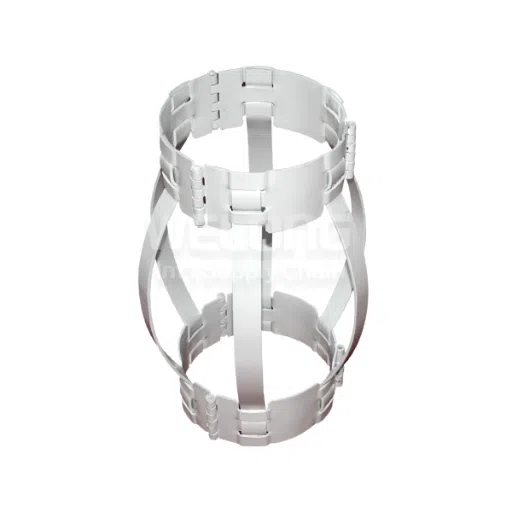
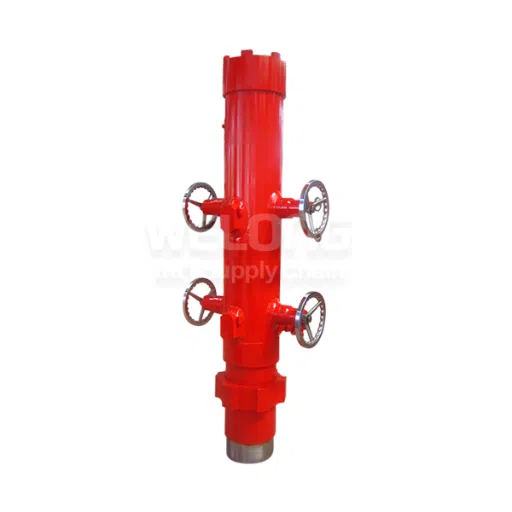
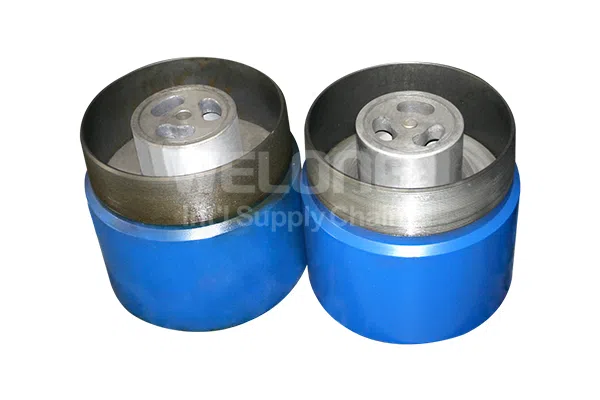
Size confirmed against casing program and selected model
Casing centralizer OD range
5-1/2–13-3/8 in
Float equipment model reference
7 sizes
Double-plug cement head
3 families
One casing-program RFQ
2001
Sourcing and QC since
SGS / DNV inspection available by quotation
Third-party inspection
Where Cement Jobs Fail: The Four Failure Modes and the Cement Tool That Owns Each
Start with the uncomfortable part. A cement job that passes its pressure test hasn’t been proven good – the US offshore regulator says a pass “only indicates that one of the two barriers is competent and does not demonstrate that both barriers are independently holding the pressure.” The same report goes further, finding that existing practice and BSEE’s own regulations on pressure testing “may not be adequate to evaluate the integrity of either the seal assembly or the cement column.”
Why this changes how you buy
If the verification step can’t reliably tell you the sheath is sound, the tools have to be right on the way in. You don’t get to test your way out of a bad primary cement job.
Long-term zonal isolation is set during the few hours the string is going in the hole, not during the test that follows.
By the time rig personnel are reading a pressure gauge, every decision that governs cementing operations has already been made and cemented in place.
That’s the argument for specifying casing accessories properly rather than treating them as commodity line items.
Four failure modes account for most of what goes wrong, and each has a specific tool that owns it. Treating them as one risk with one fix is the trap: a 5,000 psi pressure class on the cement head does nothing for a channel a centralizer left thousands of feet below. The routing table below is built around ownership, not product categories.
The Failure-to-Tool Routing Table
| Failure mode | What actually happens | Tool family that owns it | Governing document |
|---|---|---|---|
| Bypassed mud / channelling | Casing lies against the low side; slurry takes the wide path and leaves a mud channel on the narrow side | Casing centralizers | API Spec 10D / ISO 10427-1 |
| U-tubing after displacement | Cement is denser than the displacement fluid, so hydrostatic imbalance pushes it back up inside the casing | Float equipment | API RP 10F / ISO 10427-3 |
| Shoe-track contamination | Mud film and plug handling contaminate the last cement down, so the shoe track never sets as a barrier | Cement head and plugs | API TR 10TR6 |
| Verification gap | The job passes its pressure test and is still not proven — the test does not exercise the two barriers independently | All three, specified up front | BSEE QC-FIT #2014-02 |
The first row isn’t theory. In the Macondo investigation, cement modelling of the same well produced three different answers purely as a function of centralizer count: seven centralizers gave a severe gas flow potential, ten gave moderate with channelling predicted, and twenty-one at 45-foot spacing predicted no channelling and only minor gas flow potential.
Want the failure-mode table mapped against your own string?
Send your casing program and we will mark it up →
One Casing Run, Bottom to Surface: Where Each Cementing Equipment Item Sits in the String
Every supplier page shows you one product. None of them shows you the whole string. Here’s the stack, bottom up, with the document that governs each position.
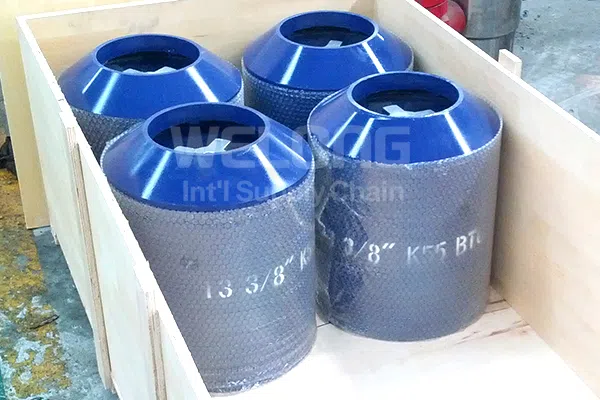
String Hierarchy (Bottom Up)
-
Guide shoe or float shoe
at the casing toe. Its round nose steers the string past ledges; a float shoe adds the check valve.
-
Float collar
run “at least one joint above the float shoe and most operators run them two joints above the shoe.” The casing between the two is the shoe track; you can work through which valve arrangement suits the duty on your string.
-
Landing collar
where fitted, gives the plug a defined seat above the float collar.
-
Casing centralizers
distributed along the string according to side force, held in position by stop collars.
-
Cement head
at surface, holding the plugs and the manifold connection.
Two regulatory numbers worth writing into your program
This stack view tells you where a substitution actually lands: swap a casing float shoe for a plain guide shoe and you haven’t saved a line item, you’ve removed the check valve that holds 500 psi of set cement in place. That mismatch risk sits in the joints between families, not inside any one of them.
30 CFR 250.420(c)(1)
Cement behind the bottom 500 feet of casing must reach a minimum compressive strength of 500 psi before drill-out or completion operations.
30 CFR 250.420(b)(3)
On wells using subsea BOP stacks, “a dual float valve, by itself, is not considered a mechanical barrier”. Float equipment isn’t a substitute for the mechanical barrier the rule requires.
What sits either side
- Before the string goes in, a casing scraper conditions the wall before cementing.
- Above it, our downhole drilling tools cover the rest of the string.
Welong Cementing Tools:
Three Product Families, Side by Side
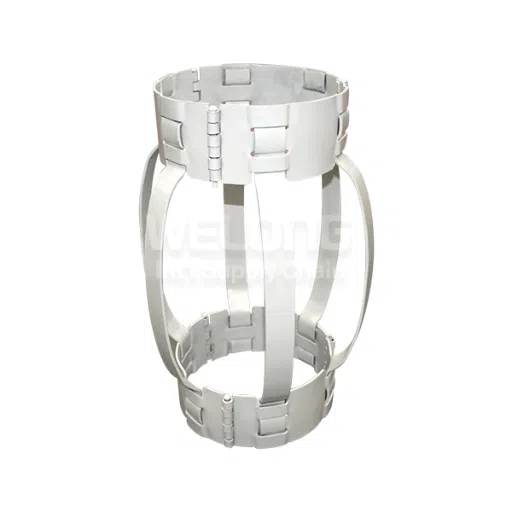
Position: along the string
Casing Centralizers
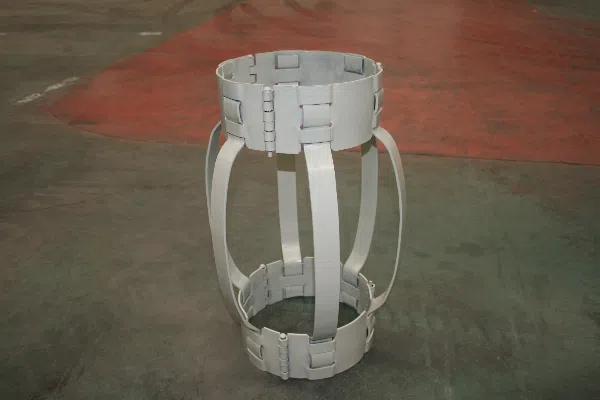
Holds the pipe off the wall so cement fills a continuous annulus instead of a crescent.
- Casing size confirmed against the casing program and selected model
- Bow spring, semi-rigid double bow, rigid blade, roller, composite
- Bow-spring performance measured per API Spec 10D / ISO 10427-1
- In-process, final and third-party inspection
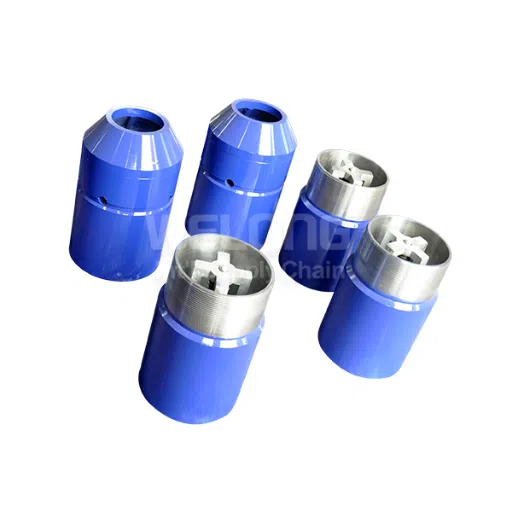
Position: string bottom
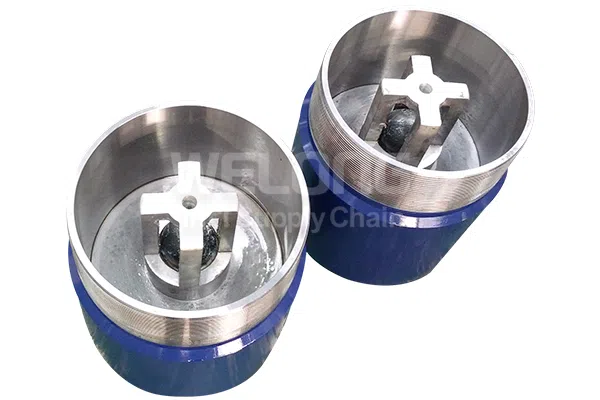
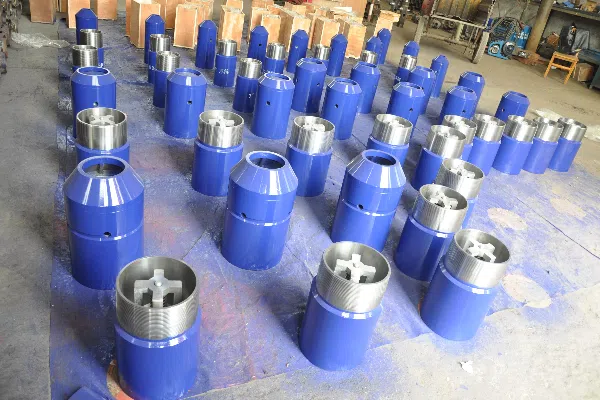
Float Shoe, Float Collar & Guide Shoe
The back-pressure barrier at the toe, plus the plug seat that defines your shoe track.
- Quoted model 5-1/2 in to 13-3/8 in casing
- Single, double, auto-fill, flapper, ball and stab-in configurations
- Tested to API RP 10F / ISO 10427-3 criteria
- Drillable on PDC and rock bits, aluminium-alloy internals
Position: surface
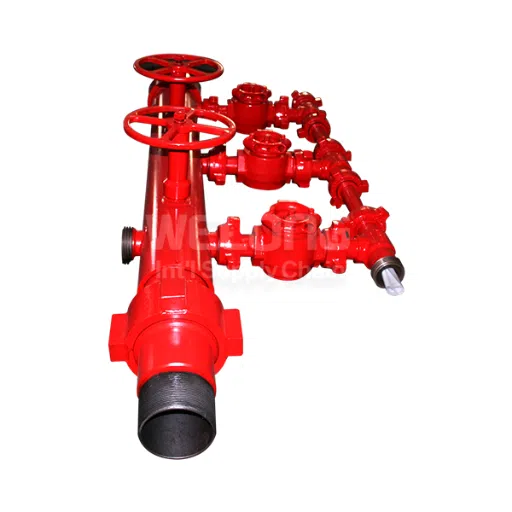
Double-Plug Cement Head
Both plugs pre-loaded, so nobody opens the head mid-job to load the top plug.
- Seven sizes, 5-1/2 in to 13-3/8 in casing
- For API 5CT casing grades J55, L80, N80, P110
- Forged AISI 4145H body, 2 in union manifold
- Lever-type plug-pass indicator
The Three-Family Decision Table
| Decision input | Casing centralizers | Float equipment | Cement head |
|---|---|---|---|
| Where it sits | Along the string | Toe and one to two joints above | Surface, above the rotary |
| Failure it prevents | Channelling on the narrow side | Cement U-tubing back inside casing | Contaminated shoe track, uncontrolled plug release |
| Product specification | API Spec 10D / ISO 10427-1 | API RP 10F / ISO 10427-3 | None — API TR 10TR6 is a technical report |
| Casing OD covered | Confirmed by selected model | 5-1/2 to 13-3/8 in model reference | 5-1/2 to 13-3/8 in, 7 sizes |
| What you must state on the RFQ | Casing OD and hole diameter | Casing OD, valve type, connection | Casing OD, casing grade, working pressure |
| Can it be omitted? | Only if standoff is achieved another way | Only with inner-string or reverse cementing | No, if plugs are launched conventionally |
"The question we get asked is which of the three we can leave out to save money. The honest answer is that they fail in different directions - centralizers decide where the cement goes, float equipment decides whether it stays there, and the cement head decides what goes down the pipe in the first place. Dropping one does not make the job cheaper, it moves the risk somewhere you are not watching."
Casing OD 4-1/2 in to 20 in: What Is Confirmed by Model and RFQ
There's no common size envelope across these three families, and pretending otherwise is how RFQs come back with holes in them. Centralizers cover the whole range; float equipment and cement heads stop well short. Cell by cell, the table lays the families on top of each other.
A centralizer size alone is not a specification
A bow-spring centralizer is rated for both the casing diameter and the hole size it was demonstrated in. A 9 5/8-inch centralizer proven in one hole size isn't automatically proven in a tighter one, because the bow deflection needed for a given restoring force varies with the annular clearance.
Supply the hole dimension together with the casing size and we provide a quote based on a tested match. If casing only is supplied, the person on the receiving end is taking a stab in the dark.
A similar problem runs across casing centralizer types: a solid-body type quoted on OD alone can hang up in a tight hole; a bow spring quoted that way can run out of standoff.
The quotation states the selected model, requested casing-and-hole information, inspection scope and available documentation.
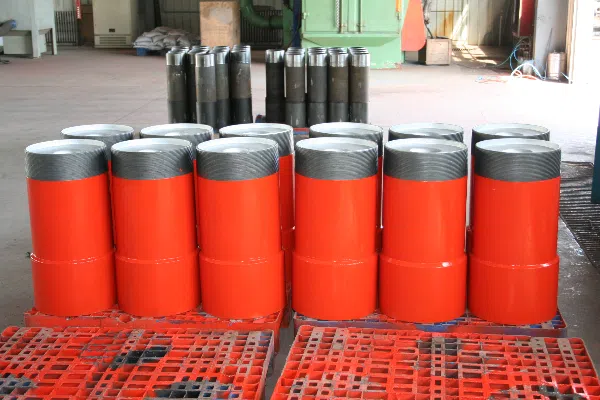
The marking requirement sits in the standard itself: ISO 10427-1:2024 covers testing, performance and marking for casing bow-spring centralizers, and is the second edition that replaced the 2001 first edition.
The Casing-OD Availability Envelope
| Casing OD | Centralizers | Float equipment | Cement head |
|---|---|---|---|
| Selected model | Quoted model | Confirmed by RFQ | Confirmed by RFQ |
| 5-1/2 in | Quoted model | Quoted model | Quoted model |
| 6-5/8 in | Quoted model | Confirmed by RFQ | Quoted model |
| 7 in | Quoted model | Quoted model | Quoted model |
| 7-5/8 in | Quoted model | Confirmed by RFQ | Quoted model |
| 9-5/8 in | Quoted model | Quoted model | Quoted model |
| 10-3/4 in | Quoted model | Confirmed by RFQ | Quoted model |
| 13-3/8 in | Quoted model | Quoted model | Quoted model |
| Selected model | Quoted model | Confirmed by RFQ | Confirmed by RFQ |
Standards Coverage by Cementing Tool, Including the Gaps
Here's the map you're never shown, because some of it is uncomfortable: not every cementing tool has a product specification, the centralizer standard covers less than the datasheets imply, and the document a US offshore operator is actually held to is none of those printed on the box. Each boundary below is stated as the standards bodies state it.
The Standards Coverage Map
Bow-spring casing centralizers
API Spec 10D, 7th ed 2021, supplemented by ISO 10427-1:2024
Explicitly not applicable to rigid centralizers or cement baskets
Rigid and solid centralizers
API TR 10TR5 test methods; selection guidance in API TR 10TR4
Technical reports, not product specifications
Centralizer placement, stop collars
API Spec 10D-2 / ISO 10427-2:2004, confirmed current in 2025
Governs placement and stop-collar testing, not the centralizer device
Float equipment
API RP 10F / ISO 10427-3
A recommended practice for performance testing, not per-unit certification
Cement wiper plugs and cementing heads
API TR 10TR6, First Edition July 2015
No API product specification exists for the cement head body
Casing material grade
API 5CT
Governs the casing, not the accessory tool body
US offshore regulatory duty
30 CFR 250.420(a)(6), pointing to API Standard 65-Part 2
Neither API Spec 10D nor API Spec 10F is incorporated by reference
Liner hangers
API Spec 19LH — a separate equipment family
Its enumerated scope is liner hangers, packers, tie-back receptacles, seal assemblies and running tools
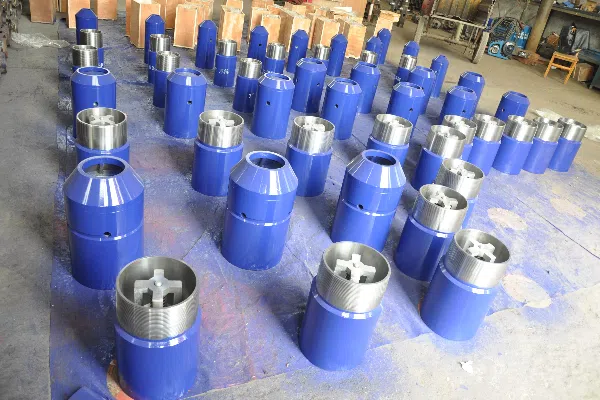
The wording operators get audited on
30 CFR 250.420(a)(6) requires you to "provide adequate centralization consistent with the guidelines of API Standard 65—Part 2."
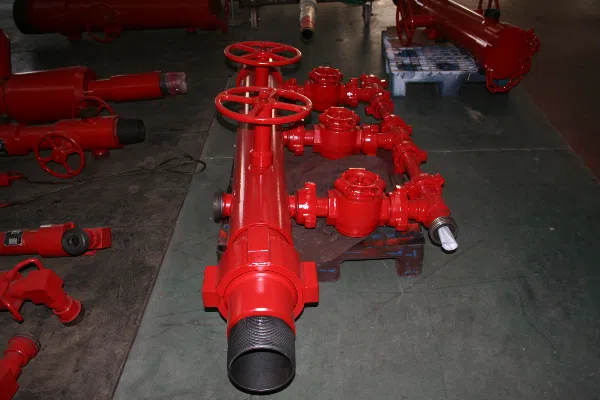
One document number to stop looking for
There's no API 10G in the well cementing family. API Standard 65-Part 2 enumerates the series in its normative references: 10D, 10D-2, 10F, 10TR1, 10TR3, 10TR4 and 10TR5. If a quote cites API 10G, pin down which document it means before comparing.
Need the coverage map as a reference sheet?
Look up which standard covers a given cementing tool →Mill, Major, or Sourcing Partner: Three Ways to Buy Cementing Tools and Casing Accessories
There are three routes to the same shelf of casing accessories, differing less in product than in who carries which risk. Making that explicit helps you more than claiming one route is simply superior.
| Consideration | Direct from a mill | Through an integrated major | Sourcing and QC partner |
|---|---|---|---|
| What you are buying | One factory's output | Product bundled with service | Supplier selection plus inspection |
| Who holds the licence | The mill, verifiable in the API Composite List | The major or its supplier | The mill, and you verify it yourself |
| Multi-family coordination | You coordinate | Bundled, at bundled pricing | One RFQ, one shipment plan |
| Inspection scope | Factory's own release | Contract dependent | In-process, final, third-party by quotation |
| Where the risk sits | Buyer, at origin | Vendor, priced in | Shared, documented per shipment |
The inspection column matters more than it looks, because the industry's verification step is already weak. BSEE's own QC-FIT evaluation of seal assembly and cement failures found an elastomeric seal "may help to mask a poor cement job," increasing "the likelihood that the system will pass the pressure test, which reduces the need for costly remedial action." If the downstream check is weak, the upstream one is all you've got.
Where the risk actually goes
No route eliminates the risk; each only shifts it. A mill sells the lowest unit price and keeps the tolerance question on its own turf; a major prices the coordination in; Welong keeps the inspection layer present and hands you the evidence. None of the three can make a centralizer perform in a hole it was never tested in - an RFQ-stage specification issue, not a rig one.
One Casing Program, One RFQ: Lead Time, Incoterms, Inspection, and the Cement Tools We Quote Confirmed by RFQ
We publish neither a price list nor a lead-time schedule, and the honest reason is in the data.
U.S. Energy Information Administration figures put casing and cement at 11% of total drilling and completion cost on an onshore well, with "considerable cost variability between individual wells."
What we can publish is which variables move your number.
01
What drives cost and schedule
- Size and grade spread number of casing sizes included in the program and any that are outside standard model reference range.
- Configuration count types of valves, families of centralizers and cement head pressure classes included in the string.
- Inspection level in-process and final release inspection only, or including a third-party witness.
- Documentation package includes mill certificates, dimensional reports and the inspection records gathered for the quoted items.
- Trade term / destination which Incoterms 2020 rule applies, and any marking requirements at destination.
02
The trade term is not a formality
Incoterms 2020 presents eleven rules, with all costs for a given rule consolidated at Article A9/B9. Risk to seller under CIP shifts when the goods are given to the carrier the seller hired. Risk under CIF shifts once goods are loaded on board at the designated port.
Insurance coverage varies: CIF only requires Institute Cargo Clauses (C) minimum cover; CIP demands Clauses (A). For containerised casing accessories moving door to door, CIF is usually the wrong rule.
There's also a paperwork reason to buy the string as one program. Under 30 CFR 250.415(f) an operator must file a written description that "must identify the mechanical barriers and cementing practices you will use for each casing string."
A package assembled per string, documentation traceable per item, drops straight into that description; three suppliers with three certificate styles won't.
03
Quoted by quotation, by standard family
- Cementing plugs & wiper plugs - the family API TR 10TR6 addresses, alongside cementing heads.
- Stage collars & diverter tools - for stage cementing, where a single continuous column would break down the formation. Used also for secondary and remedial squeeze work.
- Inner-string stinger assemblies - for large-diameter strings cemented through tubing rather than down the casing bore.
- High-pressure head variants - where the anticipated surface pressure exceeds the standard working pressure class.
- Liner hangers - quoted separately and deliberately so, because API Spec 19LH is a different equipment family with its own enumerated scope. We don't fold liner equipment into a cementing-tool line item.
[RFQ_DATALINK]
Welong provides the whole package against one casing tally - sizes, configurations, inspection level and documentation, priced as a program, not as unrelated purchase orders.
Buy three product lines from three vendors on three schedules and the 7 in float collar and 7 in landing collar can arrive with incompatible connections: a coordination failure, not a manufacturing one. That's precisely why this page exists.
Ready to price a full program?
Get Instant Quote →What We Document on Every Cement Tool Order, and What We Don't Claim
The hardest question we are asked is how a buyer defends the award on paper. It isn't presentational - an auditor challenging a 9-5/8 in casing centralizer bought through a distributor rather than a licensee is asking about a break in the documentary trail. A disclaimer is the wrong answer; the right one, in API's own language, is that licence status is confirmed for the quoted contracting entity.
What the quotation puts on record
Each cementing item is quoted against the specification it is built to, with the responsible manufacturer, the inspection scope and the documents that travel with the shipment named on the quotation.
Read further definitions
But its rules exclude our category by name. Facilities whose capabilities are limited to "buying, selling and/or distributing finished products and materials" "shall not be licensed." This isn't a weakness in our case; it's a category definition.
That leaves a checkable set of controls that doesn't rely on anyone believing us. Every item is marked with its heat and manufacture data, and the release records for that heat are held against your order. Welong certifies nothing on its own authority - we capture those fields and pass them through.
What that looks like on one line item
For a selected order, a 13-3/8 in solid body centralizer for a surface casing string arrives with the mill certificate showing the heat, the dimensional report against the tested casing-and-hole pair, and the license data off the product where the mill is licensed. Each can be checked by your quality team without talking to us. We will not claim anything more than the paperwork indicates.
TRACEABILITY PARAMETERS
Mill certificates
Material traceability per heat
Licence data captured
Number and date of manufacture
SGS / DNV
Third-party witness by quotation
In-process + final
Dimensional and visual release
Cementing Engineering & Verification Tools
casing program package builder
Configure and evaluate casing string designs with precision. Optimize wellbore integrity for complex environments.
Access Tool
standards coverage lookup
Instantly verify API and ISO compliance for your equipment to meet strict international regulatory standards.
Access Tool
supplier verification checklist
Systematically assess vendor capabilities and quality control protocols to mitigate supply chain risks.
Access Tool
At minimum a shoe at the toe, a float collar one to two joints above it to form the shoe track, centralizers distributed along the string, and a double-plug cement head at surface to launch the plugs. Stop collars position the centralizers; landing collars add a defined plug seat where wanted. Which are model reference and which are sourced to order depends on the casing OD, so send the tally rather than a part list, and we mark which is which against the actual sizes on the quote.
Working with China Welong
Order Terms, Evidence and Next Steps
The commercial terms below apply to every oilfield tools order we quote. They are the same terms our quotation repeats back to you, so nothing on this page has to be re-negotiated once a drawing is on the table.
What we make, and from what
We work from 2D drawings and 3D CAD models (AutoCAD, Pro/ENGINEER and SolidWorks; .dwg and .igs).
Founded in 2001. Manufacturing at Xi'an, Shaanxi and at Jiyuan, Henan, with 30+ engineers on staff.
Forgings from 0.2 to 50 tons, finished to 0.01 mm machining precision. Material standards to ISO, BS, ASTM, ASME, DIN, JIS and GB.
How the price is set
Send a drawing and we reply within 24 hours; a drawing-based quotation follows in 1–3 working days.
Payment is T/T or L/C. We ship EXW, FOB, CFR or CIF; other Incoterms on request.
Orders ship in standard export wooden cases, or the packing you specify.
When it ships
Production lead times are confirmed with your quotation, based on quantity, process route and finishing scope.
We hold agreed items in stock and ship against your release to shorten delivery.
Who makes it, and who answers for it
Every quotation states whether the item is made in our own works or by an approved supplier we developed and supervise.
Material mills are re-audited every two years and approved by Welong before they run your order.
The evidence that travels with the order
An EN 10204-3.1B material certificate with chemical composition and mechanical properties, a dimensional measurement report, and UT and MT reports ship with your order.
Inspection is by coordinate measuring machine, ultrasonic, magnetic particle and X-ray.
Each piece carries a stamped serial number and stays traceable for five years to its chemical composition, mechanical properties and measurement report.
What to send to start
Send the drawing or a photograph of the part, the dimensions, the material requirement and the quantity to oiltools@welongpost.com, call +86 029 88331331 or message WhatsApp +86 135 7217 2362, or use the enquiry form on our contact page.
An engineer reviews it and comes back within 24 hours.
| Term | What we commit to |
|---|---|
| Quotation turnaround | Reply within 24 hours; drawing-based quotation in 1–3 working days |
| Production schedule | Confirmed with your quotation, by quantity, process route and finishing scope |
| Drawing formats | 2D drawings and 3D CAD models (.dwg, .igs) |
| Company | Founded in 2001 |
| Machining precision | 0.01 mm |
| Forging envelope | 0.2 to 50 tons |
| Serial traceability | 5 years, with the test coupon retained |
| Documents with shipment | EN 10204-3.1B certificate, measurement report, UT and MT reports |