Get in touch with Welong Company
Drilling Jars
Drilling Jars, Hydraulic, Mechanical & Hydro-Mechanical Supply
Drilling jars are tools that stand between a stuck drill string and a costly fishing job. China Welong supplies hydraulic, mechanical, and hydro-mechanical drilling jars. Confirm the applicable API Spec 7-1-related documentation and inspection scope for the selected item.
Request a Quote
12
Hydraulic Jar Models, WLQY80 II–WLQY241 II
3
Jarring Mechanisms: Hydraulic, Mechanical, Hydro-Mechanical
280,000 lb
Max Upper Jar Force (WLQY241 II)
2-3/8–7-5/8 REG
API Connection Range Across the Line
2001
Founded
Order Standards & Documentation
When Your Drill String Gets Stuck, How Drilling Jars Deliver the Fix
The mechanical-versus-differential split matters downstream of this pain point. Mechanical sticking—hole collapse, cuttings buildup, or keyseating—may respond to a sharp, high-magnitude impact. Differential sticking, caused by mud-cake pressure differential pinning the string against a permeable formation, can require sustained, repeatable tension-proportional impact while the crew works the string; that distinction feeds directly into the jarring mechanism specified below.
For each WLQY jar, China Welong reviews the required configuration and identifies the responsible manufacturer in the quotation, because gambling on a jar type selection isn’t a minor oversight – it’s the margin between a planned one-run fishing job and a multi-day fishing mission that may be unavoidable, but often isn’t with the proper tool specified at the outset. Moreover, this isn’t a catch-all solution; no one jar type addresses every stuck pipe situation without a trade-off in either response time or impact force – and that’s precisely why the selection matrix below has been constructed. If your crew is facing a stuck string at the moment, get a quote and describe your specific well conditions; our engineering team will walk through jar types and placements with you directly, without forcing you to sacrifice on either.
China Welong Drilling Jar Range, Hydraulic, Mechanical & Hydro-Mechanical Selection Matrix
There are two fundamental jarring principles that cover most of the drilling jar market: hydraulic metering delay and mechanical preset-load release. Merge both elements in a single tool – a hydraulic delay upstroke, a mechanical latch downstroke, or any programmable combination – and you get a hydro-mechanical hybrid. Don’t confuse this for marketing terminology: it’s a bona fide engineering category that’s patented independently (Chinese utility patent CN204225821U, for example, combines the hydraulic delay and mechanical latch mechanisms within a single cylinder to simplify maintenance).[3]
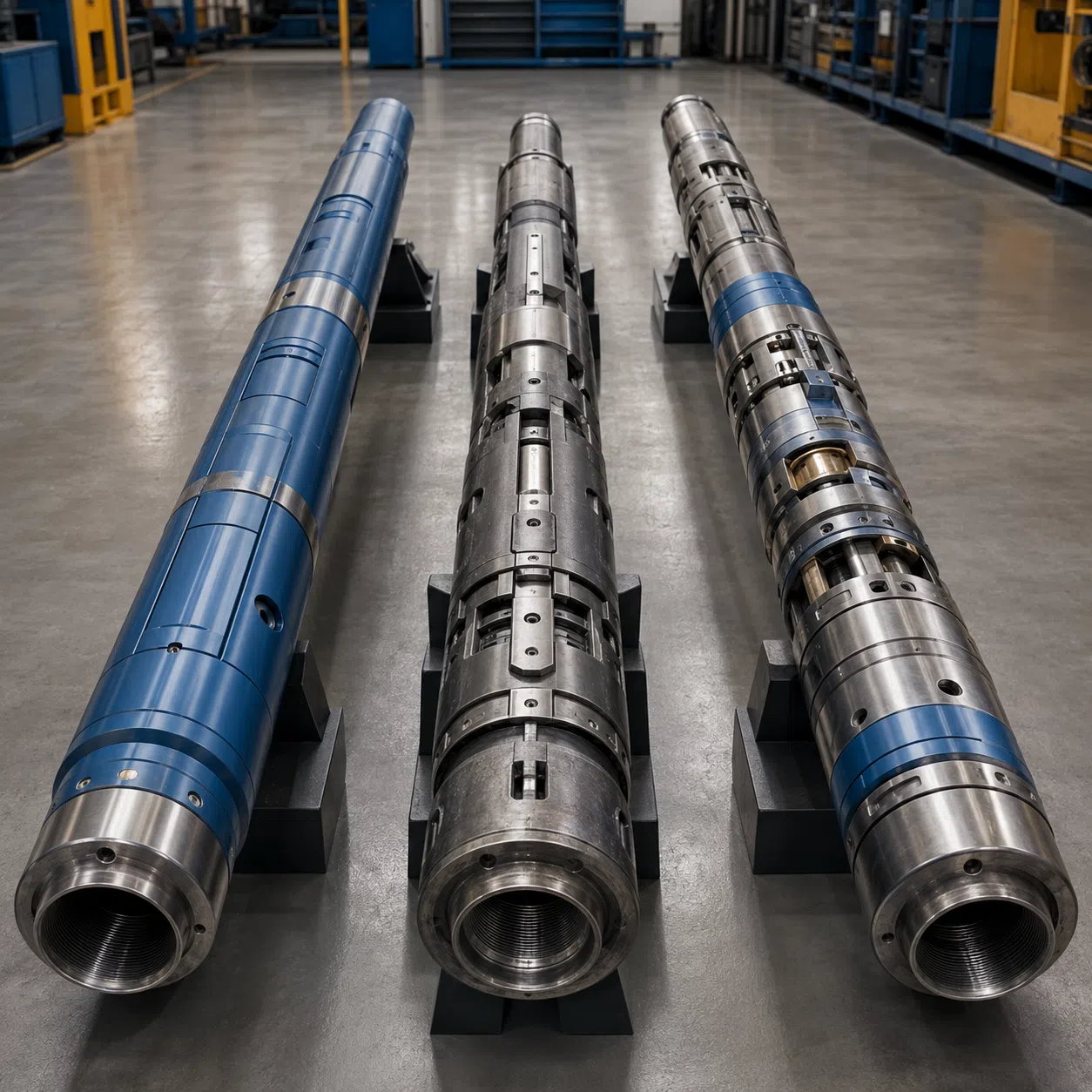
Selection Matrix, Choosing By Well Condition, Not By Catalog Name
| Jarring Type | Trigger Mechanism | Best-Fit Well Condition | Maintenance Complexity | Reference Application |
|---|---|---|---|---|
| Hydraulic | Fluid metering valve, time-delay release | Deep, directional/horizontal, high-overpull wells | Moderate — seal & fluid checks between runs | Deep vertical, directional and HPHT wells where consistent, tension-proportional impact matters |
| Mechanical | Pre-set spring/detent latch, load-triggered | Shallower, conventional-trajectory wells | Low — no hydraulic fluid to service | Conventional wells and simpler completions where field simplicity outweighs variable-impact control |
| Hydro-Mechanical | Hydraulic delay + mechanical latch combined | Complex trajectory, high-torque directional wells | Moderate to high | Wells needing configurable up/down jarring regardless of BHA orientation |
This selection matrix was built to fill a void, which buyers rarely realize exists until a jar underperforms in the field. For each China Welong configuration, the quotation identifies the responsible engineer, manufacturer and documented process controls, and our hydraulic drilling jars cover hydraulic drilling jar sizes from 3-1/8” through 9-1/2” O.D. on the WLQY series – a range most hydraulic drilling jar manufacturers cover as well, customized for your well.
Jar selection is just as much about placement as type. A widely cited third-party engineering paper on highly deviated and extended-reach wells makes this point directly: sound technical guidance on jar placement is hard to come by, and, “in these instances, conventional jar placement knowledge does not always apply,” the authors write, recommending computer-modeled placement calculations and, at times, two jars in the string.10 We size and recommend jar placements tailored to your precise BHA and wellbore trajectory, not generic placement guidelines.
Fully Hydraulic Drilling Jar, WLQY Series
| Model | O.D. (in.) | Water Hole Dia. (in.) | API Connection | Max Working Load (lb) | Max Working Torque (lb·ft) | Max Upper Jar (lb) | Max Down Jar (lb) | Overall Length, Open (ft) |
|---|---|---|---|---|---|---|---|---|
| WLQY80 II | 3-1/8 | 1 | 2-3/8 REG | 79,000 | 2,200 | 34,000 | 14,000 | 18.2 |
| WLQY95 II | 3-3/4 | 1-1/4 | 2-7/8 REG | 140,000 | 3,000 | 45,000 | 22,500 | 18.4 |
| WLQY121 II | 4-3/4 | 2 | NC 38 | 250,000 | 11,000 | 78,000 | 40,000 | 32 |
| WLQY121A II | 4-3/4 | 2-1/4 | NC 38 | 250,000 | 11,000 | 78,000 | 40,000 | 32 |
| WLQY146 II | 5-3/4 | 2-1/4 | NC 46 | 300,000 | 15,000 | 110,000 | 56,000 | 31.5 |
| WLQY159 II | 6-1/4 | 2-1/4 | NC 46 | 360,000 | 18,000 | 160,000 | 78,000 | 32.3 |
| WLQY165 II | 6-1/2 | 2-1/4 | NC 50 | 450,000 | 18,000 | 160,000 | 78,000 | 32.3 |
| WLQY165A II | 6-1/2 | 2-3/4 | NC 50 | 450,000 | 18,000 | 160,000 | 78,000 | 32.3 |
| WLQY178 II | 7 | 2-3/4 | NC 50 | 540,000 | 22,000 | 180,000 | 90,000 | 32.3 |
| WLQY203 II | 8 | 2-13/16 | 6-5/8 REG | 630,000 | 26,000 | 225,000 | 110,000 | 32.5 |
| WLQY229 II | 9 | 3 | 7-5/8 REG | 670,000 | 26,000 | 270,000 | 135,000 | 32.5 |
| WLQY241 II | 9-1/2 | 3 | 7-5/8 REG | 670,000 | 30,000 | 280,000 | 150,000 | 32.5 |
12-model specification table; confirm the source and selected model in the quotation.
Mechanical & Hydro-Mechanical Drilling Jars, Engineered to Your Connection
Beyond our catalogued WLQY hydraulic line, we’ll have our engineers config your mechanical and hydraulic mechanical drilling jars for your API connection, OD and load – same principle as the running jars, but tuned for the mechanism your well conditions dictate. We don’t publish a catalog listing for mechanical or hydro-mechanical simply because every order in this product family is a custom-BHA-matched build rather than an off-the-shelf unit – give us your connection size, target working load and well trajectory and we’ll return a proposed configuration, not a generic catalog page.
Double-Acting Jarring Explained, Up-Jar & Down-Jar Performance
01
All WLQY hydraulic jars are double-acting: the same tool deliver both up-jarring and down-jarring, no separate accelerator sub required. The tool features a splined connection that keeps the torque transmission intact between inner and outer housing through every stroke. On the upstroke, a pull on the string at surface pressurizes the hydraulic fluid in the upper cylinder, causing it to stretch, and once the fluid clears the internal restriction, the cone-structured delay mechanism releases its stored tension in one sharp blow upward. Down-jarring functions the same way, but in reverse. Slack off the string, and the lower cylinder fills, releasing the stored tension downward once the preset threshold is reached; impact position and load setting are both influenced by crew placement of the jar in the string.
Impact load correlates directly to the pull or slack-off exerted at surface, up to the rated working load for that unit; on a WLQY241II, this ceiling is 280,000lb upward and 150,000lb downward, against a 30,000lb-ft working torque rating and internal fluid pressures that can run into the thousands of psi on the largest models. The double-acting mechanism is equally suitable for workover and fishing operation work - the same mechanism reliable in a drill string can retrieve lost tools in a fishing string. Independent bench testing documents that dynamic friction forces vary significantly between individual tools even under identical test conditions[5] - which is exactly why the quotation identifies the in-process and final inspection scope for the selected unit rather than relying on design specification alone to guarantee field performance.
02
Reliability in the field come down to the cooperation of two things: appropriate mechanical calibration of the tool, and placement in the BHA with respect to the drill collars and heavy-weight drill pipe. Neither one substitutes for the other.
The responsible manufacturer and engineering scope for this hydraulic delay mechanism are confirmed in the quotation. A jar that fires early or late can damage the string above it. The WLQY unit is a double-acting hydraulic drilling jar; provide timing requirements for calibration discussion.
03
There's a specific failure mode worth understanding rather than glossing over: jar twistoff. A 2023 Journal of Petroleum Technology digest of an SPE fatigue-analysis study puts it plainly: the jar is one of the weakest points in the drillstring because of moving parts, which include complex shapes, resulting in stress concentration, particularly in large-borehole applications[10]. That's not a reason to avoid jars; it's a reason the connection design and the sub immediately above and below the jar matter as much as the jar's own rated torque and tensile figures. The configuration review should size the drill-collar and heavy-weight-pipe interface for the selected jar model to manage that bending-stress concentration rather than treating jar selection as an isolated part-swap.
04
The quotation identifies the responsible designer and manufacturer for the selected hydraulic delay mechanism. A jar set too early or too late can damage the string it is protecting. The design trade-off is delay versus response speed; specify the desired delay for calibration discussion.
One of the critical failure modes of any jar deserves a closer look: the twistoff. As an SPE digest of a fatigue analysis study recently published in JPT pointed out: "The jar is one of the weakest links in the drill-string due to its moving components and the intricate shape they possess, which induce stress concentrations," particularly in large borehole applications [10]. While not an argument against the use of jars, this underscores that connection design and the placement of the sub just above and just below the jar are as important as the torque and tensile ratings of the jar itself. The quotation should identify who designs the drill-collar and heavy-weight-pipe interface and the evidence used to address bending-stress concentration for the selected jar model.
“Bench behavior and downhole reliability are not automatically the same; confirm the functional-check scope and records for the selected WLQY unit before shipment.”
Drilling Jars vs Conventional Stuck-Pipe Recovery, Where Jarring Delivers
Although there are other ways to release a stuck string than jarring, history is a great teacher about why it’s been the go-to first choice. One analysis of 310 stuck pipe release attempts utilizing a spotting fluid (injecting fluid downhole to a differentially stuck point) demonstrated only a 44 percent success rate and an average release time of more than six hours after the fluid reached the stuck point [6]. Jarring, in contrast, provides a quick, decisive mechanical release the moment the tool fires instead of waiting on a chemical reaction or the effect of static pressure.
| Recovery Method | Historical Success Rate | Reference Time to Release | Best Suited For |
|---|---|---|---|
| Jarring (correctly placed & sized) | Design intent: immediate mechanical release on firing | Minutes once triggered | Both mechanical and differential sticking, with correct BHA placement |
| Oil-spotting / pipe-freeing fluid | 44% (310-attempt historical analysis) [6] | >6 hours average | Differential sticking only, where chemical/hydrostatic release is viable |
However, the success of jarring is conditional. impact force is dependent on the drill string actually storing elastic strain energy; in highly deviated or shallow wellbores or those with significant friction, the string may not be able to store sufficient energy to deliver the full rated blow of the jar. As shown by the third-party engineering analysis of ERD wells discussed above [4], traditional placement assumptions may break down entirely in such scenarios. This highlights the importance of utilizing the placement guidelines and selection matrices provided here as part of an overall BHA design process-as opposed to just choosing a jar based on its impact-force ratings. A 5-year field study of 3,476 wells conducted by ExxonMobil reported only three instances of differential-sticking among BHA designs adhering to stuck-pipe-avoidance guidelines, versus 17 where such designs didn't conform [7].
For every selected WLQY jar, China Welong reviews the required configuration and identifies the responsible manufacturer in the quotation because guessing at recovery method is a real cost risk, not just a minor inconvenience, and it's wasteful to experiment at the rig site to determine what method to try. In most real-life stuck-pipe instances, the crew that grabs for a jar first, using the correct jar and having it at the right depth, will bypass the several-hours oil-spotting waiting time. This is not always the case for every stuck-pipe scenario, which is why this comparison separates mechanical from differential sticking rather than treating "stuck pipe" as one category. If your well doesn't fall into either category cleanly, request a quote and describe your specific situation, our engineers can be honestly upfront about whether jarring is likely your most cost-effective first move.
Field-Proven Reliability, Quality Control & Track Record
Inspection scope can be confirmed for the selected drilling-jar order, including in-process and final inspection requirements.
We can supply custom-configured drilling jars, with the responsible manufacturer identified in the quotation: if a project requirement demands a connection size, working length, or working load rating beyond those shown on our standard WLQY table, our engineering staff will work to your required specification instead of forcing you to fit an off-the-shelf product.
Sour-Service & H2S Considerations
The API Spec 7-1 addresses the manufacture of drill rotary stem components, while both the API and the ISO do not yet provide a sour-service qualification standard specifically for drilling jars [8]. NACE MR0175/ISO 15156 includes drilling and well-construction equipment under its umbrella, however, the standard also states that a high-strength BHA tool - jars are included in this definition - is unable to achieve the low-hardness limits in sulfide stress cracking that the tool requires. In practice, sour-service concerns for jars are managed through drilling-fluid chemistry - the correct pH, sulfide scavengers, or oil-phase mud - rather than jar-specific NACE certification[9]. Let our engineers know what your well’s H2S is before you choose your sour-service jar.
Certifications & Compliance, API Spec 7-1
& Compliance Documentation
For a selected drilling-jar order, confirm the applicable API Spec 7-1 dimensional and conformity requirements in the quotation. API Spec 7-1 is a production standard and does not by itself confirm downhole impact reliability; request the relevant production and inspection documentation for the selected item.
Confirm the inspection scope and document package for the selected drilling jar in the quotation. Third-party inspection can be arranged for the selected order, with the provider, timing and deliverables agreed before production.
API Spec 7-1
Rotary drill stem element manufacturing standardOrder Documents
Confirmed for the selected orderThird-Party Inspection
Available for the selected orderInspection Scope
Provider and records confirmed in the quotation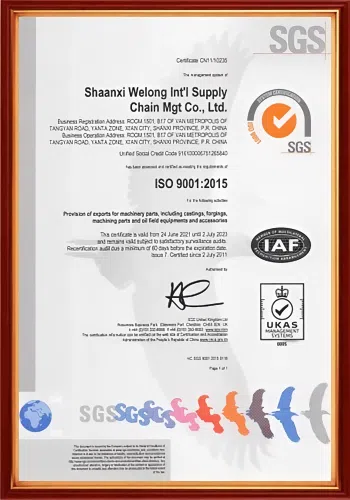
Premier Drilling Jars Global Solutions
×
![Enlarged View]()
Drilling Jar Interactive Tools & Calculators
Drilling Jar Type Selector
Answer three questions about your well to see which jarring mechanism — hydraulic, mechanical, or hydro-mechanical — fits your conditions best, based on China Welong's selection matrix.
Launch Tool
WLQY Model & API Connection Finder
Select your rig's API connection size to see which WLQY hydraulic drilling jar models fit — matched rows are highlighted.
Launch Tool
Drilling Jar RFQ Builder
Fill in your requirements to generate a structured request summary — copy it into an email or WhatsApp message to our engineering team for a fast, accurate quote.
Launch Tool
Sour-Service Quick-Check
Two questions to flag whether your well's H2S profile needs an engineering conversation before you specify a drilling jar.
Launch Tool
Stuck-Pipe NPT Cost Estimator
Enter your own rig day rate and an estimated non-productive-time (NPT) window to see what a stuck-pipe delay could cost on this well — a starting point for comparing recovery methods.
Launch Tool
Frequently Asked Questions
Jars are incorporated into the bottom-hole assembly for sustained, downhole service on routine workover operations, with high capacity torque transmission and sealing systems to facilitate continuous operation. Fishing jars are deployed only as needed when a lost or stuck piece of equipment requires extraction on a dedicated retrieval operation; consequently, their designs are less complex-a conventional drillable or millable steel pin-but not designed for continuous, full time downhole operation, as can drilling jars (SMI). Welong supplies drilling-jar and fishing-jar lines as separate product families; the responsible designer and manufacturer are identified in the quotation.
Two core jar designs are based on a mechanism for either metering fluid release or latch release: hydraulic is a fluid metering delay that produces variable, tension-proportional impact and mechanical is a preset spring/detent latch that provides a fixed trip-point. A hydro-mechanical jar incorporates elements of both mechanisms to match performance to the specific job.
Hydraulic jars are activated by metered fluid released from an internal piston/chamber assembly; the delayed, controlled fluid release translates to variable, tension-proportional impact. Mechanical jars employ a preset trip threshold and a spring-loaded pin latch to generate a sudden impact at a defined load level, with fewer moving parts and generally simpler operation.
When selecting the right jar, consider the depth, trajectory, and target operation of the well. Hydraulic jars can suit deeper or directional wells where tension proportionality is important; mechanical jars can suit shallower vertical wells where a field-simple solution is preferred. Use the matrix below or submit job parameters for a configuration review.
Yes. Standard API connections from 2-3/8 REG through 7-5/8 REG are stocked for our hydraulic product line. We can supply mechanical and hydro-mechanical jars, or custom configurations of the hydraulic series, with the responsible manufacturer identified in the quotation, with connections and OD specifications as requested by our clients.
Generally, jars are placed within heavy-weight collars or tubing, often as far up the BHA as feasible while providing enough weight below to ensure positive jar actuation and enough clearance to prevent damage from other BHA components. Some computer analysis of well-established downhole practices in highly deviated or extended-reach wells suggests alternative placement recommendations may be required [4].
Sour-service suitability depends on the material, wellbore conditions, and fluid exposure. If H₂S exposure is anticipated, provide the operating conditions for an engineering assessment.
Overpull or slack-off force is applied by the driller, stored in the extended drillstring, and released by the jar mechanism to provide a sudden impact to jar a stuck fish free from bottom. The hydraulic jar releases force once fluid has traveled through the valve, while the mechanical jar is triggered by the exceeding of a preset mechanical limit.
Procurement & Capability
Drilling Jars Capability Review
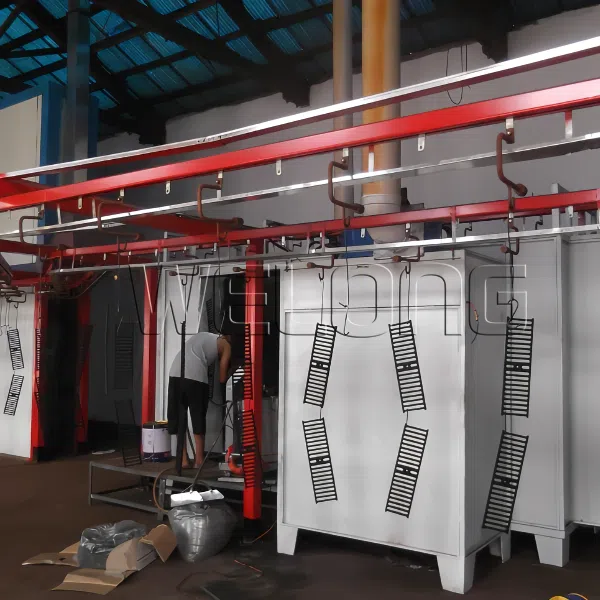
China Welong reviews the buyer drawing, product specification and inspection scope before quotation.
This review is scoped to the Drilling Jars configurations set out in the specification table on this page — 12 documented rows covering Model, O.D. (in.), Water Hole Dia. (in.) and API Connection.
24 hEngineer-reviewed quotation on business days
2001Founded in 2001
30+30+ engineers on staff
5 yrStamped serial traceability
Quotation Scope and Commercial Terms
Pricing is prepared against the selected product configuration, material route, inspection scope and shipment terms.
- Quotes are returned within 24 hours on business days, reviewed by an engineer.
- T/T or L/C by wire transfer.
- We ship EXW, FOB, CFR or CIF; other Incoterms on request.
- We work from 2D drawings and 3D CAD models (AutoCAD, Pro/ENGINEER, SolidWorks; .dwg and .igs).
Production Planning
Production timing is confirmed with the quotation after quantity, process route and finishing scope are reviewed.
- We hold agreed items in stock and ship against your release to shorten delivery. Feasibility is confirmed at drawing review.
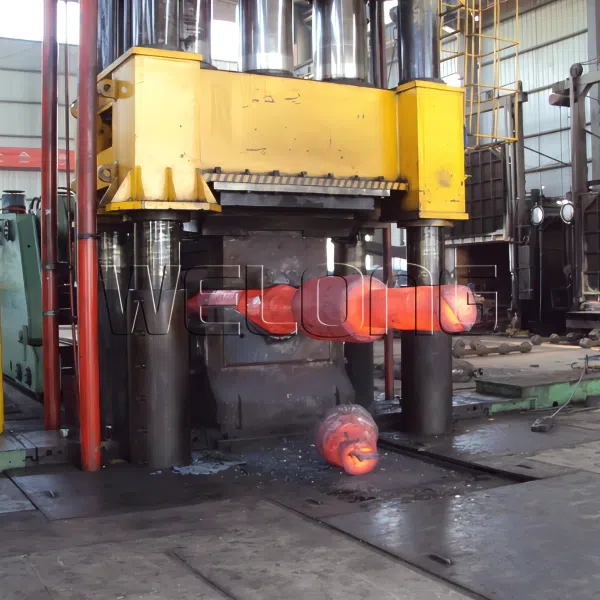
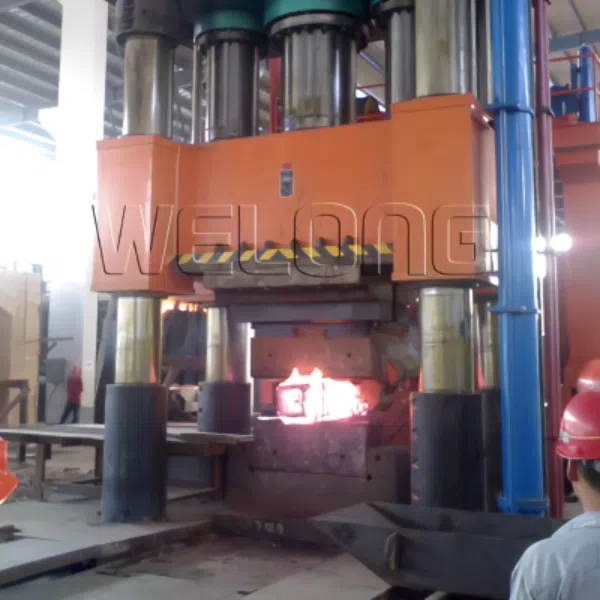
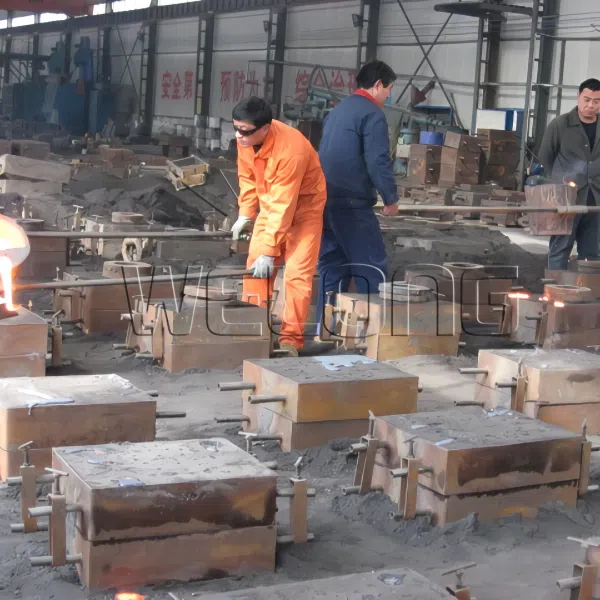
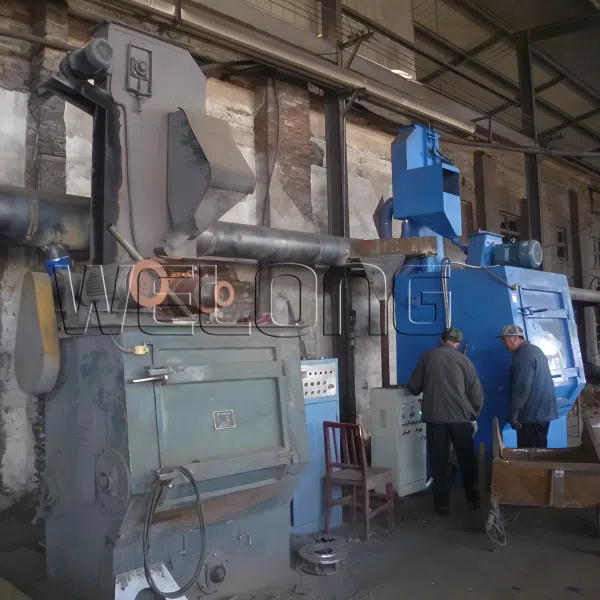
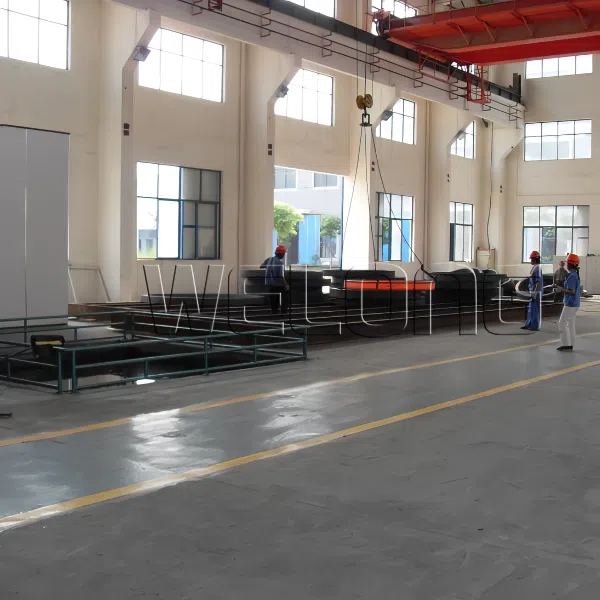
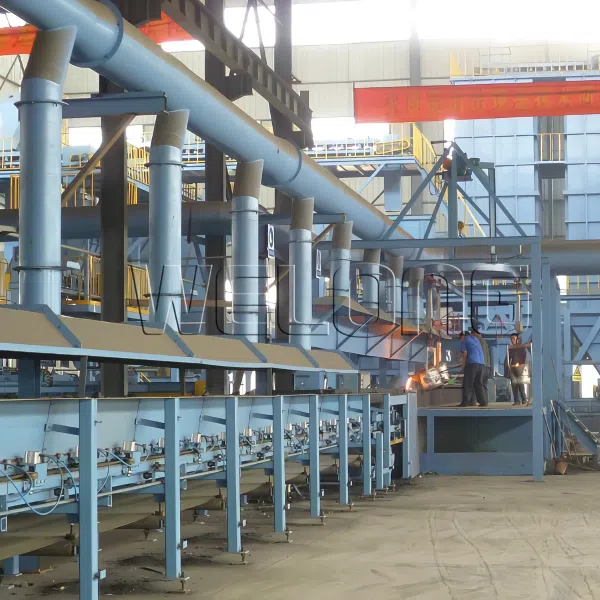
- Manufacturing at Xi'an, Shaanxi and at Jiyuan, Henan.
- 0.01 mm machining precision.
- Material standards to ISO, BS, ASTM, ASME, DIN, JIS and GB.
- Orders ship in standard export wooden cases, or the packing you specify.
Order Review and Responsibility
The responsible manufacturer, inspection scope and document package are identified for the selected item.
- Every quotation states whether the item is made in our own works or by an approved supplier we developed and supervise.
- We develop, audit and supervise the mills and workshops that make your parts: material mills are re-audited every two years and approved by Welong before they run your order.
- Forgings from 0.2 to 50 tons.
Specification and Inspection Evidence
The specification table on this page is the technical basis for this review: its numeric rows define what we quote, manufacture and inspect against.
- Each piece carries a stamped serial number and stays traceable for five years to its chemical composition, mechanical properties and measurement report, with the test coupon retained.
- An EN 10204-3.1B material certificate with chemical composition and mechanical properties, a dimensional measurement report, and UT and MT reports ships with your order.
- Inspection is by coordinate measuring machine, ultrasonic, magnetic particle and X-ray.
Request a Product Review
Send the drawing, product specification and inspection requirements for a quotation review.
![Choke & Kill Hose: [Field Guide]](https://welongoiltools.com/wp-content/uploads/2026/07/choke-kill-hose-guide-featured-1-150x150.png)