Get in touch with Welong Company
Die Collar
Die Collar (Box Tap) — External-Catch Fishing Tools
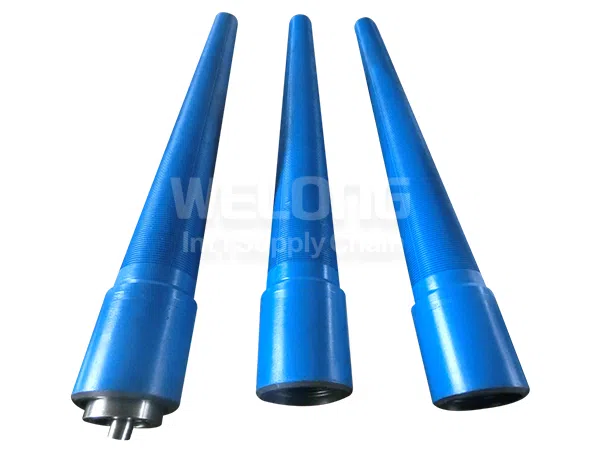
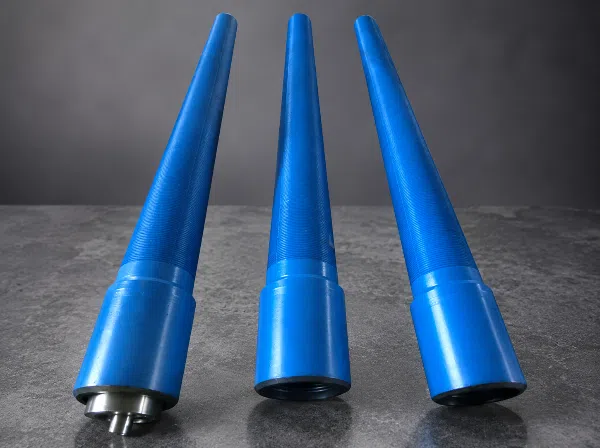
A die collar cut a fresh thread onto the outside wall of a stuck or lost tubular — what drillers call the fish: a length of pipe, tubing or equipment left in the wellbore that has to come out before work can restart. It’s the tool you reach for when that fish has no inner bore to grab, or when the bore it does have is packed, collapsed or belled beyond use.
Solution Summary
- Catch type External, committed
- Connections 6 API sizes
- Catch span 48–168 mm
- Guide options Type A / Type B
- Thread hand Right or left
- Connection standard API Spec 7-2
When the Lost Pipe Has No Bore to Grab: How a Die Collar Catches Externally
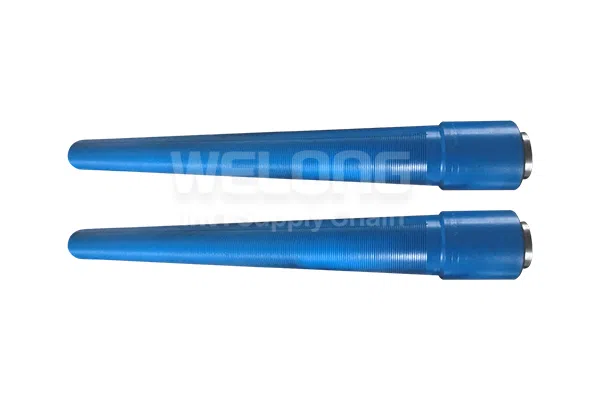
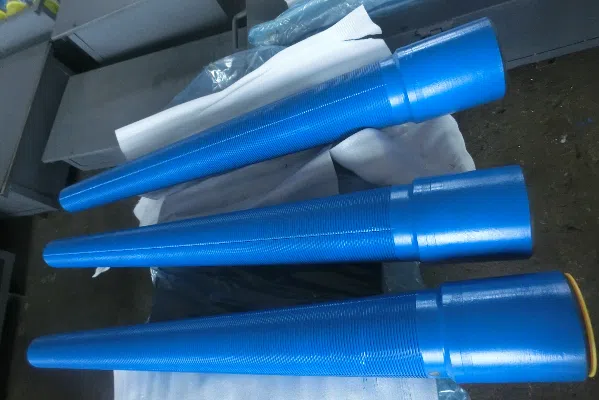
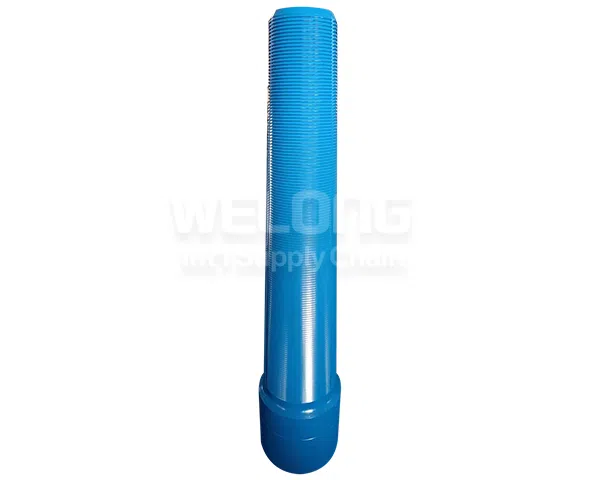
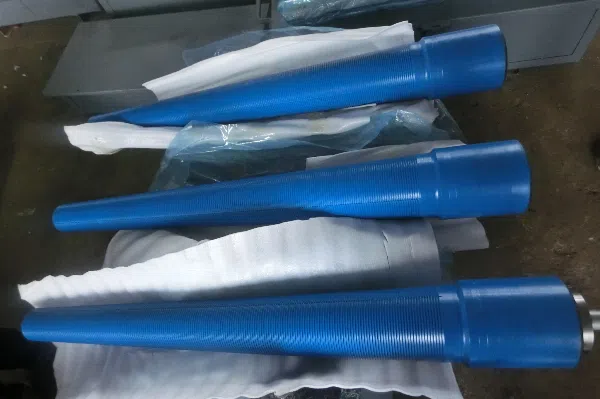
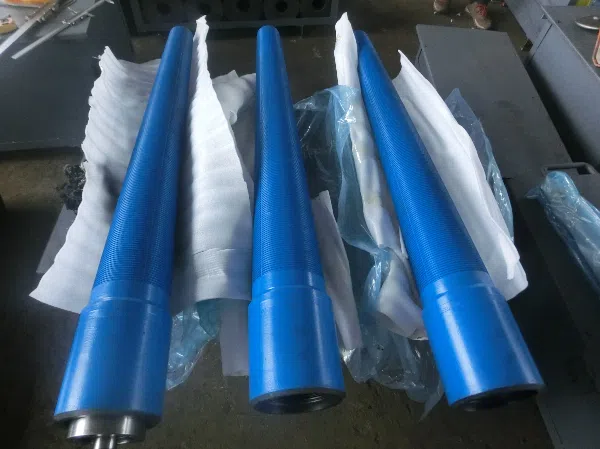
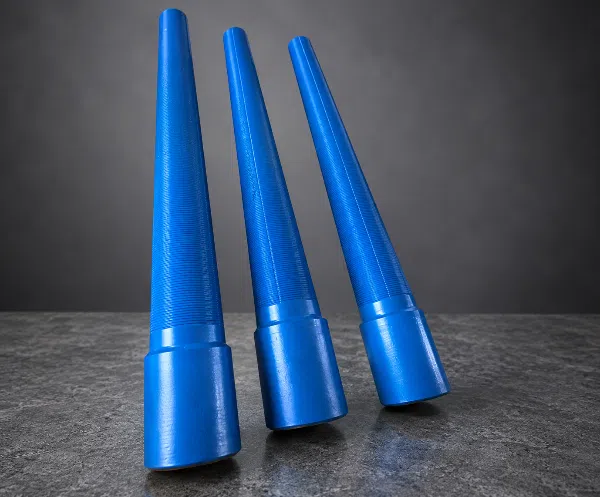
A die collar – also sold as a box tap – is a special external fishing tool that engages the outside wall of tubulars such as oil tubing and drill pipe. Hardened tapered teeth on its inside diameter cut fresh threads into the wall, and the tool then threads onto the outside of the fish it has just cut. A taper tap, its mirror tool, engages internally instead. Because it manufactures its own grip, it works on downhole tubulars with no usable inner bore.
Terminology first: in drilling, a fish is not marine life. The US Occupational Safety and Health Administration’s drilling glossary defines it as “an object that is left in the wellbore during drilling or workover operations and that must be recovered before work can proceed” — a parted drill string, a stuck joint of tubing, a dropped tool. Fishing is the operation of getting it back out.
Every other common recovery route needs something the fish may no longer have.
- An internal-catch tool need an open, round bore to cut against.
- A grapple overshot need a clean outside diameter inside a narrow tolerance window, plus annular clearance to pass around the fish.
Neither is needed here. It creates the engagement surface itself, which is why this family of oilfield fishing tools survives on fish that have already defeated the first two attempts.
The cutting action, stated at patent level
The mechanism is thread-cutting into softer parent metal, not friction. US Patent US5409065 describes it plainly for this tool family: “The taper cuts threads into the softer material of the fish and engages the fish by screwing into the newly cut threads. When the fishing tool and the fish are so engaged, the fish can be withdrawn from the well bore.”
The same patent draws the external-versus-internal line for the two tools by name, and states which is the more adaptable of the pair: the box tap “engages an exterior of the fish, unlike the tapered tap fishing tool, which is only capable of use on fish having internal diameters. Accordingly, the box tap fishing tool is a more versatile fishing tool.”
One condition that rules it out
The tool cut thread by rotating against resistance, so if the fish can turn with the tool, no thread forms and nothing engages. Field guidance for this tool family puts it plainly: “However, the fish needs to be stationary for the box tap to be successful.”
- The fish must be stationary — one free to rotate in the hole can’t be tapped, whatever its diameter or condition.
- Its top must be reachable at a known depth, normally by running an impression block first.
- Wall thickness must support a cut thread; very thin-wall or badly split tubulars may not leave enough parent metal to hold.
- Outer diameter has to fall inside the envelope. Its teeth bite the outside wall, so an irregularly worn or swollen fish still works as long as its widest diameter fall within the catch span below.
What it is designed to recover
It recovers cylindrical falling objects – drill pipe, oil tubing, casing, packers and similar downhole equipment. Any cylindrical fish with enough wall to hold a cut thread is a candidate, whether or not it has a bore, a connection or a fishing neck.
The Committed-Catch Gate: Die Collar vs Overshot vs Taper Tap
Most die collar and overshot fishing tool selection relies on three incorrect assumptions. Choosing the widest catch span may not be the wisest option. A releasable tool isn’t necessarily the lower-risk one. Common field assumption says reach for an internal catch first. Practice says otherwise.
Three physical conditions decide the tool before any feature does, and each can rule out a whole family on its own.
Can the fish top be dressed or engaged through?
Only if the bore is accessible and round — a packed, collapsed or belled bore pushes you outside.
Is there clearance to set and dress the grapple?
An overshot must pass around the fish inside the well bore; without room, the releasable external catch is out.
Can you accept a catch you can’t back off?
A die collar cut thread and stays in the hole — a commercial decision as much as a technical one, priced against how long the job can economically run.
What the job costs while you decide
Published figures, not our estimates.
$35,720
US land rig revenue / day
3 days
Economic window (10% odds)
24 days
Economic window (85% odds)
55%
Tools & jars share of daily cost
Why the gates are independent
A fish can fail gate one without failing gate two. That’s why “internal first, external second” doesn’t play out in the field — practice aims for an external catch fishing tool first whenever it’s an option, because the die collar can latch onto tubulars whose condition rules out any other tool.
External and internal limits physical comparison
| Feature | Die collar (box tap) | Grapple overshot | Taper tap |
|---|---|---|---|
| Catch side | External | External | Internal |
| Releasable | No — committed | Yes, by rotation | No — committed |
| Needs an open bore | No | No | Yes |
| Catch tolerance | Spans a range, cuts to fit | 3/32″ under to 1/32″ over* | Spans a range, cuts to fit |
| Fish must be stationary | Yes | No | Yes |
| Dressed before running | No | Yes, to the specific fish OD | No |
| Works on unknown OD | Yes | No | Yes, if bore known |
| Wireline pass-through | No | Yes | No |
| Reference body length | Short, steeper taper | Bowl and grapple assembly | 3–4 ft, 1″ to 4–5″ OD |
Why the releasable tool is not always the safer one
The instinct is to prefer the overshot because it can be backed off, but the patent record complicates that. A grapple is manufactured to a nominal minimum catch size, and European Patent Application EP0418057A1 records the consequence: if the fish hasn’t come free by the time the grapple has worked down to that minimum, “the overshot or fishing tool may slip off premature[ly].” A releasable catch, in other words, can release when you didn’t ask it to — buying catch flexibility through an oversize guide is a documented strength trade-off, not a free upgrade.
The honest limitation of this tool, from the patent record
US5409065 states in its background that conventional box taps “tend to be shorter than tapered tap fishing tools and have a larger angle of taper” and as a result “suffer the disadvantage of generally engaging fewer threads with the fish, and it is therefore more difficult to fish for heavier or more securely stuck fish.”
Thread engagement length, not catch diameter, is the controlling factor: a long, low-angle taper engages more thread than a short, steep one. That same patent’s remedy is to build the tool from stackable tapered segments, so engagement length grows by adding a segment rather than widening the taper. Length increases pull strength; angle doesn’t.
“Generally, you should stop fishing and decide to sidetrack the well when the cost of fishing has reached about half the cost of side-tracking.”
A committed catch that fails loses not just a day but the window the sidetrack decision was relying on.
The Catch-Span Envelope:
Die Collar Specifications, NC26 to 6-5/8 REG
Some suppliers quote a single reference catch size per model — only meaningful if your fish is perfectly nominal, which a fish that has been worked in, retrieved and worked again rarely is. We publish the limits instead: the range of fish outside diameters each connection size is intended to accept.
Welong die collar catch-span envelope — 12 configurations across 6 API connections
All millimetre dimensions are primary, with inch equivalents derived and rounded to two decimal places.
Materials & construction
Guide configuration
The Connection Rosetta: Reading NC, API IF, FH and REG on One Chart
In this category the suppliers list one connection format and expect you to change over. Anyone looking for NC50 can’t see the supplier’s 4-1/2 IF listing on a data sheet even though the connections are the same.
Why the translation step is where the expensive mistake happens
A tool that won’t make up on a fishing string is just a useless trip. Both name sets exist because API split their own standards, so a purchaser reading one data sheet has no reference to the other. Welong bridges the gap on the page and bids against API Spec 7-2 designations for unambiguous ordering.
Rotary shouldered connection crossover, with Welong die collar availability
| NC style | Legacy IF designation | Common string | Die collar offered |
|---|---|---|---|
| NC26 | 2-3/8 IF | 2-3/8″ drill pipe | Yes — 3 spans |
| NC31 | 2-7/8 IF | 2-7/8″ drill pipe | Yes — 3 spans |
| NC38 | 3-1/2 IF | 3-1/2″ drill pipe | Yes — 2 spans |
| NC50 | 4-1/2 IF | 4-1/2″ drill pipe | Yes — 1 span |
| 4-1/2 FH | — | Heavy-wall and collar strings | Yes — 2 spans |
| 6-5/8 REG | — | Large-bore collar strings | Yes — 1 span |
Which standard actually governs these connections
Rotary shouldered connections are covered by API Spec 7-2, not by API Spec 7-1. API’s published scope for 7-2 states it specifies “dimensional requirements on threads and thread gauges, stipulations on gauging practice and gauge specifications, as well as instruments and methods for inspection of thread connections,” and that it apply to the “number (NC) style, regular (REG) style, or full-hole (FH) style” designs.
API standardizes NC, REG and FH. IF is a legacy designation that maps onto NC as opposed to being a style published by the API, which is precisely why the two remain as names on data sheets.
That lineage is traceable on the ISO side too. API Spec 7-1’s first edition was published as an identical national adoption of ISO 10424-1:2004, whose own scope carried the same exclusion of rotary shouldered connection designs and thread gauging practice. That ISO document was withdrawn in April 2025, so the once-common dual citation “API Spec 7-1 / ISO 10424-1” now points at a standard that is no longer live.
Why there are two standards at all
API Spec 7-1 was a carry-over of kellys, kelly valves, drill stem subs, drill collars and bits from Spec 7, while tool joints, rotary shouldered connections and gauging were purposely ignored and later established as Spec 7-2.
Running a Box Tap Without Turning One Recovery Job Into Two: Procedure and String Design
The failure mode you care about isn’t a tool that won’t catch; it’s a tool that will catch, not come free, and tack its own length onto the fish you started with.
The Fish-Top Condition Ladder: Five States of a Lost Pipe Top
Fish tops are rarely clean. How far up this ladder it sit decides what tools are in the pool for that round before anything catch-size-related begins.
- Nice, square, open bore — all options are hot; usually the cheapest is an internal catch.
- Open bore, damaged rim — may still take an internal catch; an overshot may need dressing hardware to clear the burr first.
- Bore packed, collapsed or belled — internal catch out of reach. External only, and this is the die collar’s primary branch rather than a last resort.
- Severe top flare / split top — an overshot dressing tool can’t be relied on here; thread-cutting engagement below the flare is usually what’s left.
- Sloping, unbalanced or hard-to-access top — guide selection decides the job, and a wallhook guide on a Type B body is built for exactly this.
Each notch tightens up the available options. If a top has been milled, dressed or pulled on, it doesn’t climb the ladder back up again, which is why the plan for retrieving belongs before the first attempt, rather than after the second.
Engagement is a torque-feel procedure, not a set-down
The published sequence is contrary to the intuition of pushing the tool down on the fish: top and tag it, slowly spin the string to free torque, then lower it slowly as torque increases. Pulling and jarring begin only after engagement is confirmed. Weight control is the whole operation — excessive early weight tears the thread the box tap is trying to cut, and can render recovery of the fish impossible without damage.
That same guidance is candid about the limit of the method: “It is difficult to gauge the correct amount of torque to apply while making up a tap.” The torque trend thus proves to be of greater significance than any individual figure.
Two string-design questions this tool genuinely does not settle for you
Jarring may lead to an upset catch. “Caution: Tripping the drilling jar might free the tap from the fish,” reads the relevant statement, running directly counter to the intuitive assumption that jars help rather than hurt.
Whether to run a safety joint is another point of dispute. According to one frequently consulted guide, one should always run a safety joint immediately above a die collar precisely for the reason that a tool can’t be disengaged. By contrast, another source advises against running a safety joint while fishing, since such a joint might seize when jarred.
The same guide that advises a safety joint also dismisses box taps generally, saying they should be used only where releasable tools aren’t available — a live trade-off of jar-freezing risk against release payoff, to be judged per well rather than by consensus.
ESCALATION PROTOCOL
When the top cannot be engaged at all
The standard escalation is to wash over it. The US Occupational Safety and Health Administration defines that string as “a washover back-off connector, several joints of washover pipe, and a rotary shoe.”
“We do not quote a catch range and leave it there. If a customer sends us a fish OD and a top condition, we will tell them when a die collar is the wrong tool for that top — the committed catch is only worth taking when the alternatives have already been closed off.”
— Welong Engineering Team, fishing and milling toolsAPI Scope for Fishing-Tool Connections
Across the relevant segment of the market, API 7-1 compliant appears on all die collar datasheets. We don’t include it on our datasheet, because of the reason provided in API’s documentation.
API Spec 7-1, Rotary Drill Stem Elements, 2nd Edition, states in its scope as amended by Addendum 1: “This standard is not applicable to drill pipe and drill pipe tool joints, rotary shouldered connection designs, thread gauging practices, or grand master, reference master and working gauges, and does not include or identify performance properties.”
So the connection claims can’t be substantiated — neither the connection design nor the gauged values are included — and neither are performance properties.
API’s catalog of Exploration & Production standards has 24 equipment categories, and none of its product specifications covers fishing tools as a class — not overshots, washover equipment, junk baskets or die collars. So a fishing tool isn’t an API-specified product; what can legitimately claim API standing is the connection on it, manufactured to API Spec 7-2.
That first edition’s ISO twin, ISO 10424-1:2004, carried the same carve-outs before it was withdrawn in 2025 — so a supplier citing API 7-1 to vouch for a connection has been citing the wrong document for two decades, not since last year.
The four evidence tiers, and which one a claim actually sits in
Certification collapses four distinct types of evidence into a single word. They aren’t mutually interchangeable, and only the first is facility- and product-specific.
| Tier | What it is | Scope it covers | How a buyer verifies it |
|---|---|---|---|
| 1 | One facility, for named product specifications | API Composite List, classified by specific API specification | |
| 2 | The management system, not product performance | Certificate plus accredited registrar check | |
| 3 | Third-party inspection | The specific shipment inspected | Inspection report from SGS, DNV or equivalent |
| 4 | Material test certificate | The heat of steel it was cut from | Mill certificate traceable to the part |
Why tier 1 is the narrowest, not the broadest
According to API, a license is issued only upon review of the quality manual and a successful on-site audit of the facility, against API Spec Q1 and at least one applicable product specification. A license is specific to the facility and the applicable specification, not the company name.
How Welong manages the manufacturing route
Welong supplies die collars through a designated and approved manufacturing route matched to the specified material, connection and machining scope. Welong retains responsibility for supplier qualification, order review, QA coordination, documentation traceability and delivery against the agreed purchase specification. The quotation identifies the applicable manufacturing route and the inspection and traceability records supplied for the order, so buyers can verify facility-specific certification scope while keeping Welong accountable for QA coordination and delivery.
Ask your supplier which manufacturer holds the licence and for what product specification, then verify it in the Composite List. A supplier unable to answer that’s asking you to accept their word instead of their scope.
Thinking of vetting us just like any other new supplier?
Request the inspection and traceability package
Procurement: Die Collar Lead Time, Inspection, and RFQ Checklist
A request for “please quote a die collar” becomes a question, for a build is dictated by five factors – four of which are entirely within the knowledge of your well.
01 //
Why there is no price list
A fishing tool, unlike a catalogue item, is manufactured to solve a particular problem you’ve already experienced downhole. We don’t have die collar size price lists – any given nominal size could be the right tool for your well, or a complete waste of time, depending on the fish top, and it’s just transferring that risk onto you to quote without this information.
02 //
Why the specification matters more than the unit price here
Standard service contracts generally place all lost-in-hole responsibility on the operator — for any equipment lost or damaged below the rotary table, for any reason. And in the daily fishing cost breakdown cited earlier, fishing tools were the largest line item of all.
A tool arriving with the wrong guide or connection isn’t a procurement pain; it’s a trip. At a US land rig revenue of $35,720 per operating day, the trade-off between confirming a specification and re-ordering isn’t close.
Worth remembering who receives the tool. OSHA’s glossary defines the fishing-tool operator as “the person (usually a service company employee) in charge of directing fishing operations” — the specification you send us ends up in their hands on the rig floor, not in a warehouse.
03 //
Inspection and shipping
Tools used in fishing operations get one attempt to work, so inspection runs in tiers and you buy the level of assurance the job justifies. The risk sits in materials and heat treating rather than assembly — which is where the effort belongs.
- In-process inspection during manufacture, as standard.
- Final inspection before release, also standard.
- Third party inspections – arranged upon request. We can provide SGS, DNV or other certified third party inspection services and coordinate the inspection plan.
What to put on the RFQ
- Connection State the API or NC designation of the fishing string on which the tool will be run.
- Outside diameter of the lost pipe (the fish) – nominal size plus any known swell, wear or belling.
- fish top cond. is the top cut clean, or does it show burrs, belling, packing or leaning?
- Guide type whether to run a type A integrated, or a type B guide type, with either a wallhook or cut-lip guide.
- thread hand whether the standard right hand thread, or left hand, if it’s going on a left hand drill string for back-off or washover service.
DIE COLLAR ENGINEERING TOOLS
catch span selector
Calculate the precise engagement diameter range for external catch operations to ensure reliable retrieval.
LAUNCH TOOL
connection rosetta
Cross-reference API and proprietary thread connections for seamless integration into your fishing string.
LAUNCH TOOL
committed catch gate
Evaluate load capacities and torque thresholds to prevent structural failure during engagement.
LAUNCH TOOL
Send Us the Dimensions, Not the Part Number
Send us the fish outside diameter, top condition and connection on your fishing string and we’ll reply with the matching configuration for the span, or with confirmation when a die collar isn’t the appropriate tool for the top.
FAQ: Die Collar Selection, Specification and Compliance
An external catch fishing tool with hardened tapered teeth on its inside diameter. Lowered over a stuck or lost tubular and rotated, it cuts a fresh thread into the outside wall of the fish and engages by screwing onto the thread it just cut — used to retrieve pipe and other downhole tools when no bore, connection or fishing neck is available to grab.
In vendor and operator usage, yes — Weatherford even titles a technical sheet box tap (die collar). But the SPE-hosted OnePetro glossary uses box tap for a tapered tap, an internal tool, so specify the catch side on the requisition.
Three, in order of how much they cost: ordering against a product name rather than a fish dimension; assuming a nominal catch size covers a fish that has worn or swollen; and specifying a connection in one naming system when the string is recorded in the other. All three fail the same way — the tool arrives, doesn’t fit, and the rig loses a trip. Welong quotes against the fish outer diameter and the API Spec 7-2 connection designation for that reason.
Not in its conventional form, which is what we supply. Once the wickers cut thread onto the fish you’re committed to that engagement. Plan the string around that fact and treat the safety joint question as a per-well decision — published guidance is genuinely divided between running one for release capability and omitting one because safety joints can freeze when jarred.
Work the three gates in order: 1. An open and clear bore can support an internal catch. 2. If the bore is unusable but annular clearance is available and the fish outer diameter is known to within about an eighth of an inch, an overshot gives you a releasable catch. 3. If the outer diameter is unknown, out of tolerance, or damaged and the bore is unusable, a die collar can still provide a grip.
- Open and clear bore – usually cheapest on internal catch.
- If the bore is unusable but annular clearance is available and the fish outer diameter is known to within about an eighth of an inch, an overshot gives you a releasable catch.
- Outer diameter unknown, out of tolerance or damaged and the bore is unusable – a die collar can still provide a grip.
Our envelope runs from 48 mm to 168 mm of fish outer diameter across six API connections. Seven of the twelve configurations publish a true min-to-max span rather than a single nominal value, which is what lets you match a fish that has worn or swollen away from nominal — the single cheapest way to cut downtime on the job.
No. Because the tool cuts its own thread into the parent metal, no existing thread, connection or fishing neck is required on the fish. You do need the fish to be stationary — a fish free to rotate with the tool will never take a thread.
Yes. Give us the connection on your fishing string and the fish outside diameter and we build to that pairing, in right-hand or left-hand thread, with your choice of integral or field-fitted guide.
No fishing tool is. No product specification in API’s Exploration and Production catalogue covers fishing tools as a class, and API Spec 7-1 explicitly excludes connection design, thread gauging and performance properties from its own scope. What’s defensible is that the connection is manufactured to API Spec 7-2 — and any supplier telling you a die collar is stated as meeting API Spec 7-1 requirements is describing a standard that says it doesn’t do that.
Procurement & Capability
Die Collar Capability Review
China Welong reviews the buyer drawing, product specification and inspection scope before quotation.
This review is scoped to the Die Collar configurations set out in the specification table on this page — 12 documented rows covering API connection, Catch span (mm), Catch span (in) and Span type.
24 hEngineer-reviewed quotation on business days
2001Founded in 2001
30+30+ engineers on staff
5 yrStamped serial traceability
Quotation Scope and Commercial Terms
Pricing is prepared against the selected product configuration, material route, inspection scope and shipment terms.
- Quotes are returned within 24 hours on business days, reviewed by an engineer.
- T/T or L/C by wire transfer.
- We ship EXW, FOB, CFR or CIF; other Incoterms on request.
- We work from 2D drawings and 3D CAD models (AutoCAD, Pro/ENGINEER, SolidWorks; .dwg and .igs).
Production Planning
Production timing is confirmed with the quotation after quantity, process route and finishing scope are reviewed.
- We hold agreed items in stock and ship against your release to shorten delivery. Feasibility is confirmed at drawing review.
- Manufacturing at Xi'an, Shaanxi and at Jiyuan, Henan.
- 0.01 mm machining precision.
- Material standards to ISO, BS, ASTM, ASME, DIN, JIS and GB.
- Orders ship in standard export wooden cases, or the packing you specify.
Order Review and Responsibility
The responsible manufacturer, inspection scope and document package are identified for the selected item.
- Every quotation states whether the item is made in our own works or by an approved supplier we developed and supervise.
- We develop, audit and supervise the mills and workshops that make your parts: material mills are re-audited every two years and approved by Welong before they run your order.
- Forgings from 0.2 to 50 tons.
Specification and Inspection Evidence
The specification table on this page is the technical basis for this review: its numeric rows define what we quote, manufacture and inspect against.
- Each piece carries a stamped serial number and stays traceable for five years to its chemical composition, mechanical properties and measurement report, with the test coupon retained.
- An EN 10204-3.1B material certificate with chemical composition and mechanical properties, a dimensional measurement report, and UT and MT reports ship with your order.
- Inspection is by coordinate measuring machine, ultrasonic, magnetic particle and X-ray.
Request a Product Review
Send the drawing, product specification and inspection requirements for a quotation review.
![Choke & Kill Hose: [Field Guide]](https://welongoiltools.com/wp-content/uploads/2026/07/choke-kill-hose-guide-featured-1-150x150.png)