Get in touch with Welong Company
HOLE OPENER // BHA TOOLS //
HOLE OPENER // BHA TOOLS //
Hole Opener
Hole Opener, Downhole Enlargement Tools for Oil & Gas Drilling
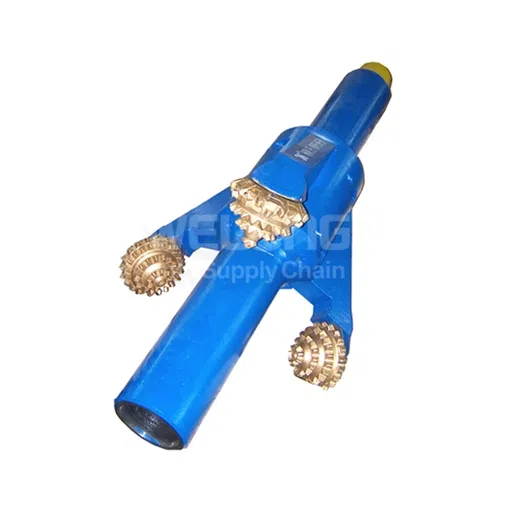
China Welong supplies hole openers and manages their production for oilfield drilling programs worldwide, 8 fixed-diameter and roller cone models from 12-1/4″ to 42″, built to bring a pilot hole up to full gauge in the fewest trips your BHA design allows.
Request a Quote →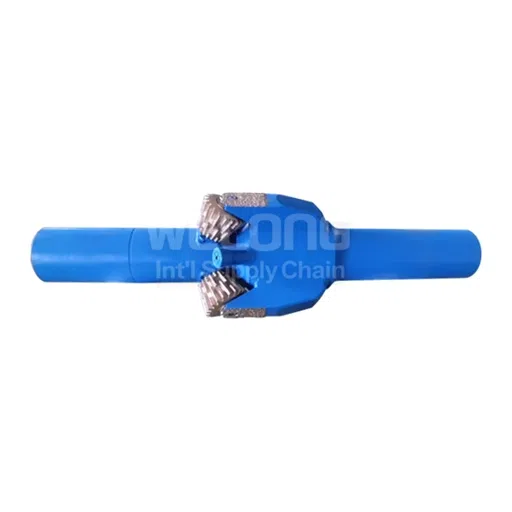
⟳
8
Hole Opener Models
12-1/4″–42″
Hole Size Range
3
Cutter Types by Formation
AISI
4145H / Mod / 4330V Steel
0.01 mm
Machining Precision
2001
Founded
Borehole
Enlarging Boreholes Without Losing Trip Time, How Hole Openers Solve It
A hole opener is the downhole tool you run above the bit, or over a pilot hole already in the ground, to bring a wellbore up to full gauge for the casing string, liner, or gravel-pack completion that the pilot-hole diameter alone can’t accommodate.[1] Fixed-diameter cutters or roller cones do the cutting; the pilot hole does the steering. Buyers search for this same hole opener tool under a few different labels, hole opener drilling, hole opener drill bits, PDC hole opener, or hole opener reamer, depending on which supplier catalog they learned the terminology from; this page and the model table below use them interchangeably for the same product line.
The part that doesn’t show up in a spec sheet is how unforgiving the bit-and-reamer combination can be in practice. Reamer-durability patent literature frames the core problem bluntly: matching the operating characteristics of a reamer to the bit ahead of it “may prove futile” once the two tools move through the same formation but wear at different rates.[3]
Separately, published SPE/OnePetro technical papers on hole-opening BHAs document the resulting failure pattern directly: shorter BHA runs, excessive vibration, downhole tool failure, poor borehole quality, and a borehole that come out rougher than the pilot hole it was supposed to improve on.[2] That’s not a hypothetical, it’s the reason cutter-type selection and formation matching (Section 2 below) is treated here as an engineering decision, not a checkbox.
In practice, most of the trip-time argument for a hole opener come down to one thing: doing the enlargement in the same run as the pilot bit, instead of pulling out of the hole to swap tools. Underreaming and reaming-while-drilling are the two ends of that spectrum, and if you’re not sure which term applies to your well program, Section 4 below walks through the distinction directly, because “hole opener” and “underreamer” get used interchangeably in casual conversation but describe two different tool designs.
That’s not a generic engineering platitude, either, it’s the structural reason our cutter-type selection (Section 3) is built around formation-matching data instead of a one-size-fits-all compromise design that’s mediocre everywhere, unlike a catalog that only lists one blade profile per hole size.
Welong Hole Opener Line, Model & Size Selection
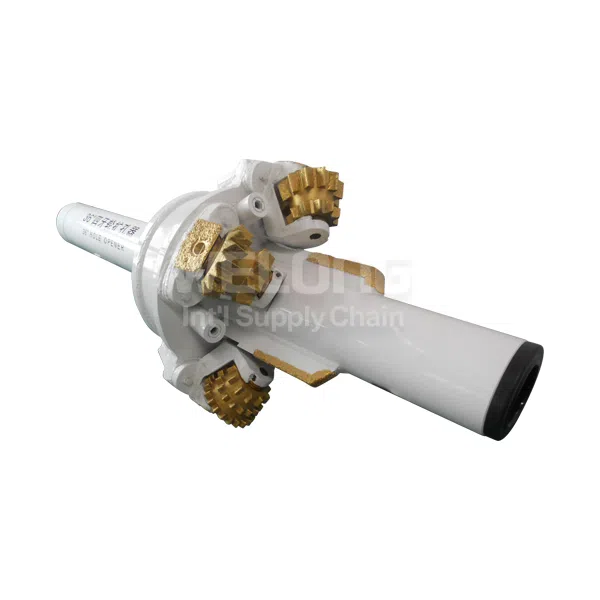
The table below is the Welong Pilot-to-Gauge Enlargement Reference, every listed model, subject to confirmation against the selected supplier drawing and quotation, with the fields you need to confirm fit before you write an RFQ: hole size, cutter count, pilot-hole compatibility, fishing neck OD, connection on both ends, water hole diameter, and overall length.
| Model | Hole Size | Cutter Qty | Pilot Hole Size | Fishing Neck OD | Bottom Conn. | Top Conn. | Water Hole | OAL |
|---|---|---|---|---|---|---|---|---|
| WLHO42 | 42″ | 6 | 26″ | 28″ | 8-5/8 REG | 8-5/8 REG | 4″ | 100–110″ |
| WLHO36 | 36″ | 4 | 24″ | 24″ | 7-5/8 REG | 7-5/8 REG | 3-1/2″ | 90–100″ |
| WLHO26 | 26″ | 3 | 17-1/2″ | 18″ | 7-5/8 REG | 7-5/8 REG | 3″ | 69–85″ |
| WLHO24 | 24″ | 3 | 14″ | 18″ | 7-5/8 REG | 7-5/8 REG | 3″ | 69–85″ |
| WLHO23 | 23″ | 3 | 12-3/4″ | 18″ | 7-5/8 REG | 7-5/8 REG | 3″ | 69–85″ |
| WLHO22 | 22″ | 3 | 12-3/4″ | 18″ | 7-5/8 REG | 7-5/8 REG | 3″ | 69–85″ |
| WLHO17-1/2 | 17-1/2″ | 3 | 10-1/2″ | 18″ | 7-5/8 REG | 7-5/8 REG | 2-1/4″ | 69–75″ |
| WLHO12-1/4 | 12-1/4″ | 3 | 8-1/2″ | 18″ | 6-5/8 REG | 6-5/8 REG | 1-1/2″ | 60–65″ |
WLHO36 — 36 in roller cone hole opener, 4-cutter configuration
Dimensions shown are standard offering; sizes, connections, and cutter arrangement can be customized to your BHA and hole program, see Section 5 for procurement details.
Two things are worth reading directly off this table before you spec a model. First, from WLHO26 down to WLHO17-1/2, four different hole sizes (26″, 24″, 23″, 22″) all share the same 18″ fishing neck OD, 7-5/8 REG connection on both ends, and the same 3-cutter count, the size step between them is a cutter-profile change, not a connection change, which matters if you’re trying to standardize handling tools and fishing gear across a multi-well program. Second, connection size steps down in three discrete bands (8-5/8 REG, 7-5/8 REG, 6-5/8 REG) defined under API Spec 7-2 rather than scaling continuously with hole size, so the model that matches your target hole diameter isn’t always the one that matches your existing drill-string connection, check both fields against your BHA before ordering.
Confirm the fishing-neck OD, overall length, water hole, hole size, and connection against the BHA before ordering.
Decision Reference, Cutter Type by Formation Condition
| Formation Condition | Recommended Cutter Type | Example Models | Why |
|---|---|---|---|
| Soft to Medium (clay, sand, soft shale) | PDC / fixed-diameter blade | WLHO17-1/2, WLHO12-1/4 | Shears rather than crushes — faster penetration on lower-abrasion formations |
| Medium to Hard (interbedded shale/limestone) | Insert / mixed-tooth | WLHO24, WLHO23, WLHO22 | Balances penetration rate against cutter wear on variable formation |
| Hard (granite, hard limestone) | Roller cone / tungsten carbide insert | WLHO36, WLHO42 | Crushing action tolerates high torque and abrasive wear better than fixed cutters |
Buyer Advisory
Match hole size and connection together, not hole size alone, a 3-cutter model and a 6-cutter model built for very different hole sizes can share a fishing neck OD, but not a bottom connection. If you’re unsure which model fits an existing BHA, send us the pilot bit size and target casing OD; that’s normally enough to shortlist 1-2 models before a full RFQ.
Fixed-Diameter vs Roller Cone, Matching Cutter Type to Formation Hardness
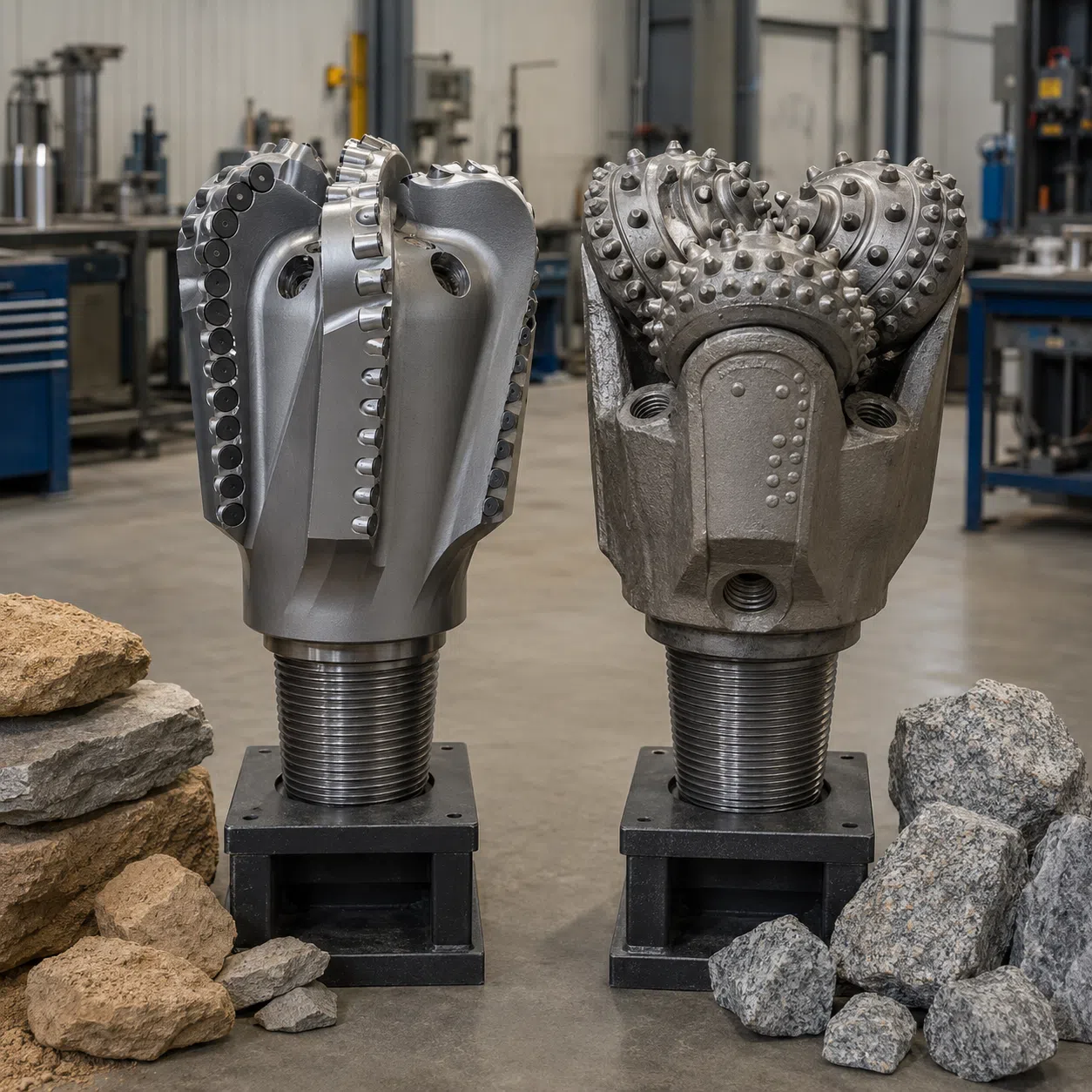
Welong supplies both families and manages their production from the same base alloy program, AISI 4145H and 4145H MOD for the tool body, with 4330V used where additional toughness is specified, and the choice between them comes down to formation, not tool quality. Fixed-diameter (PDC/blade) cutters shear through soft-to-medium formations with less torque and higher ROP, the same cutting principle behind our PDC drill bit line; roller cone cutters crush through hard, abrasive formations where a fixed blade would wear out early or ball up, matching the crushing action of our tricone drill bit line.
| Factor | Fixed-Diameter (PDC/Blade) | Roller Cone |
|---|---|---|
| Cutting Mechanism | Shearing action, fixed cutting structure | Crushing action, rotating cones |
| Best-Fit Formation | Soft to medium (clay, sand, soft-to-medium shale) | Hard, abrasive (granite, hard limestone, interbedded hard streaks) |
| Moving Parts | None — one-piece cutting structure | Sealed or open roller bearings per cone |
| Wear Signature | Cutter/insert wear on gauge row first | Bearing wear and lost cutting structure (cone/tooth loss) on abrasive intervals[3] |
Hole Opener vs Underreamer, Which One to Specify in Your BHA/RFQ
Both tools enlarge a borehole; they’re built for different positions in the string and different jobs. A hole opener is a fixed-body tool run above the bit or over an already-existing pilot hole, it cuts full gauge the entire time it’s in the hole, which is why the model table in Section 2 lists a single hole size per model. An underreamer carries retractable cutter arms that stay collapsed while running in through a restriction (an existing casing shoe, a narrow section of hole), then extend hydraulically once past it to enlarge the section below, useful specifically when the enlargement has to happen below something the tool itself couldn’t otherwise pass.[4]
The practical RFQ question is usually this: if your enlargement point is open hole with no restriction above it, a hole opener is normally the simpler, lower-cost specification. If you need to enlarge a section below an already-set casing string or a narrow spot the full-gauge tool can’t get through, an underreamer’s retract-and-expand design is what makes the job possible at all, a fixed-diameter hole opener physically can’t pass through a restriction narrower than its own body.
Getting this wrong is an expensive mistake, not a paperwork problem, because a fixed-diameter hole opener physically can’t pass a restriction narrower than its own body, if the wrong tool shows up on location, that’s a lost trip and a delayed casing run, not a quick swap. For both tool families, the responsible manufacturer and BHA-matching scope are confirmed in the quotation, and China Welong won’t claim a hole opener can do an underreamer’s job below a restriction, that’s the honest answer, not always the one a sales sheet gives you. In the field, confirm your restriction depth and casing program against Section 2’s connection data before choosing between the two.
If you want the fuller technical breakdown, including where “reamer bit” fits into this terminology, our Hole Opener vs. Reamer Bit guide covers the concept-level comparison in more depth than this procurement-focused section need to.
Manufacturing & Quality Control
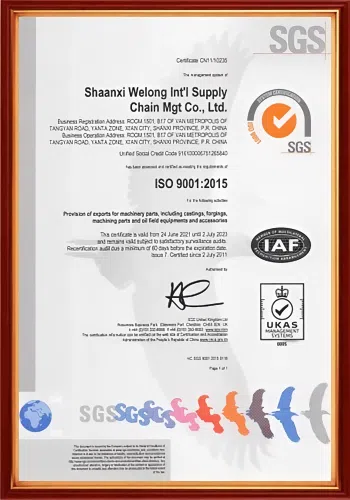
For the selected hole opener, the quotation confirms the responsible manufacturer, material grade, machining and heat-treatment route, final inspection scope, and required records. Third-party inspection by SGS, DNV, or another qualified provider can be arranged when requested.
For the selected hole opener, the quotation confirms the responsible manufacturer, applicable API Spec 7-1 material and testing requirements, API Spec 7-2 threading and gauging requirements, and supporting documentation.
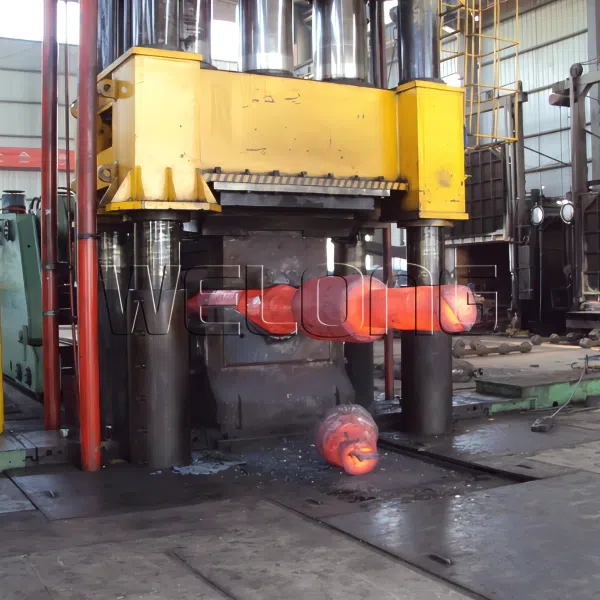
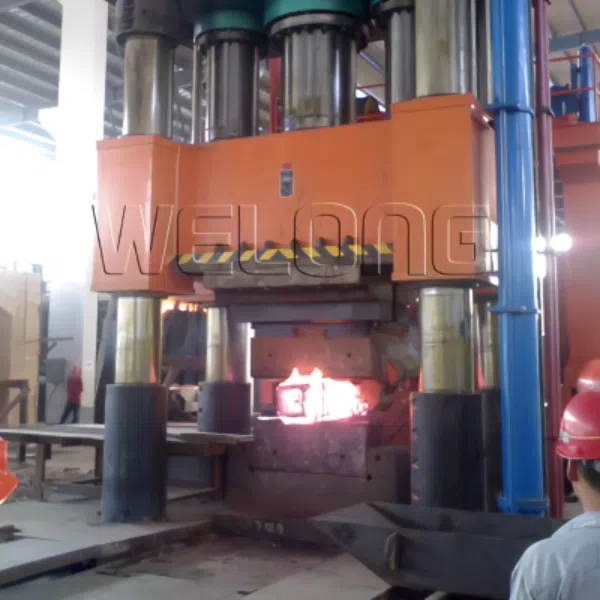
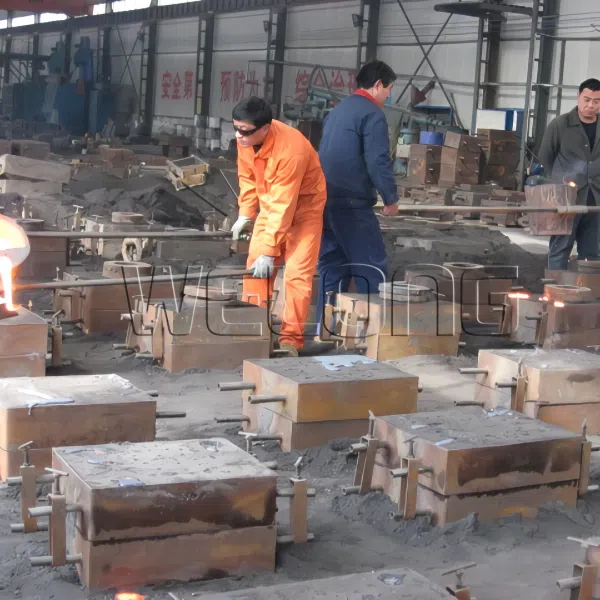
Documentation and inspection precision matters. Buyers evaluating an oilfield tool supplier should consider machining-tolerance drift and inconsistent material quality, which can appear downhole rather than on a specification sheet. The cost of a failed connection or a stuck tool can exceed a unit-price saving. In-process inspection at each machining stage is intended to identify that drift before a tool ships, not after it is downhole.
Applications
Hole openers in this line are specified for casing and liner-string enlargement, gravel-pack completions in unconsolidated formations, remedial borehole enlargement, and single-trip hole-enlargement programs that pair a pilot bit and hole opener in one BHA run rather than a separate reaming trip.[7] Continued patent activity in single-trip enlargement design, including hydraulically-actuated and vibration-assisted hole opener mechanisms filed as recently as 2023–2024 — reflects an industry still actively investing in reducing the number of trips a hole-enlargement program needs, which is the same trip-time argument Section 1 opened with.[7]
The certifications section should state only product documentation that can be confirmed for the selected order.
API Spec 7-1
Material & Testing Practice
API Spec 7-2
Connection Thread & Gauge Practice
SGS / DNV
Optional 3rd-Party Inspection
High-Performance Hole Opener Solutions
Hole Opener Engineering & Selection Tools
01
Hole Opener Model & Connection Finder
Select your target hole size to see the matching WLHO model, connection, and dimensional data from the spec table above — before you write an RFQ.
➔
02
Cutter Type Advisor, By Formation
Tell us the formation you are drilling through to see the recommended cutter type from Section 3’s decision reference above.
➔
03
Hole Opener vs Underreamer, Decision Guide
Answer one question about your enlargement point to see which tool design fits your BHA, as covered in Section 4 above.
➔
04
Shipping Term Selector
Tell us your transport mode to see the correct Incoterms® 2020 term for your shipment, as covered in Section 6 above.
➔
FAQ
What is a hole opener used for?
A hole opener enlarges a borehole from pilot-hole diameter up to the size needed for casing, liner, or gravel-pack installation, run above the bit or over an existing pilot hole in oil and gas, geothermal, and horizontal directional drilling applications.
What’s the difference between a hole opener and a reamer?
In everyday field usage the terms overlap, but strictly: a hole opener enlarges a pilot hole in stages toward a target diameter, while a reamer bit's primary job is smoothing and calibrating an already-drilled hole to a uniform diameter rather than substantially enlarging it.
What’s the difference between fixed-diameter and roller cone hole openers?
Fixed-diameter (PDC/blade) hole openers shear through soft-to-medium formations with a static cutting structure; roller cone hole openers use rotating, bearing-mounted cones to crush hard, abrasive formations.
Is a hole opener the same as an HDD reamer?
No, they enlarge boreholes on the same basic principle, but HDD (horizontal directional drilling) hole openers are built for utility/pipeline pull-back operations on different connection standards than the API REG oilfield connections used in oil and gas drill strings.
What materials are Welong hole openers made from?
Body and cutter steel is AISI 4145H, 4145H MOD, or 4330V alloy steel, the grade is set by which duty requirement the model targets, with in-process and final inspection through machining and heat treatment.
What order-specific standards and inspection evidence apply to a Welong hole opener?
For the selected hole opener, confirm the applicable API Spec 7-1 material and testing requirements and API Spec 7-2 threading and gauging requirements, together with the responsible manufacturer and order evidence.
What’s the standard lead time for a hole opener order?
Confirm availability and production schedule for the selected stock or custom configuration at RFQ.
Can hole opener dimensions or connections be customized?
Yes, the 8 models in Section 2 are our standard offering, but hole size, connection type, and cutter arrangement can be built to a specific BHA or hole program on request.
Which Incoterms does Welong support for international shipment?
FOB and CIF for sea/inland-waterway shipment; FCA, CPT, CIP, DAP, or DDP for air, rail, or multimodal shipment, matched to your preferred transport mode and delivery point.
Why does bit-and-reamer BHA matching matter if the specs look compatible on paper?
Published drilling-engineering literature on hole-opening BHAs documents that a bit and reamer moving through the same formation can still wear at different rates and develop mismatched dynamics, leading to vibration, shorter runs, and rougher boreholes even when the individual tool specs look correct in isolation.
Procurement & Capability
Hole Opener Capability Review
China Welong reviews the buyer drawing, product specification and inspection scope before quotation.
This review is scoped to the Hole Opener configurations set out in the specification table on this page — 8 documented rows covering Model, Hole Size, Cutter Qty and Pilot Hole Size.
24 hEngineer-reviewed quotation on business days
2001Founded in 2001
30+30+ engineers on staff
5 yrStamped serial traceability
Quotation Scope and Commercial Terms
Pricing is prepared against the selected product configuration, material route, inspection scope and shipment terms.
- Quotes are returned within 24 hours on business days, reviewed by an engineer.
- T/T or L/C by wire transfer.
- We ship EXW, FOB, CFR or CIF; other Incoterms on request.
- We work from 2D drawings and 3D CAD models (AutoCAD, Pro/ENGINEER, SolidWorks; .dwg and .igs).
Production Planning
Production timing is confirmed with the quotation after quantity, process route and finishing scope are reviewed.
- We hold agreed items in stock and ship against your release to shorten delivery. Feasibility is confirmed at drawing review.
- Manufacturing at Xi'an, Shaanxi and at Jiyuan, Henan.
- 0.01 mm machining precision.
- Material standards to ISO, BS, ASTM, ASME, DIN, JIS and GB.
- Orders ship in standard export wooden cases, or the packing you specify.
Order Review and Responsibility
The responsible manufacturer, inspection scope and document package are identified for the selected item.
- Every quotation states whether the item is made in our own works or by an approved supplier we developed and supervise.
- We develop, audit and supervise the mills and workshops that make your parts: material mills are re-audited every two years and approved by Welong before they run your order.
- Forgings from 0.2 to 50 tons.
Specification and Inspection Evidence
The specification table on this page is the technical basis for this review: its numeric rows define what we quote, manufacture and inspect against.
- Each piece carries a stamped serial number and stays traceable for five years to its chemical composition, mechanical properties and measurement report, with the test coupon retained.
- An EN 10204-3.1B material certificate with chemical composition and mechanical properties, a dimensional measurement report, and UT and MT reports ships with your order.
- Inspection is by coordinate measuring machine, ultrasonic, magnetic particle and X-ray.
Request a Product Review
Send the drawing, product specification and inspection requirements for a quotation review.
![Choke & Kill Hose: [Field Guide]](https://welongoiltools.com/wp-content/uploads/2026/07/choke-kill-hose-guide-featured-1-150x150.png)