Get in touch with Welong Company
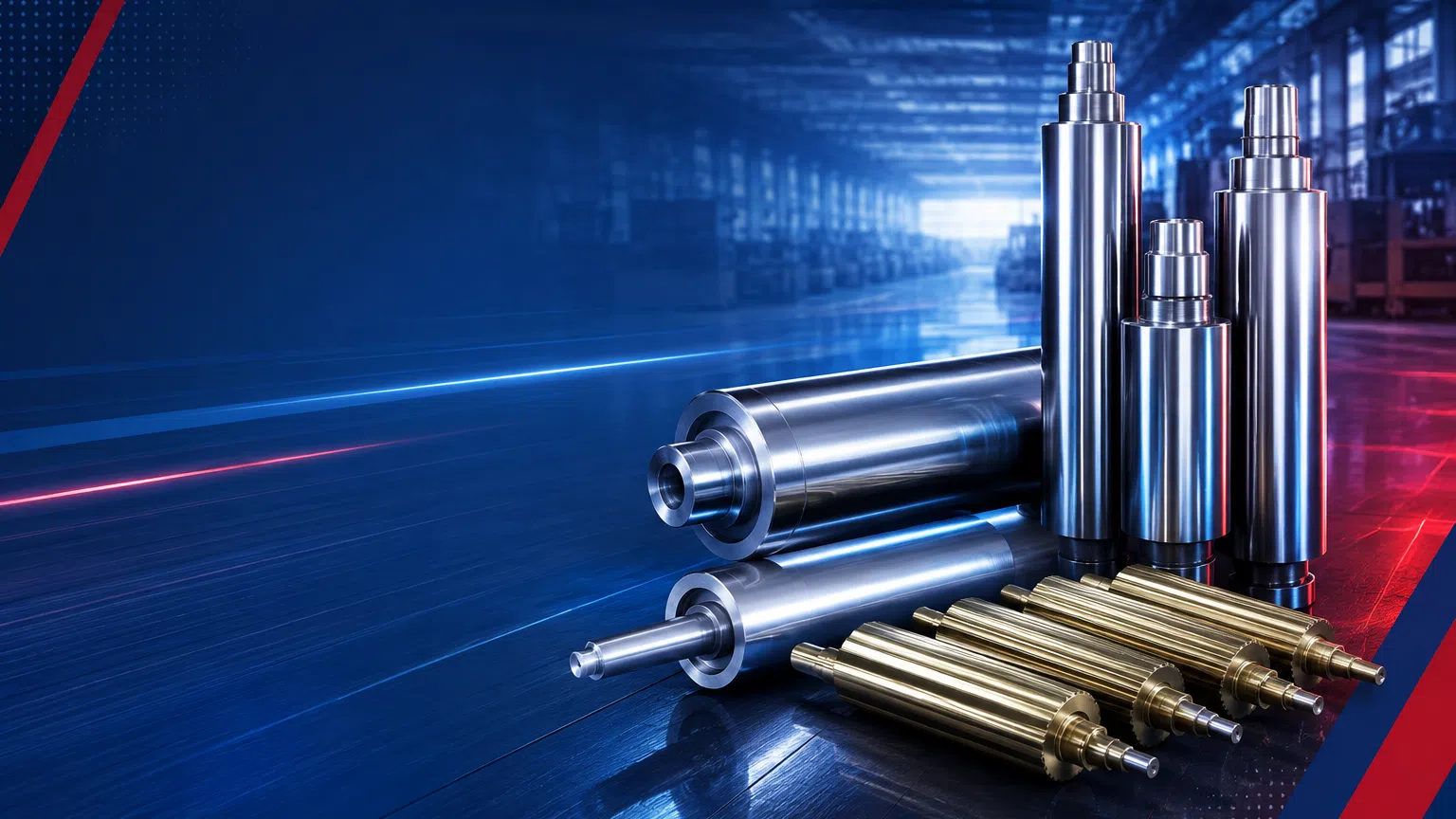
Work Roll Failure Risk in Rolling Mills, And How Grade Selection Solves It
A rolling mill work roll is in constant contact with hot or cold steel with every pass, with simultaneous absorption of thermal cycles, mechanical load and abrasion. If a different grade is installed in a stand to which it isn’t intended, then the roll begins to spall, crack or delaminate mid-campaign.
A J-STAGE field study of 80 cracked hot strip finishing-stand work rolls found that cobble-induced cracks in high-alloy grain cast iron roll bodies accounted for most of the cracking. Whether a minor patch job versus a condemned roll would suffice all came down to when the cobble crack was found.
- Fast changing rolls in event of a crack: confined to small and easily reparable area
- Additional rolling of a damaged roll: Spalling wider than 100mm, more than 50mm deep and can result in a full roll body break.
- Fix: the study recommends performing an eddy current inspection after an event such as a cobble, rather than waiting until a regularly scheduled inspection
The quotation confirms the applicable eddy-current and ultrasonic inspection scope and records for the selected roll.
A work roll manufacturer earns its margin by matching grade, casting or forging route, and QC depth to your mill stand, roughing, finishing or cold, rather than pushing one grade across every application. Welong engineers that match because the failure mode a roll actually see in your stand, not a generic hardness number, is what determines whether it survives a full campaign.
- Grade matched to mill position, roughing, finishing or cold
- Production route fit, cast composite shell or forged solid billet
- QC depth matched to the failure risk that position actually carries, not a flat default
The unvarnished answer for “which grade is best” is that no single ISO-graded roll technology wins out in every stand. The sections below compare the grade families and application needs; the quotation confirms the selected production route and available documentation.
SPECIFICATION INQUIRYHardness Is Not the Whole Story
Hardness has only a marginal influence on wear resistance, per industry metallurgical references — carbide content is much more important, followed by alloying elements and microstructure. There isn’t one roll technology that works for every stand and type of mill, there’s the best cost-per-ton for your specific stand, so don’t get lured by a hardness value on a spec sheet.
Welong Work Roll Line, Forged & Centrifugally Cast Grades
We supply four grade families, selected for each specific match between the application and their ability to cope with different combinations of thermal load, abrasive wear and impact resistance. We quote for every roll against your drawing and mill stand, and don’t just pick from a list of standard sizes.
Mill Type × Grade × Hardness Band Selector
| Grade | Production Route | Specified Hardness | Best-Fit Mill Position |
|---|---|---|---|
| High Speed Steel (HSS) | Centrifugal casting | ~80–85 HSC shell | Finishing stands, hot strip mill |
| ICDP (Indefinite Chill Double Poured) | Centrifugal casting | ~725.9 HV shell avg. | Finishing stands, mid-range wear/cost balance |
| High-chrome cast iron | Horizontal spin casting | ~70–80 Hs outer layer | Roughing & intermediate stands, fire-crack resistance |
| Forged Cr-Mo alloy steel (Cr2/Cr3/Cr5 WR) | Forging | 90–100 Shore fully hardened | Cold rolling, tandem & temper mills |
| Forged Cr-Ni-Mo alloy steel (34CrNiMo6–70CrNiMo WR) | Forging | Custom to drawing | Cold mill work rolls, high-toughness duty |
Engineering Note, Grade Selection Logic
Although HSS and ICDP roll hot strip in finishing stands, they do so with different compromises. The former rolls at high shell hardness to extend the wear life, and the latter’s matrix (bainite-martensite) with dispersed free graphite makes it less prone to thermally-fatigue damage for a less expensive per roll cost. High-chrome iron is used for roughing stands because the material has to resist fire-cracking with thermal shock, a damage mechanism documented in ScienceDirect (Wear journal) research on work roll damage.
Our cold mill duty runs on forged alloy steel instead of cast grades, since cold rolling puts more mechanical load and less thermal cycling on the roll body. All grades are quoted to your drawing (dia., barrel length, chock set up and surface finish on your specific mill stand configuration).
Confirming Fit to Your Drawing
Welong confirms grade against your mill position rather than defaulting to whichever grade carries the highest hardness rating, hardness alone isn’t the differentiator ASTM- and JIS-graded rolls are actually selected on.
Hot Strip Mill Work Rolls vs Cold Mill Work Rolls, Material & Process Comparison
Because hot strip and cold mill work rolls have different physics they must also have different structures. The hot strip work roll handles cyclic thermal shock when the steel enters the mill at rolling temperature; the cold mill work roll takes mechanical load and must have a finer surface finish to achieve the best possible strip flatness and gauge.
| Factor | Hot Strip Mill Work Roll | Cold Mill Work Roll |
|---|---|---|
| Dominant load type | Thermal cycling + abrasive wear | Mechanical load + surface fatigue |
| Specified grade | HSS, ICDP, high-chrome cast iron | Forged Cr-Mo/Cr-Ni-Mo alloy steel |
| Specified roll diameter | Larger barrel, roughing/finishing stands | Can run as small as ~50mm on Sendzimir/Z-mill stacks |
| Priority property | Thermal-fatigue resistance, fire-crack resistance | Surface hardness, dimensional accuracy |
| Production route | Centrifugal casting (shell + core composite) | Forging (solid alloy billet) |
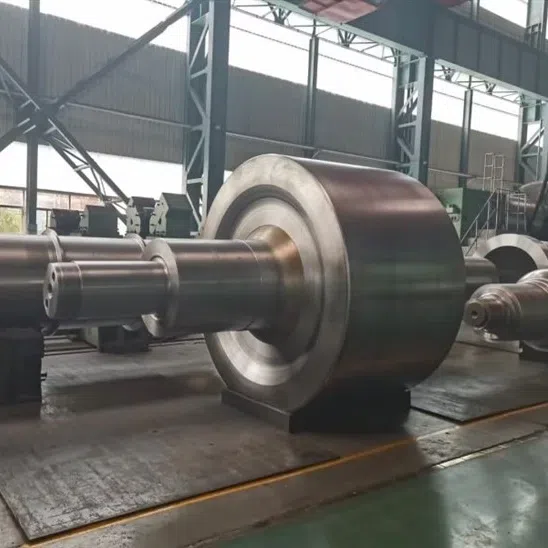
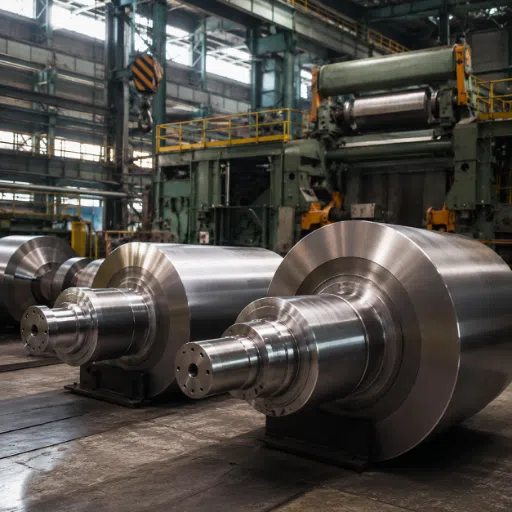
Where Sendzimir-Type Cold Mills Differ
For that matter, cold rolling (of high-alloy and stainless steel) often uses a Sendzimir (Z-mill) configuration in which the work roll could be as small as 50 mm or so in diameter, backed by six to twenty supporting rolls stacked in a pyramid-like arrangement. The geometry itself-the reason why cold mill work rolls use a forged steel with hardness of 90 to 100 Shore hardness as opposed to a composite cast shell-is that a centrifugally cast shell/core (the composite construction governed by ASTM A942/A942M) can’t justify its size if the work roll is small.
Fewer Mid-Campaign Roll Changes
Matching grade to mill position — instead of defaulting to the hardest available roll — in service reduces unplanned mid-campaign roll changes, since the failure mode a roll actually sees (thermal fatigue vs mechanical wear vs shell-core bond integrity) is what determines service life, not hardness alone.
Directional pattern from published metallurgical references — not a Welong-specific measured figure. Request a duty-cycle-specific assessment for your stand.An Honest Trade-Off, Not a Sales Pitch
We’re not going to lie and tell you that the highest hardness grade is the safe one. A roll can lose fracture resistance at higher rolling forces with excessive hardness, so a roll that never fail from wear can still fail from brittle cracking if the hardness isn’t matched to the load on your actual roll operation.
“Buyers sometimes assume one grade should cover both a roughing stand and a cold mill stack. We’d rather walk through your stand geometry and thermal profile first, a grade that’s right for hot strip roughing is usually the wrong choice for a Sendzimir cold mill, and vice versa.”
— Senior Application Engineer, Welong Mill Rolls DivisionReady to see how a matched grade compares for your stand?
Request a Custom Comparison →Work Roll Forging & Centrifugal Casting, From Ingot to Finished Roll
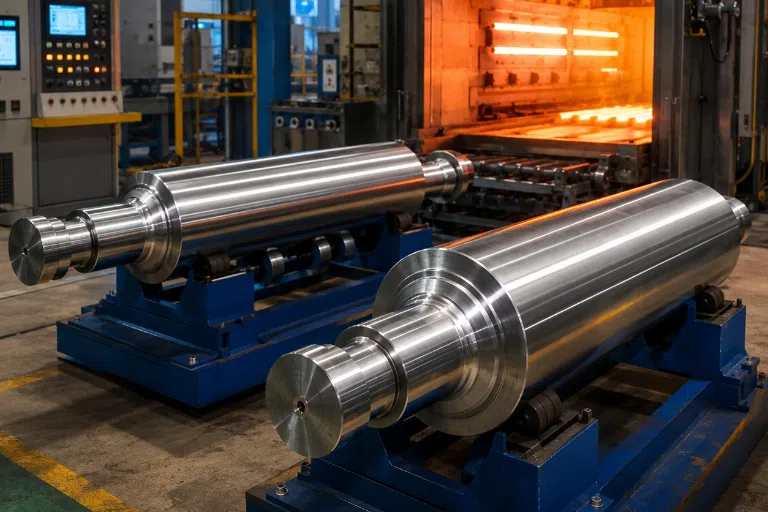
The applicable supply and production route is selected to to place the right microstructure in precisely the location where it needs to be by the roll when it’s on your steel rolling mill. One (centrifugal casting) lays up a composite shell-and-core composite; the other (forging) manipulates a solid alloy billet into a homogenous, dense roll body. Either process must withstand the deformation forces of the actual rolling process once the roll return to a steel rolling mill.
ASTM A942/A942M covers centrifugally cast, double-pour white iron/gray iron dual-metal abrasion-resistant roll shells – the closest match to our ICDP shell-core construction.
JIS G5127:2013 sets parallel chemical composition and hardness requirements for centrifugally cast high-alloy cast iron rolls in the Japanese market – we confirm which standard your program requires, and for forged grades the quotation confirms the specification and responsible production route before production starts.
It’s not so simple to say one approach is ‘better’; that’s the truthful, not marketing-speak, answer. If your priority for large composite shells is the hard wear layer over a tough core, that points toward centrifugal casting. If your preference is for solid-section smaller-diameter rolls with homogeneous mechanical properties across the full cross-section, you might lean toward forging.
Too thin a shell can over-constrain a process application and result in the 50mm-deep spalling failure mode illustrated above, so we verify both shell thickness and route against your mill position and drawing.
Centrifugal Casting, Composite Shell + Core
- Molten shell alloy is poured into a rotating mold (vertical or horizontal spin), where centrifugal force packs it dense and concentric against the mold wall
- Core metal is added after the shell partially solidifies, forming a metallurgical bond at the shell-core interface
An incomplete shell-core bond is a separate risk from the cobble-crack failure mode described above, and it’s just as invisible to a visual check – which is why we verify bond integrity by ultrasonic testing before a roll ship, not after a customer reports a problem
Patents: CN102990031B (high-boron HSS centrifugal composite casting) & EP1020244A1 (vertical centrifugal casting for composite mill rolls) show shell-core bonding technique has continued to develop across multiple filings, not settled to one fixed method decades ago.
Forging, Solid Alloy for Cold Mill Duty
Forged work rolls start as a cast steel ingot, then get worked under repeated press strokes into a denser, tougher grain structure than the as-cast ingot had. That mechanical working is what gives forged Cr-Mo and Cr-Ni-Mo grades the fully hardened 90-100 Shore range cold mills need, without the shell-core interface a cast composite roll relies on.
Heat Treatment, Grinding & Final Machining
Every grade go through heat treatment before it’s ready for service – cast rolls run controlled quench-and-temper cycles to lock in the target hardness band, and forged rolls get the same heat treatment step to relieve stress from forming at high temperature and set final microstructure.
- Rough machining to near-final barrel diameter and chock geometry
- heat treatment (quench and temper) to the grade’s target hardness band
- Finish grinding of the roll surface to the tolerance and surface quality spec on your drawing
Forged rolls and centrifugally cast rolls both go through this same sequence – machine, heat-treat, grind – because that production process matter to final performance as much as the alloy chemistry itself.
Customer Results, Engineering Approach to Roll Life
The precise figures vary greatly with steel grade mix, mill speed, and maintenance program, so it isn't helpful to quote a single roll life or cost-per-ton value for your mill on this page. What we can commit to is the engineering discipline that keeps variance out of the roll itself.
Traceability & Batch Consistency
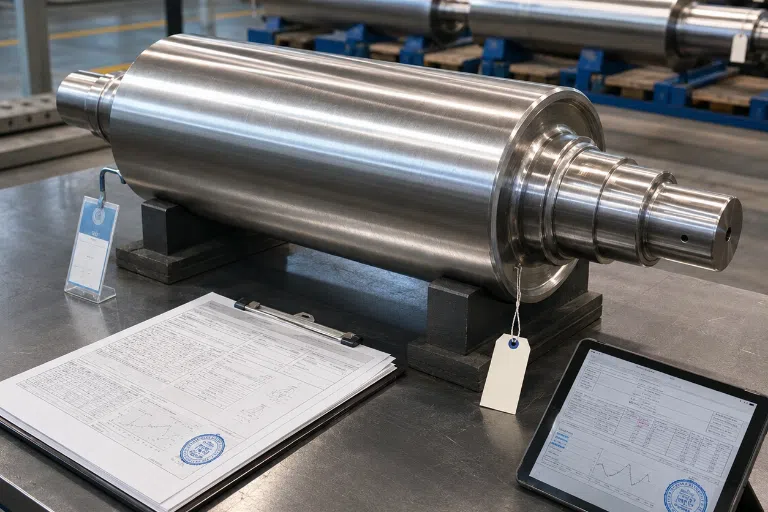
Variations in roll performance during a run generally correlate with composition or hardness variation from one heat to another, which often result from poorly-controlled furnace temperature and alloy control - an observed pattern in rolling-mill roller literature and not a static percentage that holds for all grades or mills. The quotation identifies the heat-number traceability and hardness or chemical test records available for the selected work roll.
Engineered Consistency, Not a Guessed Number
We don't publish a fixed roll-life or downtime-savings figure here, because your mill's steel grade mix and maintenance program change the real answer more than any single grade choice does. Request a duty-cycle-specific comparison and we'll work the numbers against your actual rolling schedule.
No first-party measured figure available for this page — request an application-specific assessment.
Certifications & Quality Control
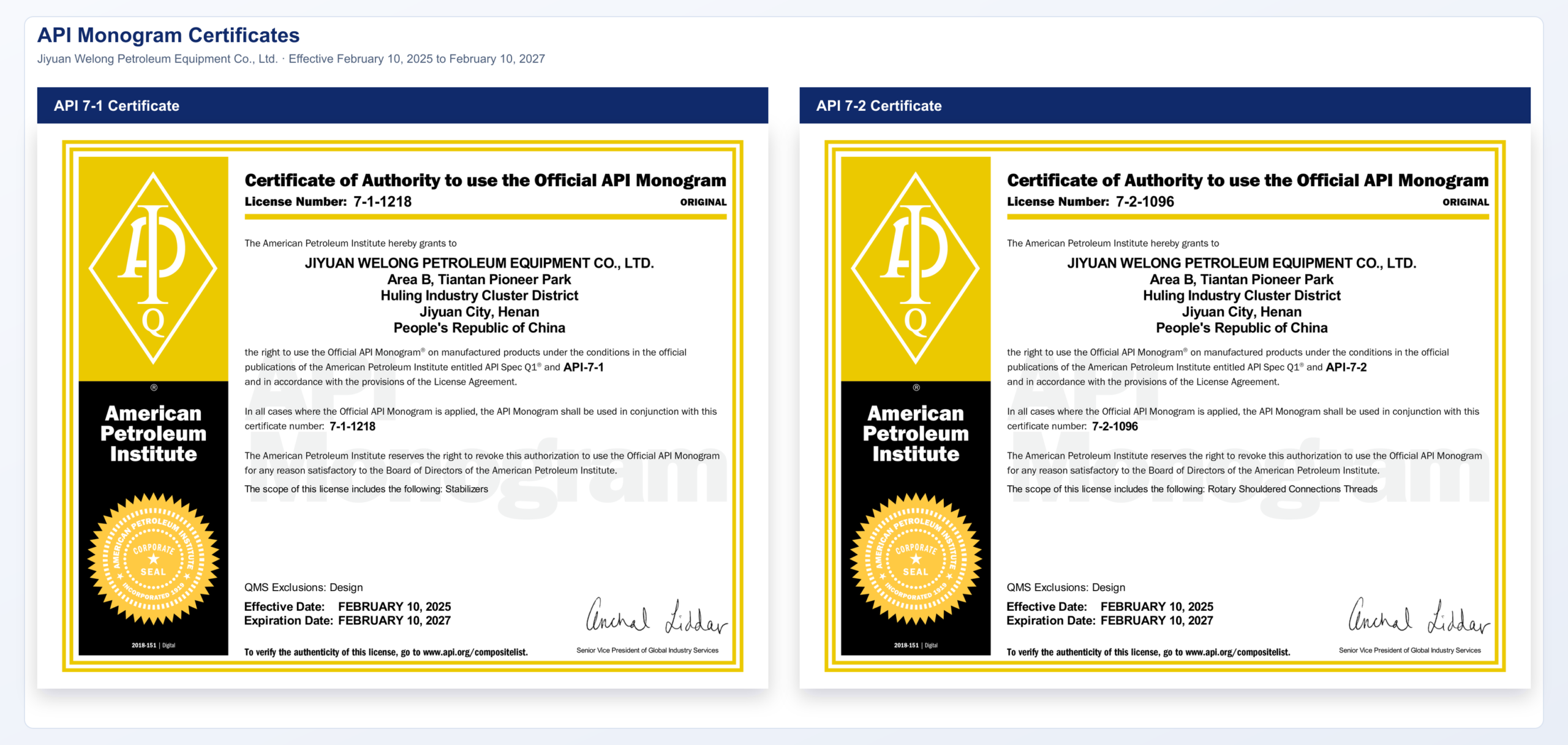
The quotation should identify the standard, grade, manufacturing route, inspection scope and documents applicable to the selected work roll; do not apply one standard or production route to every roll type.
ASTM A942/A942M
Centrifugally cast dual-metal abrasion-resistant roll shells
JIS G5127:2013
Centrifugally cast high-alloy cast iron rolls
order quality documentation
Quality management baseline
MTR / CMTR
Mill test report by heat number
UT / MT
Bond & surface integrity testing
Quality Control Test Stack (7 Methods)
- Chemical composition analysis by heat number
- Dimensional inspection against drawing
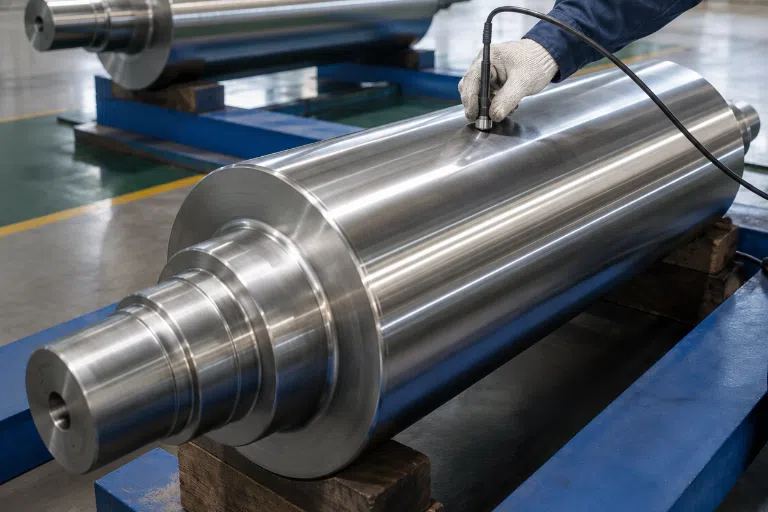
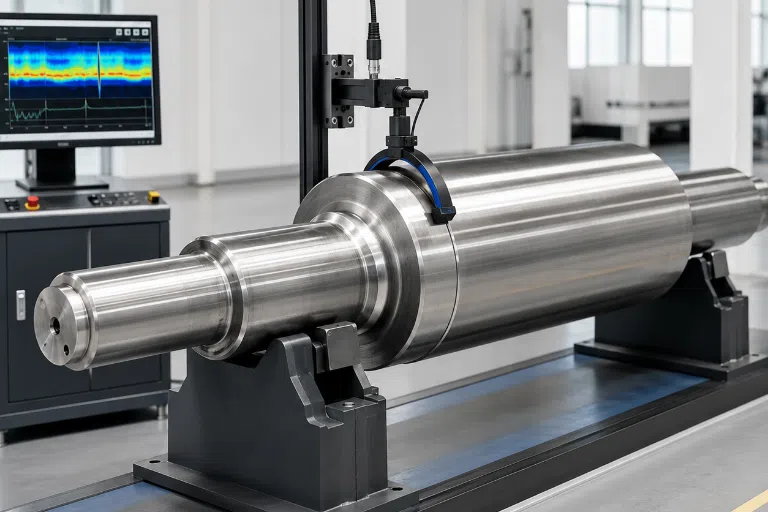
- Ultrasonic Testing (UT) is used to assess the strength of the shell-core bond as well as detect internal imperfections
- Eddy Current Testing (ET) is applied to identify early-stage cracks after a cobble event or impact, preventing the crack from propagating into a spalling failure mode
- Magnetic particle testing (MT) — surface and near-surface cracking
- Hardness testing across the shell profile
- Metallographic microscopy, confirms microstructure matches the specified grade
Ultrasonic and eddy current testing exist because specific failure modes such as the cobble-induced cracking discussed above don't show up on a simple visual inspection or a hardness reading. The results of all tests are shipped in the form of detailed reports, not simple checkbox approvals.
What a Test Report Actually Proves
A "certified" roll without evidence on the documentation is of little use to a procurement engineer, but UT/MT reports for each heat number on a work roll are precisely what a rolling mill’s quality inspection department needs, whether the roll is headed to a hot strip finishing stand or a cold mill, to verify prior to placing it in service.
Request product informationFAQ
What is a work roll, and how is it different from a backup roll?
The difference between work roll and backup roll comes down to contact: the work roll come into direct contact with, and deforms, the steel. The backup roll doesn't contact the steel, it supports the work roll, helping control roll gap and load distribution across the roll bite. Work rolls carry the direct thermal and mechanical load from the steel; backup rolls see that load transmitted through the work roll instead.
What materials are used in work rolls?
High speed steel (HSS), Indefinite chill double poured cast iron (ICDP), high-chrome cast iron, Forged Cr-Mo or Cr-Ni-Mo alloy steel - all chosen based on mill location, duty and temperature, rather than one standard type.
Is a harder work roll always a better work roll?
No, wear resistance isn't as significantly impacted by hardness as it's by the amount of carbide, alloying elements and microstructure, and pushing hardness too far can compromise fracture resistance in rolling. Select the appropriate grade by weighing wear resistance against fracture resistance for the particular stand you're running, not by what's highest on the specification sheet.
How is a work roll manufactured, forged or cast?
Both are practiced depending on the grade. A composite shell and core design is developed with the centrifugal process for the HSS, ICDP and high chrome cast iron grades which are selected applied in the hot strip and roughing stands. Forging works the solid alloy billet for the Cr-Mo and Cr-Ni-Mo grades, selected for cold mill applications.
What is the process of hot strip rolling, and where do work rolls fit in?
A hot strip mill reheats a steel slab and rolls it through roughing stands, then finishing stands, reducing thickness at each pass while the steel is still at rolling temperature. There are three types of rolling mills worth distinguishing here, hot, cold, and combination lines, and work rolls in the roughing and finishing stands of a hot line are what directly contact and shape the steel, which is why roughing-stand and finishing-stand rolls in service run different grades.
What should I watch for when evaluating a work roll supplier?
Ask for material traceability by heat number and batch, and third-party verifiable test data on chemical composition and hardness. Demand a documented on-time delivery record, not a vague promise. A vendor who can't readily supply a mill test report (MTR) on demand is a major warning sign, no matter how slick the sales talk.
How do I know I'm getting consistent quality across production batches?
We provide material traceability by heat number and batch, and third-party verifiable chemical composition and hardness data, the data that will catch the subtle batch-to-batch variation that can slip through a simple "in spec" check.
Can Welong supply work rolls to standards other than ASTM?
In addition to ASTM A942/A942M, we offer JIS G5127:2013 for cast grades. Forged grades are built to your program's standard and confirmed against your requirements prior to production.
What size range can Welong supply?
We’ll confirm the roll diameter, barrel length, and chock configuration against your mill’s stand geometry and drawing. Submit your dimensions and mill stand location for an accurate sizing and lead time estimate.
Procurement & Capability
Work Roll Capability Review
China Welong reviews the buyer drawing, product specification and inspection scope before quotation.
This review is scoped to the Work Roll configurations set out in the specification table on this page — 7 documented rows covering Parameter, Evidence wording, HSS shell hardness and ICDP shell hardness.
24 hEngineer-reviewed quotation on business days
2001Founded in 2001
30+30+ engineers on staff
5 yrStamped serial traceability
Quotation Scope and Commercial Terms
Pricing is prepared against the selected product configuration, material route, inspection scope and shipment terms.
- Quotes are returned within 24 hours on business days, reviewed by an engineer.
- T/T or L/C by wire transfer.
- We ship EXW, FOB, CFR or CIF; other Incoterms on request.
- We work from 2D drawings and 3D CAD models (AutoCAD, Pro/ENGINEER, SolidWorks; .dwg and .igs).
Production Planning
Production timing is confirmed with the quotation after quantity, process route and finishing scope are reviewed.
- We hold agreed items in stock and ship against your release to shorten delivery. Feasibility is confirmed at drawing review.
- Manufacturing at Xi'an, Shaanxi and at Jiyuan, Henan.
- 0.01 mm machining precision.
- Material standards to ISO, BS, ASTM, ASME, DIN, JIS and GB.
- Orders ship in standard export wooden cases, or the packing you specify.
Order Review and Responsibility
The responsible manufacturer, inspection scope and document package are identified for the selected item.
- The quotation records whether the item is made in our own works or by an approved supplier and confirms the responsible manufacturer and inspection scope.
- Production-management review is re-audited every two years; the quotation confirms the responsible manufacturer and inspection scope for the selected item.
- Centrifugal castings to 3,000 kg, 4,000 mm long, 2,000 mm outside diameter, 8 mm minimum wall.
- Forgings from 0.2 to 50 tons.
Product Specification Evidence
Five rows reproduce current-page wording. Two legacy first-party rows reproduce the old Welong work-roll pages and are identified row by row in the batch ledger. The approved B19 work-roll route statement is a separate legacy-source exception; the quotation confirms the responsible manufacturer and inspection scope for the selected item.
- Each piece carries a stamped serial number and stays traceable for five years to its chemical composition, mechanical properties and measurement report, with the test coupon retained.
- An EN 10204-3.1B material certificate with chemical composition and mechanical properties, a dimensional measurement report, and UT and MT reports ships with your order.
- Inspection is by coordinate measuring machine, ultrasonic, magnetic particle and X-ray.
- Forged work rolls are made in our own works; centrifugal casting is used for sink rolls, stabilizer rolls and radiant tubes; high-chrome, HSS and ICDP rolls are sourced from approved mills under our supervision.
| Parameter | Evidence wording |
|---|---|
| HSS shell hardness | High Speed Steel (HSS) Centrifugal casting ~80–85 HSC shell |
| ICDP shell hardness | ICDP (Indefinite Chill Double Poured) Centrifugal casting ~725.9 HV shell avg. |
| High-chrome outer-layer hardness | High-chrome cast iron Horizontal spin casting ~70–80 Hs outer layer |
| Forged Cr-Mo hardness | Forged Cr-Mo alloy steel (Cr2/Cr3/Cr5 WR) Forging 90–100 Shore fully hardened |
| Cold-mill diameter example | Can run as small as ~50mm on Sendzimir/Z-mill stacks |
| Legacy first-party work-roll OD and length | Outer diameter | Φ40~Φ1350mm | Length | ≤10000mm |
| Legacy first-party work-roll weight | Weight | 100-15,000KGS |
Request a Product Review
Send the drawing, product specification and inspection requirements for a quotation review.
![Choke & Kill Hose: [Field Guide]](https://welongoiltools.com/wp-content/uploads/2026/07/choke-kill-hose-guide-featured-1-150x150.png)