Get in touch with Welong Company
Casing, Tubing & Drill Pipe Elevators | API 8C Oilfield Handling Tools
13 elevator models spanning five mechanism families and covering a 27 kN to 500 ton working range in sizes from 2-3/8 to 36 inches, engineered to match the precise tool joint, casing, or tubing you’re running, not the heaviest tonnage on the shelf.
13
Elevator models
27kN-500T
Working load range
2-3/8″-36″
Size coverage
5
Mechanism families
Oilfield manufacturing
API 8C
Scoped & batch-tested
API 8C SPEC
When Your Elevator Can’t Match the String — Downtime, Damage & the Fix
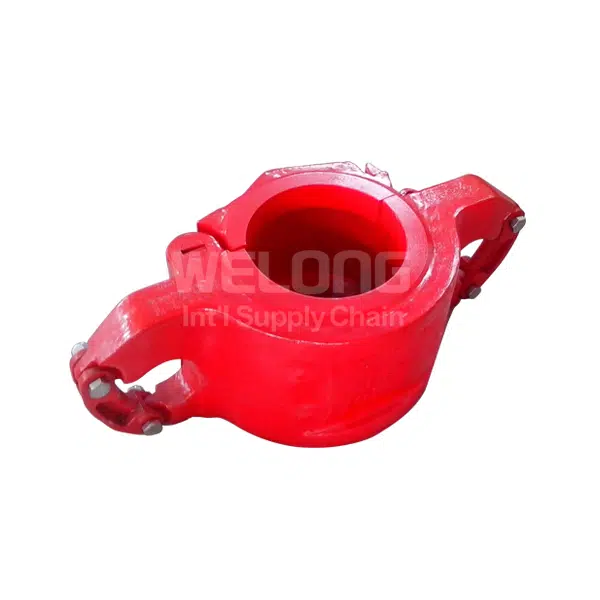
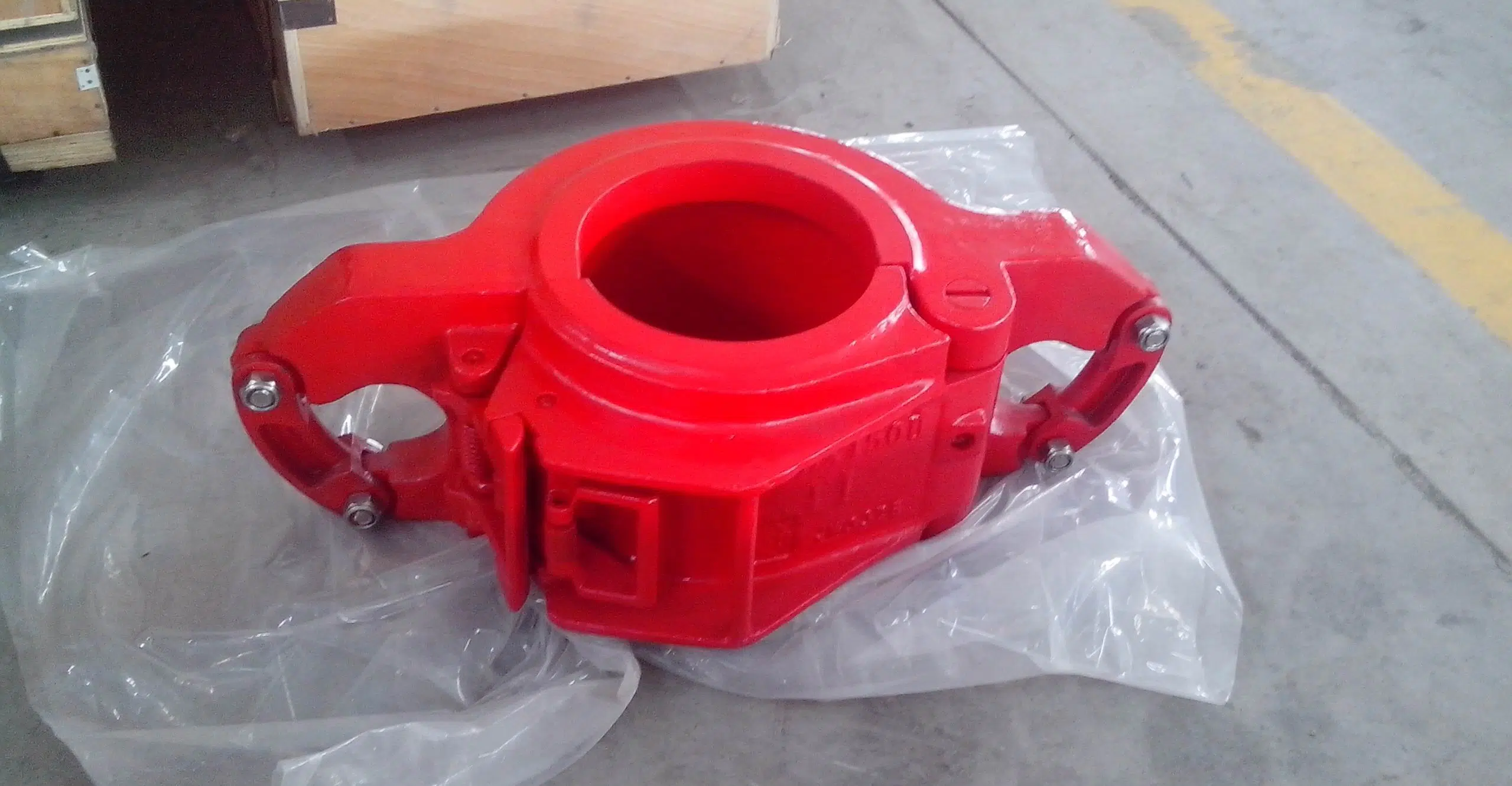
A casing elevator, tubing elevator, or drill pipe elevator is the hinged clamp that grips the tool joint, casing collar, or tubing coupling, then carries its full weight as the string move in or out of the hole. Get the mechanism wrong for the connection on the deck, and the crew can’t latch it at all or will latch it onto a shoulder that wasn’t built to hold it.
Elevators are highly stressed pieces of equipment on the rig floor, and if one fails, operation stops, the string is suspended, the floor crew goes idle, and hours lost on an active well cost an additional several hundred thousand dollars on top of the base day-rate cost of an active operation[4]. Much of that risk, though, doesn’t come from a weak elevator — it comes from the wrong elevator, like a 90 collar shoulder being forced onto a mechanism designed for an 18 taper, or a single-joint tool asked to take a slip-type job.
Lineup & Load Standards
Welong’s answer is a 13-model lineup categorized by mechanism lineage — how each elevator actually grips: center latch, side door, slip type, single joint, or spider — so that the shoulder profile of your string dictates the elevator model, not the other way around.
Center Latch
Side Door
Slip Type
Single Joint
Spider
The quotation identifies whether proof-load test documentation is required for the selected unit, and covers the range from 27 kN to 500 tons, with options for casing, tubing, drill pipe, and drill collar applications. These are oilfield tools built of steel, rated for drill-string duty, and not shallow-water-well or submersible-pump installation PVC casing elevators that, as they fall into a wholly different product class, require different load standards.
Operation Protocol & Matching Process
When the time comes to match them, it happens long before the elevator is ever pulled onto the deck. First pull the tool joint or coupling specification for the string that’s running, confirm whether the shoulder is an 18 taper or a 90 square profile, then select the appropriate mechanism family. Crews who reach for “whatever tonnages we’ve on the truck” without first confirming the shoulder type will find themselves improvising a fit on location, and an improvised fit on a load-bearing latch is the exact scenario OSHA’s rig-floor safety guidelines were written to help prevent [1]. When the crews also use manual tongs for make-up and break-out on those same connections, they’ll be ensuring that both tools work to the same specification, not different assumptions about the string’s configuration.
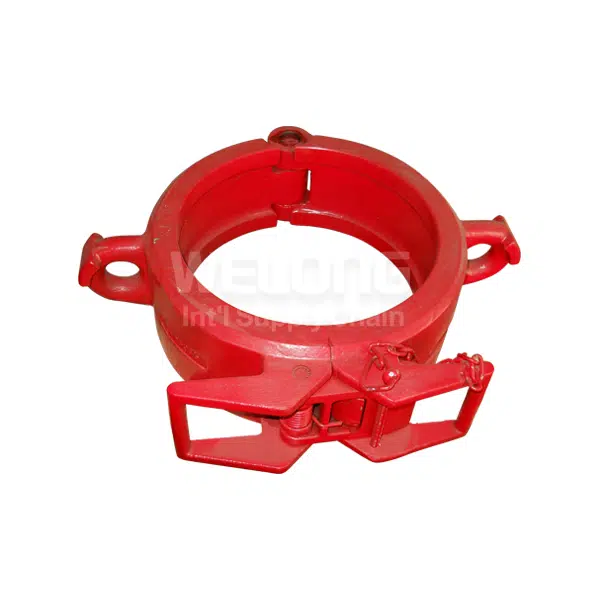
Center-latch elevators operate from a central latch that pivots to grip the tool joint. Our DDZ type – better known by the industry moniker “Bottleneck Elevator” or G-Series elevator – was originally developed to service the 18 taper shoulder reference on drill pipe tool joints. Note that this same 18 taper shoulder allows a standard drill pipe elevator to run in place of a specialized casing elevator on most compatible connections. The center-latch mechanism was then extended to casing, tubing and drill collars that feature a square shoulder configuration via the DD and TA series. By nature of the central latch design, these elevators tend to be the quickest to seat on straight-line runs of identical connections. One drawback of a center-latch mechanism is its reliance on a consistently machined taper or shoulder across the entire hole string.
Side-door elevators have a hinge rather than a central pivot that opens up for a “clamshell” effect; these are best used to service the standard 90 square shoulder found on casing, tubing and drill collars when a tapered tool joint isn’t present. The side-door mechanism allow you to swing the elevator around the pipe body, eliminating the need to thread it over the top of the string, which is often more convenient with drill collars or a heavier casing.
Slip-type elevators use internal slip segments to grab and hold a piece of upset or collar-type casing or tubing, clamping directly onto the pipe body itself rather than a shoulder face. This mechanism is effective for upset or collar-type casing and tubing, where the pipe’s own wall, not a machined shoulder, has to withstand the full clamping force.
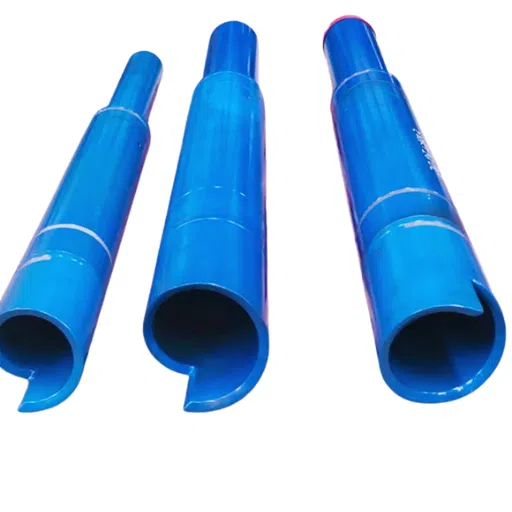
Single-joint elevators are the lightest of the elevator families and were designed to pick a single length of pipe from the V-door and convey it into the derrick, rather than to hold a suspended string. The single-joint elevator represents the “match the job, not the tonnage” case – running a heavy multi-ton elevator on a single joint task only slows down the crew and adds unnecessary weight that the derrickman will have to maneuver by hand.
Elevator-spiders mate an elevator’s grip to a slip style body that can be disengaged from the travelling block – often used on casing-running jobs when the string has to be held at the rotary table between joints. A sucker rod elevator, a cousin of this elevator-spider design, is a specially-built variation for artificial-lift rod strings instead of casing or tubing; it’s often the lowest-tonnage, smallest-diameter tool in the range.
You’ll notice that many of our competitors list some of these same mechanism classes using entirely different type codes, such as LYT/MYT/YT/HYT for the tubing-focused slip-type elevators or YC/MYC/HYC for casing-focused versions. Our own designation codes (WLDD, WLDDZ, WLCD, WLCDZ, WLSLX, WLSJ, WLSP) all align with these five mechanism classes as listed; just provide us with your required shoulder profile and connection size, and if the prior supplier used a different code, we’ll show you the correct Welong equivalent. This is also how the single joint elevator fits into the broader picture of types of elevators in drilling operations: the smallest tool in the lineup, purpose-built for one-joint-at-a-time V-door duty rather than full-string hoisting.
Engineering Note
Full Model & Working Load Reference| Model | Family | Application | Size Range | Working Load |
|---|---|---|---|---|
| WLDDZ | Center-Latch | Drill Pipe | 2-3/8″ EU – 6-5/8″ IEU | 150/250/350/500 T |
| WLDD | Center-Latch | Drill Pipe | 2-3/8″ – 5-1/2″ | 65/100/125/150 T |
| WLDD | Center-Latch | Casing | 4-1/2″ – 10-3/4″ | 100 / 150 T |
| WLDD | Center-Latch | Tubing | 1.05″ – 5″ | 35/65/100/125/150 T |
| WLDD | Center-Latch | Drill Collar | 2-7/8″ – 11-1/4″ | 35/65/125/150 T |
| WLCD | Side-Door | Multiple | 2-3/8″ – 30″ | 100/150/200/250/350/500 T |
| WLCDZ | Side-Door | Drill Pipe | 2-3/8″ – 5-1/2″ | 150/250/350/500 T |
| WLSLX | Slip-Type | Multiple | 2-3/8″ – 30″ | 100/150/250/350 T |
| WLSJ | Single-Joint | Multiple | 2-3/8″ – 36″ | 45 / 60 kN |
| WLSP | Single-Joint | Multiple | 2-3/8″ – 7-5/8″ | 27 kN |
But after you decide what class of mechanism will work for your string, you’ve only half of the equation. Actually confirming that the elevator sitting on your deck can safely lift the load for which it’s rated is the other half – which is where certification and inspection come in, preventing not just a string drop but potential injury to your crew.
Elevators vs Rope Slings & Generic Aftermarket
— Why Mechanism Class Matters
Even OSHA’s own tripping-in/tripping-out guidance for the rig floor states the elevator hazards plainly: “getting hands or fingers pinched in elevators,” “being struck by elevators not securely latched,” and “getting hands or fingers caught between elevators and stump” [1]. Every one of those hazard descriptions comes back to a mechanism that wasn’t correctly matched to the string or a failed latch seating – not because the elevator was “too small.”
This is the difference between a dedicated, purpose-built mechanism class and a “generic” aftermarket slip, or a hastily assembled chain or rope sling. The latter two have zero positive latch; in the case of the ill-fitting aftermarket slip, it might look okay on the spec sheet, but its shoulder profile and slip geometry will simply not engage the connection being run.
When you select by mechanism class first, you also avoid over-specifying. OSHA states that “utilizing the wrong equipment or parts can have catastrophic results” and that hoisting equipment must be “adequately designed, properly selected, properly installed, and properly maintained” [2]. The first action OSHA instructs is selection.
That same guidance addresses corrosion and metal fatigue as a separate, ongoing risk factor beyond initial selection – which is why the order-specific proof-load records from the responsible manufacturer only account for half the equation of equipment condition. Ongoing service is the other half – pre-use inspection of the latch and hinge pin, and tracking wear against a maintenance schedule, rather than just running a unit until it breaks down. The order-specific manufacturing evidence is covered below; for the in-service half, our fishing and pipe-handling tools page points to the more general inspection procedures we recommend for our full line of rig-floor handling tools, not just elevators alone.
Not sure which mechanism family matches your connection profile? Check Elevator Type Compatibility →
Field Performance & Reliability —
Confirm the inspection and documentation scope required for the selected elevator order.
“
The quotation should state the proof-load acceptance criteria and disposition of a failed unit; do not assume a lower-tonnage relabeling path is acceptable for load-bearing equipment.
1.5x Proof-Load & API 8C Scope
For the selected elevator, the quotation must identify the responsible manufacturer, applicable API 8C design and test requirements, in-process and final inspection scope, proof-load basis, and records to be supplied. Do not assume a specific test method or load factor unless it is stated for that model and order.
Third-Party Verification Layer
Standard in-process and final inspection can be supplemented by an agreed third-party inspection scope for an international order.
Subsurface MPI Protocol
Magnetic particle inspection uses a magnetized part and a finely divided ferromagnetic powder that reveals cracks and other surface discontinuities. As these flaws are present at or near the surface of a load-bearing component, they disturb the magnetic field in such a way that they attract the particles, making them clearly visible when they wouldn’t be to the naked eye. For the selected elevator, the quotation must identify whether latch bodies and hinge pins receive magnetic-particle inspection before shipment, the applicable acceptance criteria, and the documentation required with the order.
We’re not going to offer a definitive percentage improvement in service life or a specific failure-rate number – that kind of precision would require controlled, third-party field test data we don’t have, and we won’t invent a number to avoid the question. What can be relied on is the test and inspection scope stated for the selected order in the quotation and supplied records.
Certifications & Compliance —
Equipment Inspection and Documentation
API Spec 8C governs hoisting-equipment requirements. Confirm the relevant proof-load test and inspection documentation for the selected elevator.
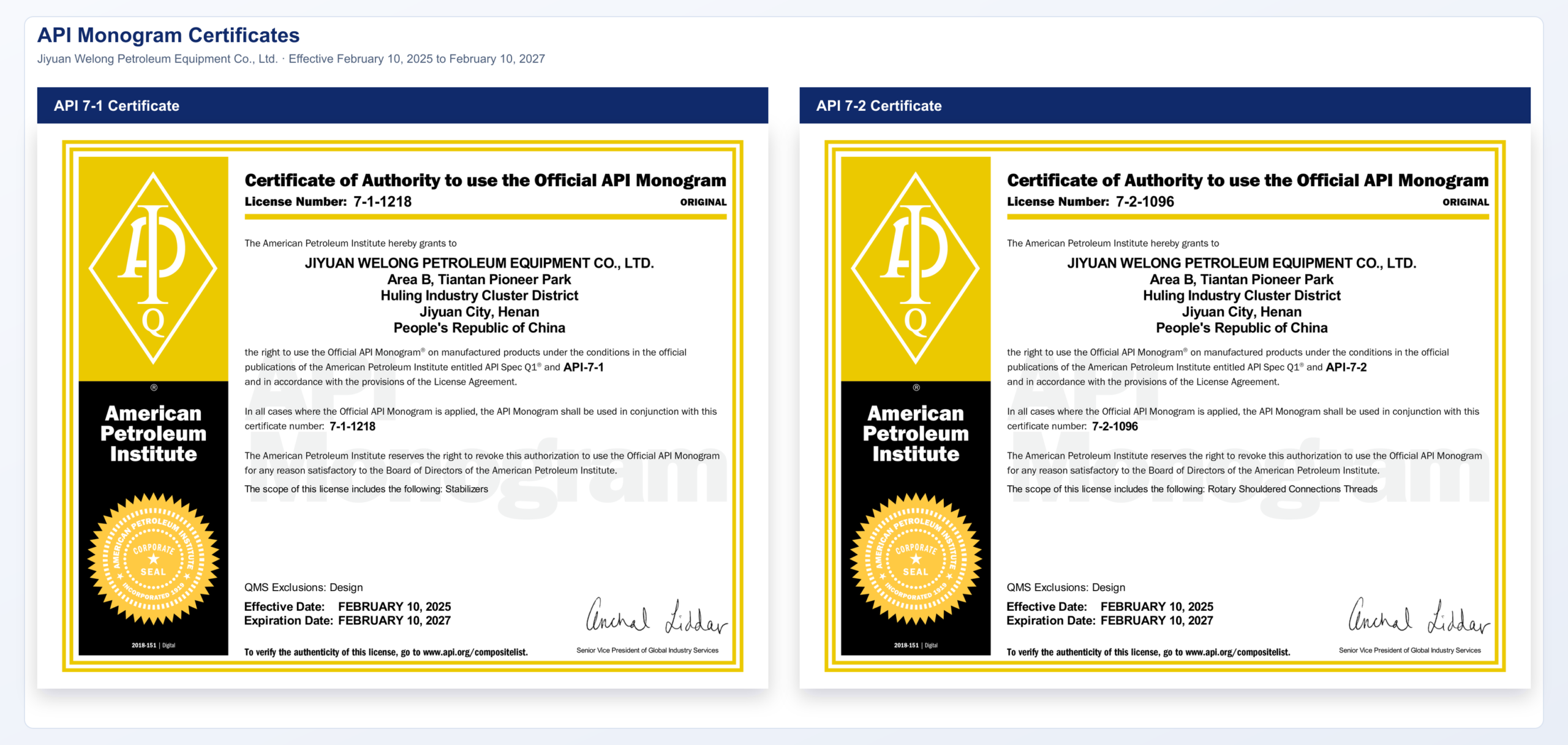
API 8C
Hoisting equipment scope
Quality management
Order Documentation
Confirmed for the selected order
Third-Party Inspection
Provider and scope confirmed in the quotation
MPI
Magnetic particle inspection
Procurement Guide —
Lead Time, Trade Terms & Inspection Options
Sourcing oilfield equipment from a Chinese manufacturer often raises three questions before price ever comes up: what’s the total landed cost after shipping and import duties are added, compared to buying domestically? Can quality be verified before the equipment leave port? Is there a point person who can actually answer technical questions without a language barrier delaying an active RFQ?
A single seal failure, let alone equipment downtime in a load-bearing part of the operation, quickly wipes out any small per-unit price difference – and it’s the landed-cost difference, not just unit price, that matters.
What Drives Your Landed Cost
PROCUREMENT & INSPECTION PROTOCOLS01 Cost Drivers & Incoterms
Because there’s no such thing as “the number” for your total landed cost, without knowing your actual freight lanes, import classifications, and volume, here’s what influences total cost: Choice of Incoterms (FOB / CIF / DDP / DDU – we support them all to offer you control over freight and import risk); the inspection regimen (standard in-process and final inspection versus supplemental third-party inspection with an agency like SGS or DNV); and the order volume, relative to our current production schedule. Let’s get specific: Contact Welong for a quotation tailored to your specific needs and circumstances.
02 Triple-Layer Inspection Protocol
For the selected elevator order, the quotation identifies the responsible manufacturer, in-process and final inspection scope, and required records. Third-party inspection by SGS, DNV, or another qualified provider can be arranged when requested.
03 Communication & Trade Terms
Our technical and sales team communicates in English throughout the RFQ and production process, and the quotation identifies the proof-load, MPI and acceptance records required to compare production units with an approved sample. The same FOB/CIF/DDP/DDU flexibility applies whether you’re ordering elevators alongside our bumper subs or as a standalone order.
04 Vendor Evaluation Criteria
If you’re evaluating casing elevators for sale from multiple suppliers, just ask the same three questions we’d anticipate you’d ask us: what specification is used for the proof-load, if the proof-load is tested on every unit or just as needed, and if third party inspection is offered as an optional verification. Any supplier unable to answer the first two should give you cause to re-evaluate the risks of going with them over price alone.
05 Lead Times & MOQs
Lead times and MOQs vary by model, size and current production schedule; we prefer to quote these based on your application and quantity rather than listing figures which won’t hold true across our full line-up of 13 models.
06 RFQ Preparation Guidelines
There are two points worth noting when preparing your RFQ: request our full drill pipe elevator specification sheet prior to deciding on your final size and load rating, as the DD, DDZ, CD and CDZ models do differ slightly in the dimensional aspects; and if you’re just looking for drill pipe elevator parts – whether latch bodies, safety latches, or hinge pins – then state this in your quote request and we’ll quote the part, rather than a full assembly.
Elevator Selection & Engineering Toolkits
01
Mechanism Family Finder
Evaluate shoulder profiles (18° taper vs 90° square) to identify the exact elevator mechanism class for your drill string.
02
Size & Load Selector
Input pipe OD and string weight to filter the 13-model Welong lineup for precise API 8C tonnage and bore combinations.
03
Model Comparison
Compare side-by-side dimensional footprints, latch mechanisms, and proof-load test standards across multiple elevator series.
04
RFQ Spec Builder
Compile a manufacturer-ready technical specification package, complete with material tracing and third-party inspection requirements.
Frequently Asked Questions
01
What’s the difference between a casing elevator, a tubing elevator, and a drill pipe elevator?
Core mechanism family overlaps – there are center-latch, slip-type, and side-door mechanisms used across all three types – but their size and shoulder profile are specific to the intended connection, with drill pipe elevators sized around reference 18 tapered tool joints and casing and tubing elevators sized for common shoulder or slip connections. We organize the 13 models into mechanisms on our Family Tree first precisely because one class of mechanism frequently serves more than one category once properly sized to the joint.
02
How does mechanism class affect drilling efficiency, not just safety?
An inappropriate mechanism delays crews before creating a safety issue – using a slip-type elevator on a shoulder connection or forcing a center-latch tool onto a connection with a collar type profile adds unnecessary time on every joint to seat and re-latch. On a string of pipe, that adds up to measurable non-productive time before anything fails.
03
What is a spider elevator, and is it the same as a regular elevator?
An elevator-spider uses an elevator’s grip, but on a slip-style body that can be set independently of the traveling block so the string remains static in the rotary table between joints during casing-running (unlike a standard elevator, which hangs from the traveling block). SE500/SE350/SE100 form the Spider-Auxiliary family that provides this capability – a relative, but mechanically different, tool from the Center-latch, Side-Door, Slip-Type and Single-Joint families above.
04
How often should elevators be inspected, and what should crews check?
OSHA guidance regarding rig-floor equipment condition refers to “properly designed, selected, installed, and maintained equipment” and to “a pre-use inspection prior to each trip” [2]. At a minimum this should mean inspecting the latch and hinge pin for wear, verifying that the safety latch fully closes and locks, and ensuring the elevator size matches the tool joint or coupling profile being run today, not based on last week’s setup.
05
Which safety practices matter most when handling casing and tubing elevators?
Proper latching procedure is the most-cited control measure in OSHA’s own tripping-in/tripping-out guidance – fully latch the elevator before it takes load, and keep your hands away from the latch and hinge point as the elevator seats onto the tool joint or collar [1]. A properly matched elevator and safety latch eliminate the failure mode of mismatch, but not the procedure itself.
06
Do bigger tonnage elevators mean better performance?
Not necessarily. Elevator selection is an application-specific rather than a maximum-tonnage decision – a correctly sized single-joint elevator for V-door applications will perform better than an oversized multi-ton unit on that specific task, and a lighter mechanism can provide more maneuverability where an extensive load path isn’t required. Start with a match of mechanism family and size to connection and job, and use tonnage headroom as a secondary check.
07
What size are drill pipe elevators available in?
Our Center-latch drill pipe models (WLDD/WLDDZ) accommodate 2-3/8″ through 6-5/8″ IEU with working loads from 65 to 500 tons, depending on size and model. Size coverage extends to 2-3/8″ through 36″ once the Side-Door, Slip-Type, and Single-Joint families are included — see the Engineering Note table above for the complete breakdown.
08
Who is responsible for manufacturing the selected elevator, and how is quantity confirmed?
Every quotation states whether the selected elevator is made in Welong's own works or by an approved supplier Welong develops and supervises. Quantity and production scheduling are confirmed at RFQ.
09
Which certifications should I ask for when buying elevators from an overseas supplier?
At a minimum, verify that your elevator supplier provides API 8C-scoped proof-load test certification for each unit and offers third-party inspection (SGS, DNV, etc.) as an option. Relying on general "certified" statements from suppliers without proof of per-unit testing creates a higher risk than verifying test records yourself.
10
Do you supply elevator-spiders and sucker rod elevators as well as standard elevators?
Yes, the Spider-Auxiliary range of models (SE500, SE350, SE100 elevator-Spider, and Sucker Rod Elevator version) falls within the same 13-model range referenced in the Family Tree diagram. Confirm the responsible manufacturer, proof-load scope and records for the selected model in the quotation.
References & Sources
- OSHA – Oil and Gas Well Drilling and Servicing eTool: Tripping Out/In. osha.gov/etools/oil-and-gas/drilling/tripping-out-in
- OSHA – Oil and Gas Well Drilling and Servicing eTool: General Safety, Equipment Condition — osha.gov/etools/oil-and-gas/general-safety/equipment-condition
- American Petroleum Institute — API program documents
- Industry reporting on unplanned drilling rig downtime cost context (secondary sources; figures cited as industry background, not Welong-specific claims).
- Drilling Contractor (International Association of Drilling Contractors) – reporting on casing/drill pipe elevator shoulder-profile selection.
- Wikipedia — Elevators (drilling rig) — en.wikipedia.org/wiki/Elevators_(drilling_rig)
- Quality Management System Documentation
Why We Supply This
This page helps engineers and procurement teams size elevators by mechanism class rather than tonnage alone. Confirm the working load, size, responsible manufacturer, inspection scope and order records for the selected model in the quotation; the linked OSHA and API references identify the underlying industry requirements.
Procurement & Capability
Casing, Tubing & Drill Pipe Elevators Capability Review
China Welong reviews the buyer drawing, product specification and inspection scope before quotation.
This review is scoped to the Casing, Tubing & Drill Pipe Elevators configurations set out in the specification table on this page — 10 documented rows covering Model, Family, Application and Size Range.
24 hEngineer-reviewed quotation on business days
2001Founded in 2001
30+30+ engineers on staff
5 yrStamped serial traceability
Quotation Scope and Commercial Terms
Pricing is prepared against the selected product configuration, material route, inspection scope and shipment terms.
- Quotes are returned within 24 hours on business days, reviewed by an engineer.
- T/T or L/C by wire transfer.
- We ship EXW, FOB, CFR or CIF; other Incoterms on request.
- We work from 2D drawings and 3D CAD models (AutoCAD, Pro/ENGINEER, SolidWorks; .dwg and .igs).
Production Planning
Production timing is confirmed with the quotation after quantity, process route and finishing scope are reviewed.
- We hold agreed items in stock and ship against your release to shorten delivery. Feasibility is confirmed at drawing review.
- Manufacturing at Xi'an, Shaanxi and at Jiyuan, Henan.
- 0.01 mm machining precision.
- Material standards to ISO, BS, ASTM, ASME, DIN, JIS and GB.
- Orders ship in standard export wooden cases, or the packing you specify.
Order Review and Responsibility
The responsible manufacturer, inspection scope and document package are identified for the selected item.
- Every quotation states whether the item is made in our own works or by an approved supplier we developed and supervise.
- We develop, audit and supervise the mills and workshops that make your parts: material mills are re-audited every two years and approved by Welong before they run your order.
- Forgings from 0.2 to 50 tons.
Specification and Inspection Evidence
The specification table on this page is the technical basis for this review: its numeric rows define what we quote, manufacture and inspect against.
- Each piece carries a stamped serial number and stays traceable for five years to its chemical composition, mechanical properties and measurement report, with the test coupon retained.
- An EN 10204-3.1B material certificate with chemical composition and mechanical properties, a dimensional measurement report, and UT and MT reports ships with your order.
- Inspection is by coordinate measuring machine, ultrasonic, magnetic particle and X-ray.
Request a Product Review
Send the drawing, product specification and inspection requirements for a quotation review.
![Choke & Kill Hose: [Field Guide]](https://welongoiltools.com/wp-content/uploads/2026/07/choke-kill-hose-guide-featured-1-150x150.png)