Get in touch with Welong Company
Specifications & Capabilities
Bumper Sub | Welong, KXJ Standard & BXJ Lubricated Series
A bumper sub that is under-specified for the string can delay the operation. The KXJ and BXJ lines cover NC23 through 7 5/8 REG in 12 standard models.
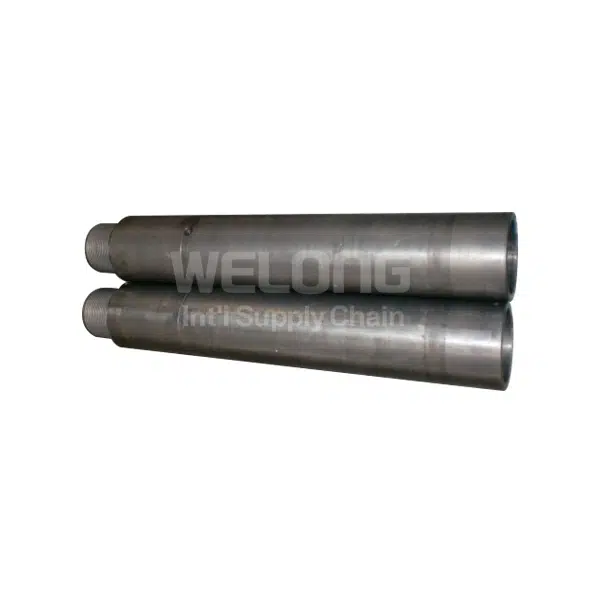
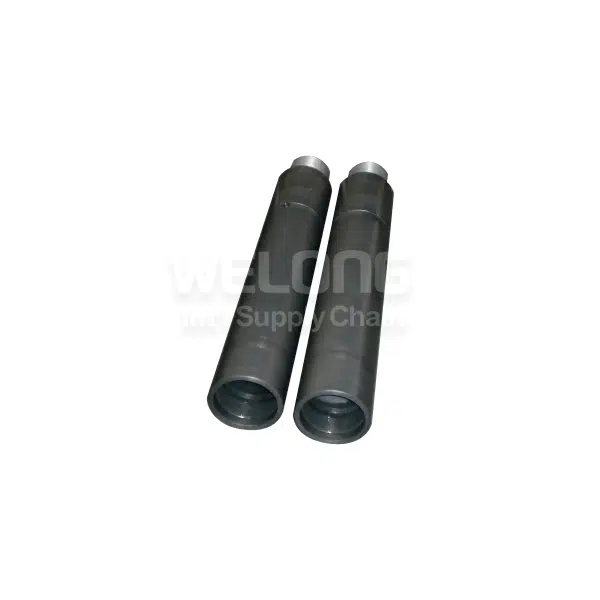
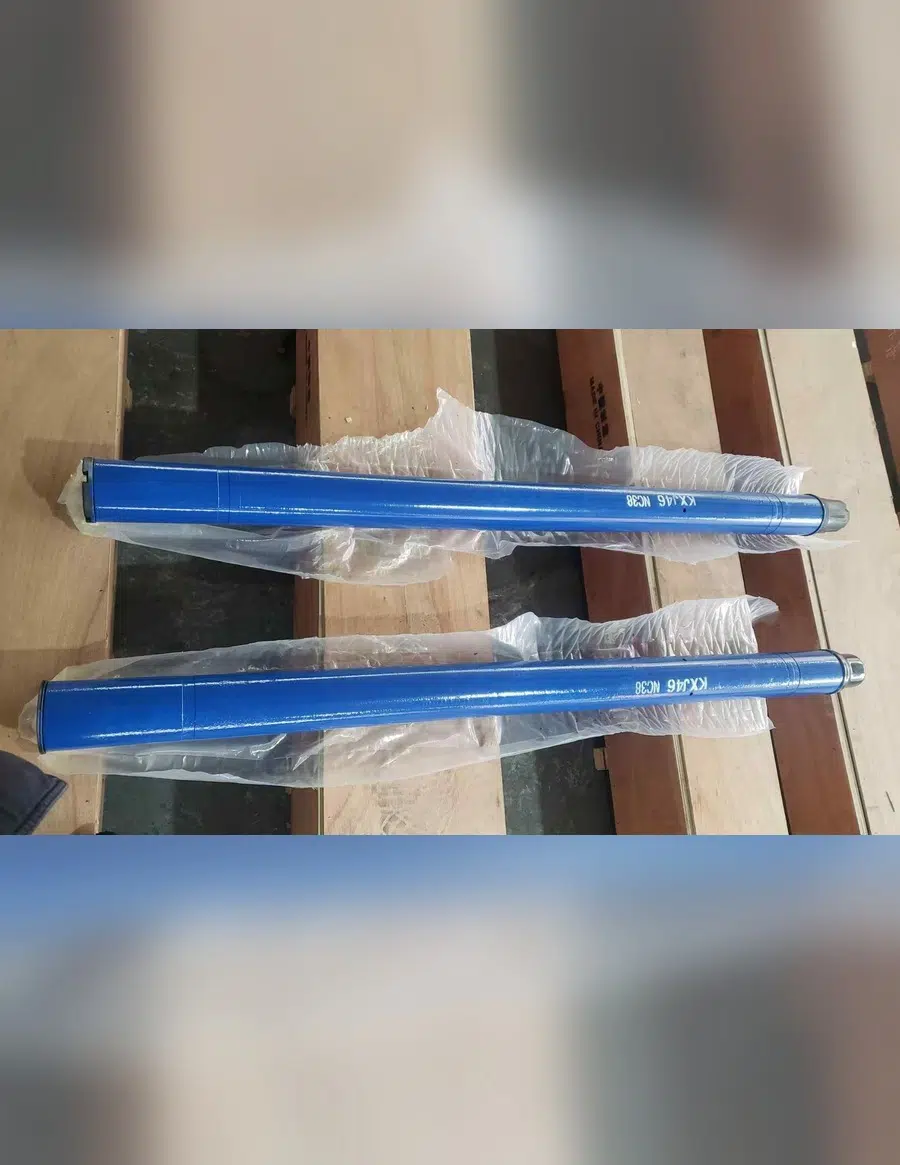
- 12 KXJ + BXJ model variants
- NC23–7⅝ REG Connection range
- Up to 2,200 kN Max tensile load (KXJ90B)
- API 7-1 Section 7: Drill-Stem Subs
Stuck Pipe or Fish? How a Bumper Sub Releases It Without Damaging the String
A bumper sub is a telescoping downhole sub run just above the fishing tool or safety joint, positioned to transmit a controlled downward or upward blow along the drill string without losing full torque transmission at any point in its stroke. When an overshot or spear grips a stuck fish and won’t release cleanly, or when the string need a repeatable “feel” for the top of the fish before applying weight, jarring straight through solid drill collars risks damaging the connection you’re trying to protect.
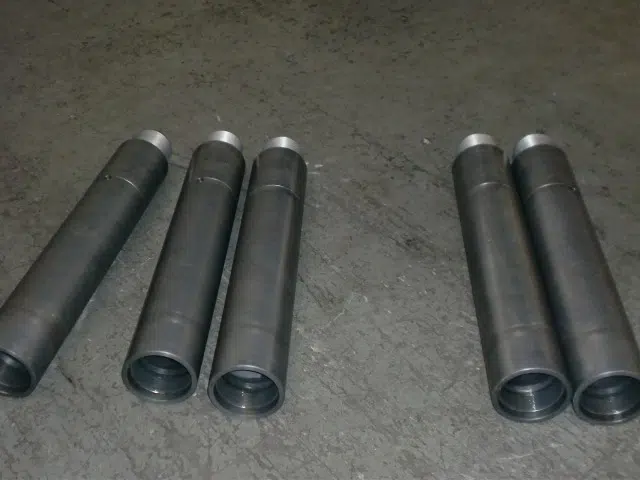
The mechanism is simple by design: a hex or splined mandrel slides inside a matching mandrel body, so the tool can bump up or down through its full stroke while continuously transmitting rotational torque. That combination, sustained travel plus uninterrupted torque, is what separates a bumper sub from a fishing jar, which stores and releases energy in a single sharp impact instead (see the comparison below).
Stuck-pipe events aren’t cheap to sit through: non-productive rig time during fishing operations has been documented at $10,000 to $1,000,000 per day depending on rig class and location [1]which is exactly why the tool positioned above the fish need to be sized correctly the first time, not swapped mid-job.
Engineering Note
Why Torque Transmission Matters Here
A bumper sub isn’t just a spacer with travel. Because it sits in the load path directly above the fishing tool, it has to keep transmitting full rotational torque at every position of its stroke, otherwise the overshot or spear above it loses the ability to back off or engage cleanly under rotation. That’s the specific engineering reason bumper subs use splined or hex mandrels (see EP0830493A1) rather than a plain slip joint, and it’s the trade-off a plain telescopic joint without torque-through capability can’t make.
In the field, this plays out most often on two ends of the same problem: an overshot that latched the fish but won’t disengage cleanly during a bumper sub drilling recovery, and a mill or cutting tool that needs its weight modulated so it doesn’t stall mid-cut.
Product Line
Welong’s KXJ line
Pressure Rating
15,000 psi
Max Tensile Load
2,200 kN
Largest Connection
7 5/8 REG
…is engineered around exactly those two scenarios, not as a generic “fishing accessory,” but as a specific bumper sub fishing tool sized to a documented load path. Unlike a plain slip joint, it does this without sacrificing torque transmission, which is the honest reason the mandrel geometry look the way it does rather than being simplified for lower cost.
Welong Bumper Sub Lineup, KXJ Standard vs. BXJ Lubricated
Welong supplies two distinct bumper sub lines and manages their production, not one model dressed up in two names. KXJ is a mechanical bumper sub, a slack-joint-style design with simple internal geometry, easy field maintenance, and no hydraulic oil to service — the splined-joint torque-through design documented in mechanism patents such as EP0830493A1. BXJ is the lubricated line: its working chamber is filled with wear-resistant hydraulic oil, which reduces internal friction and extends seal life under sustained cycling. Twelve total models across both lines cover NC23 through 7 5/8 REG, the quotation identifies the specification sheet required for the selected bumper sub.
KXJ Standard Bumper Sub, Full Specification Table
| Model | O.D. (mm) | I.D. (mm) | Sealing Pressure (MPa) | Max. Tensile Load (kN) | Max. Work Torque (kN·m) | Work Stroke (mm) | Connection | Closed Length (mm) |
|---|---|---|---|---|---|---|---|---|
| KXJ31B | 79 | 25.4 | 20 | 300 | 3 | 508 | NC23 | 1410 |
| KXJ36B | 95 | 32 | 20 | 500 | 4 | 508 | NC26 | 1410 |
| KXJ42B | 108 | 38 | 20 | 700 | 6 | 508 | NC31 | 1608 |
| KXJ62B | 159 | 51 | 20 | 1430 | 13 | 1400 | NC50 | 2604 |
| KXJ76B | 197 | 70 | 20 | 1630 | 20 | 1500 | 6 5/8 REG | 2730 |
| KXJ90B | 229 | 76 | 20 | 2200 | 25 | 1500 | 7 5/8 REG | 2760 |
BXJ Lubricated Bumper Sub, Full Specification Table
| Model | Product Code | O.D. (mm) | I.D. (mm) | Sealing Pressure (MPa) | Max. Tensile Load (tf) | Work Stroke (mm) | Connection | Closed Length (mm) |
|---|---|---|---|---|---|---|---|---|
| BXJ31B | 1101000 | 80 | 25.4 | 30 | 30 | 394 | 2 3/8 REG | 2355 |
| BXJ36B | 1103000 | 95 | 28 | 30 | 50 | 394 | NC26 | 2514 |
| BXJ44B | 1106000 | 114 | 38 | 30 | 80 | 394 | NC31 | 2450 |
| BXJ46B | 1108000 | 121 | 38 | 30 | 90 | 400 | NC38 | 2446 |
| BXJ64B | 1111000 | 165 | 57 | 30 | 143 | 460 | NC50 | 2730 |
| BXJ80B | 1115000 | 203 | 76.2 | 30 | 220 | 465 | 6 5/8 REG | 3108 |
Decision Matrix, Matching a Model to Your String
| Your string O.D. range | Recommended line | Best-fit model(s) | Connection | Why |
|---|---|---|---|---|
| ~79–108 mm (3 1/2″ class) | KXJ (mechanical) | KXJ31B / KXJ36B / KXJ42B | NC23 / NC26 / NC31 | Lighter fishing strings, standard workover — no hydraulic oil servicing needed in the field |
| ~80–121 mm, sustained-cycle jobs | BXJ (lubricated) | BXJ31B / BXJ36B / BXJ44B / BXJ46B | 2 3/8 REG–NC38 | Oil-filled chamber extends seal life under repeated jarring cycles |
| 159–229 mm (heavy string / offshore) | KXJ (mechanical) | KXJ62B / KXJ76B / KXJ90B | NC50 / 6 5/8 REG / 7 5/8 REG | Highest tensile ratings (up to 2,200 kN) in the lineup, mechanical simplicity for high-load work |
| 165–203 mm, high-cycle lubricated need | BXJ (lubricated) | BXJ64B / BXJ80B | NC50 / 6 5/8 REG | Matches KXJ’s heavy-string connections with lubricated wear protection |
Not sure which connection matches your existing string?
Send your tally for a model matchShop-floor product record
Real Bumper Sub Product Views
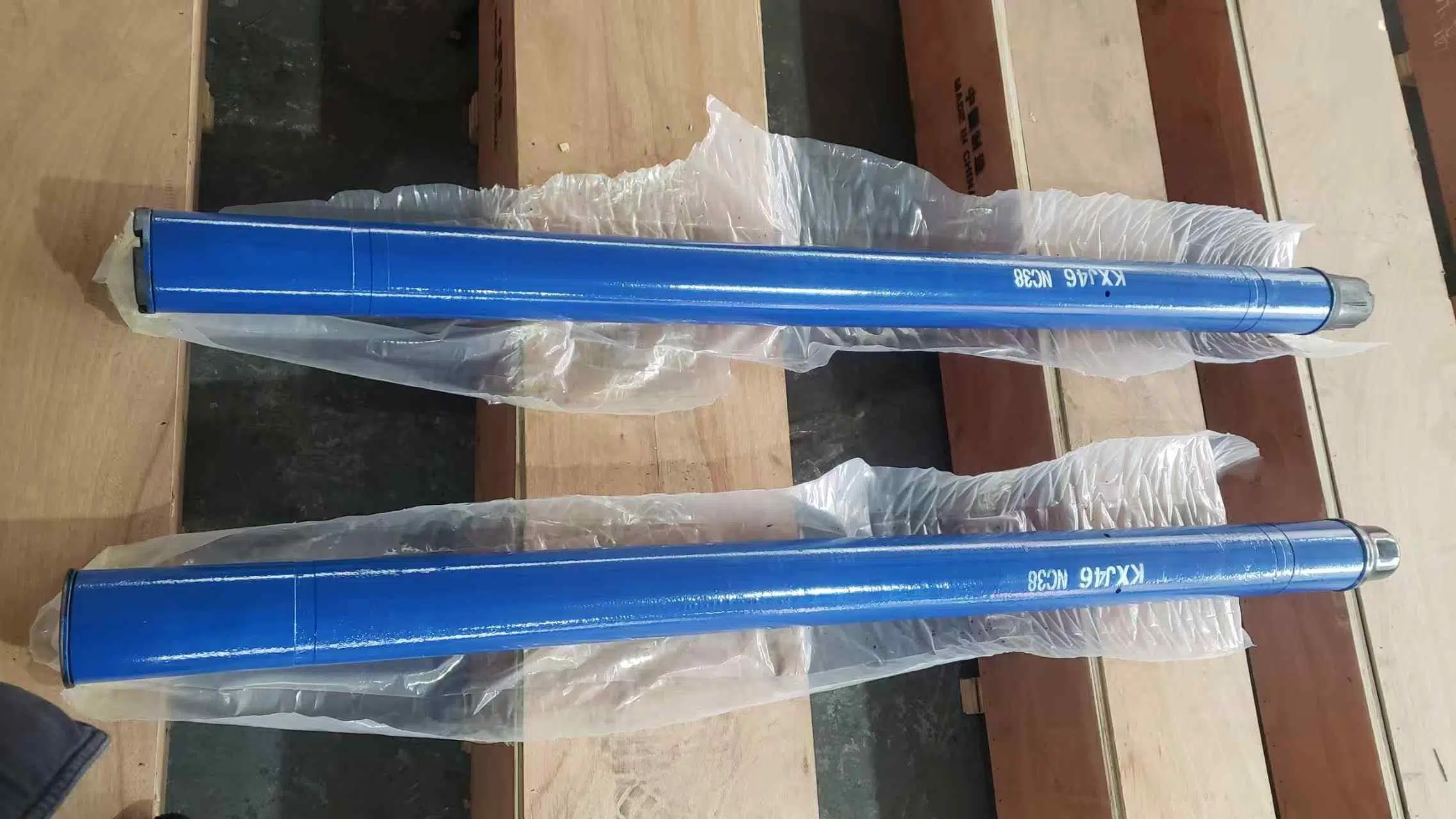
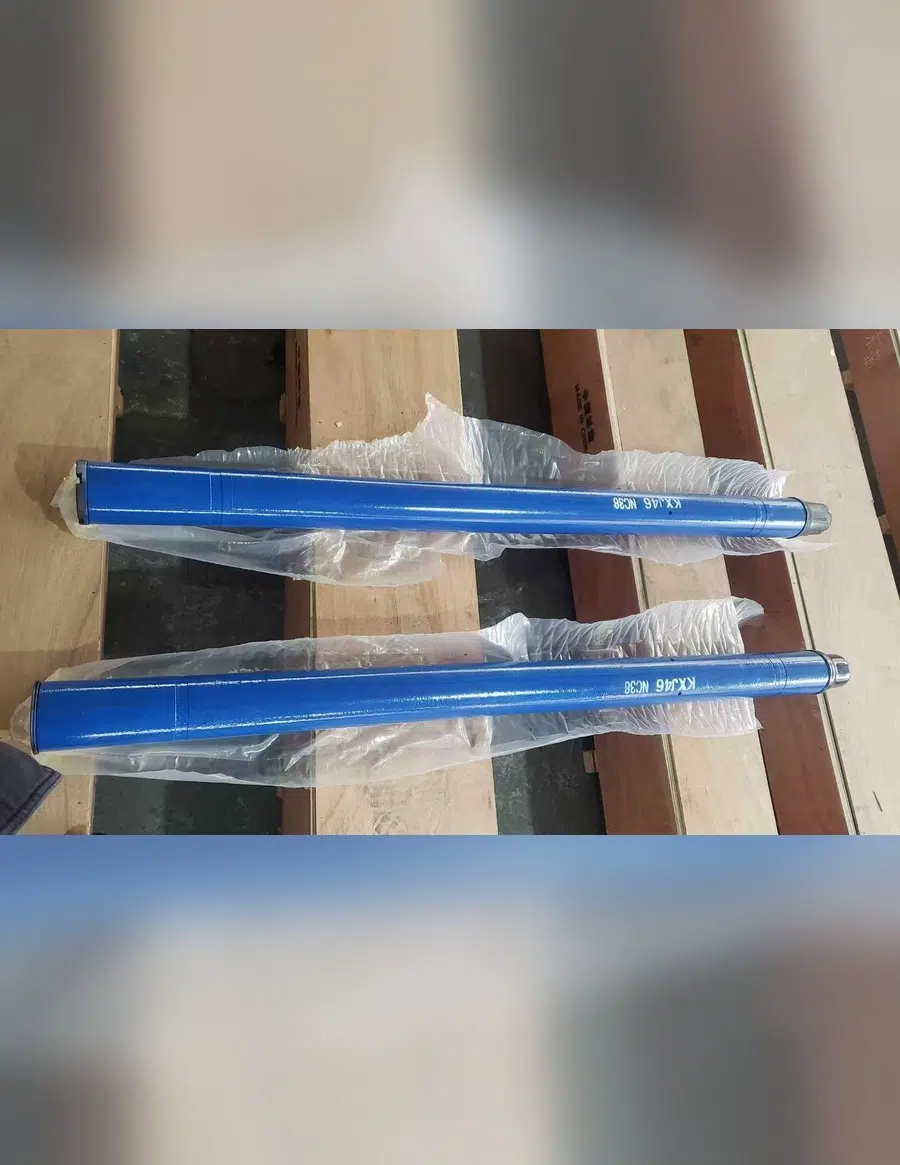
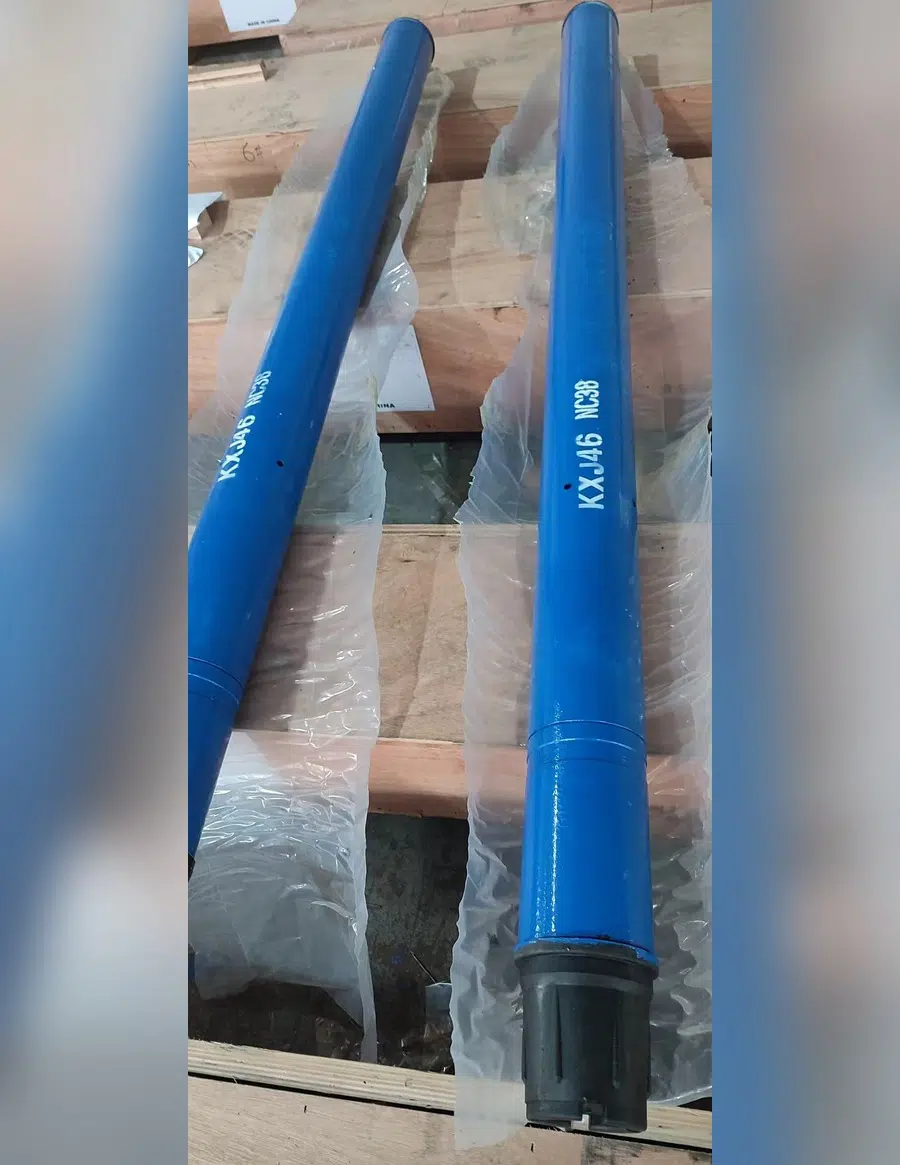
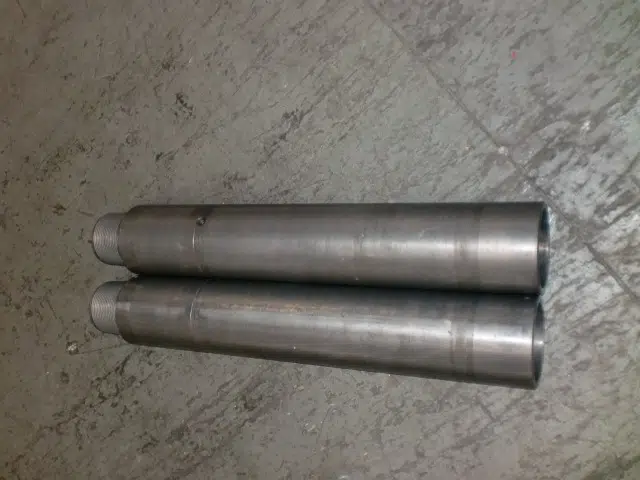
Finished bumper sub photos are added next to the lineup content so buyers can compare product length, body finish and connection-end details before choosing KXJ or BXJ routes. Total added photos: 3.
KXJ / BXJ reviewConnection-end detailFinished product evidenceRFQ reference
Comparative Analysis
Bumper Sub vs. Fishing Jar, Which Release Tool Fits Your Job
These two tools get grouped together constantly, and the mix-up cost real rig time. Whether you frame it as a bumper sub vs jar question or a bumper sub fishing jar mix-up on the catalog page, the underlying answer is the same: a bumper sub and a fishing jar aren’t interchangeable, and neither one is simply the “better” choice, they deliver force in fundamentally different ways, a distinction documented in jarring-tool mechanism patents like US5033557A, and the right pick depend on how your fish is stuck, not on which tool happens to be on the truck. If a jar is what your job actually calls for, see Welong’s CSJ hydraulic fishing jar series for the trigger-release side of this comparison. For the broader inventory beyond bumper subs, see Welong’s full oilfield fishing tools catalog covering overshots, taper mills, and casing scrapers.
US5033557A
Mechanism Patent
Characteristic
Bumper Sub (KXJ / BXJ)
Fishing Jar
Force delivery mechanism
Telescoping mandrel, continuous sustained travel
Energy accumulation + sudden trigger release
Impact pattern
Repeatable, controlled cycles
Single high-magnitude blow, then reset
Torque transmission
Full torque at every stroke position
Torque transmission depends on jar type/design
Reference role in the string
Positioned above the fishing tool/safety joint for controlled “feel” and release
Positioned to deliver a decisive shock when a fish is severely stuck
Engineering literature frames the choice around the sticking mechanism itself, not brand preference, published fishing-tool guidance is consistent on this point: simple rules of thumb for jar (and bumper sub) placement don’t always hold up in the field, because the right call depend on the specific stuck-pipe analysis [2]. In practice, that means: differential sticking in soft formations or deviated-well work-free scenarios tend to favor a bumper sub’s sustained, controlled cycling; severe mechanical sticking in hard formations, where a single decisive high-shock blow is what’s needed, tends to favor a fishing jar.
Mechanical (KXJ) vs. Lubricated (BXJ) — A Real Operating Limit, Not a Sales Pitch
This distinction matters and we won’t paper over it: published field guidance on bumper sub selection notes that in high-temperature conditions, the mechanical (slack-joint) type should be used, because sustained heat can damage the seals inside a lubricated bumper sub’s oil-filled chamber. Conversely, where pump pressure exceeds roughly 500 psi, the lubricated type’s closed housing and seal design generally holds up better than an unsealed mechanical joint [3]. If your job profile runs hot, KXJ is very likely the correct call over BXJ, regardless of which one carries a longer nominal service life on paper.
Comparing bumper sub against a jar for a specific stuck-pipe scenario?
Request a Custom Comparison
→
When a customer asks us for BXJ on a high-temperature job, we walk them through KXJ first. The oil-filled chamber is a real advantage on high-cycle work, but it’s not the right tool for every well profile, and we’d rather size it correctly than sell the higher-margin option.
Engineering Rationale & Field Applications
Bumper subs earned their place in the fishing string decades before “downhole tool marketing” existed as a category. W.D. Greenfield’s 1967 SPE paper on floating-vessel drilling documented bumper subs used to maintain constant weight on bit despite vessel heave [4]a telescoping principle relevant to the listed KXJ configuration; confirm the responsible designer, manufacturer, materials and tolerances in the quotation. That continuity matter: this is proven mechanical logic, not a new invention being marketed as breakthrough technology.
Selection isn’t just a bumper-sub-spec decision in isolation, it’s a bottom-hole-assembly decision. Stroke length, connection, and O.D. all have to work inside the broader BHA context: well trajectory, weight-on-bit transfer through the string, stabilizer placement, and any LWD/MWD tool spacing constraints above or below the sub. A model that’s technically correct on tensile rating can still be the wrong pick if it doesn’t clear a directional assembly’s tool spacing.
Patent literature such as US4709462A describes the bumper-sub slip-joint category; it does not establish Welong ownership or prove the selected KXJ configuration. Confirm the responsible designer, manufacturer, tolerances, materials and connection evidence in the quotation.
$10K–$1M/day
Rig non-productive time during stuck-pipe events
No product-category performance percentage is provided for bumper subs; evaluate the selected configuration against the operating requirements.
Where a Bumper Sub Gets Called On
Overshot/spear release operations, positioned above the grappling tool to help disengage it cleanly after the fish is caught, per documented fishing-string setups [5].
Heave compensation on floating rigsthe original SPE-documented application, still relevant on offshore and semi-submersible work where vessel motion needs to be absorbed without losing bit weight control [4].
Milling and cutting operations, where the sliding-sleeve effect let an operator “feel” for the top of a fish and modulate weight applied to a cutting or milling tool, preventing overload or stalling.
Swaging collapsed casing and general work-string freeing where a fish is attached and needs controlled jarring to move.
Order Evidence, Supply Control & Buyer Review
Bumper subs sit in the load path of a fishing string under torque and tension, so the selected configuration should be checked against the applicable technical documentation. The drill-stem sub category falls under API Spec 7-1 (Section 7: Drill-Stem Subs), a technical delivery specification for rotary drill-stem components.
SPECIFICATION & CERTIFICATION MATRIX
REG. 02
API Spec 7-1
Section 7: Drill-Stem Subs
REG. 03
China Customs Class-A
Supplier and order documentation
REG. 04
SGS / DNV
Third-party inspection available
Reliability claims mean little without an inspection trail behind them. For the selected bumper-sub order, the quotation identifies the in-process and final inspection scope; third-party inspection by SGS, DNV, or another qualified provider can be arranged when requested, a practice consistent with how major operators structure their own supplier quality requirements, which call for documented process quality checks and independent verification on critical drill-string components as standard practice rather than taking a supplier’s word alone.
A Note on Sourcing From China
Third-party inspection can be requested for the selected bumper-sub order.
Manufacturing & Precision Equipment
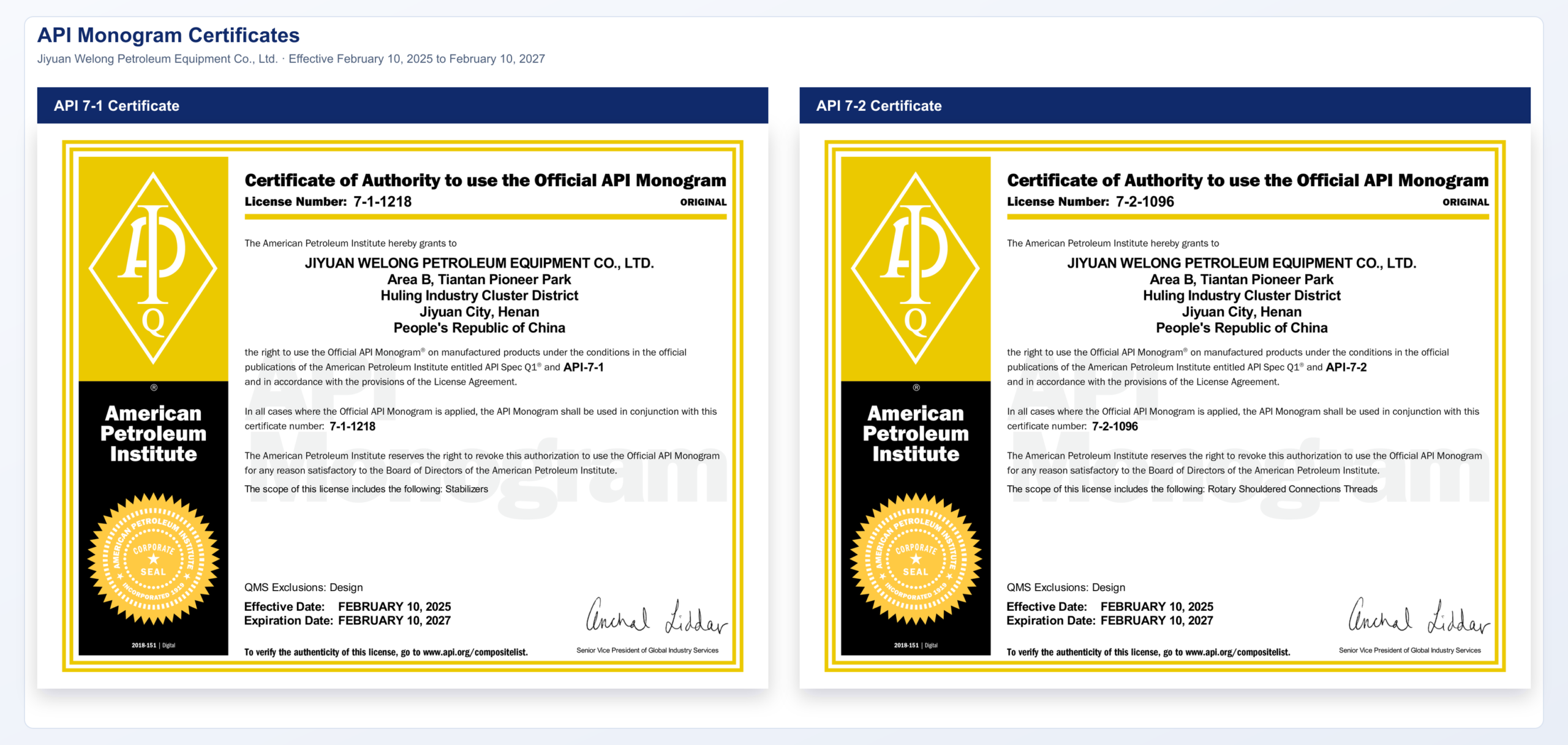
Need proof of compliance before you can approve a new supplier?
Request product information
Procurement & Logistics
How to Order, MOQ, Lead Time, Incoterms & Custom Packaging
Pricing on a bumper sub depends on connection, stroke, and any customization, so instead of a number that won’t apply to your configuration, here’s what actually drives it and how the order process runs.
PRECISION MACHINING
What Drives Pricing
Model & Connection
Larger O.D./higher-tensile models (KXJ76B, KXJ90B, BXJ64B, BXJ80B) carry more material and machining time than smaller-bore models.
KXJ vs. BXJ
The lubricated line’s oil-chamber sealing system adds manufacturing steps versus the mechanical KXJ line.
Inspection Level
Standard in-process/final inspection is included; adding SGS or DNV third-party inspection is an optional line item.
Custom & Packaging
Welong supports customer-logo marking. Standard packaging uses paper, wood, or container options selected based on transport method and order volume.
Contact for quote based on your specific model, quantity, and inspection requirements.
Shipping & Trade Terms
Orders ship by sea, air, or rail depending on urgency and volume, with flexible Incoterms, FOB, CIF, DDP, or DDU, so you can choose the arrangement that fits your logistics setup rather than being locked into one shipping model.
Inspection & Records Process
The manufacturing process includes in-process inspection followed by final inspection before packaging and dispatch.
Third-party inspection by SGS, DNV, or another qualified provider can be arranged for the selected order. The provider, scope, timing and required records are confirmed in the quotation.
What to Send Us for a Fast, Accurate Quote
The fastest path to an accurate quote: your existing connection type (or string tally if you’re not sure), target O.D./I.D. range, whether you need KXJ or BXJ (or want us to recommend based on temperature/pressure conditions), quantity, and preferred Incoterm. That’s usually enough for us to return pricing without a back-and-forth.
Ready to move on a quote?
Request a QuoteBumper Sub Engineering Tools
Frequently Asked Questions
A bumper sub is a telescoping downhole tool run in the drill string, positioned just above a fishing tool (overshot or spear) or safety joint, or above the drill collars during drilling operations. Its internal mandrel and mandrel-body design let it transmit full rotational torque at every position of its stroke while delivering controlled upward or downward movement, used to release stuck fishing tools, absorb rig-heave motion, maintain circulation while working a stuck string free, or “feel” for the top of a fish before applying weight.
A bumper sub delivers sustained, repeatable cycles of controlled force through a telescoping mechanism and continues transmitting torque throughout its stroke. A fishing jar stores mechanical or hydraulic energy and releases it as a single, high-magnitude shock once a trigger threshold is reached. See the full comparison table above for how that difference maps to which tool fits which stuck-pipe scenario.
It depends on temperature and pump pressure more than personal preference. High-temperature conditions favor the mechanical KXJ line, since sustained heat can damage the seals in an oil-filled BXJ chamber. Where pump pressure runs above roughly 500 psi, the lubricated BXJ’s closed, sealed housing tends to hold up better. If you’re unsure, send us your well conditions and we’ll recommend a line rather than defaulting to whichever has better margins.
Bumper subs use the stated rotary drill-stem connection and dimensional reference; confirm the selected configuration against the applicable documentation.
Yes, the 12 models listed above are our standard catalog, but connection type, stroke length, and branding/packaging can be customized to match your specific string requirements. Send your target specs and we’ll confirm feasibility and lead time.
Connection/model breadth includes 12 standard KXJ and BXJ configurations. Confirm the selected model, inspection scope, and Incoterm at RFQ.
Procurement & Capability
Bumper Sub Capability Review
China Welong reviews the buyer drawing, product specification and inspection scope before quotation.
This review is scoped to the Bumper Sub configurations set out in the specification table on this page — 6 documented rows covering Model, O.D. (mm), I.D. (mm) and Sealing Pressure (MPa).
24 hEngineer-reviewed quotation on business days
2001Founded in 2001
30+30+ engineers on staff
5 yrStamped serial traceability
Quotation Scope and Commercial Terms
Pricing is prepared against the selected product configuration, material route, inspection scope and shipment terms.
- Quotes are returned within 24 hours on business days, reviewed by an engineer.
- T/T or L/C by wire transfer.
- We ship EXW, FOB, CFR or CIF; other Incoterms on request.
- We work from 2D drawings and 3D CAD models (AutoCAD, Pro/ENGINEER, SolidWorks; .dwg and .igs).
Production Planning
Production timing is confirmed with the quotation after quantity, process route and finishing scope are reviewed.
- We hold agreed items in stock and ship against your release to shorten delivery. Feasibility is confirmed at drawing review.
- Manufacturing at Xi'an, Shaanxi and at Jiyuan, Henan.
- 0.01 mm machining precision.
- Material standards to ISO, BS, ASTM, ASME, DIN, JIS and GB.
- Orders ship in standard export wooden cases, or the packing you specify.
Order Review and Responsibility
The responsible manufacturer, inspection scope and document package are identified for the selected item.
- Every quotation states whether the item is made in our own works or by an approved supplier we developed and supervise.
- We develop, audit and supervise the mills and workshops that make your parts: material mills are re-audited every two years and approved by Welong before they run your order.
- Forgings from 0.2 to 50 tons.
Specification and Inspection Evidence
The specification table on this page is the technical basis for this review: its numeric rows define what we quote, manufacture and inspect against.
- Each piece carries a stamped serial number and stays traceable for five years to its chemical composition, mechanical properties and measurement report, with the test coupon retained.
- An EN 10204-3.1B material certificate with chemical composition and mechanical properties, a dimensional measurement report, and UT and MT reports ships with your order.
- Inspection is by coordinate measuring machine, ultrasonic, magnetic particle and X-ray.
Request a Product Review
Send the drawing, product specification and inspection requirements for a quotation review.
![Choke & Kill Hose: [Field Guide]](https://welongoiltools.com/wp-content/uploads/2026/07/choke-kill-hose-guide-featured-1-150x150.png)