Get in touch with Welong Company
Casing Cleaning Tools
Casing Scraper / Oilfield Casing Cleaning Tools by Welong
A casing scraper cleans the casing ID to gauge before the next tool is run. The rotating and non-rotating designs cover 4-1/2 in through 13-3/8 in casing; confirm the required inspection scope at RFQ.
Click stack to cycle images
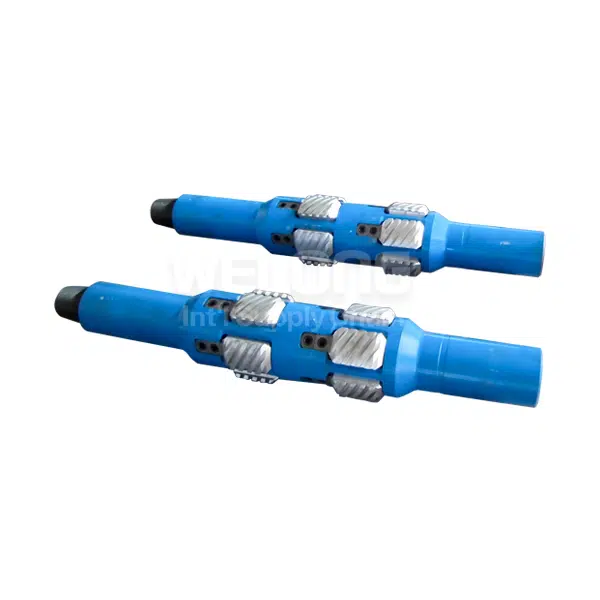
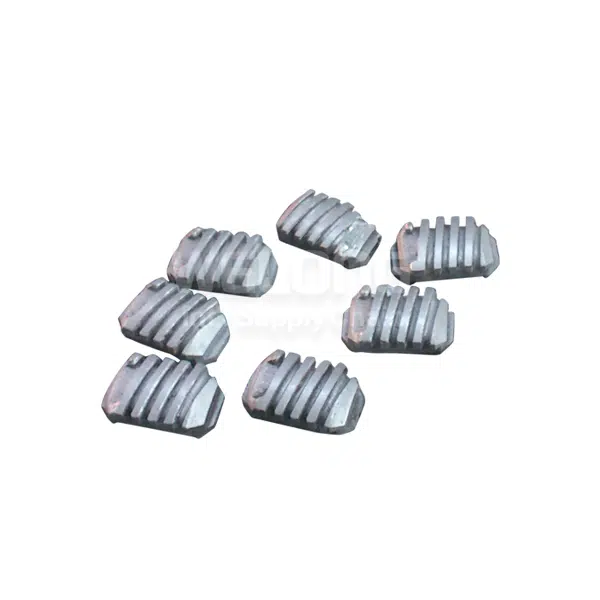
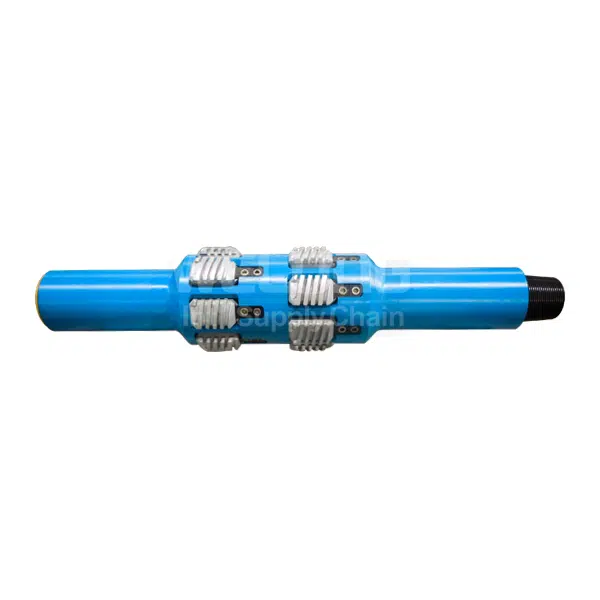
- 4-1/2″–13-3/8″ Casing size range
- 2 Blade configurations: rotating / non-rotating
- REG / NC API 7-2 rotary-shouldered connections
- SGS · DNV Third-party inspection available
- FOB·CIF·DDP·DDU Incoterms options
Casing buildup threatens cementing & completion — how a casing scraper solves it
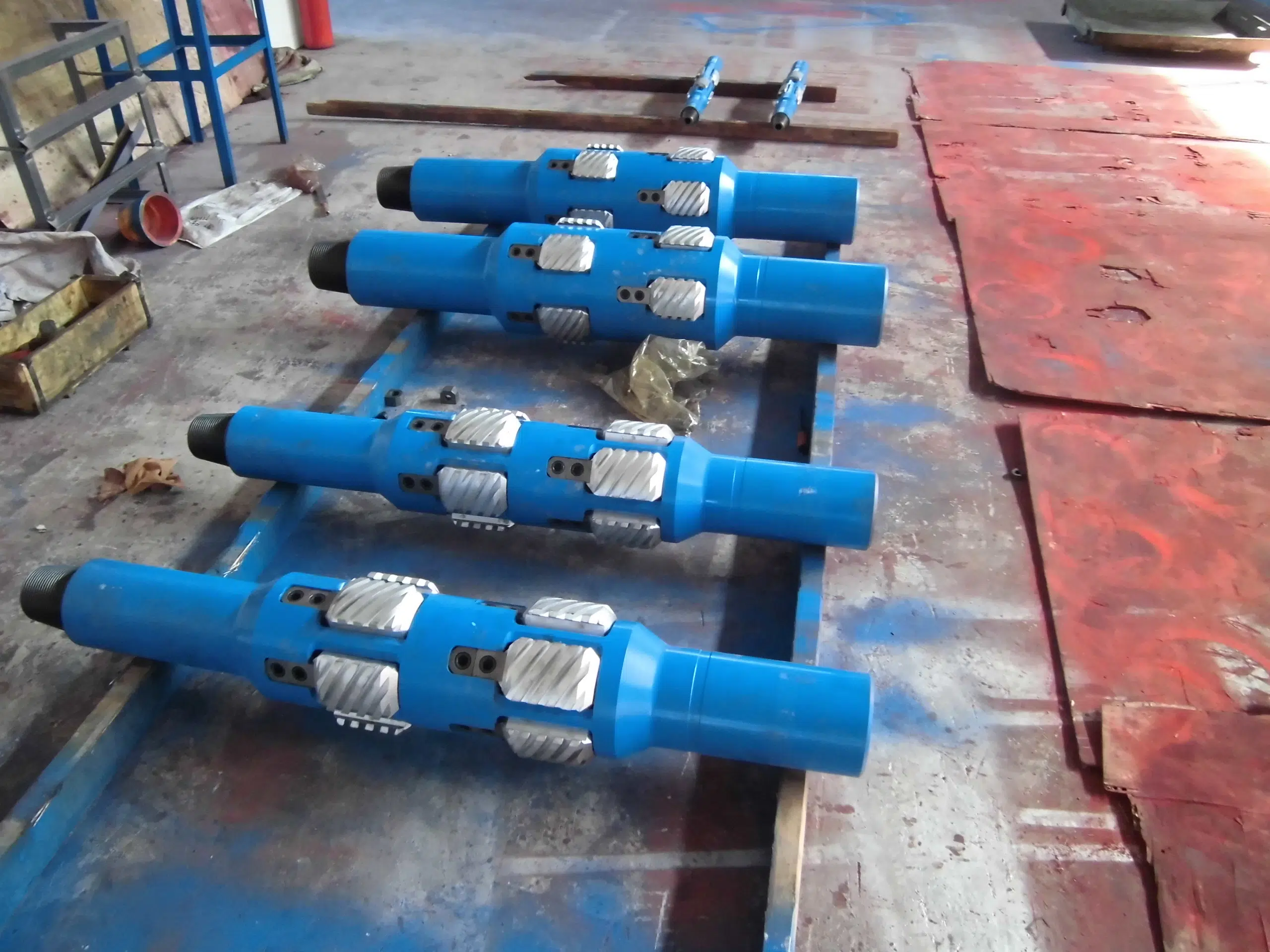
SYSTEM OVERVIEW
"Sometimes it is a tool that is simplest of all that determines job success."
A casing scraper is a downhole device that cleans cement sheath and debris from the internal surface of a casing string. It rarely gets a budget line item until a job fails because it wasn't run.
INDUSTRY CONTEXT
Scrapers, brushes, and magnets each address different debris. On cement-adjacent work, the scraper is the first tool in the string, built to the proven full-circle mechanism.
RISK ANALYSIS DASHBOARD
CONTAMINANTS
- Cement Sheath
- Hardened Mud
- Mill Scale & Rust
- Packer Burrs
FAILURE CASCADE
Poor Cement Bond ➔ Fluid Leaks ➔ Zonal Isolation Threatened ➔ Gas Migration.
DOE/NETL research confirms: Inadequate zonal isolation is a direct pathway for gas migration and sustained annular pressure — the exact failure a clean casing prevents.
MECHANISM & SEQUENCE
Clearing, rather than just moving loose debris.
A rotating or non-rotating scraper runs below the bit. Its blade assembly cuts against the entire internal surface in one pass.
1. Confirm Size/Conn
➔
2. Check Blades
➔
3. Run & Circulate
The sequence matters more than the brand. Run it paired with a casing brush for bonded scale.
Welong Casing Scraper Product Line — Rotating & Non-Rotating Selection
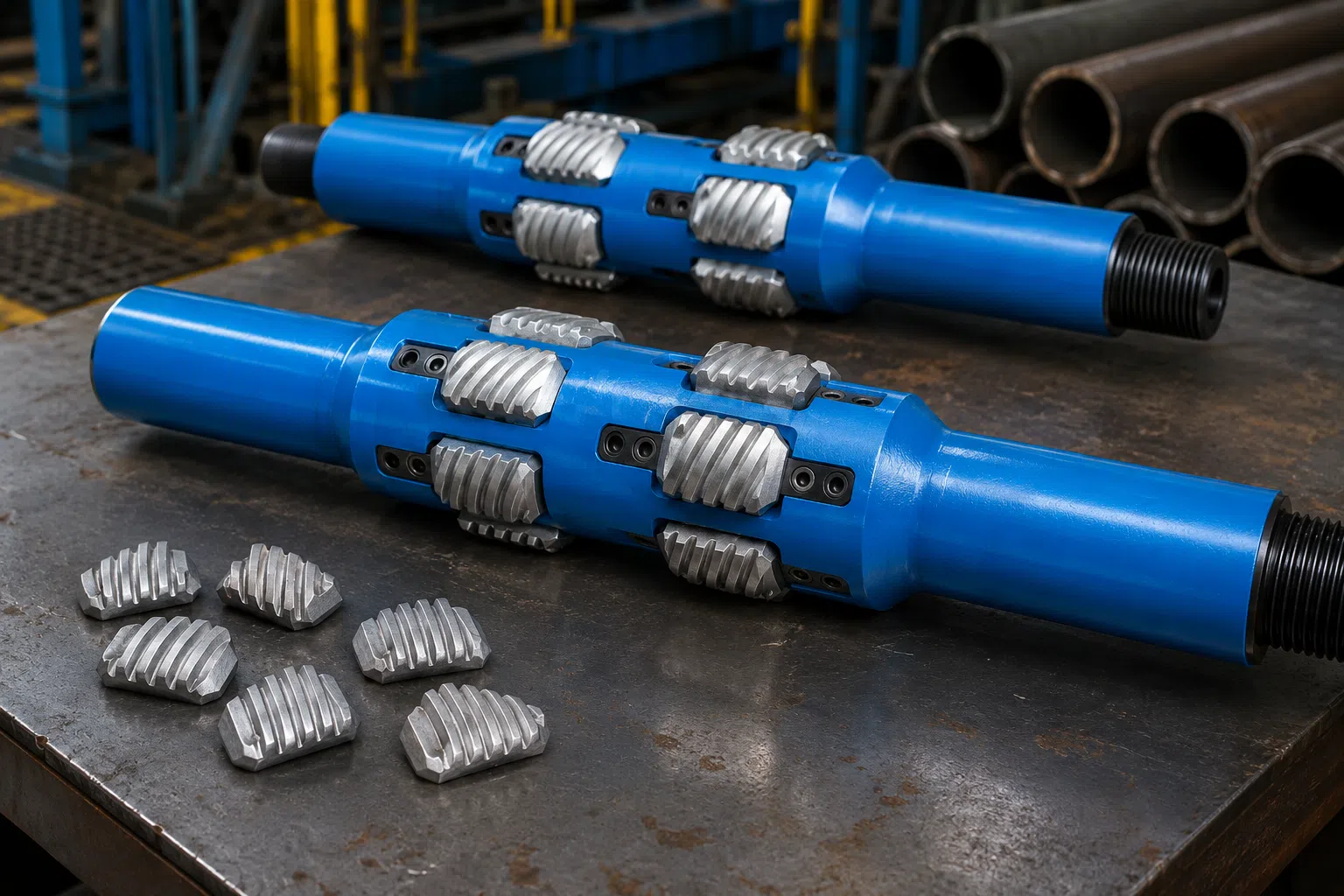
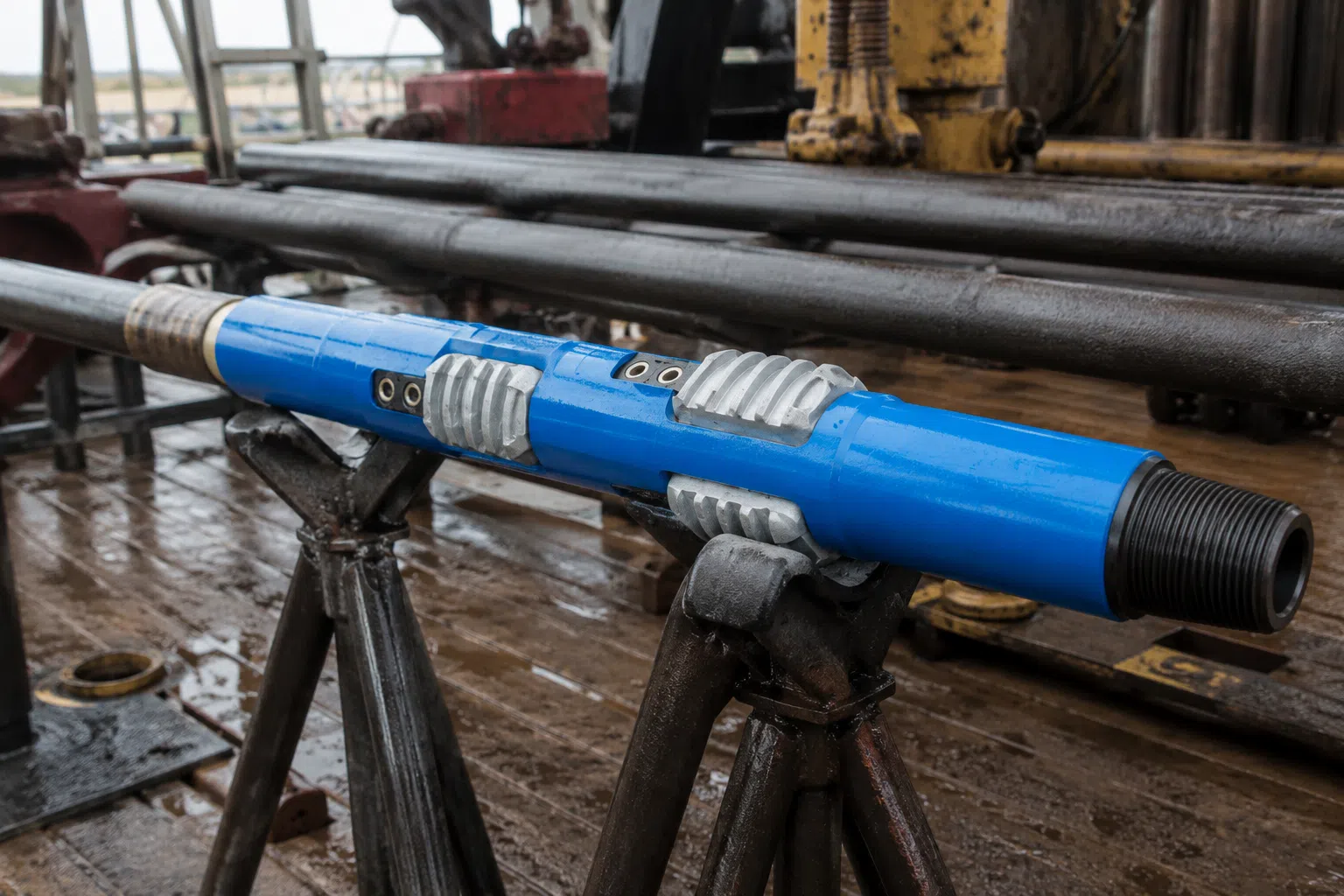
Welong supplies casing scrapers in eight standard casing sizes and manages their production, 4-1/2" through 13-3/8", with the connection matched to the casing's thread. Each ships with the cutter setup sized to the casing's ID, so the same catalog entry that tells you the connection also tells you the blade count. Body and cutter blocks are made from heat-treated alloy steel, the same alloy family the wider oil and gas industry turns to for parts that take countless rounds of rotation and reciprocal action without distorting.
Engineering Note — Rotating vs. Non-Rotating Selection
It’s not that one blade type is inherently “better” than the other. We don’t set one up as an interchangeable default - the trade-off is real, and driven by operating environment. Non-rotating scraper design in particular is still an active area of engineering refinement, as reflected in a published U.S. patent for an improved non-rotating wellbore casing scraper aimed at solving strength limitations in earlier designs. Rotational scrapers have shown an ability to perform more aggressive cleaning of uncomplicated, relatively vertical wellbores. The mechanism encourages the scraper to apply uniform contact against the full circumference of the casing wall, minimizing the chances that some vertical sections of debris will be missed. In contrast, a non-rotating casing scraper is often best suited for wellbores with complex geometry or where casing walls (thin or lower-strength strings) require a gentler approach. The choice, then, between the two should be based on field conditions and casing grade rather than a blanket assumption that one configuration is superior.
As the table below shows, Welong's casing scraper types span the full range — from a 5 1/2 casing scraper for slim production strings up to the 13-3/8" surface-casing size — with the connection and cutter count fixed to each individual size, not shared across the line. Specify a casing scraper 7 inch model, for example, and it ships on a 3-1/2 REG connection with a 1 13/16" cutter; that pairing is specific to the 7" row and doesn't carry over to the other sizes.
Full Specification Table
| Casing (in) | Connection | Scraper OD (in) | Length (in) | Scraper ID (in) | Cutter | Casing Weight Range (lb/ft)‡ | Casing Drift Dia. Range (in)‡ |
|---|---|---|---|---|---|---|---|
| 4-1/2 | 2-3/8 REG | 3 5/8 | 38 1/4 | 3/4 | 2×3 | 9.50–15.10 | 3.701–3.965 |
| 5 | NC26 | 3 5/7* | 38 1/4 | 3/4 | 2×3 | 11.50–18.00 | 4.151–4.435 |
| 5 1/2 | NC31 | 3‡‡ | 5/16‡‡ | 44‡‡ | 5/16‡‡ | 14.00–23.00 | 4.545–4.887 |
| 6 5/8 | 3 1/2 REG | 4‡‡ | 7/64‡‡ | 44‡‡ | 5/16‡‡ | 20.00–32.00 | 5.550–5.924 |
| 7 | 3 1/2 REG | 5 3/8 | 44 | 5/16 | 1 13/16 | 17.00–35.00 | 5.879–6.413 |
| 9 5/8 | 4 1/2 REG | 8 | 52 | 2 1/4 | 2×5 | 32.30–53.50 | 8.379–8.845 |
| 10 3/4 | 6 5/8 REG | 9 | 59 | 2 1/4 | 2×5 | 32.75–55.50 | 9.604–10.036 |
| 13 3/8 | 6 5/8 REG | 11 1/4 | 59 | 2 13/16 | 2×7 | 48.00–72.00 | 12.191–12.559 |
* The 5" row's OD is recorded in Welong's source documentation as "3 5/7" - a fraction denominator not used in standard casing measurement, most likely a transcription error for 3 5/8 (matching the adjacent 4-1/2" row), but reproduced here exactly as documented rather than silently corrected; confirm at RFQ.
‡ Casing Weight Range and Drift Diameter columns are independent of Welong's own catalog - they reflect API 5CT nominal casing dimensions as consistently reproduced across multiple independent manufacturer catalogs (not an official API/ISO document pull), included to show which standard casing weights each scraper size is built to clean.
‡‡ The OD/Length/ID/Cutter values for the 5-1/2" and 6-5/8" rows come from Welong's own reference documentation but are internally inconsistent with each other (the recorded Length is smaller than the recorded OD, and the recorded ID exceeds the tool's own body) - this is being verified directly with Welong's engineering team. Do not order against these two rows without confirmation - request a quote and we'll confirm exact dimensions for your casing weight before you commit.
Decision Matrix — Matching Scraper Type to Well Conditions
| Well Condition | Recommended Type | Cleaning Action | Reference Run Method | Lead Time Class |
|---|---|---|---|---|
| Straightforward vertical wellbore, heavy cement/scale buildup | Rotating | Full-circumference uniform contact | Rotated on drill pipe/tubing | Standard sizes: shorter |
| Deviated or horizontal wellbore | Rotating (spring-loaded blade contact) | Full-circumference, tolerant of bore curvature | Rotated + reciprocated | Standard sizes: shorter |
| Complex geometry / sensitive or thinner-wall casing | Non-Rotating | Reciprocating pass, lower torque on casing | Reciprocated on drill pipe/tubing | Standard sizes: shorter |
| Non-standard OD/connection combination | Custom (either type) | Per confirmed spec | Per confirmed spec | Custom: longer — confirm at RFQ |
Want the full rotating vs. non-rotating spec set as a PDF?
Request product informationQuality Control Evidence
Sourcing oilfield tooling internationally carries a well-documented set of risks that has nothing to do with any single supplier's marketing claims: buyers repeatedly report ending up with a trading company rather than an actual manufacturer, having product quality checked only after it clears customs, or finding that an approved sample doesn't match what ships in volume.[5] None of that is unique to this product category - it's the standard risk profile procurement teams are trained to screen for when sourcing from overseas.
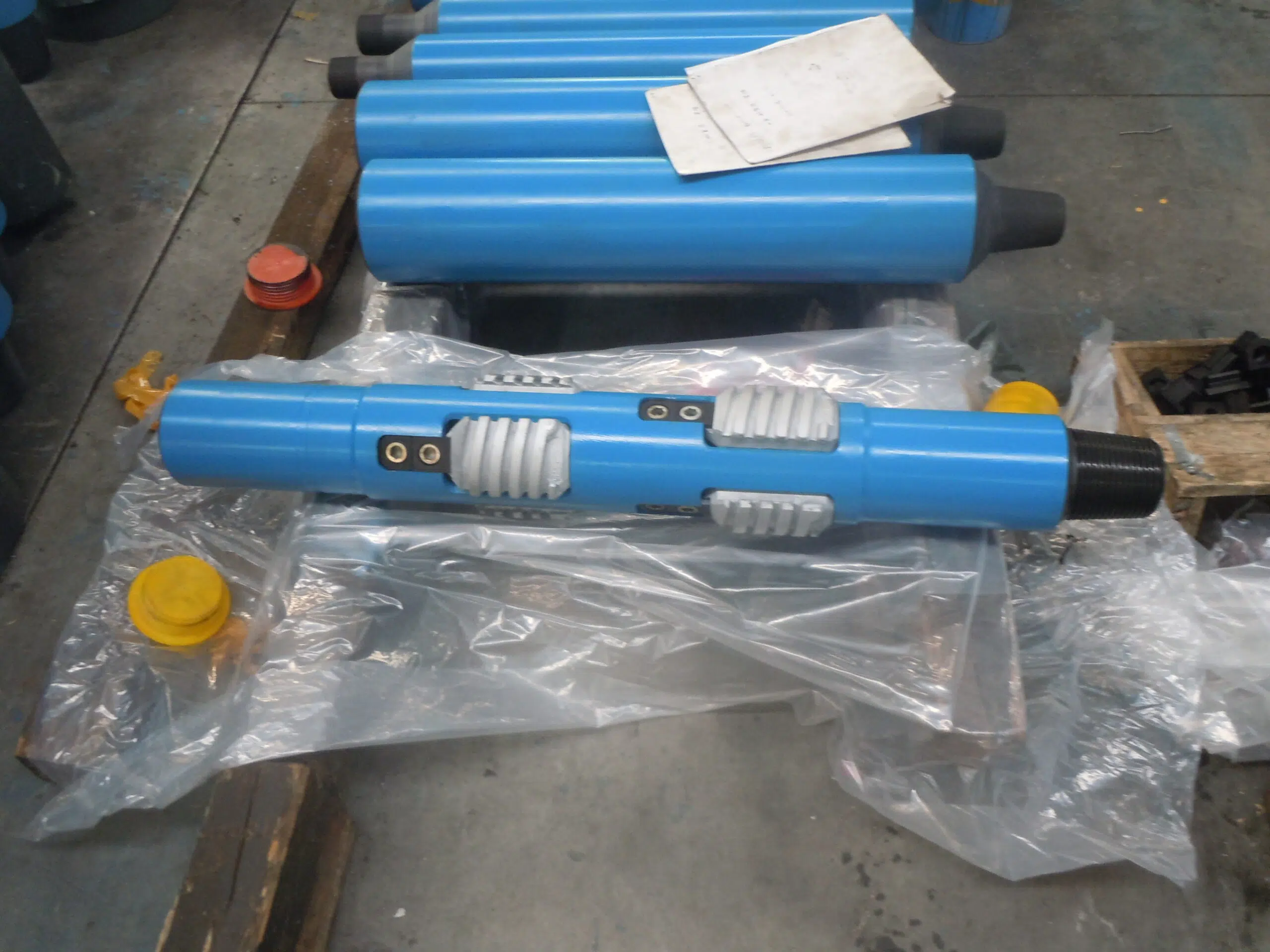
Every quotation identifies whether the selected casing scraper is made in Welong's own works or by an approved supplier Welong develops and supervises. The quotation also states the inspection scope and document package; third-party inspection can be arranged when requested.
Standard Reference — Connections & Quality Frameworks
The REG and NC connection types listed in the specification table above are rotary-shouldered connections governed by API Spec 7-2 (Threading and Gauging of Rotary Shouldered Connections) - a thread and gauging standard, not a claim about the casing scraper itself being certified to a specific API product specification. For buyers evaluating supplier quality systems more broadly, ISO 29001:2020 defines quality management system requirements specific to petroleum, petrochemical, and natural gas sector supply organizations, addressing sector-specific supply-chain risk in a way a generic quality-management-system audit does not fully capture.[6]
SGS / DNV
Third-Party Verification
Have a specific casing weight or connection to match?
WhatsApp a sizing question
International Procurement Review
MODULE 01
The casing scraper line is supported by the company's established supply-chain functions, including supplier development, purchasing supervision, and quality control.
VENDOR VERIFICATION RECORD
Request the relevant delivery and inspection documentation for the selected casing scraper.
Manufacturing review
Responsible Manufacturer Identified in the Quotation
Source: Welong company records; overseas-sourcing risk pattern per Forbes/industry procurement guidance[5].
Operational Standards & Logistics Flexibility
Quality Assurance & Inspection
The quotation identifies the in-process and final inspection scope; third-party inspection by SGS, DNV, or another qualified provider can be arranged when requested.
Transparency & Custom Routing
The honest version of this section will not give you a ROI number or a named case study for this specific product — there is no first-party casing scraper customer data to cite yet, and inventing one would be worse than not having it. What Welong can stand behind is supply chain flexibility: multiple transport modes (air, sea, rail) and multiple Incoterms (FOB, CIF, DDP, DDU) so you can build the logistics around your own constraints, not ours.
Certifications & Quality Control — SGS & DNV Third-Party Inspection, Standard Connections
If a shipment arrives at your location with zero documentation about what it actually is, there’s nothing for your QA team to compare against, and when a scraper underperforms in the field, that whole batch of parts will already have been run on site. that’s the very problem that adding in-process and final inspection solves for tool before it ever ships from the factory floor.
SGS Inspection
Available on request
DNV Inspection
Available on request
API 7-2 Connections
REG / NC thread series
In-Process + Final QC
Scope confirmed per order
Oilfield manufacturing
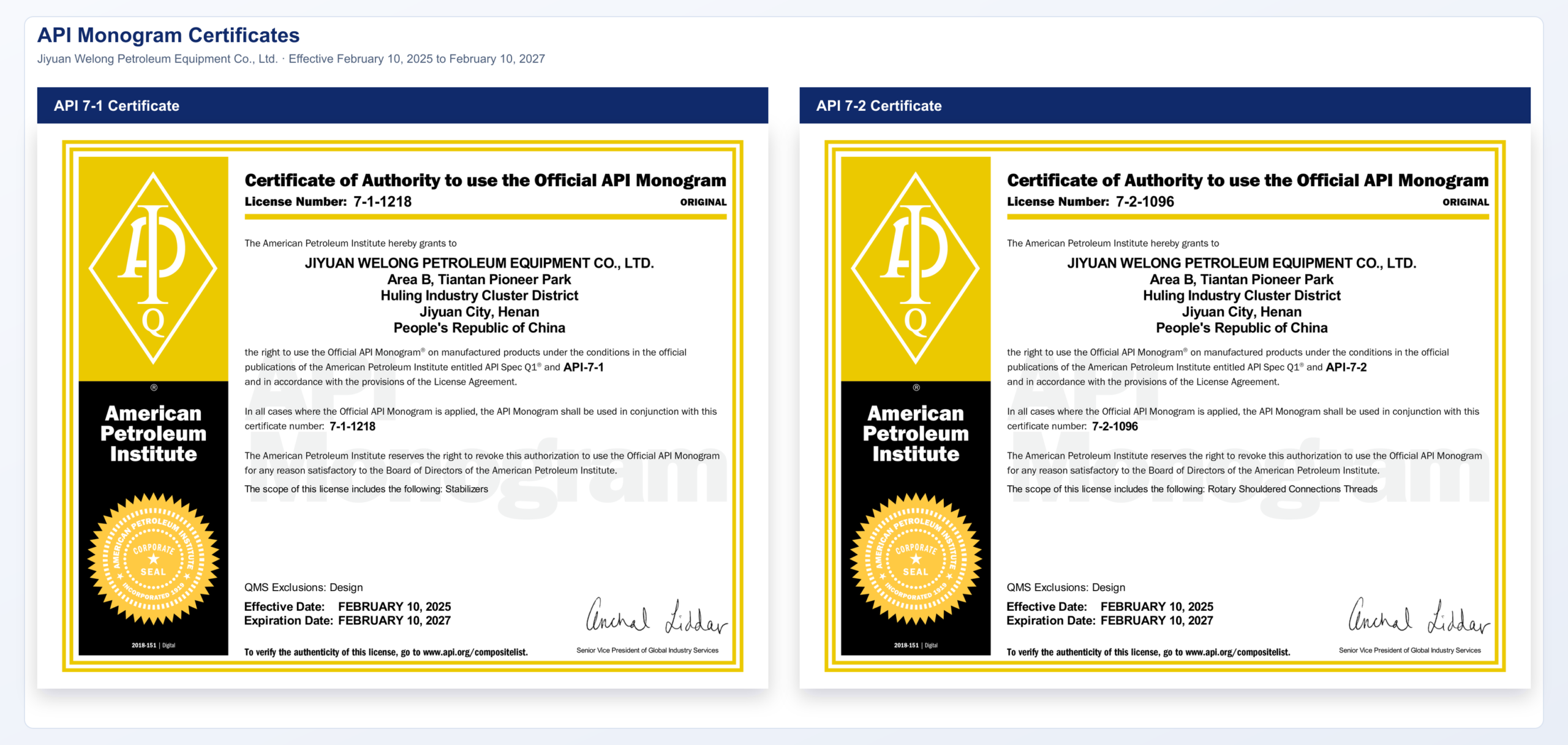
Order-specific inspection records are confirmed in the quotation; independent inspection can be arranged when requested.
If third-party verification is required, identify the required inspection scope during the RFQ stage so it can be evaluated with the order.

Procurement & Logistics
Ordering Guide — Price Reference Range, MOQ, Lead Time & Incoterms
Publicly listed casing scraper prices on B2B marketplaces such as Made-in-China.com span a wide range — from roughly $200 up to $6,000 per unit across more than two dozen active listings — with no single "reference" figure, since size, connection, cutter configuration, inspection scope, and order quantity each shift the number independently. None of these third-party listings represent a Welong quote; they're included here only as a market-context range, not a price we're offering.
Pricing Factors Framework
Key price influencers for a casing scraper order include the casing size and cutter selection (more of each translates to increased material costs and machining hours), connection type (a standard REG/NC connection versus a non-standard thread that may require custom tooling), inspection options (just internal Welong QC or added third party SGS/DNV inspection) and the size of the order quantity. Give us a call at Welong and let us provide a quotation for your specific casing weight and connection.
Welong ships with Incoterms like FOB, CIF, DDP, or DDU, via sea, air or rail to accommodate your shipping timeframe and your preferred customs handling arrangements. It’s worth being precise about what an Incoterm actually requires: per the U.S. International Trade Administration's Incoterms guidance, these terms define responsibility for shipping, insurance, customs, risk transfer and handling along each segment, but don’t dictate your per-unit price or a definite delivery date. Your final unit price and lead time will be determined at the RFQ stage, once your connection, casing type, inspection range, and desired inspection timing (final, in-process, or third party) are all confirmed prior to starting production.
Ready to get exact numbers for your order?
Submit your connection type, target O.D./I.D., and inspection requirements for a tailored quote.
Casing Scraper Engineering Tools
Size & Connection Finder
Rotating vs Non-Rotating Selector
RFQ Checklist Generator
Technical FAQ & Specifications
A casing scraper is a downhole device used to clean cement sheath, hardened drilling mud, mill scale, rust, and perforation burrs from the internal surface (ID) of a casing string before running completion tools.
A rotating casing scraper rotates along with the drill string to clean the casing. A non-rotating casing scraper features a stationary blade assembly that scrapes longitudinally while the inner mandrel rotates, reducing rotational wear on the casing wall.
Custom casing scraper specifications can be reviewed for BHA constraints, O.D./I.D. dimensions, and API 7-2 rotary-shouldered connections.
A casing scraper uses hardened blades to cut and scrape away stubborn, bonded debris like cement and burrs. A casing brush uses wire bristles to sweep away loose, fine debris. They are often run together in the same string for maximum cleaning.
For the selected casing scraper, confirm the applicable API 7-2 rotary-shouldered connection, responsible manufacturer and gauge evidence in the quotation.
Casing scrapers are highly versatile, but selection must account for well trajectory, dogleg severity, and internal diameter constraints to prevent getting stuck in highly deviated or restricted wells.
Welong offers flexible Incoterms including FOB, CIF, DDP, and DDU. This allows buyers to structure logistics and risk transfer according to their specific project requirements.
The quotation identifies the inspection scope and records for this casing-scraper order. Independent inspection can be arranged when requested.
Why We Supply This
This page focuses on the casing scraper range. Confirm the selected size, connection type, and inspection process against the applicable drawings and order documentation.
References & Data Sources
- World Oil: "Operational field procedure for identifying, installing and optimizing a gas lift well" (worldoil.com, June 2022)
- ResearchGate & DOE/NETL: Cement bond evaluation log case studies; U.S. Dept of Energy research on wellbore cement integrity (netl.doe.gov, project DE-FE0024296)
- Industry Standards: ISO 29001:2020 (Sector-specific QMS); API Spec 7-2 (Rotary Shouldered Connections)
- Logistics & Sourcing: ICC Incoterms 2020 rules; Forbes sourcing risk guidance; U.S. International Trade Administration data
- Market References: Landrill Oil Tools, Saigao Group, US20150027713A1 patent analysis, Made-in-China.com (market reference only)
Procurement & Capability
Casing Scraper Capability Review
China Welong reviews the buyer drawing, product specification and inspection scope before quotation.
This review is scoped to the Casing Scraper configurations set out in the specification table on this page — 8 documented rows covering Casing (in), Connection, Scraper OD (in) and Length (in).
24 hEngineer-reviewed quotation on business days
2001Founded in 2001
30+30+ engineers on staff
5 yrStamped serial traceability
Quotation Scope and Commercial Terms
Pricing is prepared against the selected product configuration, material route, inspection scope and shipment terms.
- Quotes are returned within 24 hours on business days, reviewed by an engineer.
- T/T or L/C by wire transfer.
- We ship EXW, FOB, CFR or CIF; other Incoterms on request.
- We work from 2D drawings and 3D CAD models (AutoCAD, Pro/ENGINEER, SolidWorks; .dwg and .igs).
Production Planning
Production timing is confirmed with the quotation after quantity, process route and finishing scope are reviewed.
- We hold agreed items in stock and ship against your release to shorten delivery. Feasibility is confirmed at drawing review.
- Manufacturing at Xi'an, Shaanxi and at Jiyuan, Henan.
- 0.01 mm machining precision.
- Material standards to ISO, BS, ASTM, ASME, DIN, JIS and GB.
- Orders ship in standard export wooden cases, or the packing you specify.
Order Review and Responsibility
The responsible manufacturer, inspection scope and document package are identified for the selected item.
- Every quotation states whether the item is made in our own works or by an approved supplier we developed and supervise.
- We develop, audit and supervise the mills and workshops that make your parts: material mills are re-audited every two years and approved by Welong before they run your order.
- Forgings from 0.2 to 50 tons.
Specification and Inspection Evidence
The specification table on this page is the technical basis for this review: its numeric rows define what we quote, manufacture and inspect against.
- Each piece carries a stamped serial number and stays traceable for five years to its chemical composition, mechanical properties and measurement report, with the test coupon retained.
- An EN 10204-3.1B material certificate with chemical composition and mechanical properties, a dimensional measurement report, and UT and MT reports ships with your order.
- Inspection is by coordinate measuring machine, ultrasonic, magnetic particle and X-ray.
Request a Product Review
Send the drawing, product specification and inspection requirements for a quotation review.
![Choke & Kill Hose: [Field Guide]](https://welongoiltools.com/wp-content/uploads/2026/07/choke-kill-hose-guide-featured-1-150x150.png)