Get in touch with Welong Company
Casing Head | API 6A Casing Head & Casing Spool Supply
Welong supplies API Spec 6A casing spools, casing head housings, and casing heads that are managed through the selected supply and production route from forged blanks and then pressure-tested prior to shipment.
Request a Quote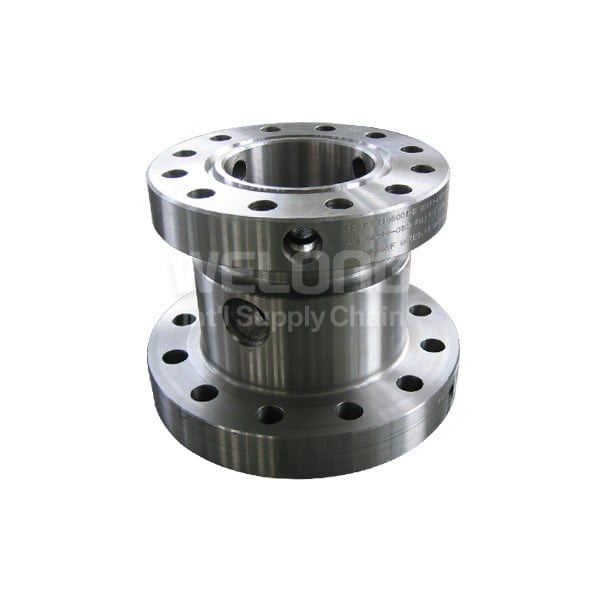
Full MTR Traceability
Material test reports issued with every shipment
Supply and Production Management
No outsourced castings in the pressure body
2,000–15,000 PSI
Working Pressure Range
Thread / Slip
Bowl Connection Types
AA–FF
Material Class
API Spec 6A
Governing Standard
PSL1–PSL3G
Spec Level
PU / LU
Temperature Class Range
Product Specification and Selection Review
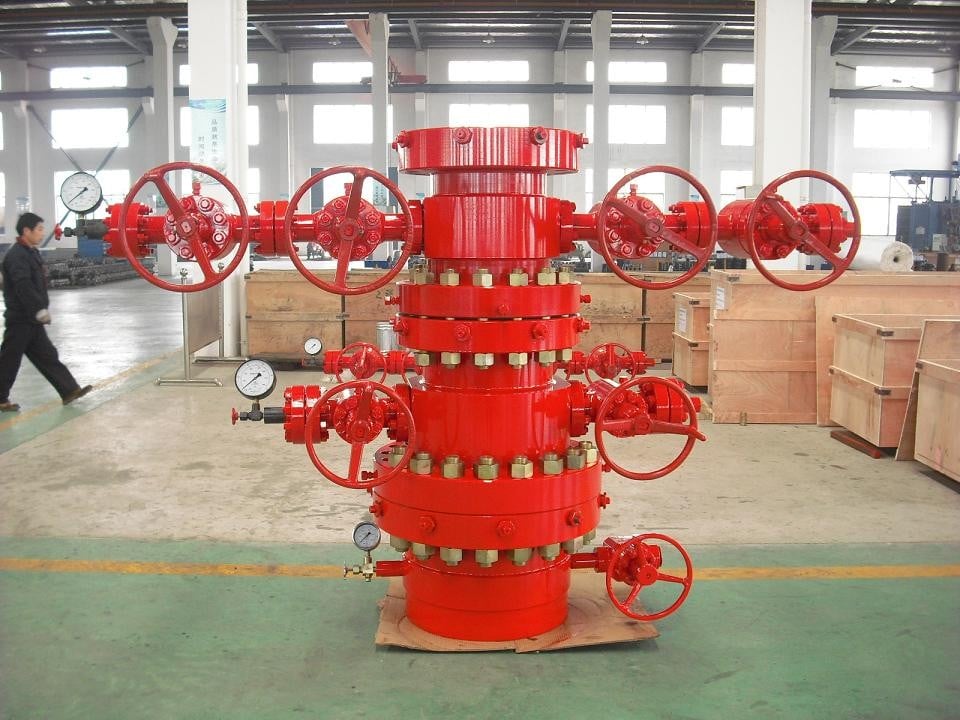
The casing head, which seats onto the surface casing string, is the base upon which the entire wellhead stack – blowout preventers, tubing heads, spools, and Christmas trees – is attached, bolted, threaded, or welded. If bowl type, material class, or connection is mis-specified on the casing head, that mistake cascades to all components of the wellhead stack that will sit on it.
That’s exactly the failure mode procurement professionals are trying to prevent. When procurement managers consult independent research on wellhead equipment, they find one consensus: delays or a failed seal on a wellhead component have the potential to exceed the cost of the component itself and lead to weeks of Non-Productive Time (NPT).
Consider the consequences:
-
Using a standard-bowl casing head in a medium-to-extreme casing load application results in inadequate bearing depth to support the hanger weight, creating a problem on the rig location, not in engineering or accounting.
-
A general-service material class selection for a sour (H₂S) environment results in an immediate re-order rather than an on-site fix.
-
Shipping a casing head without a full material traceability test report and a hydrostatic test certificate poses an instant risk as soon as a QA team requests the paperwork.
The quotation identifies the responsible manufacturer, selected production route, bowl type, material class, hydrostatic-test scope, and documentation available for the selected casing-head configuration.
Not sure which bowl type or material class your well program needs?
WhatsApp Engineering Question →Casing Head Types, Bowl Selection & Specification Table
There are two casing head installation types, and the choice is a matter of function, not aesthetics. A thread-type casing head has a 45° landing shoulder designed for precise placement of annular seals, test, and control ports and is the best choice for permanent single-well completion assemblies where accuracy is a priority. Slip-type casing heads bypass post-weld heat treatment, install quickly, and are preferred for exploratory projects and exploratory rig moves on short schedules.
| Parameter | Standard-Bowl Casing Head | Deep-Bowl Casing Head |
|---|---|---|
| Casing Weight Range | Light to intermediate | Intermediate to extreme |
| Bowl Profile | Straight bowl | Deeper bowl, taller hanger seat |
| Connection Type | Thread or slip-type | Thread or slip-type |
| Bottom Connection | Threaded, slip-lock, or welded | Threaded, slip-lock, or welded |
| Working Pressure | 2,000–10,000 PSI | 5,000–15,000 PSI |
| Material Class | AA–EE | DD–FF (project review) |
| Temperature Class | P, S, U | U, V, X, PSL 1–3, 2–4 |
| Outlets | Line pipe or studded | Studded, extended flanged |
| Working Medium | Oil, gas, mud | Oil, gas, mud (sour) |
| Casing Weight / Service Condition | Recommended Bowl Type | Recommended Connection | Material Class |
|---|---|---|---|
| Light to intermediate casing, standard service, single-well completion | Standard-Bowl | Thread-type | AA–BB |
| Intermediate casing, exploratory/multi-well program, fast rig moves | Standard-Bowl | Slip-type | BB–CC |
| Intermediate to extreme casing weight, high working pressure | Deep-Bowl | Thread-type | DD–EE |
| Extreme casing weight, sour (H₂S) service present | Deep-Bowl | Thread-type | EE–FF |
Follow industry-standard deep-bowl versus straight-bowl selection logic used in API 6A wellhead systems. Confirm final bowl type and material class based on your specific casing program and H₂S exposure.
For instance, say a multi-well exploratory pad running intermediate casing is working in a sour field: the rig moves between wellheads under tight constraints, and every string on the pad will be exposed to H₂S. In this situation, the ideal setup is a slip-type, deep-bowl casing head in DD-EE material class, since the slip-style connection cuts down on rig move time, and the deeper bowl ensures that the hanger has the bearing surface required by the casing string’s high-load sour-service application. A single-well permanent completion without H₂S exposure running standard casing loads does not require the deep-bowl: a thread-type, standard-bowl casing head in AA-BB range will do the trick, and it is needless and costly to order the deep-bowl in this application.
Field Note — The Bowl Isn’t a Universal Fit
When the casing hangers are sized to fit a straight, standard-depth bowl, they will not fit properly in a deep-bowl casing head, and vice versa: the hanger and its associated bowl form a closely-matched pair, and are not to be confused as equivalent to one from another bowl class.
Confirming the bowl profile prior to purchasing hangers as standalone items will prevent such costly misunderstandings that would not otherwise be apparent until casing is running.
The quotation identifies the responsible manufacturer, selected forging or other production route, applicable API 6A requirements, inspection scope, and available records for the selected item.
Outlets can be provided as line-pipe, studded, or flanged configurations (casing head flange specification is verified to your outlet requirement before machining), and top and bottom connections are made to correspond to the adjoining wellhead, whether it be a BOP stack while running drilling, or a casing spool following completion operation.
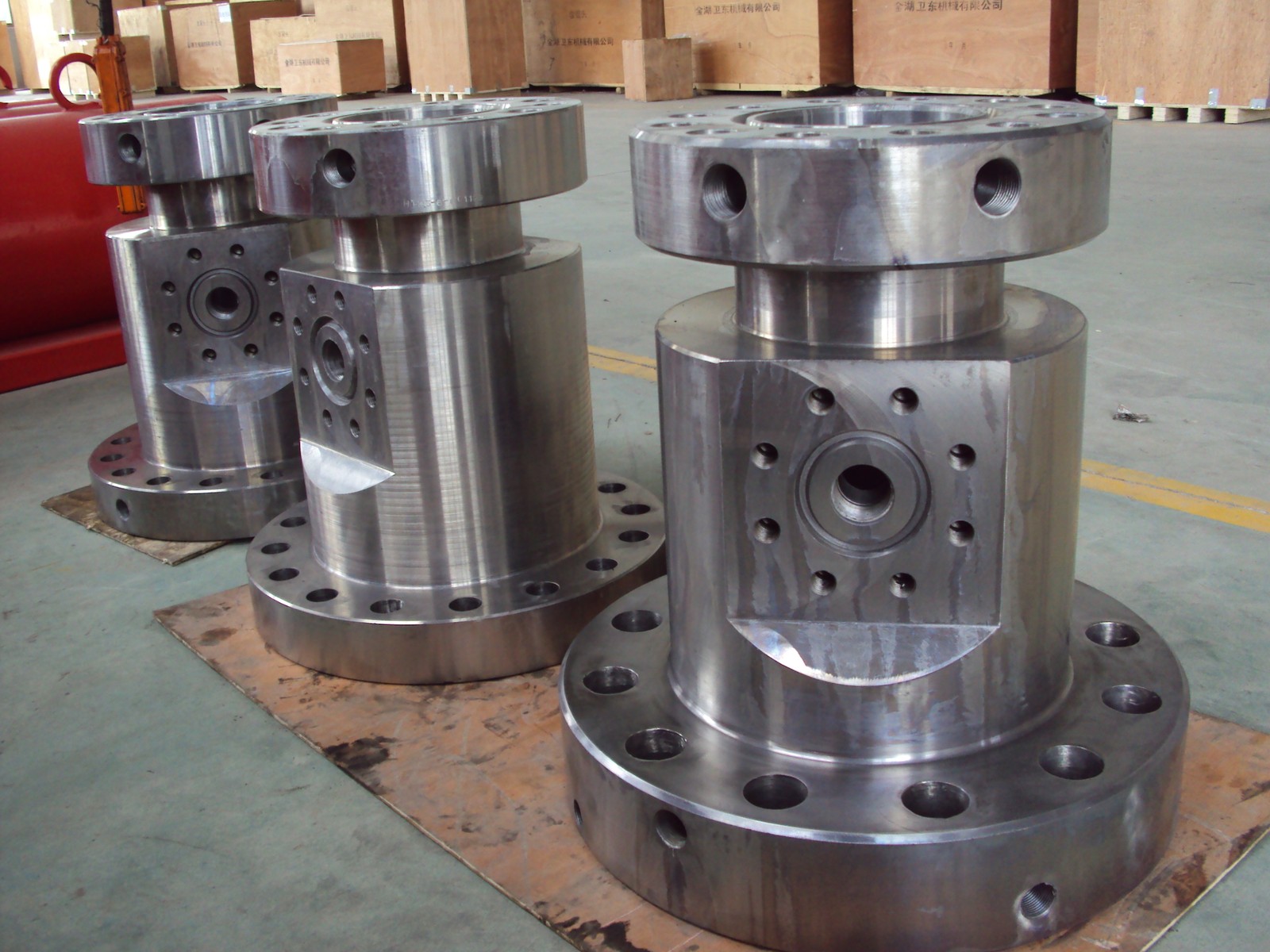
Casing Head vs Casing Spool vs Casing Hanger — Where Each Sits in the Wellhead Stack
When the buyer refers to the “wellhead package,” ordering three separate components under a single line item is how we most frequently see a mismatch occur between a bowl and its associated hanger-each assumes these are all compatible regardless of the intended function. Buyers confuse the three as the same components by referring to them interchangeably in casual discussion, and these are, by definition, not.
This confusion is quite widespread, in fact; one of the most selected questions asked of Welong’s engineers is: “What is the difference between casing head and casing spool,” or, “What is the difference between casing head and casing hanger?” In either case, the underlying question relates to an element’s placement in the overall stack and what sort of load its associated bowl needs to accommodate.
Casing Head
Position in Stack
Bottom of the wellhead assembly
Function
Adapts surface casing to the rest of the wellhead; supports BOP during drilling
Landed On
Surface casing string (welded or threaded)
Casing Spool
Position in Stack
Above the casing head
Function
Suspends the next casing string via a casing hanger; adds an additional pressure barrier
Landed On
Top flange of the casing head
Casing Hanger
Position in Stack
Inside the casing spool (or casing head) bowl
Function
Suspends the casing string itself and seals the annulus between strings
Landed On
Bowl profile of the spool or head
Order documentation and inspection scope are agreed for the selected item.
Ordering Tip
When purchasing casing and casing heads together as a wellhead assembly, the casing head, casing spool, and casing hanger should all be identified as separate line items on the purchase order with individual callouts for their bowl-profile and material-class-the buyer must avoid simply ordering “wellhead” as a generic part and accepting a standard, assumed-to-fit “package.”
Welong supplies and manages production for the selected casing-head configuration. The quotation identifies the responsible manufacturer, the selected supply route, inspection scope, and records for the item.
Ordering for a multi-string program?
Check Compatibility →API 6A Compliance — What a Certified Casing Head Actually Guarantees
The gap between purchasing a casing head that has “API 6A compliant” listed on its datasheet and having a specific hydrostatic test certificate per unit is something that may be addressed as an administrative matter in a materials audit once a unit arrives on site.
“Certified” is used quite liberally by wellhead-equipment marketers. What actually ensures the buyer is the trail behind the “certification,” not the word. Procurement advice from independent wellhead sourcing experts is quite specific as to what needs to be requested from wellhead-equipment manufacturers: material test reports (MTRs) for the raw stock; non-destructive testing records (ultrasonic or magnetic-particle inspection); and pressure-test certificates issued with every shipment – complete with full traceability from raw material to final assembly.
A person could assume that trusting a wellhead manufacturer would begin with the location where the equipment is manufactured, but the procurement research is pointing in another direction; as China is now the leading wellhead equipment manufacturing country, buyer evaluations have been increasingly shifting from country of origin toward a verifiable track record of performance. The MTRs, NDT results, and the delivery record that suppliers can produce on demand are now more important than a mark on a datasheet. The honest version of this trade-off is that country of origin was never truly a reliable proxy for quality; it’s a compromise buyers used when records were hard to produce, and it stops mattering once a supplier can hand over the paperwork.
| Documentation | Compliant Supplier | Non-Compliant / Corner-Cutting Supplier |
|---|---|---|
| Material Test Report (MTR) | Issued per shipment, traceable to heat number | “Available on request” — not issued by default |
| NDT Records | Ultrasonic + magnetic-particle inspection documented | Visual inspection only, undocumented |
| Hydrostatic Test Certificate | Unit-level scope and API 6A test-pressure reference confirmed in the quotation | Batch-tested claim, no per-unit certificate |
| Material Class Marking | Stamped on body per API 6A marking requirements | Class stated in datasheet only, not stamped |
Welong Wellhead Equipment Supply and Production Management
Welong supplies and manages production for casing-head configurations. The quotation identifies the responsible manufacturer, selected supply route, inspection scope, and records for the selected item. Third-party inspection may be arranged for selected orders, with provider, scope, and records confirmed in the quotation.
Welong supports buyers throughout the European Union, the United States, the Middle East, Russia, and South America with its line of wellhead equipment, which is available alongside its portfolio of downhole drilling tools, power tongs, and fishing & milling tools as a broader supplier of oilfield tools, rather than a company focused on a single product.
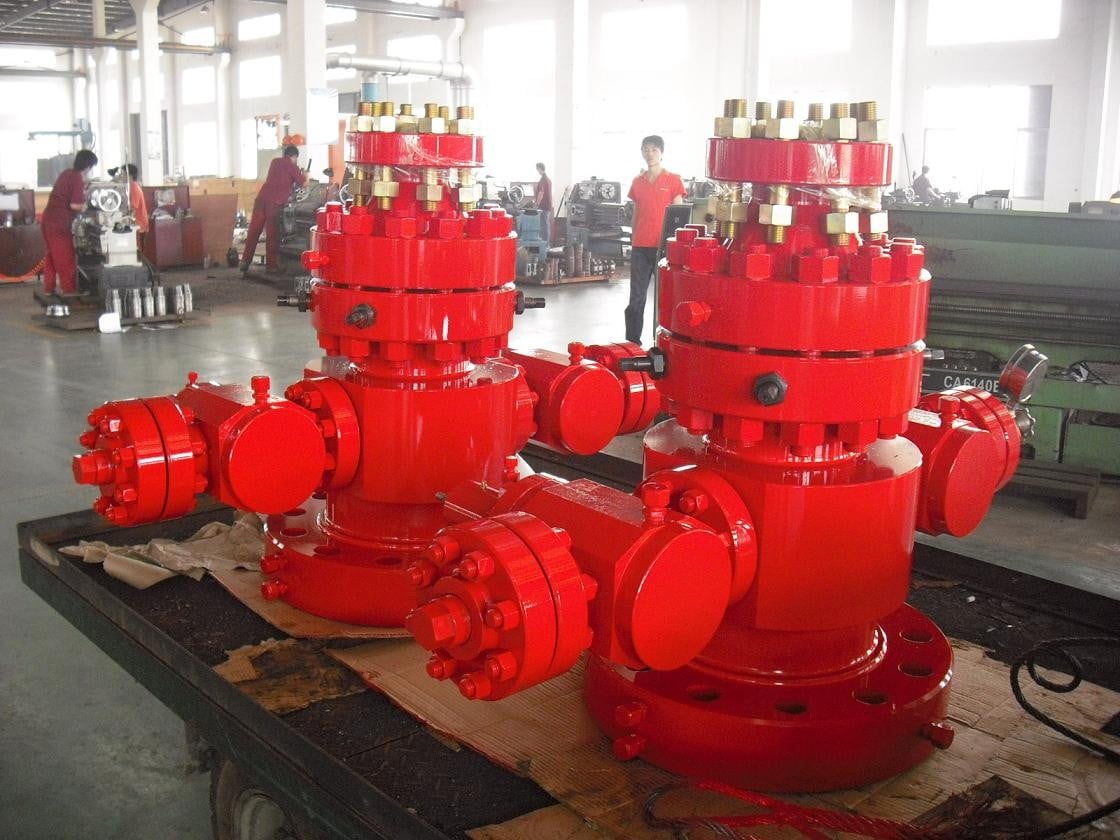
“A casing head that appears correct on a spec sheet but has not been pressure-tested at its rated working pressure cannot be sent out the door – the quotation confirms the hydrostatic-test and inspection scope for the selected item.”
Certifications & Quality Control
The casing or tubing head quotation should identify the applicable product standard, material requirements, pressure class, inspection scope and documents for the selected configuration.
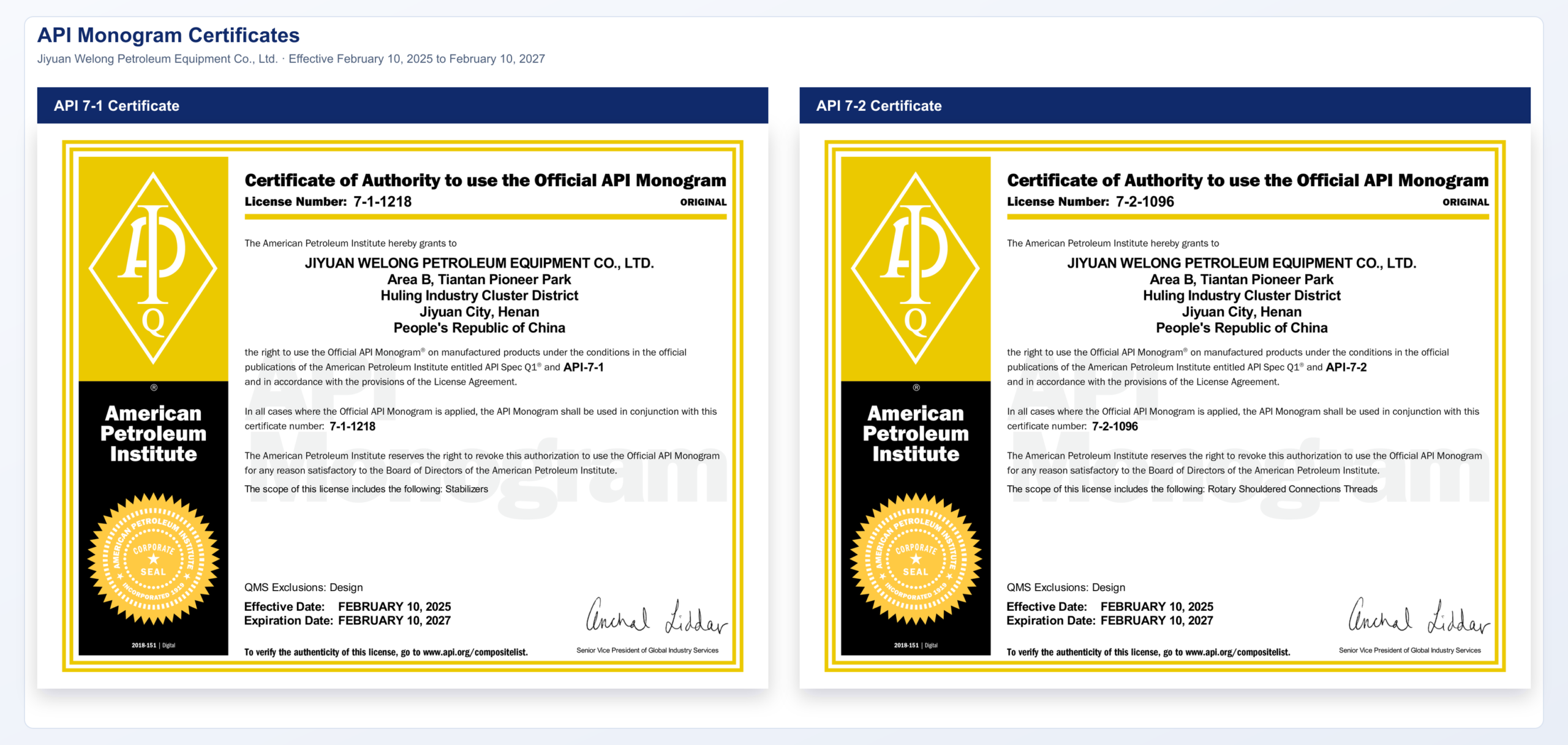
Standard
order quality documentation
Quality management system
Compliance
API Spec 6A
Design, material & test compliance
Reference
ISO 10423
Supplements API 6A for wellhead & tree equipment purchasing
Quality Control
Full MTR Traceability
Heat-number traceable, issued per shipment
Need the full certification package before you commit?
Request product informationEngineering Configuration Tools
Casing Head FAQ
What is a casing head?
Sitting directly on top of the surface casing string, a casing head acts as the bottom of the wellhead stack, providing the foundation for the blowout preventer during the drilling operation and later supporting the balance of the stack after the completion operation (casing spool, tubing head, Christmas tree, etc.)
What is the difference between casing head and casing spool?
Position in the stack is what separates the two: the casing head lands directly on the surface casing, while the casing spool stacks on top of it and supports a second casing string through a casing hanger, adding a pressure barrier for each subsequent string run in the well.
What is the difference between casing head and casing hanger?
Casing head refers to the outer body that lands on the casing at the surface. Inside a casing spool or the casing head bowl, a casing hanger is inserted to physically support the casing string weight and to create a seal around the innermost diameter of the pipe.
What is casinghead gas?
The casinghead gas that is discussed is not part of the wellhead system; it refers to naturally occurring gas found in solution with crude oil that has been produced at the wellhead. Although it has a similar name root to the casing head, this is not related terminology and falls under the purview of production-engineering terms.
How is a casing head installed?
Installed casing heads of the thread type feature a 45° landing shoulder to accurately locate sealing surfaces and ports, while slip-type casing heads do not require the post-weld heat treatment associated with the install process. As a result, slip-type casing heads are the industry standard choice for exploratory programs requiring rapid rig movement.
Which pressure rating should I choose for my casing head?
Always match the casing head’s pressure class to the projected maximum wellhead pressure expected during your well program, not simply to the current casing weight. The various API 6A pressure classes range from 2000/3000/5000/10000/15000 psi. Any programs expecting exposure to hydrogen sulfide (H₂S/CO₂) will also require material classes in the DD-FF range regardless of the pressure class.
How long is the Specified lead time for a Welong casing head order?
Lead time will be dependent on bowl type, class of material, and outlet arrangement – general service standard-bowl units in service have a faster turn-around time compared to deep-bowl sour-service configurations, which have an additional requirement for NDT and heat tracing on the material certification. Obtain a quote with your specific spec to confirm firm lead time.
Procurement & Capability
Casing Head & Tubing Head Capability Review
China Welong reviews the buyer drawing, product specification and inspection scope before quotation.
This review is scoped to the Casing Head & Tubing Head configurations set out in the specification table on this page — 6 documented rows covering Parameter, Current source wording, Thread-type pressure range and Slip-type pressure range.
24 hEngineer-reviewed quotation on business days
2001Founded in 2001
30+30+ engineers on staff
5 yrStamped serial traceability
Quotation Scope and Commercial Terms
Pricing is prepared against the selected product configuration, material route, inspection scope and shipment terms.
- Quotes are returned within 24 hours on business days, reviewed by an engineer.
- T/T or L/C by wire transfer.
- We ship EXW, FOB, CFR or CIF; other Incoterms on request.
- We work from 2D drawings and 3D CAD models (AutoCAD, Pro/ENGINEER, SolidWorks; .dwg and .igs).
Production Planning
Production timing is confirmed with the quotation after quantity, process route and finishing scope are reviewed.
- We hold agreed items in stock and ship against your release to shorten delivery. Feasibility is confirmed at drawing review.
- Manufacturing at Xi'an, Shaanxi and at Jiyuan, Henan.
- 0.01 mm machining precision.
- Material standards to ISO, BS, ASTM, ASME, DIN, JIS and GB.
- Orders ship in standard export wooden cases, or the packing you specify.
Order Review and Responsibility
The responsible manufacturer, inspection scope and document package are identified for the selected item.
- The quotation records whether the item is made in our own works or by an approved supplier and confirms the responsible manufacturer and inspection scope.
- Production-management review is re-audited every two years; the quotation confirms the responsible manufacturer and inspection scope for the selected item.
- Forgings from 0.2 to 50 tons.
Current Product Specification Evidence
These product-scoped numeric rows reproduce current-page wording. The quotation confirms the responsible manufacturer and inspection scope for the selected item.
- Each piece carries a stamped serial number and stays traceable for five years to its chemical composition, mechanical properties and measurement report, with the test coupon retained.
- An EN 10204-3.1B material certificate with chemical composition and mechanical properties, a dimensional measurement report, and UT and MT reports ships with your order.
- Inspection is by coordinate measuring machine, ultrasonic, magnetic particle and X-ray.
| Parameter | Current source wording |
|---|---|
| Thread-type pressure range | 2,000–10,000 PSI |
| Slip-type pressure range | 5,000–15,000 PSI |
| Declared product PSL range | PSL1–PSL3G |
| Slip-type temperature and PSL class | U, V, X, PSL 1–3, 2–4 |
| Pressure-class sequence | 2000/3000/5000/10000/15000 psi |
| Thread-type landing shoulder | 45° landing shoulder |
Request a Product Review
Send the drawing, product specification and inspection requirements for a quotation review.
![Choke & Kill Hose: [Field Guide]](https://welongoiltools.com/wp-content/uploads/2026/07/choke-kill-hose-guide-featured-1-150x150.png)