Get in touch with Welong Company
Power Tongs, Hydraulic Casing, Tubing & Drill Pipe Power Tongs
China Welong supplies the listed ZQ, XQ and TQ series with published torque and size tables; applicable API Spec 7K requirements are confirmed for the selected model in the quotation. The responsible manufacturer and any third-party inspection scope are confirmed in the quotation.
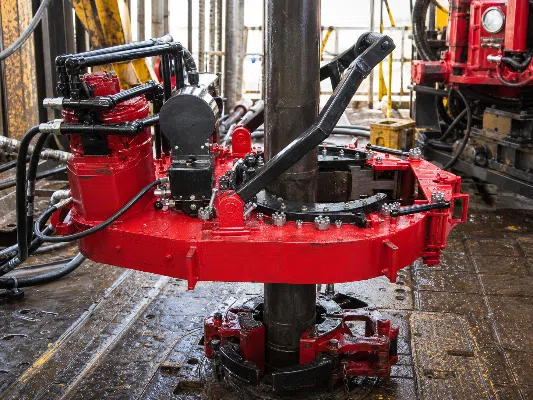
A power tong is a hydraulic wrench used on drilling and workover rigs to make up (tighten) and break out (loosen) threaded connections on casing, tubing and drill pipe. It pairs a rotating master tong that turns the joint with a backup tong that grips the pipe below to stop the string from spinning, applying controlled torque that manual tongs and spinning chain can’t repeat safely.
Request a Quote →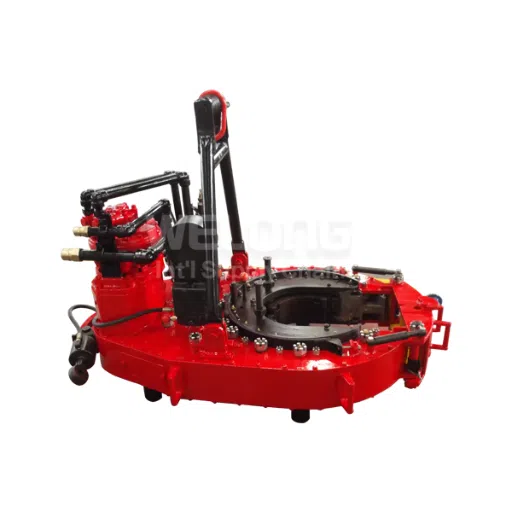
- 65–508 mm
- Pipe range (2⅜″–20″)
- 125 kN·m
- Max torque (~92,200 ft-lbs)
- 3 tong types
- Drill pipe / tubing / casing
- API Spec 7K
- Design & build basis
- SGS · DNV
- Third-party inspection
- 2001
- Founded
Rig-Floor Torque Without the Guesswork
01 / THE HIDDEN FAILURE
On the rig floor, the failure you can’t see is the connection torqued 20% low. Under-torqued casing leaks and over-torqued tubing galls the thread, and both surface as non-productive time weeks later, not on the day of the trip. That’s the real problem a power tong exists to remove.
02 / REPEATABLE CONTROL
Manual make-up is inconsistent for a simple reason: torque depends on the crew, and a tong line or spinning chain records nothing. A hydraulic power tong fixes that root cause, the master tong rotates the joint while the backup tong clamps the pipe below to stop the string turning, so a calibrated system applies the same value on every stand of a 300-joint casing run.
How the make-up torque target is set
Optimum make-up torque isn’t a single number, it’s set per connection by size, weight, steel grade, thread type and thread-compound friction under API RP 5C1. A 7″ N-80 BTC joint targets ~5,190 ft-lbs; a 13⅜″ joint ~10,400 ft-lbs, with maximum values 50–80% above the minimum.
Because those numbers move with every string, torque control matters more than raw capacity. For ZQ and TQ tongs, confirm load-cell torque measurement in the linkage for the selected design, the method in US Patent 6,263,763 and US Patent 4,700,787 which is what turns a hydraulic wrench into a repeatable process for oil and gas operations.
CRITICAL TRADE-OFF
The mistake buyers make: a bigger, higher-torque tong isn’t always the better choice. Unlike a raw-capacity comparison, a tong whose dies and jaws are matched to the pipe diameter, and calibrated annually, delivers a cleaner make-up than an oversized unit running worn or mismatched dies. This is the trade-off engineers get wrong most often.
Welong Power Tongs — ZQ, XQ & TQ Series by Tubular & Torque
A mixed fleet risks a size gap, a tong that can’t grip the diameter you actually run. Welong closes that gap with three power tong lines plus a shop bucking unit, each matched to a tubular class, with the responsible manufacturer and machining tolerances confirmed in the quotation. Use the table below as the selector: find your pipe, read across to the series, torque and application.
| Tubular class | Welong series | Size range | Torque (low gear) | Primary application |
|---|---|---|---|---|
| Tubing | XQ (hydraulic backup, cam clamp) | Φ60–140 mm (2⅜″–5½″) | 3,300–20,000 N·m (2,434–14,751 ft-lbs) | Workover, well servicing, snubbing |
| Drill pipe | ZQ (spinning + torque, open head) | 65–203 mm (2⅜″–8″) | 25–125 kN·m (18,440–~92,200 ft-lbs) | Drilling make-up / break-out |
| Casing | TQ | 101.6–508 mm (4″–20″) | up to 90 kN·m (~66,000 ft-lbs) | Casing running, high-torque connections |
| Coupling / shop | WL bucking unit | 60–762 mm (2⅜″–30″) | up to 110 kN·m (~81,100 ft-lbs) | Threading shop make/break |
Not sure which series fits your string?
Get torque-to-tubular sizing help →
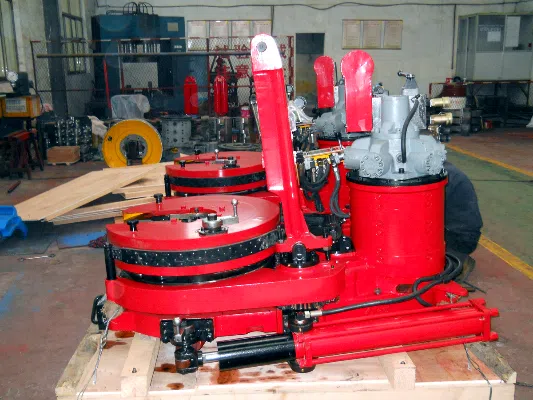
ZQ SERIES
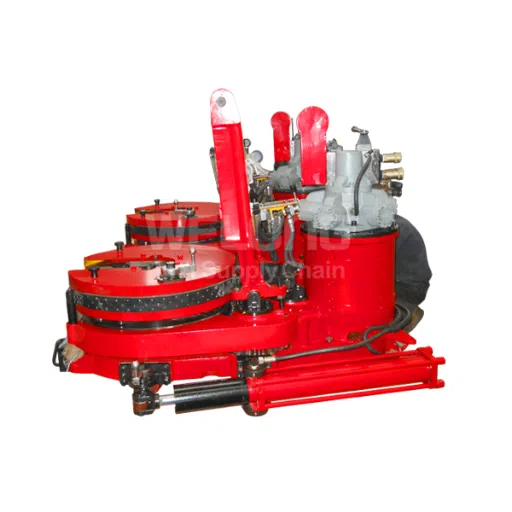
Drill Pipe Power Tong
A compact open-head design combining a spinning tong and torque tong in one unit, replacing cathead manual tong and spinning rope. Confirm the applicable API Spec 7K requirements in the quotation.
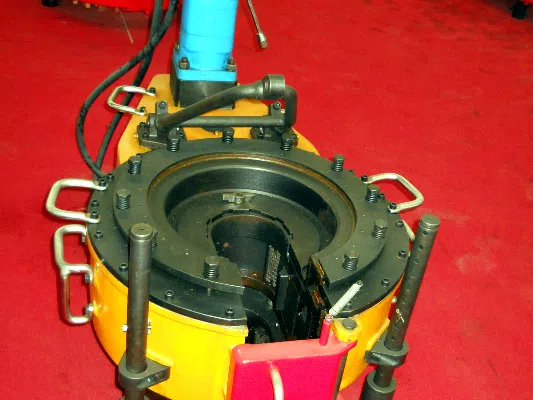
XQ SERIES
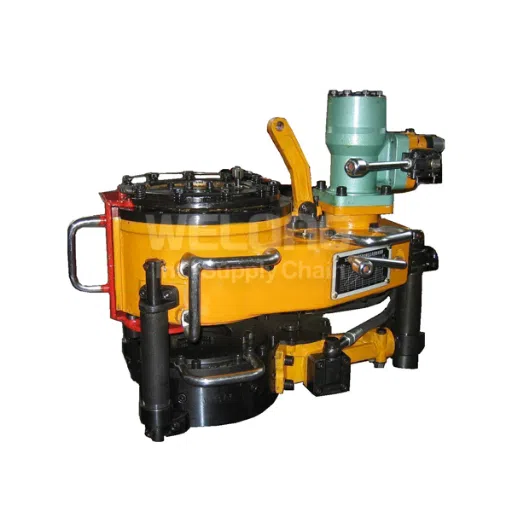
Tubing Power Tong
Hydraulic master tong with an integral hydraulic backup tong and inner curved-cam gripping for fast, safe tubing make-up and break-out.
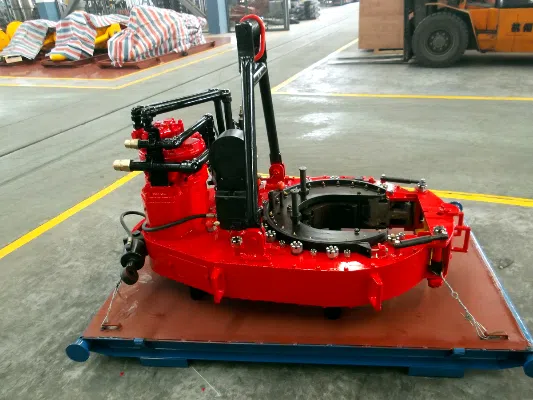
TQ SERIES
Casing Power Tong
High-torque casing tongs sized from 4″ to 20″ for quick, controlled make-up and break-out of casing strings.
| Model | Size range | Max torque | Max torque (ft-lbs) | Weight |
|---|---|---|---|---|
| ZQ127-25 | 65–127 mm | 25 kN·m | 18,440 | 620 kg |
| ZQ162-50 | 85–162 mm | 50 kN·m | 36,880 | 1,500 kg |
| ZQ203-100 | 127–203 mm | 100 kN·m | 73,750 | 2,400 kg |
| ZQ203-125 | 127–203 mm | 125 kN·m | ~92,200 | 2,400 kg |
| Model | Size range | Max torque (low gear) | Working flow | Best fit |
|---|---|---|---|---|
| TQ178-16 | 101.6–178 mm | 14.5–17.5 kN·m | 110–160 L/min | Small casing / liner |
| TQ340-35 | 114.3–340 mm | 32–40 kN·m | 110–160 L/min | Common 9⅝″–13⅜″ casing |
| TQ508-70Y | 244.5–508 mm | up to ~70 kN·m | 110–170 L/min | Large surface / conductor casing |
Power Tong vs Manual Tong — Torque, Speed & Safety
Repeatability, not muscle, is the real case for a power tong. Manual tongs rely on tong lines and spinning chain, where torque is inconsistent because it depends on the crew, and mis-handling is a documented hand-injury risk on the rig floor. That’s the root cause a recorded, hydraulic system removes.
| Factor | Manual tong + spinning chain | Hydraulic power tong |
|---|---|---|
| Torque control | Operator-dependent, not recorded | Load-cell measured, repeatable |
| Torque record | None | Torque-turn logged per joint |
| Make-up speed | Slower, multi-step | Spin + final torque in one cycle |
| Hand exposure | Tong line / spinning chain near hands | Operator outside swing radius |
| Torque range | Limited by crew | 2,434–92,200 ft-lbs across series |
The Make-Break Torque Ladder
Real Welong figures for the drilling and casing application, low to high, so you can place your connection on the ladder before selecting a model.
- 2,434 ft-lbs XQ89 tubing (workover, well servicing)
- ~12,900 ft-lbs TQ178 casing (small casing / liner)
- 18,440 ft-lbs ZQ127 drill pipe (slim-hole drilling)
- 36,880 ft-lbs ZQ162 drill pipe (standard drill pipe)
- ~66,000 ft-lbs TQ508 casing (large / conductor casing)
- ~92,200 ft-lbs ZQ203-125 drill pipe (heavy drill string)
- ~81,100 ft-lbs WL bucking unit (shop threading, peak up to 110kN·m)
Honest safety note
Here’s the honest version: a power tong reduces the tong-line and spinning-chain hazards of manual make-up, but it isn’t hazard-free. Rotating and gripping machinery still creates caught-in and pinch risks, and OSHA power-tool guarding rules and proper lockout still apply. We won’t claim a power tong is safe by itself; the trade-off is control, not immunity from procedure.
NPT > unit price
In oilfield procurement, a leaking or galled connection from inconsistent torque can add cost beyond the tong itself. Repeatable, recorded torque gives buyers a concrete point to review in the selected configuration.
Framework based on published oil & gas procurement guidance (TCO / NPT). No client-specific ROI figure implied.
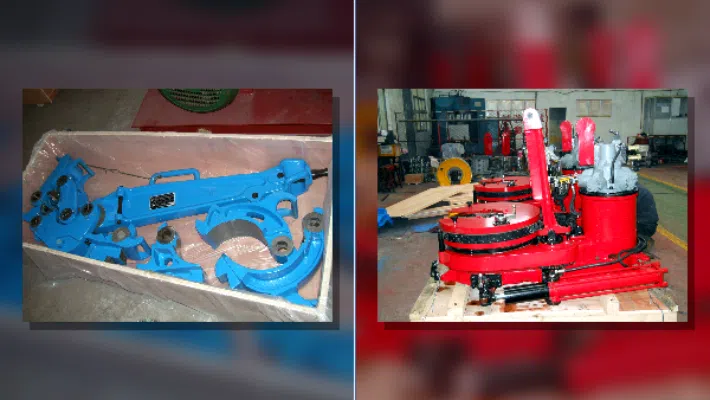
Engineered to API Spec 7K — Manufacturing, Inspection & Verification
For a new supplier, the trust gap is real: buyers do not want to discover a paperwork problem after delivery. Confirm the selected ZQ or TQ power tong’s design basis, inspection scope, and order documentation before purchase.
API SPEC 7K
Design & build basis for ZQ / TQ tongs
SGS · DNV
Third-party inspection available
3-STAGE QC
In-process, final & optional third-party
ORDER REVIEW
OEM supply to international oilfield firms
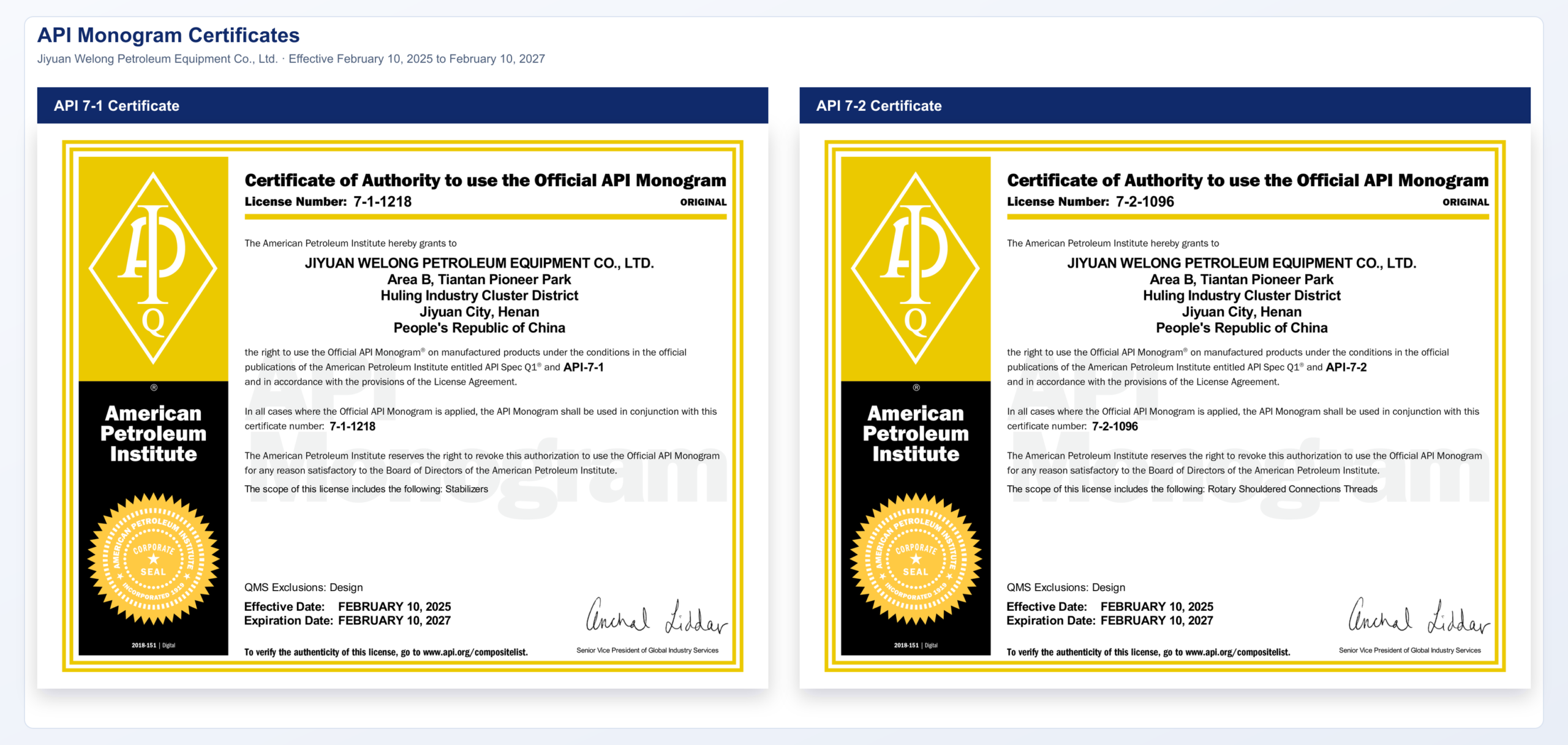
For the selected power tong, confirm the documented design basis, inspection scope, and order records before purchase. The linked quality-management reference is general background, not evidence of a product or supplier credential.
Verification should be based on the selected product’s documentation, inspection scope, and agreed acceptance records rather than on a general supplier-history claim.
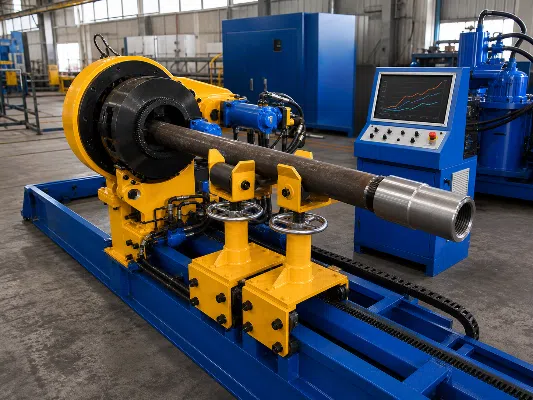
SYSTEM OVERVIEW
Bucking Units — The Shop-Floor Make/Break Companion
A bucking unit solves an off-rig problem: making up and breaking out couplings and downhole tools in a threading or repair shop, where a manual wrench can’t deliver repeatable torque on a 30″ connection. Where a power tong works vertically on the rig, the Welong WL bucking unit does the same job horizontally, with computer torque-turn monitoring and a never-stick grip.
For the selected bucking unit, the quotation identifies the responsible manufacturer, torque recorder, power unit and acceptance evidence; no patent ownership is implied by the industry references below. Unlike a generic frame, the make/break-plus-gripping approach follows the field the industry has patented for decades, see US Patent 4,869,137 (jaws for power tongs and bucking units) and US Patent 10,711,541 (portable bucking frame).
| Model | Application range | Low-gear torque | Note |
|---|---|---|---|
| WL178-20 | 60–178 mm (2⅜″–7″) | 20 kN·m | Tubing / small casing |
| WL340-55 | 60–340 mm (2⅜″–13⅜″) | 55 kN·m | Mid-range casing couplings |
| WL760-134W | 340–762 mm (13⅜″–30″) | 110 kN·m | Large-OD, auto variable speed |
Procurement Guide — Sizing, Lead Time & Global Delivery
Oilfield buyers should review uptime requirements, safety records, and total cost of ownership alongside unit price. Confirm the selected tong’s configuration, delivery information, and inspection scope before purchase.
What actually drives your quote
- Tong type and torque band tubing (XQ), drill pipe (ZQ) or casing (TQ), matched to your string
- Size range and die/jaw set the diameters you run, plus spare power tong dies and parts
- Power and control hydraulic power unit, torque-turn recording, backup tong
- Inspection scope standard QC versus added SGS/DNV third-party inspection
- Trade term and destination FOB, CIF, DDP or DDU; sea, air or rail
Lead time & landed-cost reality
Tier-1 oilfield equipment lead times can run long, and a country-of-origin factor applies: for a tong sourced from China, the quotation should confirm the responsible manufacturer and country-of-origin marking required for the destination (19 CFR) and quoted on transparent Incoterms so your landed cost isn’t a surprise. Unlike a form that hides the number, we quote lead time and terms up front.
We won’t publish a single sticker price because a power tong is configured to your string, dies and inspection scope, the honest version is a specific quotation, not a placeholder. Send your pipe sizes, torque range and destination, and you get a detailed price built around your application. Buyers searching for hydraulic power tongs for sale get a real number, not a range.
Engineering Reference Tools
KNOWLEDGE BASE
FAQ — Answers for Buyers
It makes up and breaks out threaded connections on casing, tubing and drill pipe with controlled, repeatable torque.
Welong casing (TQ) tongs cover 101.6–508 mm (4″–20″), tubing (XQ) covers Φ60–140 mm, and drill pipe (ZQ) covers 65–203 mm. Match the string diameter to the series in the selector table above and confirm the torque band against your connection.
For the selected power tong, request the documented design basis, inspection scope, and order records before purchase.
No, it isn’t always better, and this is the mistake buyers make most often when they shop on the maximum torque number alone. The die and jaw match to your pipe diameter, plus annual calibration under API RP 5C1, determine make-up quality far more than the peak torque rating, so an oversized tong running worn or mismatched dies makes a measurably worse connection on a 9⅝″ casing string than a correctly sized TQ340 does. Match the tong to the tubular first, then confirm the torque band.
Send your pipe sizes, required torque range, control options and destination. Because the tong is configured to your string, dies and inspection scope, we quote a specific price and lead time on your Incoterm (FOB/CIF/DDP/DDU).
A power tong works vertically on the rig floor; a bucking unit does make-up and break-out horizontally in a threading or repair shop. Welong supplies both and manages production against the selected torque-turn requirements.
Procurement & Capability
Power Tong Capability Review
China Welong reviews the buyer drawing, product specification and inspection scope before quotation.
This review is scoped to the Power Tong configurations set out in the specification table on this page — 6 documented rows covering Parameter, Current source wording, XQ tubing size and torque and ZQ drill-pipe size and torque.
24 hEngineer-reviewed quotation on business days
2001Founded in 2001
30+30+ engineers on staff
5 yrStamped serial traceability
Quotation Scope and Commercial Terms
Pricing is prepared against the selected product configuration, material route, inspection scope and shipment terms.
- Quotes are returned within 24 hours on business days, reviewed by an engineer.
- T/T or L/C by wire transfer.
- We ship EXW, FOB, CFR or CIF; other Incoterms on request.
- We work from 2D drawings and 3D CAD models (AutoCAD, Pro/ENGINEER, SolidWorks; .dwg and .igs).
Production Planning
Production timing is confirmed with the quotation after quantity, process route and finishing scope are reviewed.
- We hold agreed items in stock and ship against your release to shorten delivery. Feasibility is confirmed at drawing review.
- Manufacturing at Xi'an, Shaanxi and at Jiyuan, Henan.
- 0.01 mm machining precision.
- Material standards to ISO, BS, ASTM, ASME, DIN, JIS and GB.
- Orders ship in standard export wooden cases, or the packing you specify.
Order Review and Responsibility
The responsible manufacturer, inspection scope and document package are identified for the selected item.
- Every quotation states whether the item is made in our own works or by an approved supplier we developed and supervise.
- We develop, audit and supervise the mills and workshops that make your parts: material mills are re-audited every two years and approved by Welong before they run your order.
- Forgings from 0.2 to 50 tons.
Specification and Inspection Evidence
The specification table on this page is the technical basis for this review: its numeric rows define what we quote, manufacture and inspect against.
- Each piece carries a stamped serial number and stays traceable for five years to its chemical composition, mechanical properties and measurement report, with the test coupon retained.
- An EN 10204-3.1B material certificate with chemical composition and mechanical properties, a dimensional measurement report, and UT and MT reports ships with your order.
- Inspection is by coordinate measuring machine, ultrasonic, magnetic particle and X-ray.
Request a Product Review
Send the drawing, product specification and inspection requirements for a quotation review.
![Choke & Kill Hose: [Field Guide]](https://welongoiltools.com/wp-content/uploads/2026/07/choke-kill-hose-guide-featured-1-150x150.png)