Get in touch with Welong Company
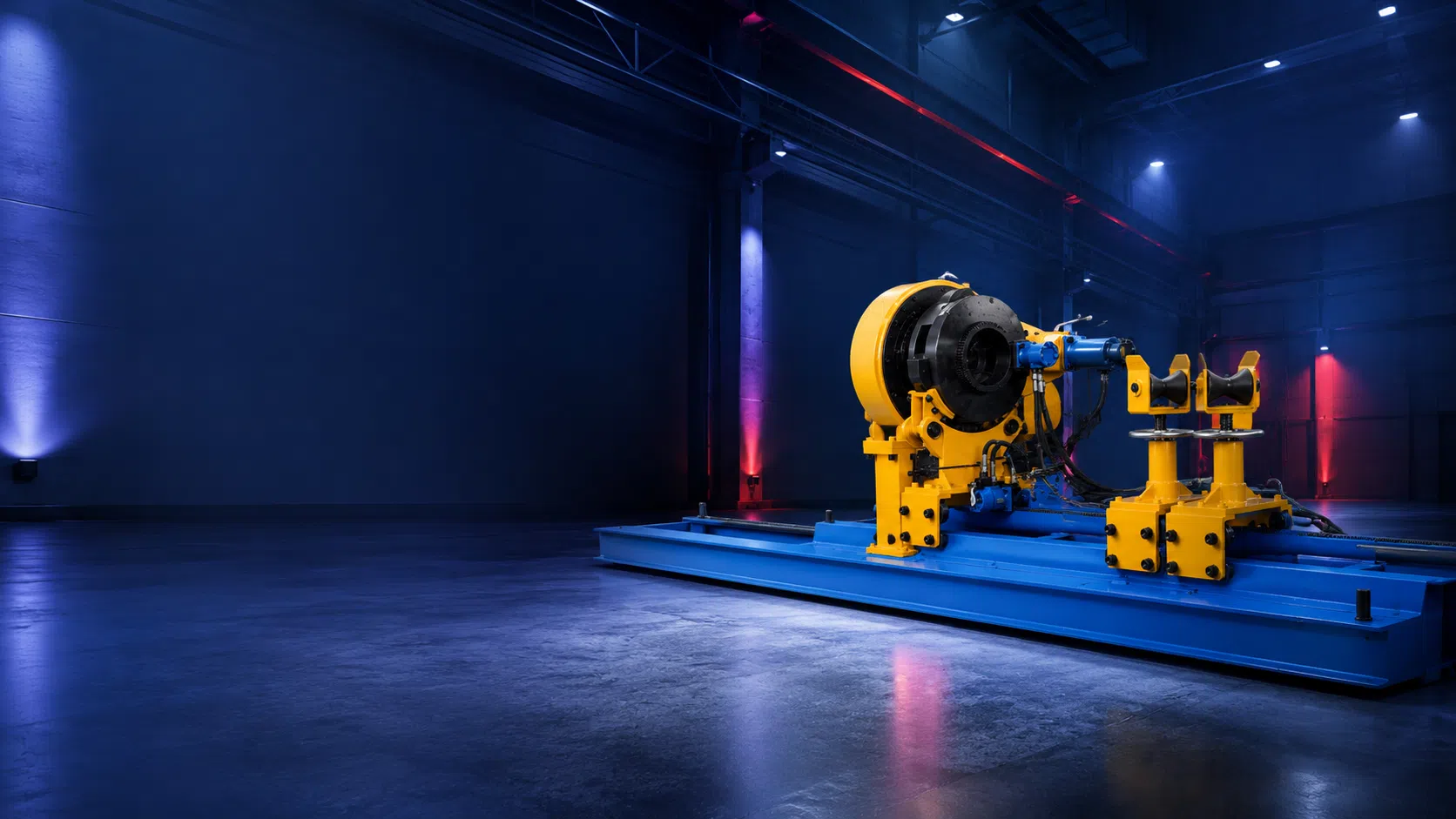
Bucking Unit for Casing & Tubing Makeup — 6 Models, up to 110 kN·m
The WL bucking-unit range covers six models from 2⅜″ to 30″ with published torque and size tables and computerized torque-turn recording. Confirm the responsible manufacturer, selected-unit documentation, and agreed inspection scope at RFQ.
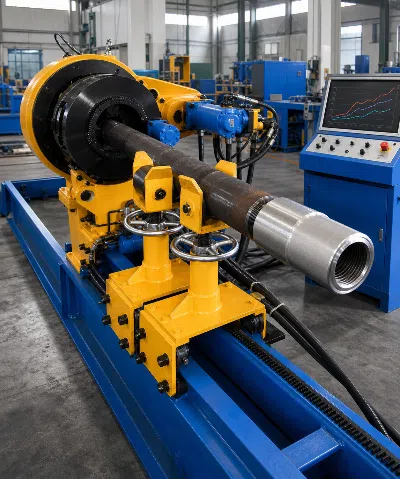
A bucking unit is a hydraulically driven make-and-break machine that joins casing and tubing couplings with recorded shop torque. A powered tong rotates the coupling while a static back tong holds the pipe. Confirm the selected connection’s documented shop makeup procedure before use.
SYSTEM VISUAL
ISSUE ANALYSIS
Premium Connection Bucking Requirements
The failure cost that impacts your bottom line most is rarely one that passes inspection in the shop – it’s the one that slips by visually, gets to the field, and leaks downhole. Sending one misaligned coupling to the rigsite causes downtime and running failures that are expensive.
- If detected at receiving — it’s an inconvenience.
- If caught during the actual make up — it’s a costly delay that interrupts the workflow.
The goal of a bucking unit is to eliminate that hidden risk before it becomes a problem.
What Manual Makeup Cannot Measure or Prove
Without precise measurement, operator skill dictates manual make up; there’s no torque feedback and therefore no record of performance. If the operator push past the shoulder on a large standoff to close it completely, galling can occur on seal faces; under-torquing can prevent shoulder seating – both compromise the joint’s ability to seal and remain pressure-tight. Traditional bucking that leans on manual labor puts human error straight into the torque path, and nothing in that workflow leaves a record you can hand to a customer.
THE WELONG SOLUTION
The Welong solution, in one line: a never-stick gripping mechanism holds the pipe body without damaging it — no-mark bucking, in shop language, while a precise torque-control system with full computer monitoring records every buck-on, so a premium coupling is made up to spec, not to feel.
SAFETY COMPLIANCE
Buyers should weigh the safety cost of a manual approach. A rotating, hydraulically clamped machine carries point-of-operation and nip-point hazards under OSHA 1910.212; guarding and a monitored makeup cycle should keep hands outside the operating envelope.
Welong Bucking Unit Models — WL178-20 to WL760-134W
An undersized machine that can’t accept your largest coupling or an oversized unit too slow for a small tubing shop represents an unseen, common procurement failure. To simplify selection and ensure the correct equipment is ordered from day one, Welong lists its six WL model series along with actual, verified bore sizes, center heights and torques. Engineers can determine the ideal unit with the chart below, even prior to a sales visit.
Select by your pipe OD, then follow across to model and rated torque and duty.
The OD band spans the casing and tubing sizes covered by ISO 11960, so the grid maps to the pipe your mill certificate already names.
The selection of bucking units for tubular assembly is not a hunt for the biggest number. Torque machines that overshoot your coupling range waste floor space and cycle time, while an undersized one cannot open to your largest OD at all. Each WL unit is customizable for premium bucking work: jaw sets, dies and control presets are matched to the connection you actually run.
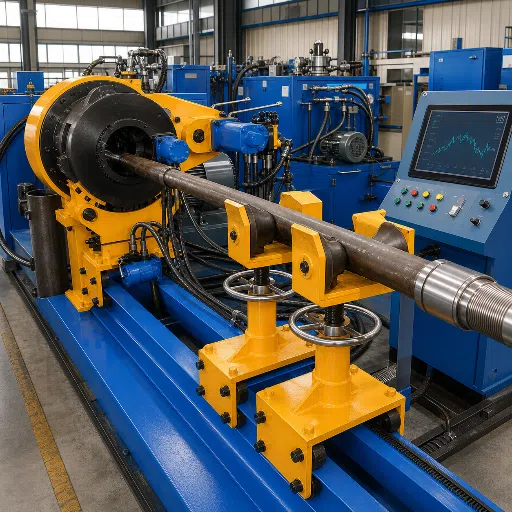
SYSTEM CAPABILITY OVERVIEW
Coverage Range
2⅜″ – 30″
Max Torque
110 kN·m
Max Bore Dia.
820 mm
Hydraulic Pressure
Up to 31.5 MPa
The Bucking Unit Model-Selection Grid
| Model | Application range (OD) | Max makeup torque | Bore dia. | Center height | Power unit | Best-fit duty |
|---|---|---|---|---|---|---|
| WL178-20 | 60.33–177.8 mm (2⅜″–7″) | 20 kN·m | 260 mm | 900 mm | YDZ120/40-22 | Tubing & small casing couplings |
| WL180-30 | 60.33–273 mm (2⅜″–10¾″) | 30 kN·m | 360 mm | 1110 mm | YDZ120/40-22 | Tubing to intermediate casing |
| WL273-45 | 60.33–340 mm (2⅜″–13⅜″) | 45 kN·m | 420 mm | 1150 mm | YDZ160-37 | Common 9⅝″–13⅜″ casing shops |
| WL340-55 | 177.8–508 mm (7″–20″) | 55 kN·m | 565 mm | 1250 mm | YDZ160-37 | Large casing couplings |
| WL508-70W | 340–762 mm (13⅜″–30″) | 70 kN·m (dual-pump) | 820 mm | 1450 mm | YDZ250-37W | Large-OD, auto variable speed |
| WL760-134W | 340–762 mm (13⅜″–30″) | up to 110 kN·m (dual-pump) | 820 mm | 1450 mm | YDZ250-37W | Heavy large-OD / conductor couplings |
Still unsure which model fits your OD and torque range?
Send your specs for a model match →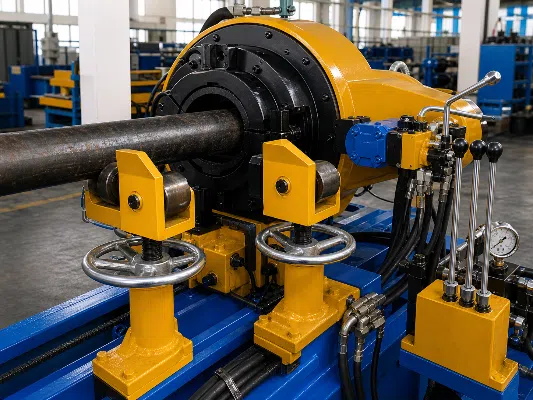
MANUAL
MANUAL
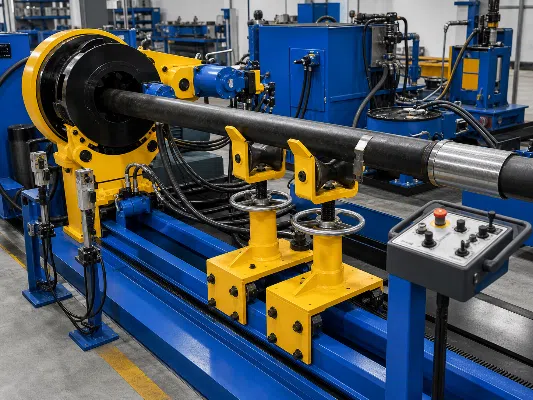
Operator-Controlled
Simple operation for lower volume pipe shops desiring direct hydraulic control and minimal investment. Integrates the same never-stick gripping system and data logging capabilities as automated units.
SEMI-AUTOMATIC
SEMI-AUTOMATIC
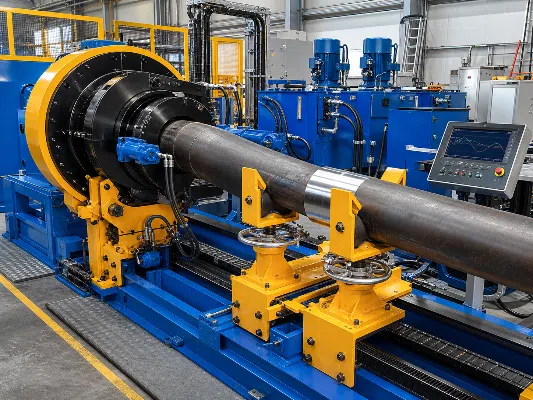
Assisted Cycle
Designed for mixed-service casing and tubing operations. Provides improved accuracy and faster cycle times through automated positioning and preset torque values.
FULLY AUTOMATIC
FULLY AUTOMATIC
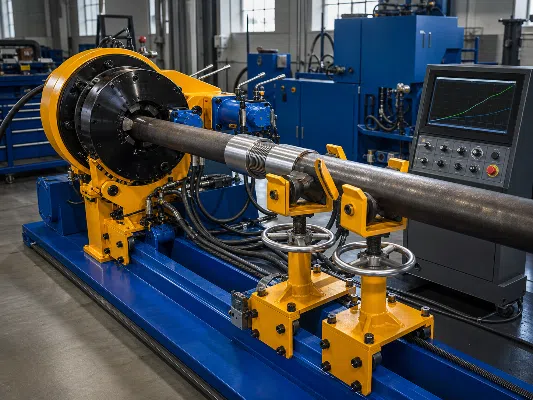
Dual-Pump Auto-Shift
Optimized for high-throughput operations and larger diameter connections where maximum efficiency and precise, repeatable torquing are essential. Features automatic speed adjustments and shifting for enhanced performance on the WL508-70W and WL760-134W models.
Reading the grid like an engineer
Smaller WL models use a mechanical high/low shift-high speed coupling spin, low speed for makeup torque on chart; largest two, the WL508-70W and WL760-134W employ dual pump auto-shift for continuous ODs. Each model is paired with a matched YDZ power unit and ZKN torque recorder; thus the makeup is accurately measured, not guessed.
The hydraulic system behind the numbers
Behind the grid sits the hydraulic system that delivers those numbers. Every WL model runs on a matched YDZ hydraulic power unit:
- a high pressure circuit rated at 16 MPa working (31.5 MPa maximum)
- moving 120–250 L/min through the control valve block
- with unit weights of 4,000–8,000 kg by model
Matching the power supply to the torque range is what makes high torque repeatable instead of pressure-starved. The quotation identifies whether the selected package includes the bucking head, matched YDZ power unit, ZKN monitoring system and support stands, together with the commissioning scope. Rotation speed shifts between a fast high gear and a slow low gear, and the automated tiers are built for one-person operation, so the operator stays at the console instead of manhandling a wrench.
Bucking Unit vs Power Tong vs Manual — And How Welong Compares
The reference bucking-unit purchase is made by considering two criteria: what piece of equipment does the job require, and which vendor do you trust to supply that equipment. One is technical; the other, commercial; here they’re both with figures instead of descriptions.
| Factor | Manual bench wrench | Power tong (rig floor) | Bucking unit (shop) |
|---|---|---|---|
| Where it works | Shop / field | Vertical, on the rig | Horizontal, in the shop |
| Primary job | Low-torque touch-up | Run/pull the string | Buck couplings onto tubulars |
| Torque control | Operator-dependent | Load-cell, repeatable | Computer torque-turn, recorded |
| Torque record | None | Per joint | Per coupling, ZKN recorder |
| Pipe marking | Wrench bite risk | Die grip | Never-stick grip, no-mark |
Third-party prior art on load-cell torque control includes US 4,700,787. A shop bucking unit applies controlled torque horizontally, while a hydraulic power tong handles connections on a rig. Confirm the selected machine’s torque-turn controls and operating procedure for the order.
Welong vs Western OEM vs Generic China Supplier
| Dimension | Premium Western OEM | Generic China supplier | China Welong |
|---|---|---|---|
| Per-model spec table | Partial / on request | Model names only | All 6 models published |
| Torque-turn recording | Yes | Varies / unstated | ZKN recorder, standard |
| Product-level certification | Brand + factory system | “API standards” unproven | Order documentation |
| Third-party inspection | Available | Rarely offered | SGS / DNV on request |
| Pricing basis | Opaque, quote-only | Opaque | Cost factors disclosed |
Disclosure is the differentiator. Competitor pages show a photo, a superlative and a form; the strongest publish a single starting price with no model-level breakdown. Welong publishes the whole grid because a buyer should confirm a 13⅜″ coupling against the WL273-45 band before price is ever discussed.
Comparing us against an OEM or your current shop setup?
Request a custom comparison →Precision Torque Control & Torque-Turn Recording
For the same connection, the shop “buck-on” torque and the rig-floor makeup torque are not interchangeable. Gripping the pipe body externally in a fixed frame changes the makeup load path, so the buck-on value can differ from a field makeup value. Program each connection to its documented shop makeup procedure rather than assuming the rig-floor figure transfers unchanged.
SYSTEM SPECIFICATIONS
Drive MechanismFull 360° Rotational
Data LoggingZKN-Series Recorder
Thread StandardAPI Dimensions
Grip ProtectionNever-Stick Surface
The Buck-On Integrity Blueprint
A quality coupling connection starts with the documented procedure; a torque number alone is not sufficient. Confirm the selected unit’s setup and records for the order.
-
SPEC 01 NEVER-STICK GRIP
Grip is secure on the body without galling or scratching the surface.
-
SPEC 02 CONTROLLED ROTATION
Higher-speed rotation brings on the coupling, low gear engages the makeup torque.
-
SPEC 03 TORQUE-TURN MONITORING
Monitoring of the entire makeup so the curve clearly show thread interference, seal interference and the stop-shoulder point.
-
SPEC 04 FULLY ROTATIONAL DRIVE
The head turns through a full 360°, so torque delivery stays continuous instead of stopping for a jaw reset on every pass.
-
SPEC 05 ZKN-SERIES RECORDER
Recording per coupling for full traceability of input value.
-
SPEC 06 API THREAD PRACTICE
Made to API tubing thread connection dimensions for gage-able, repeatable makeup.
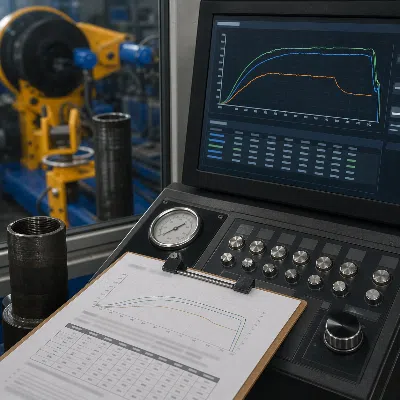
The recorder captures value because it can distinguish a good makeup from a marginal one; fail to control the parameters and the connection integrity is compromised. In this sense the graph – and not simply the final value – is the evidence. Sensor technology and automated controls are what take human error out of that judgement: the curve is measured, not remembered.
Breakout is the same curve, read backwards
Hydraulic breakout deserves the same attention as makeup because a seized coupling can demand more breakout torque than makeup torque. Third-party prior-art patent publications include early load-cell torque devices (US 4,730,254), torque-and-turn recording machines (WO 2013/142950), and pipe-bucking torque testers (CN 104502006A). These references are not claims of Welong ownership.
“We tell buyers plainly: on our units the buck-on torque can run higher than the rig-floor figure, because gripping the pipe body externally changes how the makeup loads up. The quotation should identify the responsible manufacturer, connection procedure, torque-turn curve and recorder log required for acceptance.”
Traceability and service, honestly scoped
Each coupling is given its own torque log, and on-demand torque-turn sample reports let you verify the output before you purchase. The logging machine has its calibration and certificate history set with the delivered unit; ask for them in your RFQ. Routine upkeep is deliberately ordinary:
- hydraulic system checks
- lubrication of moving parts
- calibration of torque on the ZKN recorder at the interval agreed for your unit
Strict quality control at build plus that schedule is what delivers the extended service life buyers expect from premium bucking units. These are hydraulically-powered machines, so the operation must be governed by OSHA 1910.147 lock-out/tag-out: any energy stored in the hydraulic circuit must be discharged before accessing any internal components under the guard envelope.
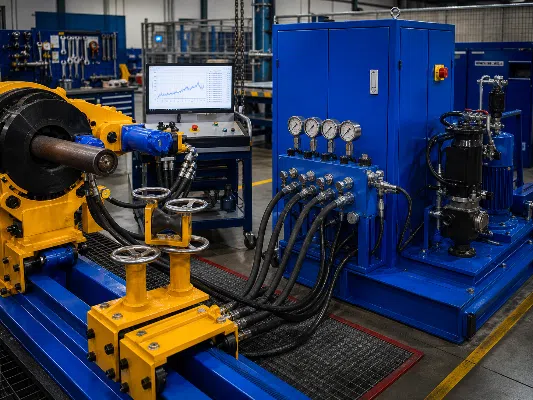
COMPLIANCE & SAFETY
Energy IsolationOSHA 1910.147 (LOTO)
Upkeep Protocol3-Point Routine Check
Record TraceabilityIndividual Torque Log
Document PackageConfirm for selected order
Application Fit by Automation Tier and Pipe Type
The right Welong WL is configured for your throughput and pipe mix, not just the largest number you see. Manuals (WL178-20, 60.33 – 177.8 mm) fit lower-volume or multi-job shops; semi-autos add repeatable torque set-points for any given production run; and high-throughput large-OD lines benefit from fully-automatic, dual-pump (WL508-70W, WL760-134W; to 762 mm OD) machines which easily justify their cost. Pick the model that fit your workflow first, then verify its OD range and torque capacity.
| Automation tier | Reference setting | Pipe / duty | Fit signal |
|---|---|---|---|
| Manual | Repair & well-service shops, pipe yards | Tubing & small casing (WL178-20 / WL180-30) | Lower volume, mixed jobs, tight capital |
| Semi-automatic | Casing threading shops | Intermediate casing (WL273-45 / WL340-55) | Consistent torque across a run matters |
| Fully automatic | Coupling / OCTG makeup lines | Large-OD casing (WL508-70W / WL760-134W) | High throughput, drill-pipe & downhole tools |
HOVER TO REVEAL
OPERATIONAL RANGE
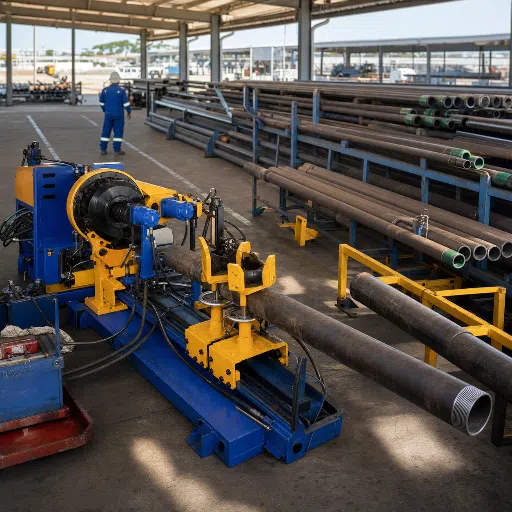
Each WL can make up and break out all the oil-field’s threading: casing, tubing, drill-pipe, and down-hole-tools – the whole buck-on and buck-off sequence that threading shops, pipe yards and service centers run before any pipe goes into a string. In practice that spans pipe handling and makeup and breakout work across oilfield operations: drilling contractors, petroleum service bases and mobile bucking spreads near drilling sites all buck the same tubular connections before they ever go downhole.
Rejection cost > unit price
In pipe-yard economics, a rejected or leaking connection — rethreading, cut-off, or a downhole failure — often costs far more than the machine that would have made it up correctly. A recorded, repeatable buck-on is the total-cost-of-ownership argument.
Framework based on published OCTG makeup / pipe-yard quality guidance. No client-specific ROI figure implied.
Where the WL Line Runs, and What the Record Buys You
Across pipe sizes and torque ranges the WL line makes up pipe connections on tubular components for drilling and completion strings; a portable spread can run bucking services close to the pad, and the quotation identifies the torque-turn record required for each selected joint, which is rig time you do not spend re-making a bad connection. Those are the same failure modes ISO 13679 puts a connection through — galling tendency, sealing performance and structural integrity — which is why a recorded buck-on, not a remembered one, is what the acceptance argument rests on.
For oil and gas drilling programs the operational efficiency case is settled downstream: pipe that arrives already bucked to a recorded value protects drilling efficiency at the rig, and the shop keeps its safety protocols simple because nobody is swinging a wrench at a coupling.
The engineering pay-off is universal: in all applications, an unrecorded makeup indicates a marginal connection; only a logged, repeatable buck-on can minimize rejection and re-thread risk for a string of oilfield pipe.
HOVER TO REVEAL
DATA CONSISTENCY
For the selected bucking unit, the quotation identifies the torque-turn recorder, acceptance criteria and traceable record to be supplied. This is the single point nearly every supplier overlooks: throughput increases, acceptance evidence doesn’t.
Sizing a line for your throughput?
Get a detailed configuration spec matched to your volume →API-Thread Practice, Order Documentation & Third-Party Inspection
For a new supplier, confirm the tubing-thread dimensions, inspection scope, responsible manufacturer, and manufacturing documentation for the selected bucking unit.
ORDER DOCUMENTATION
Confirm records for the selected unit
API TUBING THREAD
API 5B thread dimensions; TR 5TP makeup torque
SGS · DNV
Third-party inspection available
3-STAGE QC
In-process, final & optional third-party
Read the Standard Like a Buyer Should
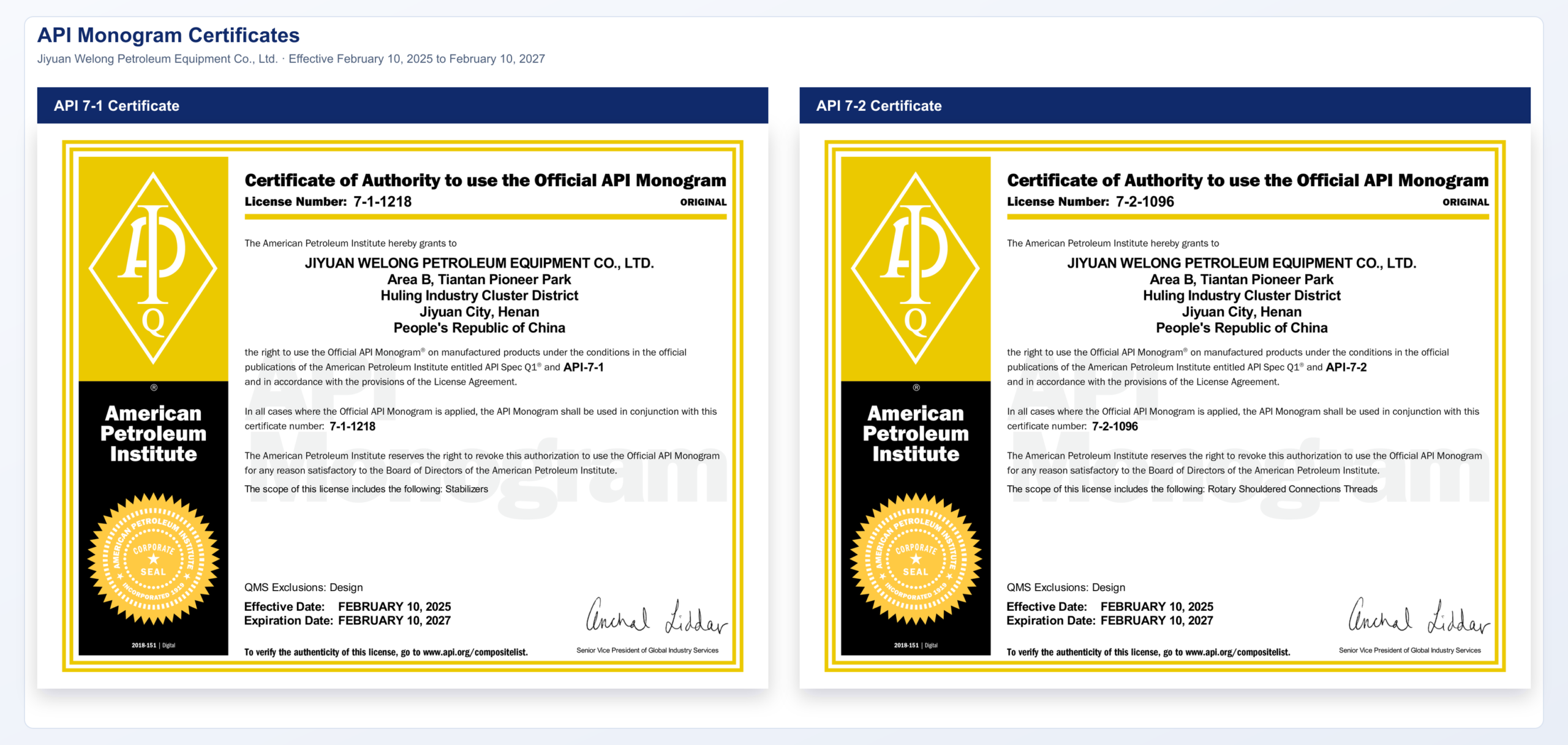
The stated tubing-thread requirements describe the dimensions and gauging used for the selected connection, with torque-application guidance in API TR 5TP. Confirm the applicable inspection and test documentation before authorizing payment.
- We do not display or claim any licence mark we have not been awarded.
- Request the applicable inspection and test documentation for the selected bucking-unit order.
Verify the selected product’s documented specifications and, where required, third-party inspection records before authorizing payment; use the applicable documented quality controls as supporting supplier information.
Buyers importing from China expect third-party inspection even if you claim to follow a standard, along with documentation proving material specs and test results, before they’ll authorize payment. That’s why they prefer working with a manufacturer, not a trader.
The Practical Test for Oil and Gas Buyers
For oil and gas buyers, ask whether the quoted tool follows the drawing’s applicable specifications and who can provide the selected unit’s records. Confirm the responsible manufacturer, inspection scope, and document package before purchase.
Engineering Calculation & Selection Tools
Access Welong’s digital toolkits to accurately configure your bucking unit parameters. These utilities calculate required torque values, cross-reference automation tiers, and match tubular outer diameters to specific machine capabilities.
TOOL 01 // SELECTION
Bucking Unit Model Selector
Map your specific pipe outer diameter and make-up torque requirements to the exact Welong WL equipment model.
Launch Tool
TOOL 02 // UTILITY
Torque Converter
Standardize engineering units across metric and imperial systems (kN·m to ft-lbs) for accurate setup configuration.
Launch Tool
TOOL 03 // ASSESSMENT
Automation Tier Fit
Evaluate your throughput volume and connection types to determine the optimal manual, semi-automatic, or fully automatic setup.
Launch Tool
FAQ — Answers for Bucking Unit Buyers
What is a bucking unit and how does it work?
The horizontal hydraulic bucking unit makes and breaks coupling threads on pipe. One tong rotates the coupling while another holds the pipe, applying and recording controlled torque. The operation is analogous to how a power tong works on a rig.
Can the bucking unit be customized for our OD and torque range?
Yes. The six WL models span 2⅜″ to 30″ and makeup torque up to 110 kN·m, and manual, semi-automatic and fully automatic tiers are available. Send your coupling OD and required makeup torque and we match a model rather than sell you the biggest one.
Is the shop buck-on torque the same as the rig-floor makeup torque?
No – assuming they’re interchangeable is a common error. Grasping the pipe body externally means you change the make-up load path, so the shop buck-on value can differ from (and often runs higher than) the rig-floor make-up value. The machine is programmed for the connection’s documented shop procedure, not the field number.
Is this bucking unit suitable for premium connections?
Computer torque-turn monitoring and ZKN recorders can document thread-seal-shoulder attributes for premium connections. Share the connection type to confirm the selected configuration’s suitability before quoting.
What order-specific evidence should I confirm before payment for a Welong bucking unit?
The machine uses the stated tubing-thread dimensions. Confirm the required pre-shipment tests and inspection scope for the selected order.
What shipping terms and lead time do you offer?
We quote on FOB, CIF, DDP, or DDU via sea, air or rail; lead times are confirmed based on your specifications. Since the unit is customized to your OD range, tier and inspection level, you’ll receive an accurate quote, not a wide price range.
What is the difference between a bucking unit and a power tong?
Bucking machines operate horizontally in shops to thread couplings to tubulars; power tongs operate vertically on the rig to run and pull the string. Welong supplies both and manages production against the selected torque-turn requirements.
Procurement & Capability
Bucking Unit Capability Review
China Welong reviews the buyer drawing, product specification and inspection scope before quotation.
This review is scoped to the Bucking Unit configurations set out in the specification table on this page — 6 documented rows covering Model, Application range (OD), Max makeup torque and Bore dia..
24 hEngineer-reviewed quotation on business days
2001Founded in 2001
30+30+ engineers on staff
5 yrStamped serial traceability
Quotation Scope and Commercial Terms
Pricing is prepared against the selected product configuration, material route, inspection scope and shipment terms.
- Quotes are returned within 24 hours on business days, reviewed by an engineer.
- T/T or L/C by wire transfer.
- We ship EXW, FOB, CFR or CIF; other Incoterms on request.
- We work from 2D drawings and 3D CAD models (AutoCAD, Pro/ENGINEER, SolidWorks; .dwg and .igs).
Production Planning
Production timing is confirmed with the quotation after quantity, process route and finishing scope are reviewed.
- We hold agreed items in stock and ship against your release to shorten delivery. Feasibility is confirmed at drawing review.
- Manufacturing at Xi'an, Shaanxi and at Jiyuan, Henan.
- 0.01 mm machining precision.
- Material standards to ISO, BS, ASTM, ASME, DIN, JIS and GB.
- Orders ship in standard export wooden cases, or the packing you specify.
Order Review and Responsibility
The responsible manufacturer, inspection scope and document package are identified for the selected item.
- Every quotation states whether the item is made in our own works or by an approved supplier we developed and supervise.
- We develop, audit and supervise the mills and workshops that make your parts: material mills are re-audited every two years and approved by Welong before they run your order.
- Forgings from 0.2 to 50 tons.
Specification and Inspection Evidence
The specification table on this page is the technical basis for this review: its numeric rows define what we quote, manufacture and inspect against.
- Each piece carries a stamped serial number and stays traceable for five years to its chemical composition, mechanical properties and measurement report, with the test coupon retained.
- An EN 10204-3.1B material certificate with chemical composition and mechanical properties, a dimensional measurement report, and UT and MT reports ships with your order.
- Inspection is by coordinate measuring machine, ultrasonic, magnetic particle and X-ray.
Request a Product Review
Send the drawing, product specification and inspection requirements for a quotation review.
![Choke & Kill Hose: [Field Guide]](https://welongoiltools.com/wp-content/uploads/2026/07/choke-kill-hose-guide-featured-1-150x150.png)