Get in touch with Welong Company
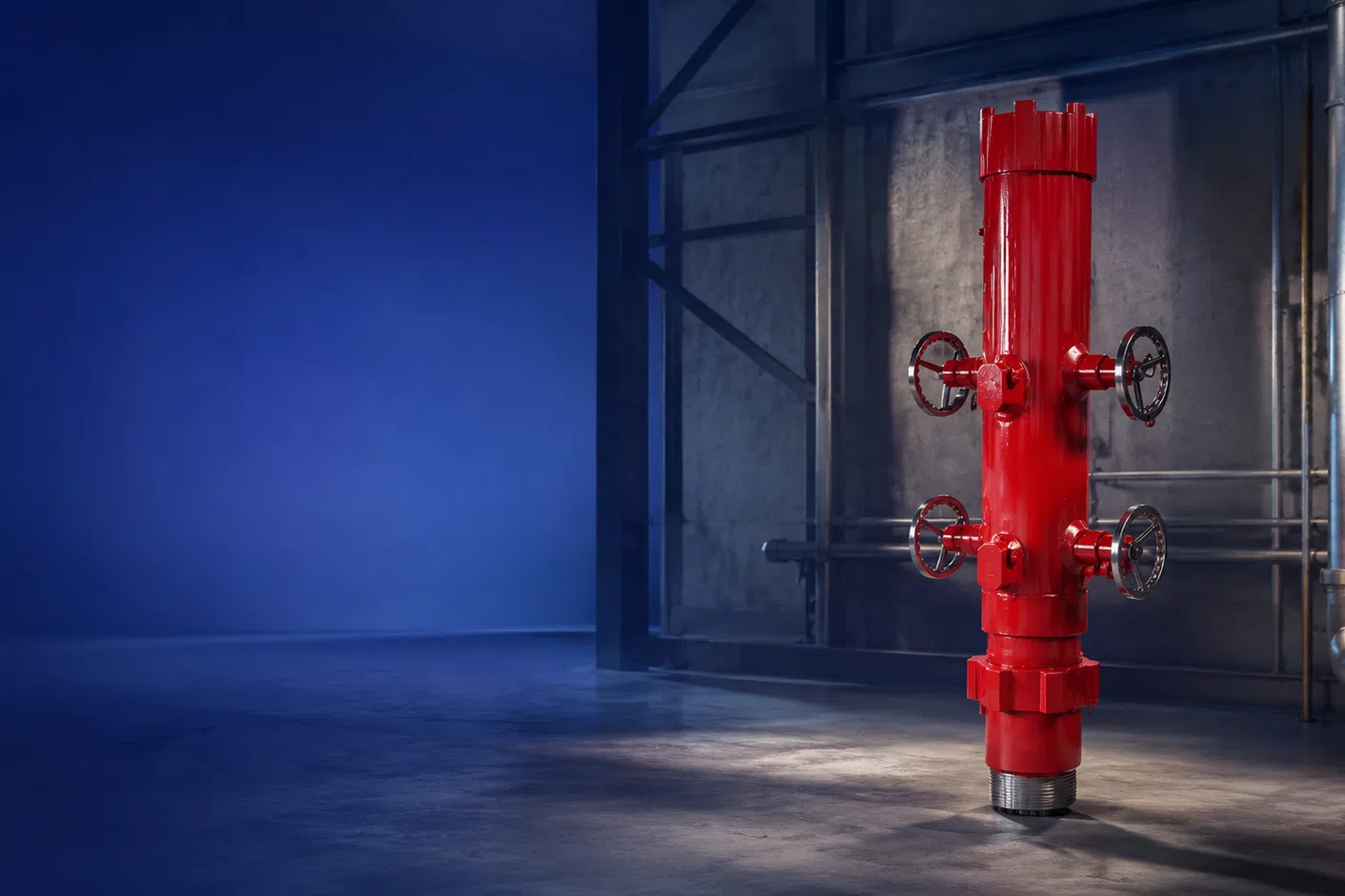
Double-Plug Cement Head — API 5CT Casing Cementing Head (5-1/2″ to 13-3/8″)
A cement head is the part of the wellhead equipment that contains and releases your cementing plugs during a primary casing cementing job, and one of the best failure modes to control on the rig floor is the leaking or unreliable plug release. Welong’s manifold-type double-plug cementing head, available with a lever-type plug-pass indicator, published dimensions for all seven standard casing sizes, and third-party inspection you can actually verify.
Request a Quote
10,000 PSI
High-pressure variant ceiling
(35/50 MPa standard)
(35/50 MPa standard)
AISI 4145H
Forged alloy-steel body
5½”–13⅜”
API 5CT casing range
2″ Union
Common manifold connection
Double Plug
Top + bottom plug, one loading
SGS / DNV
Third-party inspection on request
The Cost of an Uncertain Plug Release — And How a Double-Plug Cement Head Solves It
The most critical part of the primary cement job never manifests on the rig floor. That failure reveals itself later as a bradenhead or vent flow or sustained casing pressure, while a well only passes integrity tests when total pressure loss during the test period is below 10%.
The main culprit for these failures is often not the tool, but how the fluids are managed, including: contaminated drilling mud, gas channeling, inadequate centralization and cement shrinkage. Where a bad slurry design can’t be addressed with any hardware, however, contamination between the displacement fluid, the cement slurry and the drilling mud can and should be managed – it is the design principle behind a double-plug cementing head.
For the selected cement head, confirm the responsible designer and manufacturer, double-plug loading sequence, and operating evidence in the quotation; the intended configuration avoids opening the head mid-operation.
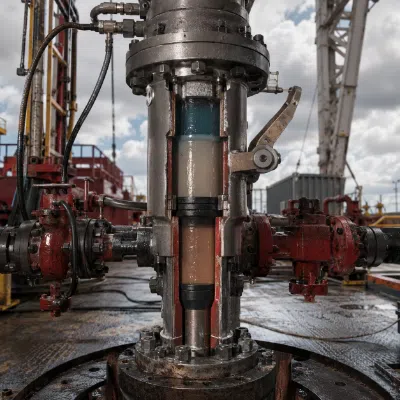
Why double plug, not single
Double plugs for primary casing cementing is where wellhead equipment of this type, used for the job, gets employed. A double plug head differs from a single plug design in having a longer body so both the lower and top plugs can be introduced simultaneously, prior to commencing the operation.
While the bottom plug scrubs the inside of the casing wall clean and burst open upon reaching the float collar allowing slurry to flow, the top plug acts as a barrier between the displacement fluid and the slurry; preloading ensures no access is required for plug changes between their releases, thus avoiding both contamination and delays.
Each head features a lever-type plug-pass indicator, serving as an in-built indicator to alert the operator if the rubber plug has indeed exited its enclosure and is now traveling down the casing. It is a mechanical aid, not an infallible sensor – critical applications will also add a radioactive-nail check, and we don’t overemphasize this mechanism in our advertising.
“For the selected plug container, the quotation should identify the responsible designer and manufacturer and confirm whether a balance pipe equalizes pressure across the lower cementing port, together with the operating evidence.”
— Configuration Review Note
Need the specific plug-container tolerance for your casing weight?
Send your casing program for a custom sizing recommendation →Double-Plug Cement Head Function
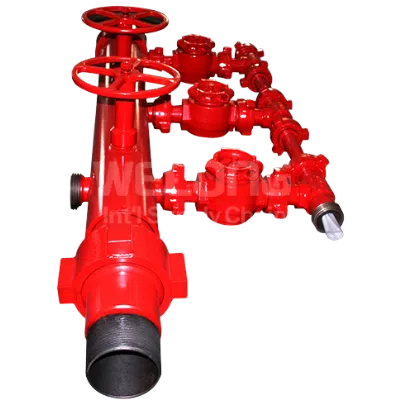
The cement head is a manifold attached to the top of the casing string which allows the cement unit discharge line to be hooked up to the casing and run the full cementing program without having to detach the connection between operations.
The sequence is methodical and each action ensures zone isolation:
STEP 1 · BOTTOM PLUG
Released first and pumped ahead of the slurry. It wipes drilling mud from the casing interior and ruptures when it seats on the float collar, opening a path for cement.
STEP 2 · SLURRY + SPACER
Cement slurry follows the bottom plug, pushing spacer and mud ahead of it, down the casing and up into the annulus.
STEP 3 · TOP PLUG
Launched after all cement is pumped. It separates the slurry from the displacement fluid — usually mud or water — so the two never mix.
STEP 4 · BUMP + DISPLACE
The top plug lands on the bottom plug. Standard well-cementing procedure bumps the top plug 500–1,000 psi above final displacement pressure, giving a clear surface signal that placement is complete.
It’s these components – the manifold, the plug valves and the quick-latch union – that permit repeatable performance under pressure. For the selected cement head, the quotation identifies the responsible designer and manufacturer for the manifold and its 2″ union connection. The cited patent literature illustrates cementing-head valve-manifold and plug-container concepts and does not establish Welong ownership or prove the selected product configuration; confirm the actual valve arrangement and evidence in the quotation.
This is actually the real workhorse configuration for virtually all primary casing and liner jobs, from the very top to the very bottom, the surface strings, down to your deepest oil and gas strings. The plugs provide positive isolation of your mud, spacer, and cement, while the pre-stacked double-plug system will ensure you maintain an efficient displacement; it is all about the reliability and efficiency that an operator sees at the head.
Why Bump Pressure Is So Important
The Bump pressure is so important to us because it is our one & only confirmation of what’s going on at the surface. The Pump needs to stop when we calculate that the Top Plug has been displaced from the casing by the correct volume or you risk pumping cement down the casing & into the annulus which is what the smooth clean job was there to stop in the first place.
Need to match this sequence to your casing program?
Send your casing program for a free sizing recommendation →Welong Double-Plug Cement Head — Models, Sizes & Engineering Specs
While many supplier pages show a pressure rating and a “refer to brochure” line that comes after a gated e-mail field, Welong goes the extra mile by showing a complete dimension table for all of its seven sizes, as a non-matching plug-container I.D. can really be a headache as the plug can end up suspended at its load capacity.
Different than just the ranges-only specification, this gives the engineer an ability to match the head up to the casing program prior to RFQ, not after – which is what we hoped publishing it in house would do.
The 7-Size Casing-to-Cement-Head Selector
| Casing OD — in (mm) | Overall Length (mm) | Manifold | Plug Container I.D. (mm) | Plug Container Length (mm) | Std Working Pressure (MPa) |
|---|---|---|---|---|---|
| 5-1/2″ (Ø139.7) | 1,460 | 2″ Union | Ø125 | 400 | 35 / 50 |
| 6-5/8″ (Ø168) | 1,500 | 2″ Union | Ø150 | 450 | 35 / 50 |
| 7″ (Ø177.8) | 1,500 | 2″ Union | Ø160 | 450 | 35 / 50 |
| 7-5/8″ (Ø194) | 1,550 | 2″ Union | Ø175 | 450 | 35 / 50 |
| 9-5/8″ (Ø244.5) | 1,750 | 2″ Union | Ø225 | 550 | 35 / 50 |
| 10-3/4″ (Ø273) | 1,750 | 2″ Union | Ø250 | 550 | 35 |
| 13-3/8″ (Ø339.7) | 1,780 | 2″ Union | Ø320 | 600 | 35 |
Standard working pressure is 35 or 50 MPa (5,000 / 7,250 psi) as per size, a higher pressure up to 10,000 psi is available as a configured option on application – the pressure indicated in the table is a standard size value.
Material & casing compatibility
Head Body – AISI 4145H. The chromium-molybdenum alloy steel used for the downhole tools, drill collars, and subs as much as possible, has been tempered for downhole strength and toughness and resistant to hydrogen-sulfide corrosion. The precisely verified hardness of your specific order can be read from the mill certificate, not asserted as an exact value below.
This head is designed to connect with the API 5CT casing strings you run, in any of the J55, L80, N80, or P110 grades. Note: the grades are for the casing the head connects to, not a rating for the head body.
Casing-side connections and end-finishes are made up to your casing program. Manifold connections are the common 2” union, while the plug-container form factor is developed following the functional logic detailed in USPTO patent US4290482A. Welong supplies the head to your drawings, samples, or specification (OEM) and manages its production, with the responsible manufacturer and production tolerances confirmed in the quotation.
Need dimensions confirmed against your casing weight and thread?
Request product information →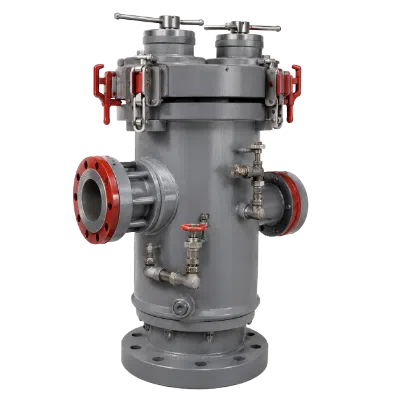
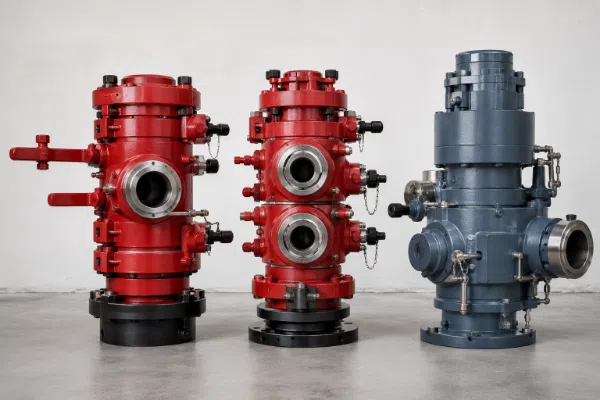
Single-Plug vs Double-Plug vs Top-Drive — Which Cement Head Fits Your Job
There is a most expensive tool and there is a tool best-suited to the string you’re running. While majors produce modular wireless top-drive systems that reciprocate and rotate casing strings (good when rotating the liner can improve cement coverage in horizontal wells, or for other specialized applications), and these do provide value, our core product is the traditional double-plug manifold head. For operations that don’t require this level of rotating-string performance, you get operational reliability, faster rig-up, and you don’t pay for rotation you’ll never use.
| Configuration | Plugs held | Rig interface | Rotate while cementing | Best fit | Welong supply |
|---|---|---|---|---|---|
| Single-plug head | 1 (top) | Manifold | No | Simple, shallow, low-complexity jobs | On request |
| Double-plug manifold head | 2 (top + bottom) | 2″ union manifold | No | Most primary casing cementing | Core product |
| Top-drive / rotating head | 2+ darts / balls | Drill pipe / top drive | Yes | Long strings, liners, extended reach | Specialized (premium tier) |
Where top-drive rotation can indeed deliver added value is for those highly specific long horizontal liner applications where enhanced cement coverage due to rotation of the liner itself is critical. However, for the overwhelming majority of onshore and offshore primary casing applications – whether high-pressure, high-strength (P110), or standard shallow wells (J55/K55) – the benefits of top-drive rotation are minimal and cost can quickly become a real concern. The honest trade-off is simple: you either pay for modular top-drive capability, or you match a proven manifold head to the job it actually runs.
Where a conventional double-plug head wins
| Parameter | Welong Double-Plug Manifold Head | Wireless Top-Drive System |
|---|---|---|
| Plug launch | Mechanical, 2 plugs pre-loaded | Remote / wireless darts & balls |
| Rotation while cementing | No | Yes |
| Std working pressure | 35–50 MPa (10,000 psi HP variant) | Reference 10,000–15,000+ psi |
| Rig-up complexity | Low (2″ union manifold) | High (top-drive integration) |
| Relative cost | Economical | Premium |
| Best fit | Conventional primary casing cementing | Rotating liner / extended-reach |
Material Traceability & Third-Party Inspection
International buyers should match the required document to the selected batch and inspection scope.
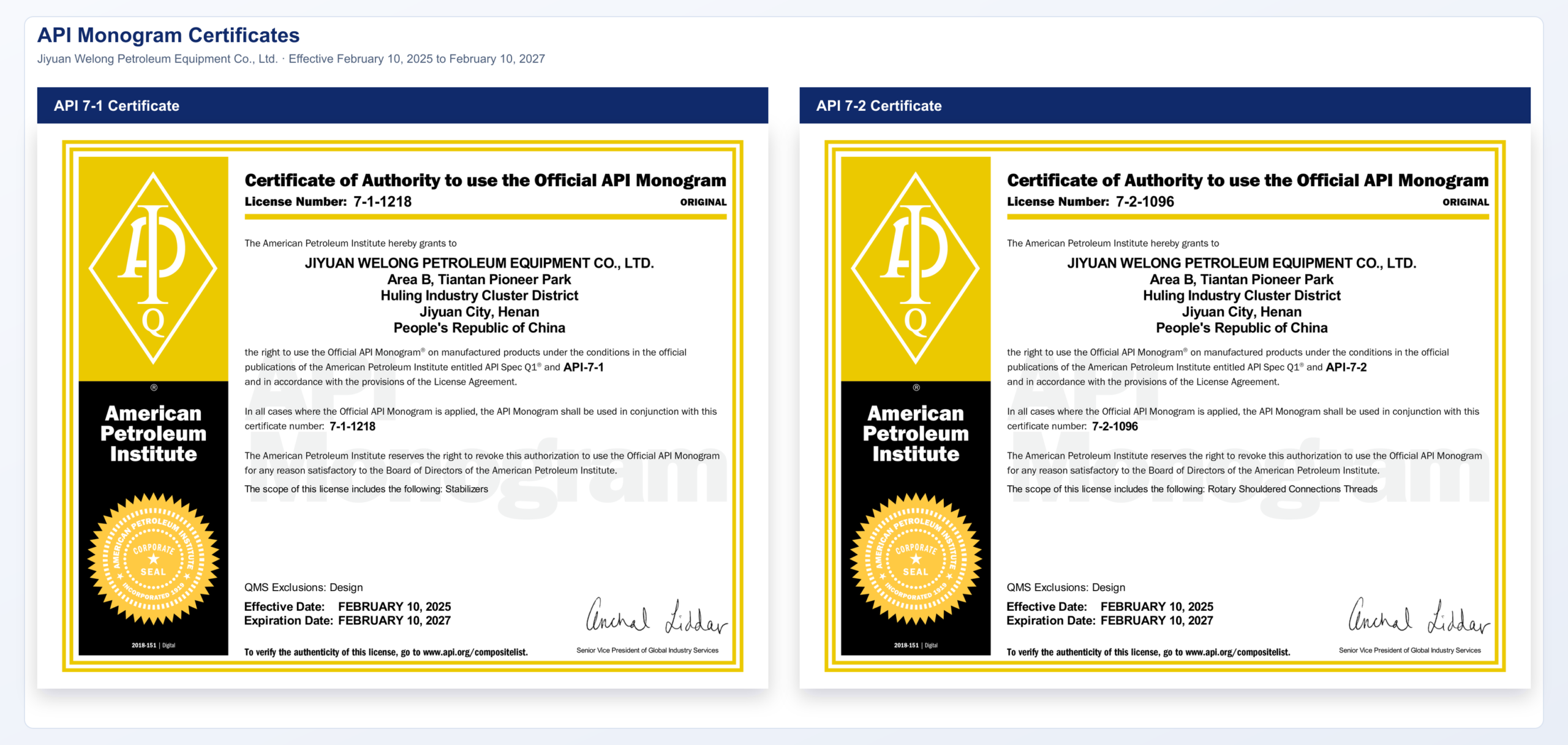
What we can document — and what we don’t claim
- Material traceability: mill and material certificates for both the AISI 4145H body and the API 5CT casing grades the head is configured to.
- Third-party inspection: available on request from SGS and DNV for the batch, covering UT, MT, load testing, and dimensional inspection. This confirms results from a specific batch — an inspection finding, not a product-type certification.
- Destination-market conformity: when required by your market, we provide the pressure-equipment documentation you need. We do not stamp a market-conformity mark we do not actually hold.
API 5CT
Casing grade compatibility
J55 · L80 · N80 · P110
AISI 4145H
Forged Cr-Mo body
H2S-resistant alloy
SGS · DNV
Third-party inspection
UT / MT / load / dimensional
In-process QC
In-process + final inspection
scope confirmed per order
Request a sample inspection report before issuing a purchase order.
Verifying a new supplier?
Request a sample third-party inspection report (SGS/DNV) →Procurement Guide — Lead Time, Trade Terms, OEM & Packaging
The hidden cost of a cementing tool is rarely the unit price. It is the failed job, the lost rig time, and the remedial squeeze that follows when the wrong tool arrives late or off-spec.
Pricing factors — not a bare number
A cement head quote is driven by casing size and count, standard vs high-pressure (10,000 psi) rating, single vs double plug, connection/thread configuration, and the inspection tier you require (supplier standard vs SGS/DNV third-party).
Tell us those parameters and you get a specific quotation – not a range you have to reverse-engineer. Contact Welong for a detailed quotation based on your application.
On terms and logistics,Sea, air, and rail shipment can be discussed with FOB, CIF, DDP, or DDU terms according to the buyer’s import setup.
OEM is standard, not an exception: Welong supplies to your drawings, samples, or specification and manages production, with custom packaging and expedited production when a job schedule moves – the responsible manufacturer and repeat-order tolerance controls stated in the quotation.
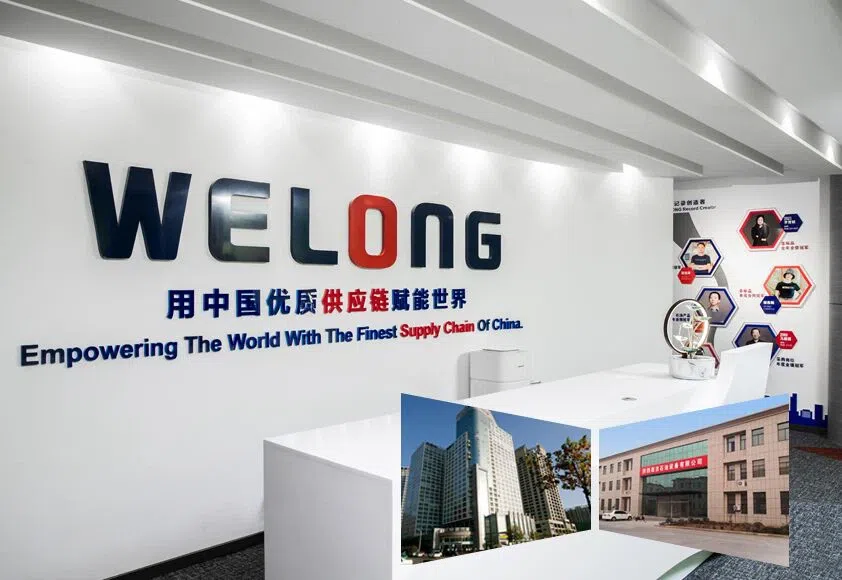
International Cement Head Procurement
Selecting an oilfield supplier requires confirmation of the tool specification, inspection scope, and shipping documents for the order.
As an integrated supply-chain partner, Welong provides supplier development, purchasing supervision, and quality-control services for international orders.
Built for two kinds of buyer
Distributors get an OEM supply partner with private-label packaging and order-specific production planning. Every quotation identifies whether the selected cement head is made in Welong’s own works or by an approved supplier Welong develops and supervises, together with the inspection scope and document package.
Engineering Calculation & Selection Tools
Utilize our digital engineering resources to determine the correct cement head size, evaluate configuration options, and generate precise RFQ specifications for your operation.
Ready to Move From Spec to Quote?
Send us your casing size, grade and working pressure. We will come back to you with confirmation of model and size and the scope of inspection – and the quotation under your trade terms.
FAQ for Cement Head Buyers
What are the types of cement head?
Cement heads are single-plug or double-plug type; caps are Acme-threaded or quick-lock, often with a swivel chain assembly. A double-plug cementing head has a multi-valve manifold and a two-plunger (top + bottom plug) assembly. Multi-stage and side-entry heads exist for staged or continuous-circulation jobs.
What is a double-plug cement head and when is it used?
It is a manifold cement head that holds both the top and bottom plug loaded at the same time, used in most primary casing cementing operations. Loading both plugs before the job removes the need to open the head mid-job, which reduces mud/cement contamination and circulation delay.
What sizes and pressure ratings are available?
Welong supplies seven casing sizes from 5-1/2″ to 13-3/8″, each with a published overall length, plug container I.D./length, and 2″ union manifold. Standard working pressure is 35 or 50 MPa, with a high-pressure variant rated up to 10,000 psi on request.
What material and steel grades are cement heads made from?
The head body is forged AISI 4145H chromium-molybdenum alloy steel (about 30–36 HRC), the standard downhole-tool material with hydrogen-sulfide corrosion resistance. It is sized for API 5CT casing in grades J55, L80, N80, and P110.
What causes a cement head leak and how is it prevented?
Cementing leaks usually come from incomplete mud removal, gas channeling, poor centralization, or cement shrinkage — leading to sustained casing pressure. A double-plug head controls one variable: fluid separation between mud, slurry, and displacement fluid, backed by a lever plug-pass indicator so the operator can confirm each plug has entered the casing.
What is a bradenhead squeeze?
A bradenhead squeeze applies hydraulic pressure to a casing, work string, or tubing to force cement outside the wellbore, with annular returns prevented by closing the casinghead valves. It is a remedial operation — the kind of costly rework a clean primary cement job helps you avoid.
Can you manufacture cement heads to our drawings (OEM)?
Yes. Welong supplies to your drawings, samples, or specification and manages production, with custom packaging and third-party inspection (SGS/DNV) available on request, shipped FOB, CIF, DDP, or DDU.
What are your lead times and trade terms?
Lead time depends on casing size, quantity, pressure rating, and inspection tier. Welong cooperates on FOB, CIF, DDP, and DDU and ships by sea, air, or railway; send your specification for a quotation with a firm lead-time estimate.
Procurement & Capability
Cement Head Capability Review
China Welong reviews the buyer drawing, product specification and inspection scope before quotation.
This review is scoped to the Cement Head configurations set out in the specification table on this page — 7 documented rows covering Casing OD — in (mm), Overall Length (mm), Manifold and Plug Container I.D. (mm).
24 hEngineer-reviewed quotation on business days
2001Founded in 2001
30+30+ engineers on staff
5 yrStamped serial traceability
Quotation Scope and Commercial Terms
Pricing is prepared against the selected product configuration, material route, inspection scope and shipment terms.
- Quotes are returned within 24 hours on business days, reviewed by an engineer.
- T/T or L/C by wire transfer.
- We ship EXW, FOB, CFR or CIF; other Incoterms on request.
- We work from 2D drawings and 3D CAD models (AutoCAD, Pro/ENGINEER, SolidWorks; .dwg and .igs).
Production Planning
Production timing is confirmed with the quotation after quantity, process route and finishing scope are reviewed.
- We hold agreed items in stock and ship against your release to shorten delivery. Feasibility is confirmed at drawing review.
- Manufacturing at Xi'an, Shaanxi and at Jiyuan, Henan.
- 0.01 mm machining precision.
- Material standards to ISO, BS, ASTM, ASME, DIN, JIS and GB.
- Orders ship in standard export wooden cases, or the packing you specify.
Order Review and Responsibility
The responsible manufacturer, inspection scope and document package are identified for the selected item.
- Every quotation states whether the item is made in our own works or by an approved supplier we developed and supervise.
- We develop, audit and supervise the mills and workshops that make your parts: material mills are re-audited every two years and approved by Welong before they run your order.
- Forgings from 0.2 to 50 tons.
Specification and Inspection Evidence
The specification table on this page is the technical basis for this review: its numeric rows define what we quote, manufacture and inspect against.
- Each piece carries a stamped serial number and stays traceable for five years to its chemical composition, mechanical properties and measurement report, with the test coupon retained.
- An EN 10204-3.1B material certificate with chemical composition and mechanical properties, a dimensional measurement report, and UT and MT reports ships with your order.
- Inspection is by coordinate measuring machine, ultrasonic, magnetic particle and X-ray.
Request a Product Review
Send the drawing, product specification and inspection requirements for a quotation review.
![Choke & Kill Hose: [Field Guide]](https://welongoiltools.com/wp-content/uploads/2026/07/choke-kill-hose-guide-featured-1-150x150.png)