Get in touch with Welong Company
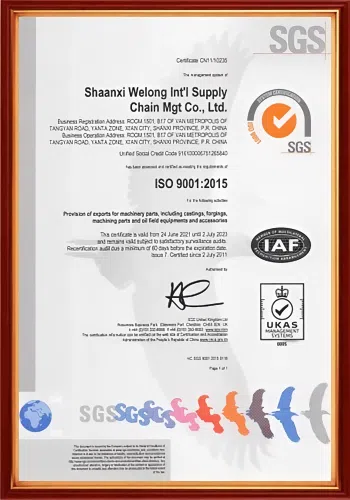
SGS / DNV Inspection Partners
PDC Drill Bit
PDC Drill Bit Manufacturer,
Matrix & Steel Body Solutions
PDC drill bits use synthetic diamond cutters to shear rock rather than crush it, delivering faster penetration and longer runs in soft-to-medium formations than roller cone bits. Welong has engineered PDC bits for oilfield operators since 2001, in both matrix and steel body construction, built to API 7-1 connection dimensions for standard drill-string compatibility.
- FOB / CIF / DDP / DDU Trade Terms
VIEW: 01/03
STATUS: NOMINAL
OPTIC: AR-SPEC
STATUS: NOMINAL
OPTIC: AR-SPEC
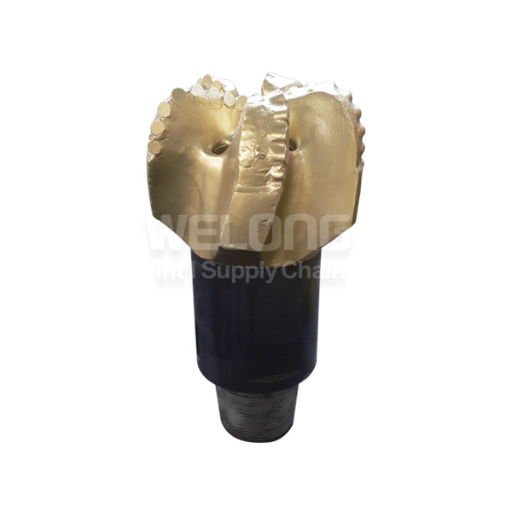
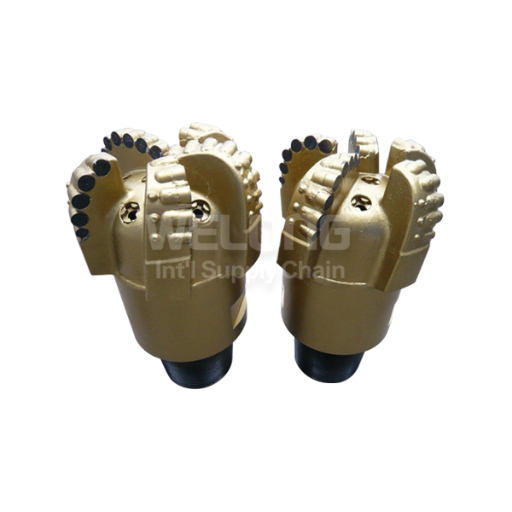
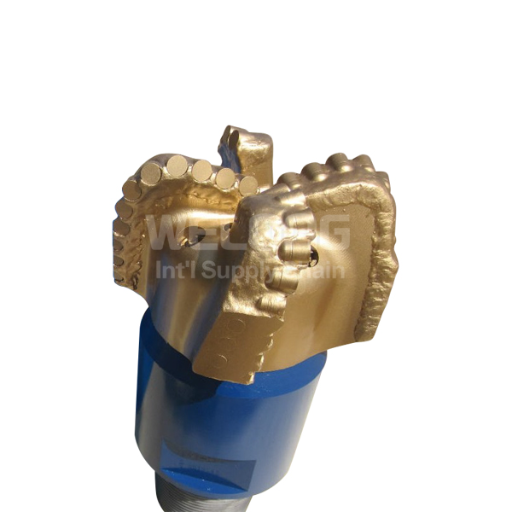
2001
Manufacturing Since
2
Body Types
API 7-1
Connection Standard
2x
QA Stages
Formation Cutting Challenges, How PDC Bits Solve Them
Drilling programs lose time and money when a bit's cutting structure doesn't match the formation it meet downhole. Take a bit selected for soft, uniform shale that suddenly encounters an interbedded streak of harder sandstone or dolomite: cutters can chip, rate of penetration (ROP) slows, and the crew faces an unplanned trip out of the hole - the single most expensive event in a drilling day. PDC (Polycrystalline Diamond Compact) bits address this by replacing the crushing-and-grinding action of roller cone bits with a continuous shearing motion: synthetic diamond cutters, bonded to a tungsten carbide substrate, slice through rock instead of pounding it. That shearing mechanism is the reason pdc bits have become the dominant fixed-cutter technology across oil, gas, and geothermal drilling over the past three decades of cutter and body-design refinement, not a recent trend - and it holds up in both vertical and directional drilling programs, where a stable, low-vibration cutting action matters even more for staying on trajectory.
Drilling performance in practice comes down to matching the bit to the rock, not just to the well plan on paper.
Formation-matching isn't automatic, though. A 2026 Stanford Geothermal Workshop field study on hard-rock drilling programs documented a persistent misconception among buyers: that adding more cutters to a bit face automatically improves durability. The study's own field data (a 12.25in pdc bit run showing a 258% ROP improvement over offset wells) demonstrated the opposite - for the same energy input (weight on bit and torque), a bit with more cutters can drill more slowly and less efficiently; cutter count has to be balanced against blade geometry and hydraulic design, not maximized on its own. These are exactly the kind of formation-and-parameter interactions Welong's engineering team walks through with buyers before a bit is quoted, rather than leaving the selection to a catalog picture.
PDC bit technology has moved well beyond a single "one bit fits all formations" design. Modern drilling applications - vertical, horizontal, and lateral sections of the same well - each present different geological conditions, and a bit built for one drilling challenge can underperform badly in the next. Cuttings need to flush away from the cutting face fast enough to remove rock efficiently rather than re-cutting it, and hydraulic design has to match the drilling equipment and mud system in use. These are ordinary drilling equipment and drilling tools decisions for an experienced engineering team, not obstacles.
Welong PDC Drill Bit Range, Matrix & Steel Body Selection
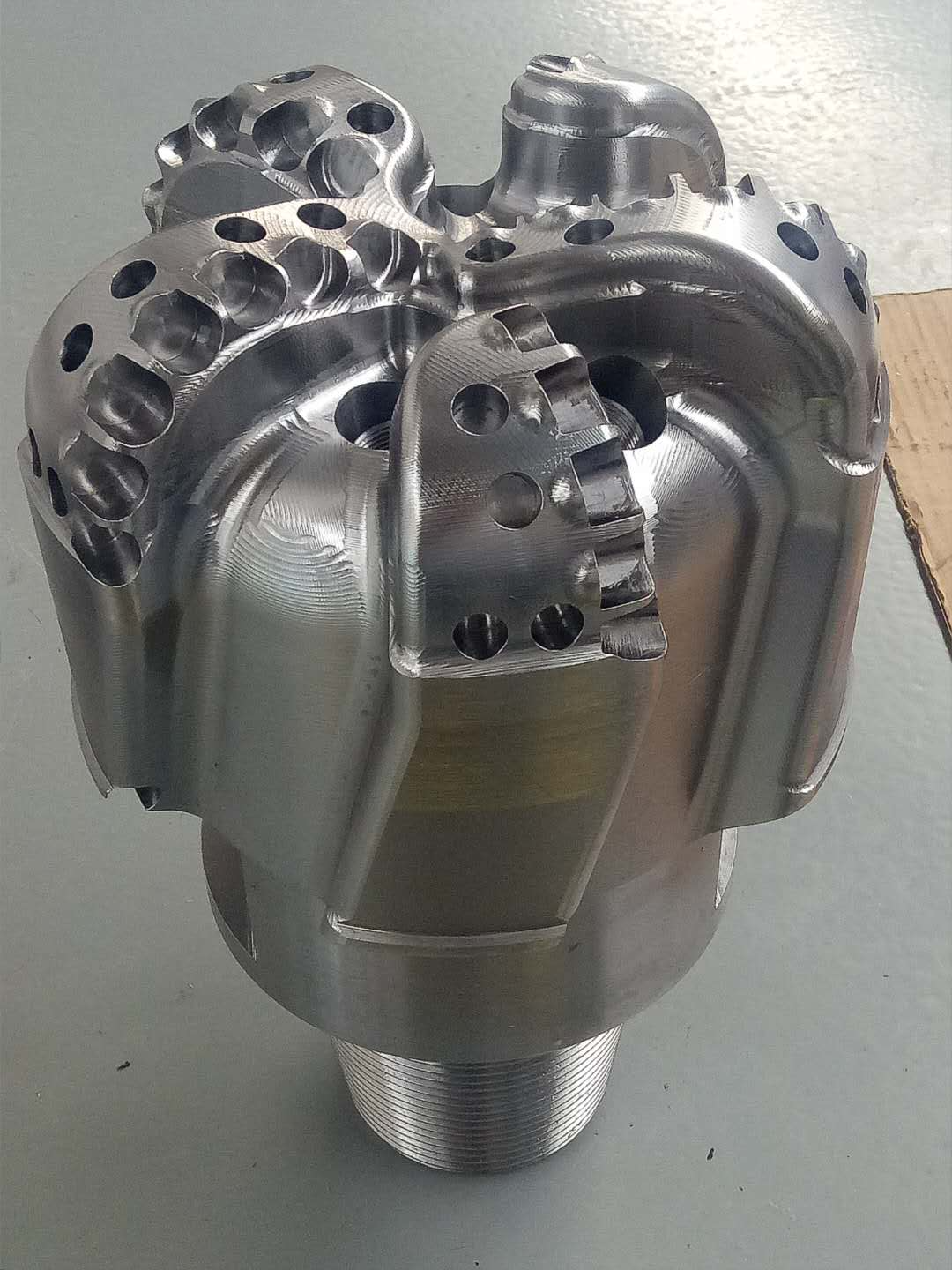
Welong manufactures pdc drill bits in two body construction styles designed to address different formation conditions and repair scenarios. Both employ premium pdc cutter grades bonded to a durable, high-strength steel or tungsten carbide substrate, providing long-wearing, wear resistance performance across the entire bit diameter.
| Selection Factor | Matrix Body | Steel Body |
|---|---|---|
| Base material | Tungsten carbide matrix, cast and infiltrated with a metal binder | Machined high-strength / low-carbon alloy steel |
| Best suited to | Abrasive, hard, or highly variable formations where erosion resistance matters most | Softer, sticky, or gummy formations needing larger junk slots for cuttings evacuation |
| Impact / abrasion resistance | Higher abrasion and erosion resistance from the carbide matrix | Higher impact toughness; easier field repair and re-run |
| Repairability | Limited — matrix bodies are harder to weld-repair in the field | Straightforward weld repair, supporting rebuilt/re-run programs |
| Blade / crown design | Parabolic crown with maximized chip area for cleaning and extended bit life | Asymmetric blade placement to improve drilling balance and stability |
blade counts range from standard configurations up to 5 or more wings on large diameter bits, and both body constructions are engineered as high-efficiency drilling tools for soft to medium-hard formations across a range of applications within the oil & gas industry-not just a single application. Customizable nozzle options permit the same base design to be adapted for optimized drilling performance across various mud types and drilling rates without a completely new design.
This table represents an initial selection guide and not a final specification. Peer-reviewed drilling engineering literature demonstrates that PDC bit selection depends on more than just body material, the interaction between rock characteristics, cutter features, and the hydraulic system drives downhole performance. Published drilling engineering studies show that adjustments in cutter back-rake angle affect the tradeoff between rate of penetration (ROP) and bit life, a more acute back-rake angle can extend bit life in tough formations, while a shallower back-rake angle can maximize penetration rates in softer ones, but this tradeoff vary by formation and bit design. Welong's engineers use this knowledge when reviewing formation data to create the most appropriate pdc bit design for your application rather than offering body style as a simple catalog option.
Connections & Compatibility
Welong builds all bits with a standard API 7-1 threaded pin connection to integrate with standard drill strings and casing programs. Welong's pdc drill bit sizes range from 3-7/8in to 26in across the broader Drill Bits product line, this is a hub-level reference range, so confirm the exact pdc drill bit specifications for your application when requesting a quote. Each bit also features a standard weld groove and bit-breaker slot on the shank to ensure proper bit handling and connection standards across industry. Please note: Welong isn't API certified or manufactured under API licenses; bits are produced to the dimensional specifications found in API 7-1 for compatibility with existing drill string components, which is a design-compliance claim, not a certification claim. The IADC classification for PDC bits (which uses a letter followed by a three-digit code corresponding to body, formation, and cutting structure type) is distinct from the three-digit system for roller cone bits; consult your Welong representative for the applicable IADC code.
Shop-floor product record
Real PDC Bit Bodies & Forging Stages
These shop-floor photos show machined PDC bit bodies and forging-stage components for visual review before specification confirmation. Buyers can compare body geometry, cutter-pocket layout, and surface condition alongside the selection guidance.
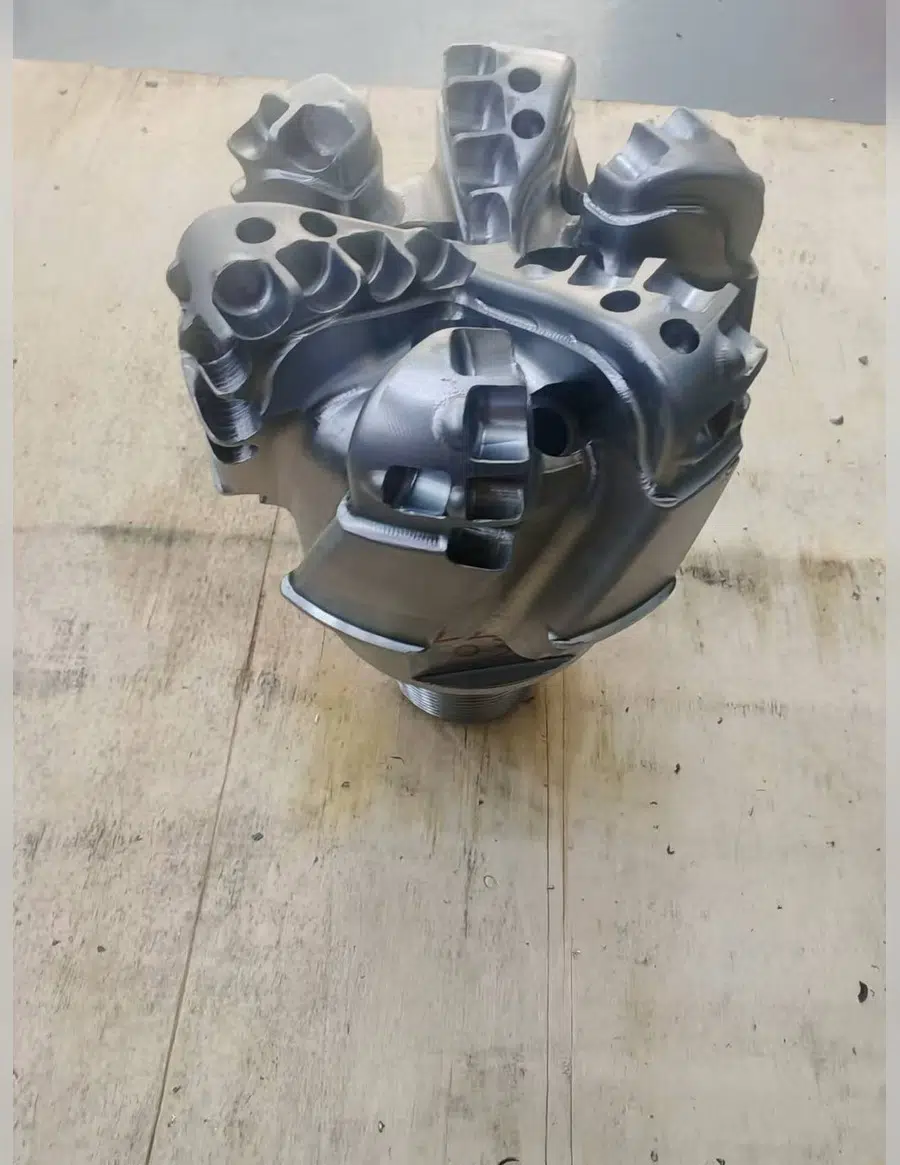
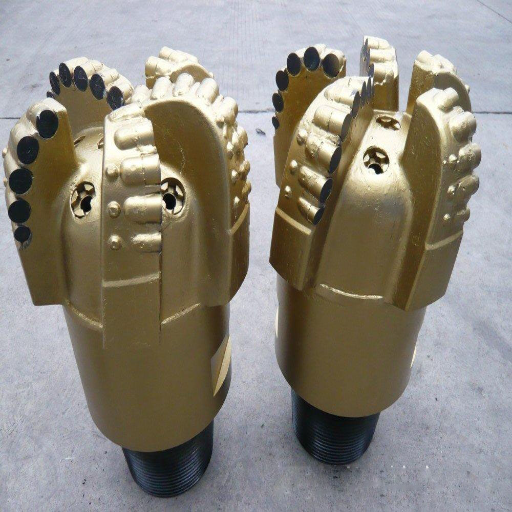
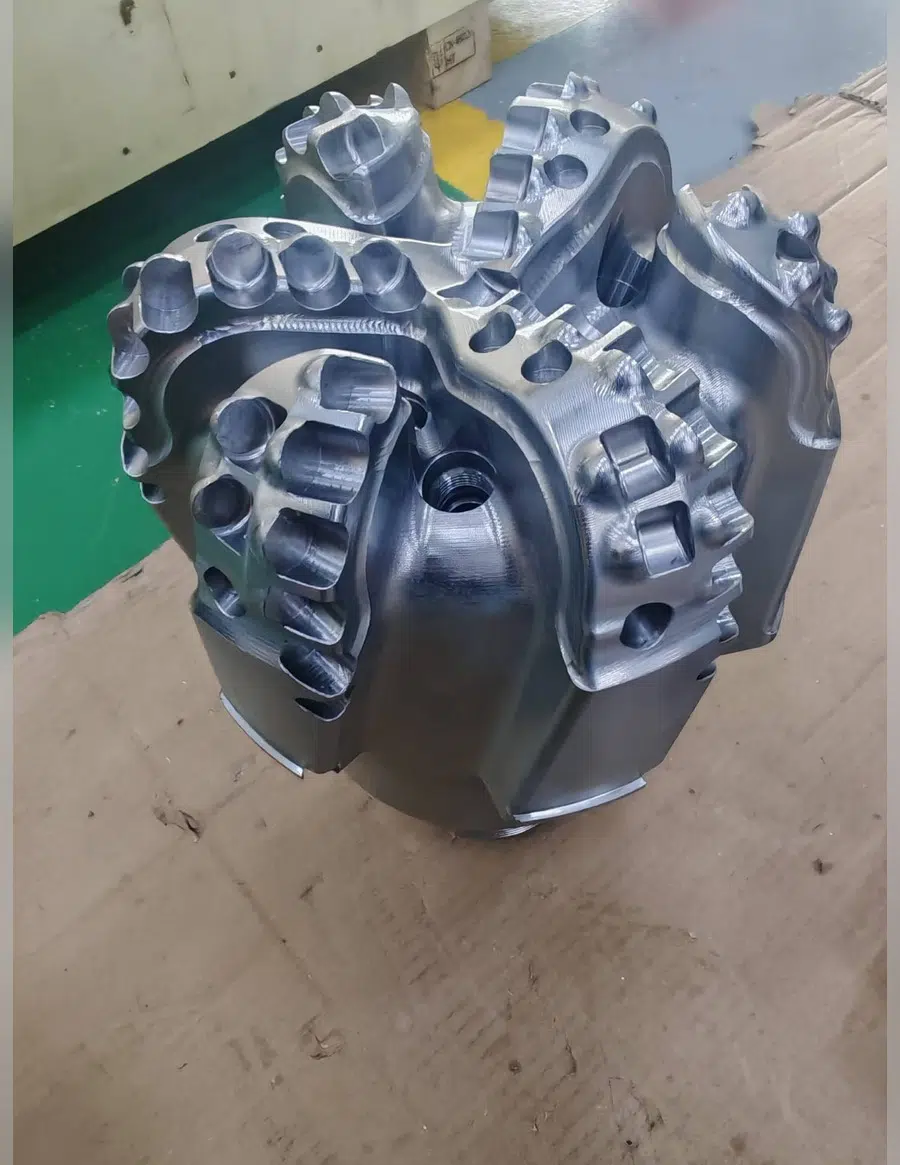
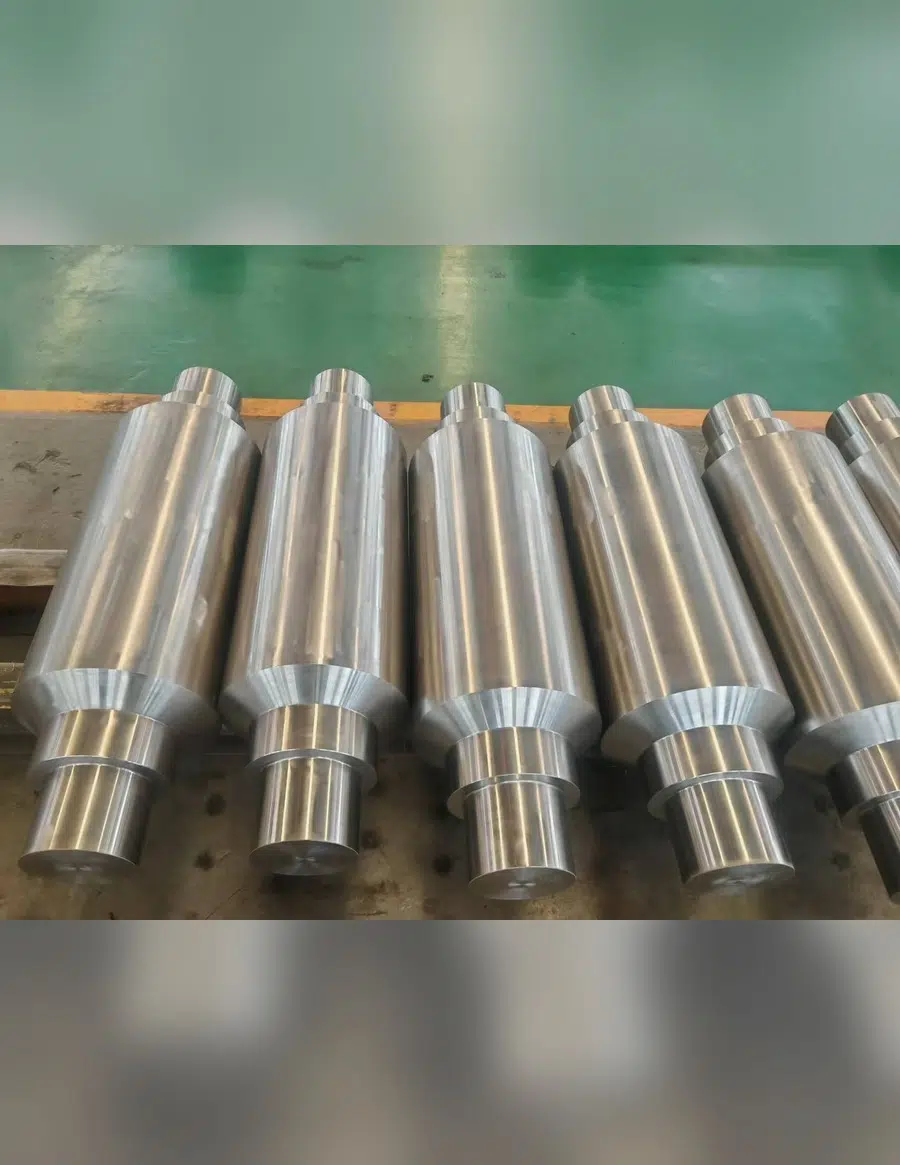
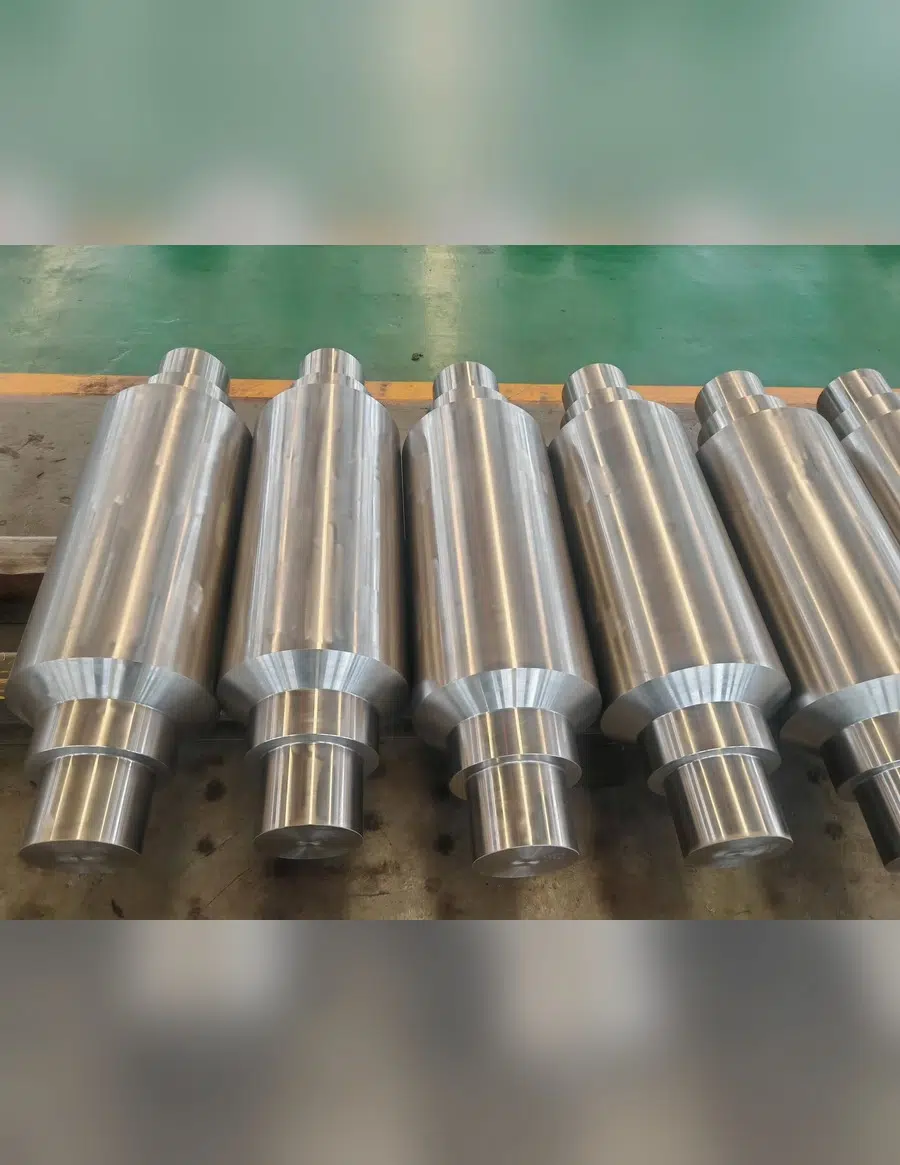
Machined PDC body - view 1PDC body selection referenceMachined PDC body - view 2Forging-stage component - view 1Forging-stage component - view 2
PDC vs Tricone, Which Fits Your Formation
When drilling softer, less abrasive formations, a properly designed pdc bit delivers faster drilling rates and a smoother cut compared to a roller cone bit operating the same section of formation, using continuous shearing rather than impact, one of the clearest performance improvements PDC brought to the industry. Drilling through hard formations interbedded with stringers often narrows that advantage. The table below compares pdc bit performance in just such a formation.
| Factor | PDC (Fixed Cutter) | Tricone (Roller Cone) |
|---|---|---|
| Cutting mechanism | Continuous shearing — no moving parts | Crushing and grinding via three rotating cones |
| Best-suited formations | Soft to medium-hard, non-abrasive to semi-abrasive (shale, sandstone, limestone) | Hard, abrasive, or highly interbedded formations |
| Failure point | No bearings to fail, but cutters can chip in abrupt formation transitions | Bearing wear is the primary failure mode |
| Cost profile | Higher upfront bit cost; lower cost-per-foot in suited formations from faster ROP and longer runs | Lower upfront bit cost; more predictable in mixed-hardness intervals |
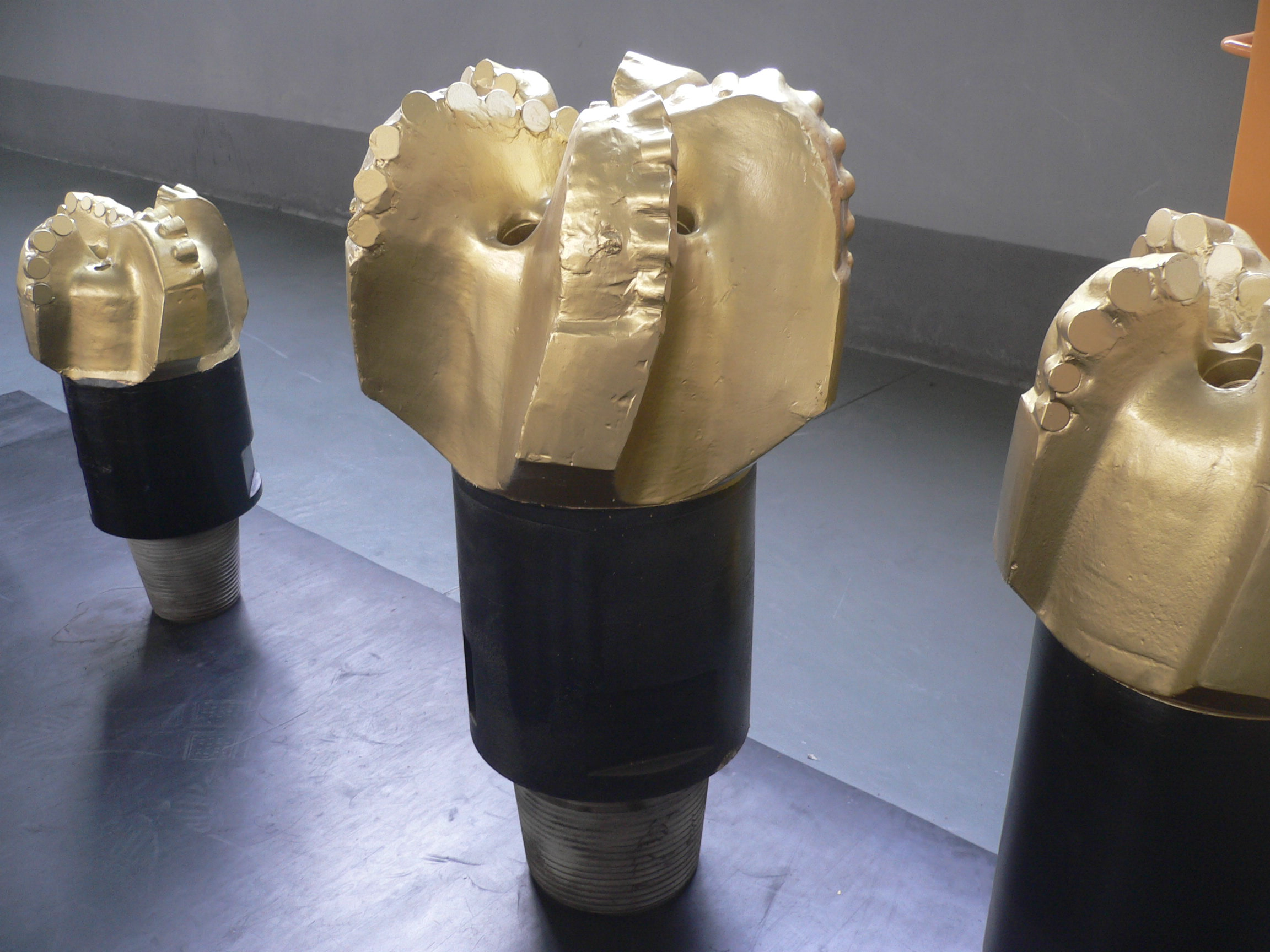
PDC’s shearing action, however, isn’t universally superior. Independent drilling-engineering literature notes that PDC bits still see higher cutter damage and lower ROP at abrupt formation changes and in true interbedded intervals-precisely where a matrix-body PDC’s greater impact resistance, or in some cases a hybrid or tricone configuration, becomes the better-engineered option. One must make a compromise to choose a single bit type for a mixed-formation run-either ROP in soft intervals or cutter survivability in the hard stringers-and the honest answer to “which bit is better?” is “better for which section of your well.” Refer to our Tricone drill bit range for the roller-cone portion of Welong’s product offering, or use the pdc bit vs tricone comparison above as a preliminary step in constructing your program.
Manufacturing & Quality Control
Since 2001, Welong has been producing oilfield equipment and continuously enhancing the development process for both well drilling and oil and gas drilling product lines. By the standard industry definition, pdc bits are fixed-cutter tools that employ a continuous scraping motion to shear rock; every bit leaving our factory is inspected according to this same principle. Our PDC bit production involves in-process inspection during machining and cutter placement, followed by an independent final inspection before shipment. This two-step inspection process is designed to identify dimensional and material issues during production rather than solely at the final stage. Each bit undergoes verification for directional control geometry and borehole-gauge consistency, as even minor discrepancies in these parameters can result in lateral vibrations and slow how efficiently the hydraulics carry cuttings away from downhole. Welong also arranges for third-party inspection by SGS and DNV at our customers’ request, covering both in-process and pre-shipment inspection, and we've established enduring partnerships with major international oilfield operators through over twenty years of supply chain collaboration.
This two-step inspection process was developed in response to a gap in the pdc bit market: while numerous competitors provide detailed descriptions of how their bits function, they often disclose little to no information about the identity of the inspectors, their inspection schedules, or the standards to which they adhere. Any purchaser evaluating new suppliers would be well-advised to seek tangible proof of inspection rather than relying on generalized claims of quality. This expectation is standard at Welong, not an unreasonable query. No marketing copy from any manufacturer is a substitute for actual inspection records; that's precisely why we identify the third-party inspection agencies instead of simply asserting “high quality.”
Certifications & Global Logistics
International buyers who work with a manufacturer for the first time for their pdc drill bits are truly risking the transaction if trade terms and inspection checks aren't set up before production begins-an incorrectly defined Incoterm may quietly move freight, insurance or customs expense on to the buyer, and failure to complete inspection prior to the agreed-upon timeframe means issues don't surface until the bit is already on a ship.
This is the exact, documented risk (not abstract "communication problems") that buyers often mention as a serious challenge in vetting potential drill bit suppliers from overseas-cost attribution that's unclear, and lack of any external checkpoint between production and shipping. Welong doesn’t suggest a single transportation mode will solve this; instead, it’s structural: the buyer decides whether their trade terms are FOB, CIF, DDP, or DDU up front, and orders the SGS/DNV inspection prior to shipment rather than post-complaint.
Buyers can select air, sea, or rail transport depending on time constraints and destinations, allowing for a landed-cost comparison before making a commitment.
Optimization of cutter design and rake angles continue to be a leading-edge, state-of-the-art frontier for drill bit engineering.
Patent applications on central-axis balancing and optimization of side rake angles date back more than a decade, and recent Chinese patent applications on modular cutter design are as new as 2024, all of which confirm that bit design still requires meaningful engineering trade-offs, rather than simply reflecting the latest commodity, off-the-shelf, finished spec sheet. Whether you're a standard drilling engineering project in oil and gas, or a specialized horizontal directional drilling project, these ongoing developments are the basis for why we provide formation-specific advice from the time of quote.
UDTECH
Certifications &
Global Logistics
Global Logistics
PDC Drill Bit Solutions
CERTIFIED
×
PDC Drill Bit Engineering & Procurement Tools
01
Cost-Per-Foot Comparison Calculator
Compare two PDC bit options — your current supplier vs. a Welong bit — using the same industry-standard cost-per-foot formula drilling engineers use to evaluate bit economics: Cost per Foot = (Bit Cost + Rig Cost × (Drilling Time + Trip Time)) ÷ Footage Drilled. A higher-priced bit that drills faster and further can still come out cheaper per foot.
02
PDC Bit Selection Advisor
Answer 3 questions about your formation to get a starting recommendation — Matrix Body, Steel Body, or "talk to an engineer" when your formation profile is mixed or interbedded. This is a first filter, not a final specification; final selection also depends on cutter back-rake angle, blade count, and hydraulic design specific to your well.
FAQ
Published market pricing for pdc bits ranges from approximately $20 for small mining bits to $8,800+ for a new 8.5in-17.5in oil & gas drill bit, with geothermal or ultra-hard-rock applications running higher. A more useful comparison metric is cost per foot = (Bit Cost + Rig Cost × (Drilling Time + Trip Time)) ÷ Footage Drilled, a higher-priced bit that drills faster and farther can still come out cheaper on a cost-per-foot basis. Ask us for a custom quote on your bit size and spec for exact, project-based pricing.
The pdc bits have non-moving, fixed synthetic diamond cutters which grind or scrape rock by continuous movement. Tricone (roller cone) bits consist of three cones on a shaft that have steel or tungsten carbide-toothed inserts, which roll along the hole face, grinding or breaking the rock. The PDC is best suited for softer to medium formations, non-abrasive, at faster rates of penetration, and can out-wear tricones, which are the preferred bit for very hard, very abrasive, and interbedded formations.
Polycrystalline Diamond Compact, or PDC, is the cutting tool in which the hard cutting surface consists of synthetic diamond and has a backing of tungsten carbide substrate. In industry usage, "pdc bit" describes the fixed-cutter drill bit built from these cutters, not just the cutter component alone.
PCD is the name of the material, i.e., bulk sintered synthetic diamond grains. PDC (Polycrystalline Diamond Compact) is a composite cutting element in which a PCD layer is applied onto a tungsten carbide base to improve impact strength. In summary: PCD is the material; PDC is the finished tool built from it.
Matrix body bits tend to work best in abrasive and highly interbedded zones where impact resistance is the key driver. Steel body bits perform well in soft, sticky formations where field weld-repair for rebuild/re-run programs makes sense. Body type alone won't give you the full picture, though, cutter back-rake angle, blade count, and hydraulic design specific to your formation also matter. Share your formation data with Welong's engineering team for a matched recommendation rather than a body-type-only guess.
Procurement & Capability
PDC Drill Bit Capability Review
China Welong reviews the buyer drawing, product specification and inspection scope before quotation.
24 hEngineer-reviewed quotation on business days
2001Founded in 2001
30+30+ engineers on staff
5 yrStamped serial traceability
Quotation Scope and Commercial Terms
Pricing is prepared against the selected product configuration, material route, inspection scope and shipment terms.
- Quotes are returned within 24 hours on business days, reviewed by an engineer.
- T/T or L/C by wire transfer.
- We ship EXW, FOB, CFR or CIF; other Incoterms on request.
- We work from 2D drawings and 3D CAD models (AutoCAD, Pro/ENGINEER, SolidWorks; .dwg and .igs).
Production Planning
Production timing is confirmed with the quotation after quantity, process route and finishing scope are reviewed.
- We hold agreed items in stock and ship against your release to shorten delivery. Feasibility is confirmed at drawing review.
- Manufacturing at Xi'an, Shaanxi and at Jiyuan, Henan.
- 0.01 mm machining precision.
- Material standards to ISO, BS, ASTM, ASME, DIN, JIS and GB.
- Orders ship in standard export wooden cases, or the packing you specify.
Order Review and Responsibility
The responsible manufacturer, inspection scope and document package are identified for the selected item.
- Every quotation states whether the item is made in our own works or by an approved supplier we developed and supervise.
- We develop, audit and supervise the mills and workshops that make your parts: material mills are re-audited every two years and approved by Welong before they run your order.
- Forgings from 0.2 to 50 tons.
Specification and Inspection Evidence
The specification table on this page is the technical basis for this review: its numeric rows define what we quote, manufacture and inspect against.
- Each piece carries a stamped serial number and stays traceable for five years to its chemical composition, mechanical properties and measurement report, with the test coupon retained.
- An EN 10204-3.1B material certificate with chemical composition and mechanical properties, a dimensional measurement report, and UT and MT reports ship with your order.
- Inspection is by coordinate measuring machine, ultrasonic, magnetic particle and X-ray.
Request a Product Review
Send the drawing, product specification and inspection requirements for a quotation review.
![Choke & Kill Hose: [Field Guide]](https://welongoiltools.com/wp-content/uploads/2026/07/choke-kill-hose-guide-featured-1-150x150.png)