Get in touch with Welong Company

Casing Centralizers, API 10D Bow Spring, Rigid & Roller Types
Bow-spring, rigid-blade, roller, and composite centralizers engineered to provide the actual standoff required by your well profile – with API Spec 10D restoring-force test data and three-tier inspection.
4½”–20″
Casing size range (larger on request)
5 families
Bow / rigid / semi-rigid / roller / composite
API 10D
Bow-spring restoring & starting force
3-tier QC
In-process · final · third-party
67%
Standoff basis for min restoring force
2001
Manufacturing & supply since
Product Specification and Selection Review
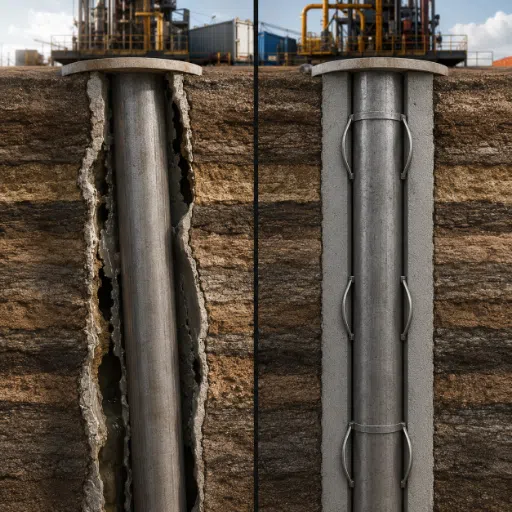
A casing centralizer is a mechanical assembly installed on the casing string to keep the casing off the wall of the borehole, opening a continuous 360° annulus so cement can fill the space around the pipe and bond the casing to the borehole wall in a uniform cement sheath for zonal isolation. If standoff is lost, cement travels down the low side of the annulus, and the cost lands on you, not the device.
IMPACT METRICS
$500K–$M+
Specified cost of a failed primary cement job — from a remedial squeeze to full workover or plug-and-abandon.
~15%
Industry estimates: ~15% of primary cementing jobs fail, costing the sector well over USD 450 million a year in cement-sheath repair.
You hardly ever have a failure mode that’s “not enough cement pumped.” People have pumped 100% of the calculated volume and lost the bond because a de-centralized casing has allowed drilling mud to flow around where cement was intended. Bad centralization leads to channeling, gas migration, and microannuli – the exact problems we try to prevent with primary cementing.
-
Cement Channeling
Mud that’s placed on the narrow side turn into a perpetual channel flow.
-
Differential Sticking
When the casing get stuck against the well wall while running in.
-
Casing Buckling
In severe doglegs – a helically buckled string can induce a side force of 50,000–100,000 lbf (222–445 kN).
-
Failed Zonal Isolation
The downstream cost every centralizer is bought to avoid.
🔎 Not sure your current spacing holds standoff?
Request an engineering centralization review →
The Welong Centralizer Range, Types, Sizes & How to Select the Right One
Most spec sheets have one missing entry that one size of centralizer for all wells is sold – which works until the wellbore trajectory change. Why? because each family is driven by a single physical property. Welong supplies the centralizer family through a quotation-confirmed production route; the quotation confirms the responsible manufacturer and inspection scope.
Our bow springs are hot-formed from a specialty alloy steel heat-treated under total control to create consistent hardness on all bow sections in line with an industry direction reflected in the patent record (e.g. USPTO US7708064B2).
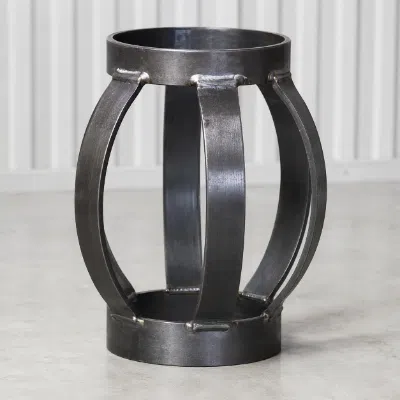
Bow Spring
Welded, non-welded, hinged and slip-on styles, plus double-bow. Flexes to fill the annulus for the highest standoff in vertical and slightly deviated wells.
Metric restoring force (API Spec 10D)
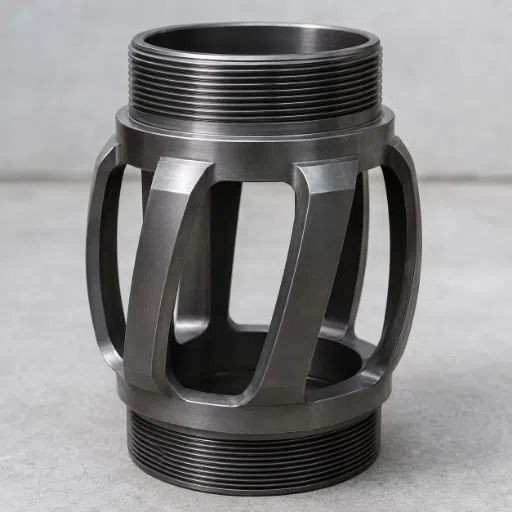
Rigid Blade
Straight-blade and spiral-blade solid-body centralizers, sized to a specific casing/hole. Positive, guaranteed standoff that holds in deviated and cased holes and acts as a bearing during rotation.
Metric fixed OD / max radial load
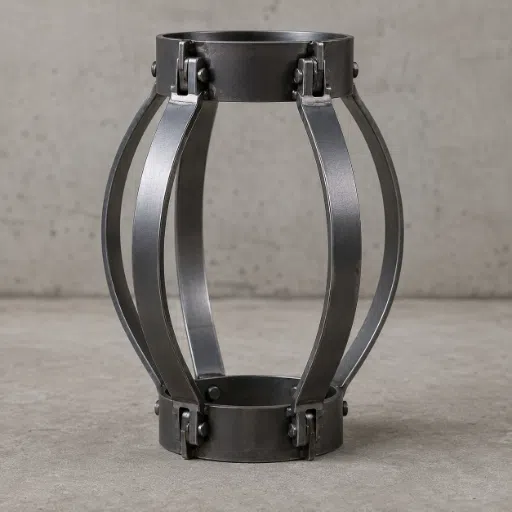
Semi-Rigid (Double Bow)
Double-crested bows that compress through tight spots and severe doglegs while delivering restoring forces above the API minimums.
Metric restoring force > API 10D min
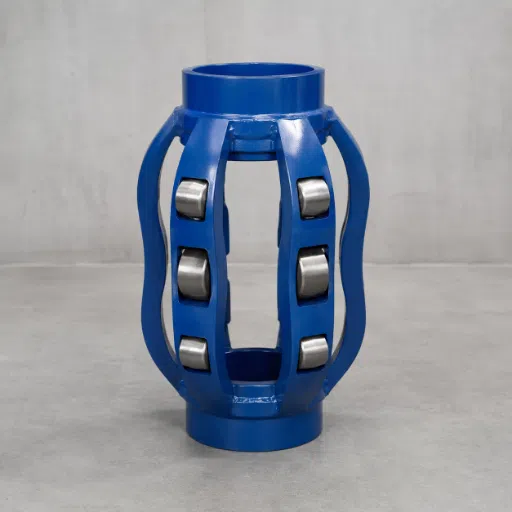
Roller
Rollers set into the blades cut running friction and aid rotation, built for highly deviated and horizontal sections.
Metric running friction / drag
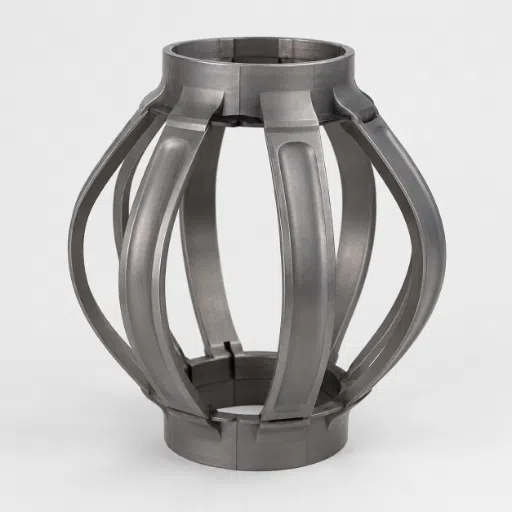
Composite / Aluminum
One-piece, low-friction bodies for extended-reach laterals where drag and casing sag threaten reaching total depth.
Metric coefficient of friction
The Centralizer Type-to-Well Selector
Since each family has a unique physical property which governs it, forcing one number is an apples to oranges comparison. Use this to choose the right centralizer by looking up the family that most resembles your well by type, then map type to well profile via the one metric that actually matter.
| Centralizer type | Governing metric | Best-fit well profile | Standoff behavior |
|---|---|---|---|
| Bow spring (welded / non-welded) | Restoring force (API 10D) | Vertical → slightly deviated | Highest — bows flex larger than bore |
| Semi-rigid (double bow) | Restoring force > API min | Moderate dogleg / tight spots | Compresses through restrictions |
| Rigid blade (straight / spiral) | Fixed OD / radial load | Deviated → horizontal, cased hole | Positive, side-load independent |
| Roller | Running friction | Highly deviated / rotating | Consistent + low drag |
| Composite / aluminum | Coefficient of friction | Extended-reach lateral | High, ultra-low drag |
📐 Not sure which family fits your string?
Get the Centralizer Sizing Chart →Bow Spring vs Rigid vs Roller, A Data-Driven Performance Comparison
Most centralizer spec sheets mistakenly just add a “force” column for comparing different centralizer types – but a rigid centralizer doesn’t actually have a restoring force, and a roller type is judged on drag, not push. The Standoff-vs-Force Trade-off Chart below instead scores each type family by its relevant metric.
| Attribute | Bow Spring | Rigid Blade | Roller | Composite |
|---|---|---|---|---|
| Governing metric | Restoring force (API 10D) | Fixed OD / radial load | Running friction | Coeff. of friction |
| Standoff in vertical | Highest | Moderate (OD < bore) | Moderate | Moderate–high |
| Standoff in deviated/horizontal | Drops under high side load | Consistent, positive | Consistent | High |
| Running drag | Low–moderate | Higher | Lowest (rolls) | Lowest (~0.08 class) |
| Rotation / reciprocation | Yes (bearing-like) | Yes (bearing) | Yes (rolls) | Yes |
| Performance standard | API Spec 10D scope | Separate basis | Separate basis | Separate basis |
Two myths debunked.
“More centralizers is better” — this assumption is false, because there can be too much: extra units just add drag and run difficulty, and the most effective centralization strategy always depends on proper placement, not just sheer numbers.
Second, shop floor dogma aside that “you can’t rotate inside a bow spring” – centralizers are designed to promote rotation and act like ball bearings, not brakes.
Engineering Note, device performance ≠ field standoff
A quoted restoring force on a centralizer specification describes the device’s performance on a bench tester under API Spec 10D. Downhole standoff, however, is a function of placement and dictated by your well deviation, dogleg severity and centralizer spacing under API RP 10D-2 / ISO 10427-2.
We provide you the test data; field standoff is your job via the appropriate spacing calculation for your wellbore. Interrogating both questions simultaneously — what kind, how many? — is where centralizer budget dollars are made or lost. Our engineers work the standoff/force trade-off with you, instead of defaulting to “one every joint.”
📊 Want this comparison run against your casing program?
Request a Custom Comparison →
API Spec 10D Compliance & Three-Tier Quality Control
By far the most expensive blunder in centralizer procurement is relying on a compliance claim you never get to see verified and taking on the full risk yourself if the cement bond downhole doesn’t perform. API Spec 10D addresses only bow spring casing centralizers, because it dictates a required minimum restoring force and maximum starting force per casing/hole size.
Welong supplies bow-spring centralizers against those requirements. The quotation confirms restoring-force test data, the responsible manufacturer, and the inspection scope for the selected item.
The API 10D Evidence Ledger
This restoring force is tested at 67% standoff, which is the basis for the minimum force requirement defined by the API standard. Here are the published minimums our bow springs are built to meet or exceed:
| Casing size | API 10D min restoring force (67% standoff) |
|---|---|
| 3½” (89 mm) | 396 lbf (1,761 N) |
| 8⅝” (219 mm) | 1,440 lbf (6,405 N) |
| 20″ (508 mm) | 1,880 lbf (8,363 N) |
Method for restoring force test: Six prototypes tested minimum. Load readings taken in 1.6 mm (1/16″) increments. Bows pre-flexed twelve times. Load measured with accuracy within 5% and displacement accuracy within 0.8 mm (1/32″).
Buyer Advisory, read the certificate, not just the claim
“Meets API 10D” isn’t the same as “API documentation licensed”. The API documentation is a stamp of manufacture in accordance with the API specification and by an API-licensed quality management system. Welong supplies centralizers against the stated API Spec 10D force requirements; the quotation confirms available restoring-force test data and inspection scope.
We verify quality on three distinct tiers rather than claiming it once. This includes: In-process testing during manufacture and heat treatment, final quality inspection prior to shipment, and independent third-party verification on request.
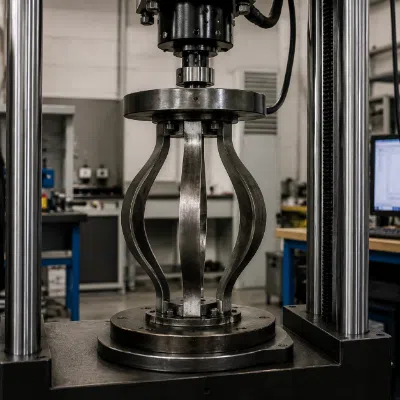
API Spec 10D
Bow-spring restoring & starting force
3rd-Party
SGS / DNV on request
UT · MT
NDT on critical parts
Load Test
Restoring-force verification
Dimensional
Per-lot gauge check
We flex every bow prototype twelve times before we log a single load reading, the number that matters is the restoring force after the spring has settled, not the one it shows brand new. That is the value we hand the client, because it is the one the well sees.
Engineered for Real Wells, Standoff Outcomes & Field Applications
Centralizer selection follows the well, not the catalog. Run the wrong body in a deviated production hole and you risk drag, casing wear, and standoff dropping below the 67% most cementing programs target. Each family below maps to a well profile, from a vertical water-injection well to an 8½ in extended-reach production lateral in the field.
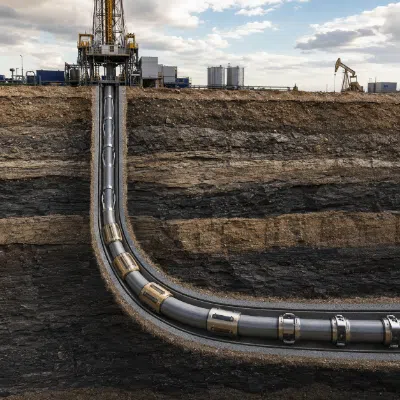
-
Vertical or slightly deviated wells
Here the centralizer bows sit wider than the borehole, creating a greater annular fill and better mud displacement.
-
Deviated or cased hole
A rugged straight or spiral-blade centralizer offers positive standoff and doesn’t yield under side loading.
-
Highly deviated or rotating wellbore
The rolling action of the centralizer reduce drag, letting the string reach bottom and rotate freely during cementing operations.
-
Extended-reach laterals
Very low coefficient of friction on one-piece composite bodies (around 0.08 for advanced composites) helps the string overcome the drag and sag that prevent reaching TD.
SUPPLY CHAIN
Welong supplies custom bodies through a quotation-confirmed production route when the standard range does not suit the string; the quotation confirms the responsible manufacturer and inspection scope.
ENGINEERING NOTE
Extended-reach reality
The most frequent reasons a string doesn’t reach total depth in a highly deviated or ERD well are elevated friction and casing sag-and Specified centralizers often increase torque and drag. A low-friction centralizer, either a roller or composite-body style, was developed to solve exactly these issues. Centralizer type matters more here than quantity.
Procurement Guide, Sizing Inputs, Lead Time & Global Shipping
A few inputs let’s issue a quick, accurate quote. If you submit incorrect casing outside diameter, you risk a centralizer that may not pass through a 5% restriction-an expensive mistake that you’ll discover with an ill-functioning string. Review the Centralizer RFQ Checklist to ensure you include the information our engineers will need to size and price your centralizers on the first attempt.
The Centralizer RFQ Checklist
- Casing OD and weight (e.g. 9⅝”, 47 lb/ft)
- Hole or previous-casing ID at the running interval
- Well profile-vertical, deviated, horizontal or ERD, maximum dogleg
- Target standoff and any operator centralization spec
- Quantity, plus stop-collar type and retaining-force requirement
- Preferred Incoterm and destination port
A 9 in string in a deviated wellbore, or 13 in surface casing, requires a specific product and count-and a number that isn’t on a static list price, but that takes size, family, style and inspection requirements into account. The quotation confirms the selected product configuration, responsible manufacturer, and inspection scope.
📦 Ready to price a batch?
Request a Quote & Lead Time →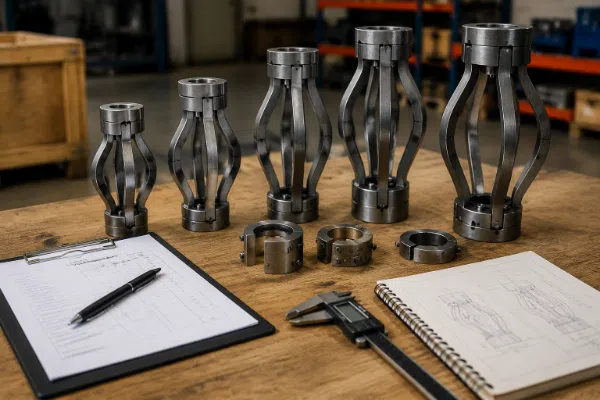
Stop collars & retaining force
Centralizer performance is directly linked to stop collar holding force under placement (API RP 10D-2 / ISO 10427-2). Therefore, centralizers can be supplied with matched stop collars (slip-on set-screw and hinged); the quotation confirms the responsible manufacturer and inspection scope for the selected interval.
Lead time & shipping
Sea, air, or rail shipments available on FOB, CIF, DDP or DDU terms so that your project is accommodated, not ours. Lead time varies based on range of size and scope of inspection; let’s know your target deadline in the RFQ and we’ll confirm a hard delivery date against that target.
Engineering Tools & Calculators
Professional cementing tools calculation and reference selection guide.
Spec the Right Centralizer for Your Next String
Just send us your casing OD, well profile, and target standoff – we’ll tell you which type of bow-spring will best meet your needs, provide you with confirming API 10D restoring force values, and tell you when you’ll get them.
INPUT PARAMETERS
- Casing OD
- Well Profile
- Target Standoff
DELIVERABLES
- Bow-Spring Type
- API 10D Restoring Force
- Delivery Schedule
FAQ, Casing Centralizer Selection & Compliance
It’s a mechanical device secured around the casing string that keeps the pipe off the wellbore wall. That standoff open a continuous annular space so cement can seal the casing to the borehole and deliver zonal isolation.
Bow springs give the best centralization in vertical and slightly deviated wells because they flex larger than the bore. Rigid blades win in deviated and horizontal holes where a positive, side-load-independent standoff matters more than flex. Restoring force versus well deviation is the deciding factor, higher deviation needs higher restoring force, or a rigid body.
Our bow-spring centralizers are built to meet the minimum restoring force and maximum starting force requirements of API Spec 10D, and we can provide the restoring-force test data. Note that API Spec 10D applies to bow-spring centralizers specifically; rigid and roller types are qualified on their own performance basis.
Standard range covers roughly 4½” to 20″ casing, with larger and special sizes made to order. Rigid bodies are sized to a specific casing/hole combination, so we match OD to your running interval rather than shipping a one-size part.
We ship by sea, air or rail on FOB, CIF, DDP or DDU terms. Lead time scales with size range and inspection level; send the deadline with your RFQ and we confirm a firm date.
Yes. We supply to your drawings and specifications; the quotation confirms bow height, blade geometry, material family, stop-collar retaining force, responsible manufacturer, and inspection scope.
Procurement & Capability
Casing Centralizer Capability Review
China Welong reviews the buyer drawing, product specification and inspection scope before quotation.
This review is scoped to the Casing Centralizer configurations set out in the specification table on this page — 6 documented rows covering Parameter, Current source wording, Catalog casing range and API test standoff.
24 hEngineer-reviewed quotation on business days
2001Founded in 2001
30+30+ engineers on staff
5 yrStamped serial traceability
Quotation Scope and Commercial Terms
Pricing is prepared against the selected product configuration, material route, inspection scope and shipment terms.
- Quotes are returned within 24 hours on business days, reviewed by an engineer.
- T/T or L/C by wire transfer.
- We ship EXW, FOB, CFR or CIF; other Incoterms on request.
- We work from 2D drawings and 3D CAD models (AutoCAD, Pro/ENGINEER, SolidWorks; .dwg and .igs).
Production Planning
Production timing is confirmed with the quotation after quantity, process route and finishing scope are reviewed.
- We hold agreed items in stock and ship against your release to shorten delivery. Feasibility is confirmed at drawing review.
- Manufacturing at Xi'an, Shaanxi and at Jiyuan, Henan.
- 0.01 mm machining precision.
- Material standards to ISO, BS, ASTM, ASME, DIN, JIS and GB.
- Orders ship in standard export wooden cases, or the packing you specify.
Order Review and Responsibility
The responsible manufacturer, inspection scope and document package are identified for the selected item.
- The quotation records whether the item is made in our own works or by an approved supplier and confirms the responsible manufacturer and inspection scope.
- Production-management review is re-audited every two years; the quotation confirms the responsible manufacturer and inspection scope for the selected item.
- Forgings from 0.2 to 50 tons.
Current Product Specification Evidence
These product-scoped numeric rows reproduce current-page wording. The quotation confirms the responsible manufacturer and inspection scope for the selected item.
- Each piece carries a stamped serial number and stays traceable for five years to its chemical composition, mechanical properties and measurement report, with the test coupon retained.
- An EN 10204-3.1B material certificate with chemical composition and mechanical properties, a dimensional measurement report, and UT and MT reports ships with your order.
- Inspection is by coordinate measuring machine, ultrasonic, magnetic particle and X-ray.
| Parameter | Current source wording |
|---|---|
| Catalog casing range | Standard range covers roughly 4½" to 20" casing |
| API test standoff | This restoring force is tested at 67% standoff |
| 3½-inch restoring force | 3½" (89 mm) 396 lbf (1,761 N) |
| 8⅝-inch restoring force | 8⅝" (219 mm) 1,440 lbf (6,405 N) |
| 20-inch restoring force | 20" (508 mm) 1,880 lbf (8,363 N) |
| Test sequence | Six prototypes tested minimum. Load readings taken in 1.6 mm (1/16") increments. Bows pre-flexed twelve times. Load measured with accuracy within 5% and displacement accuracy within 0.8 mm (1/32"). |
Request a Product Review
Send the drawing, product specification and inspection requirements for a quotation review.
![Choke & Kill Hose: [Field Guide]](https://welongoiltools.com/wp-content/uploads/2026/07/choke-kill-hose-guide-featured-1-150x150.png)